


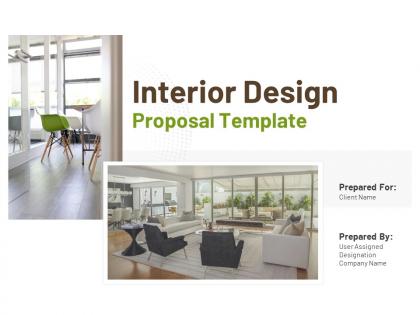
Interior design proposal template powerpoint presentation slides





Try Before you Buy Download Free Sample Product
 Impress Your
 Audience
 100%
100% Editable
 Save Hours
 of Time


Our Interior Design Proposal Template Powerpoint Presentation Slides are topically designed to provide an attractive backdrop to any subject. Use them to look like a presentation pro.
People who downloaded this PowerPoint presentation also viewed the following :
Content of this Powerpoint Presentation
Interior design is an art and science that focuses on environments that reflect both individuality and utility. The globally growing industry is a sign of how design can be a solid input to doing business. Businesses require templates to make sense of the design that suits them, and can be applicable across their infrastructure, both digital and physical. The appropriate answer is a presentation template, which offers the impact as well as the design. They aren't just slide designs. Each of these slides is detail-oriented. The Interior Design Proposal Template is a blank canvas for you to bring your concept of a space to life in a clean, professional, and utterly unique way that evokes your brand's appearance. Whether you're presenting to a client or exhibiting your portfolio, these slides can help your ideas stand out. So, explore the elements that make this template a must-have in the portfolio of a modern interior designer.
Unleash your project potential with the Roadmap Interior Design Project Proposal. It is a one-page blueprint for a breathtaking space. Visit SlideTeam.net and turn your vision into a plan today!
Template 1: Cover Letter for Interior Design
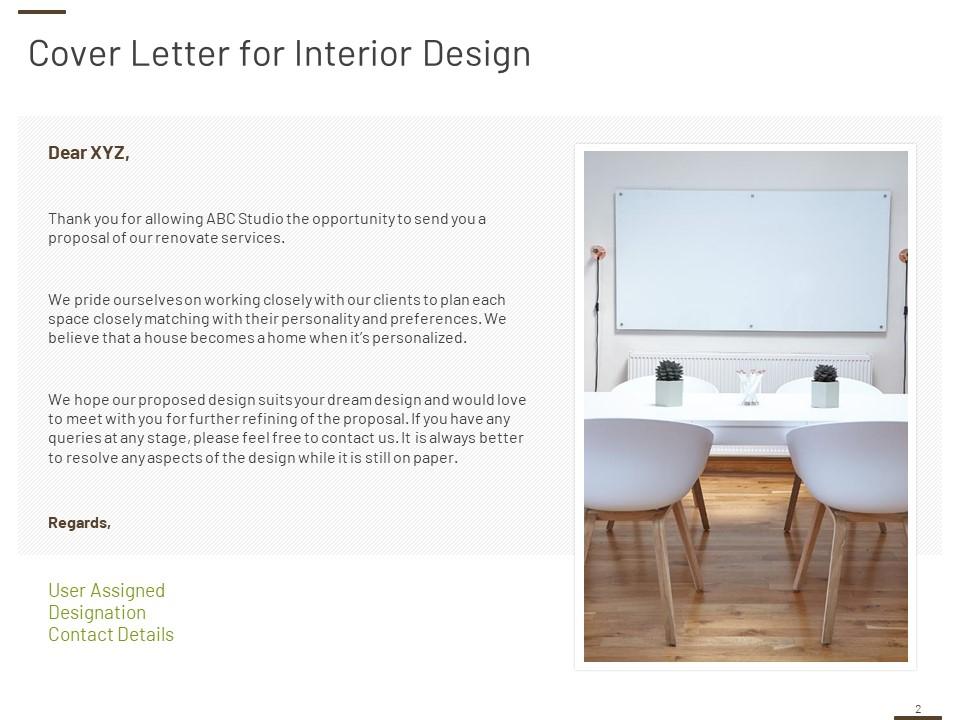
With this cover letter template that suits interior design professionals, you create the entire ecosystem for a memorable first-impression. It is a balanced play of professionalism and warmth, inviting potential clients to use your design services. The template focuses on collaboration and demonstrates how you adopt a personalized approach to match your client's vision and space requirements. It's a clean and appealing layout with enough room to customize the receiver's own brand characteristics and contact information. Such a template serves as an ideal sounding board for design studios wishing to convey ideas and services in a professional yet friendly tone.
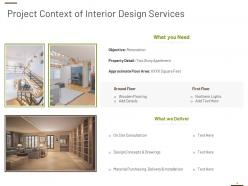
Template 2: Project Context of Interior Design Services
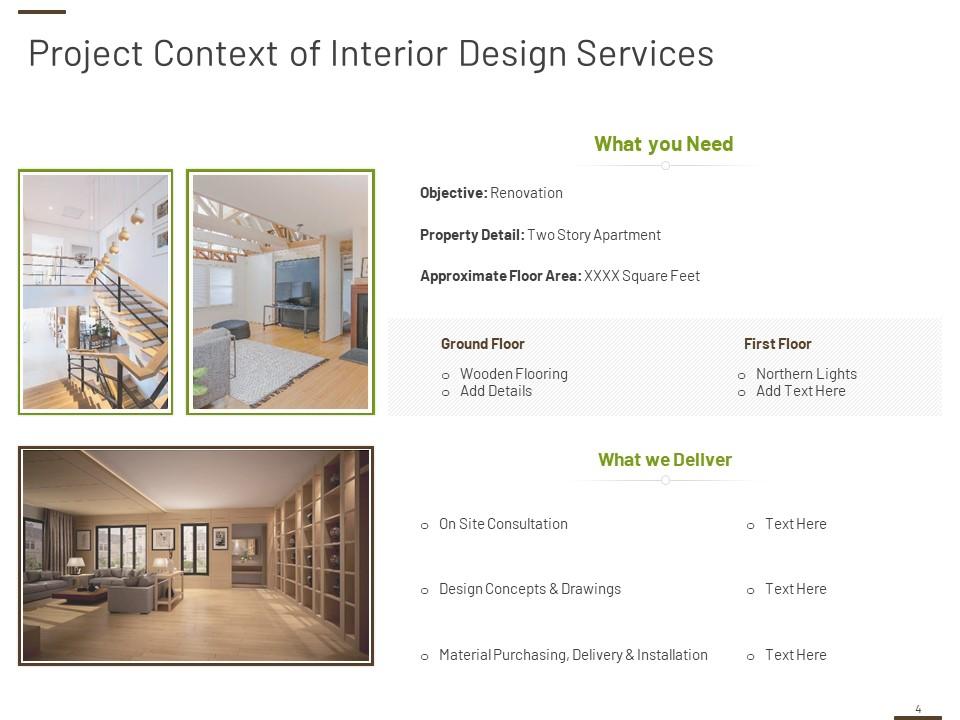
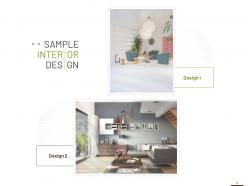
This presentation slide comes in handy for an interior designer who is laying out the scope of a renovation project. It provides a brief framework for stating project objectives, details, and deliverables. The slide will be designed using a dual-panel style that includes placeholders for photos to fill in the visual presentation. It can explain specific project-related goals while also providing property characteristics like square footage and storage information. The slide also includes a part where you can define the services given, such as on-site advice or material purchasing so that the client knows how much they're getting from you. This slide is one of the most important items in your professional toolbox, as it leads to an open debate on the project's scope and services.
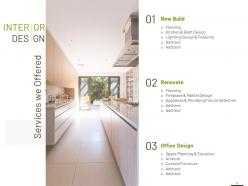
Template 3: Services We Offered
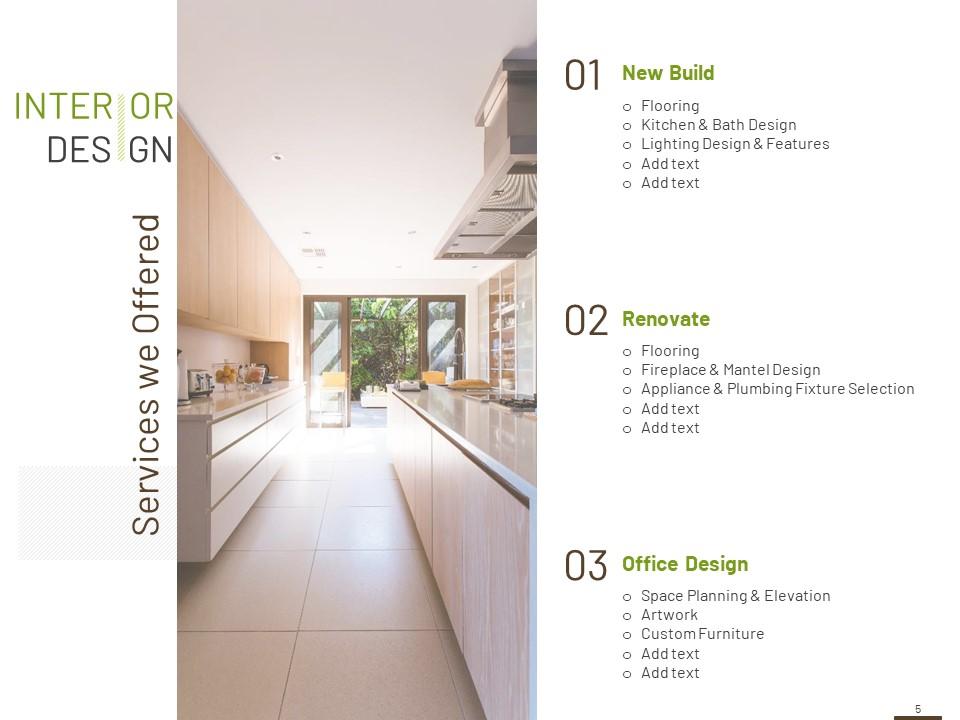
This slide presentation is designed for interior design experts who need to show their customers the range of services available, from development to realization. The three primary sections are, in order, first, second, and third. All are intended for different service categories, ranging from the establishment of a new office setting to the refreshment of an existing area. Each area has been broken down into particular offerings, allowing you to articulate your strengths clearly. The slide has a modern, clean design and a large text area where you may input or update service details. High-quality photos enhance visual appeal and can be replaced to represent previous work or the designer's style.
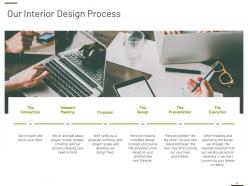
Template 4: Our Interior Design Process
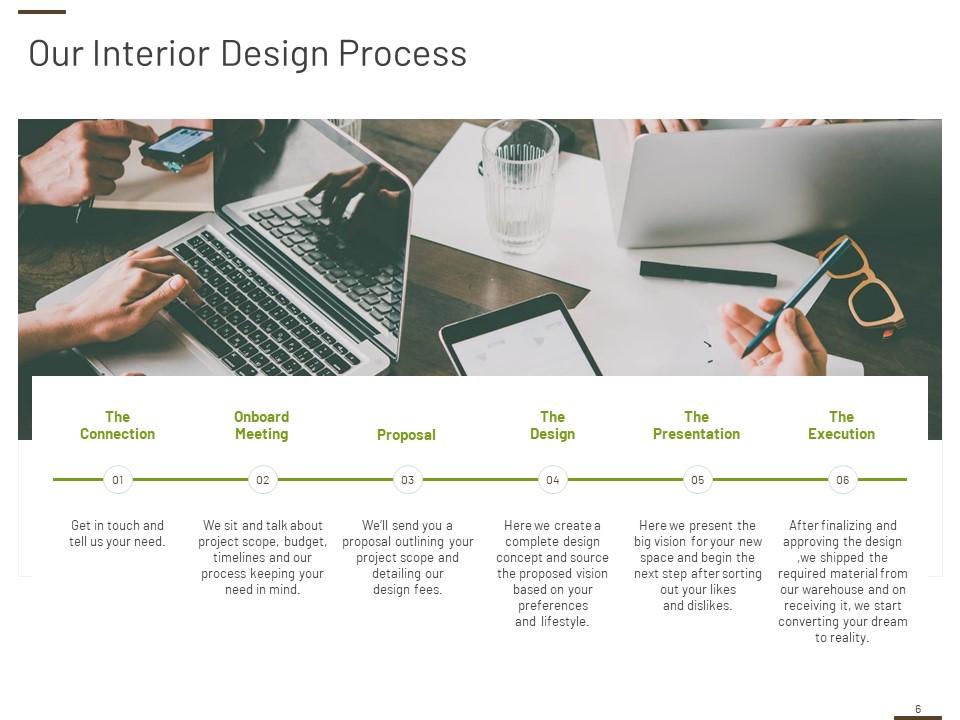
This presentation slide serves as a strategic compass for clients, guiding them through the entire design experience. The slide defined six primary phases, each with a brief explanation of the level of activity at that point: beginning with first contact, progressing to deep onboarding meetings, and transitioning to presenting a personalized proposal. The process from conceptualization to actualization and presentation of the envisioned space occurs during the design phase. The final phase is project implementation. Visual cues from accompanying photographs help create the story of a client-centered process with clearly expressed and well-executed outcomes. This slide defines expectations and covers information that the clients may require.
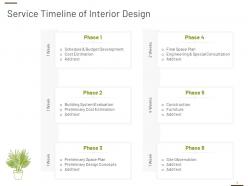
Template 5: Service Timeline of Interior Design
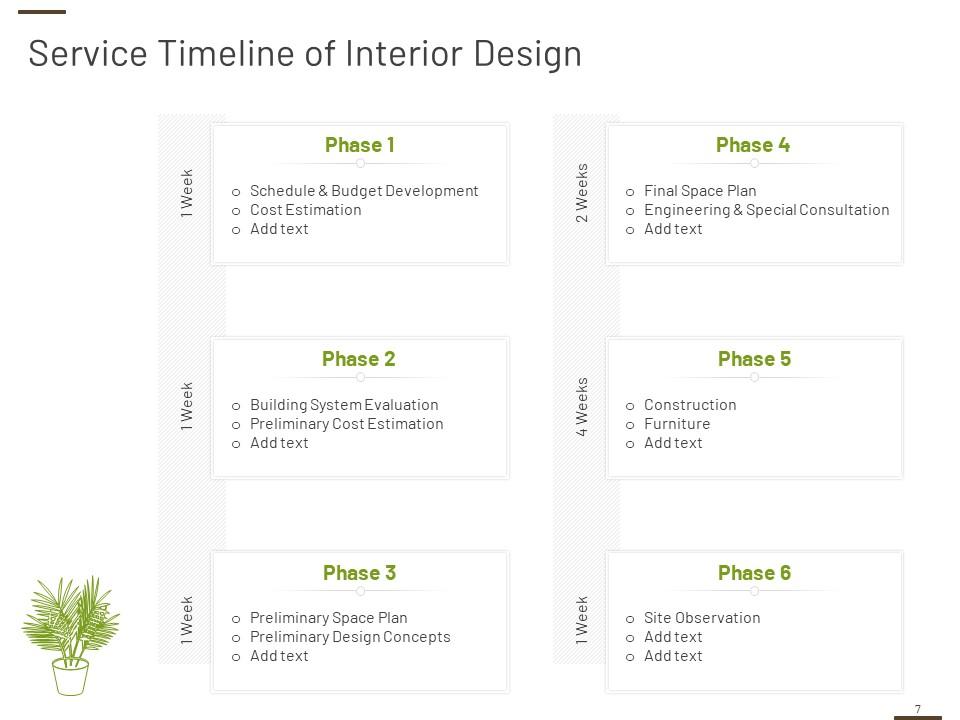
This slide is intended to walk clients through the comprehensive steps of a design journey. This illustrates the step-by-step process that begins when a client contacts the interior designer and ends when the job is completed. It is currently an attempt to divide the process into six key stages, each with a brief description of the actions within it. Starting with first contact and progressing through complete onboarding meetings, it will effortlessly lead to the presentation of a tailored proposal. The photos below provide additional visual clues to the collaborative working environment, which improves the story of the client-centric approach through clear, accurate communication and delivery.
Incorporate our exquisite company profile slides into every aspect of your design firm's narrative to make it more sophisticated. Simply visit SlideTeam.net to tell your company's narrative in an attractive and precise manner!
Template 6: Mission Statement

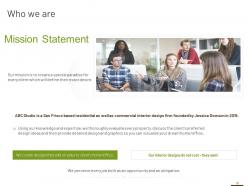
This presentation slide captures the core of a design firm's identity and beliefs. It starts with the assertion that the company aims to develop personalized spaces based on the desires of a client. It starts by explaining how the firm received its name, emphasizing the local aspect. This slide uses text and images to describe the step-by-step process by which the firm evaluates properties and then implements design concepts. This would increase profitability for well-thought-out designs, establishing the idea that good design is an investment. It is ideal for businesses wanting to differentiate their services in the marketplace.
Template 7: Agreement
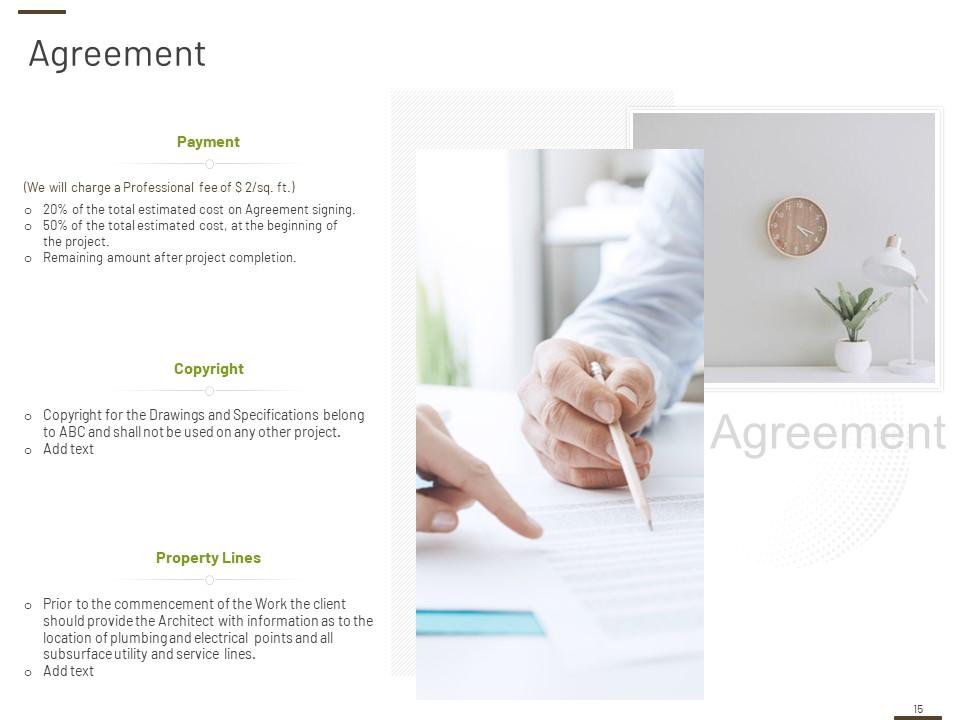
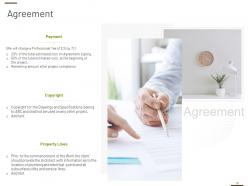
This PPT illustrates the essential components of a professional service agreement in the design industry. It provides the order and arrangement of payment conditions, detailing percentages required at stages of the project, from signing the contract until completion. These slides are educational and a must-have for establishing transparent and legally viable company agreements. They are cleanly laid up and have places for specifics. This ensures that the quantity of financial and collaborative investment required and the type of function or influence earned in the relationship are clearly defined.
Template 8: Sign Off
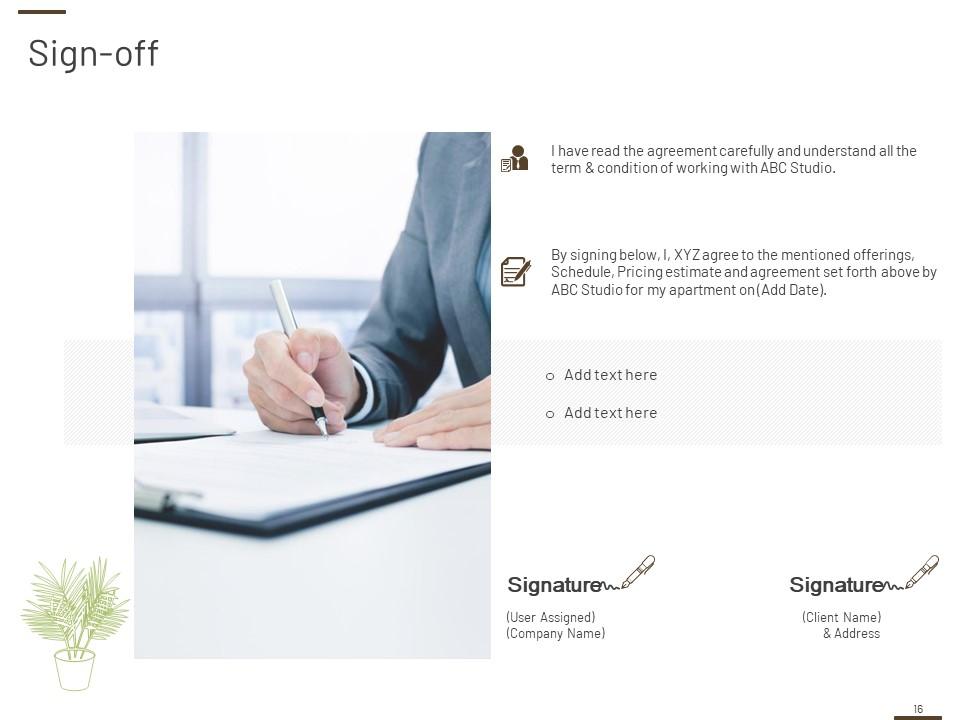
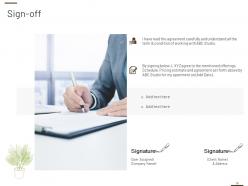
This slide illustrates a clean and professional manner to finish a service agreement. Explicit remarks that ask the client to affirm their knowledge of the agreement while leaving space for signatures. The visual style is loaded with light, subtle, ornamental elements that add a personal touch. It is the final checkpoint in the entire agreement process, ensuring transparency and mutual consent before any project begins.
Template 9: Your Investment for Interior Design Services
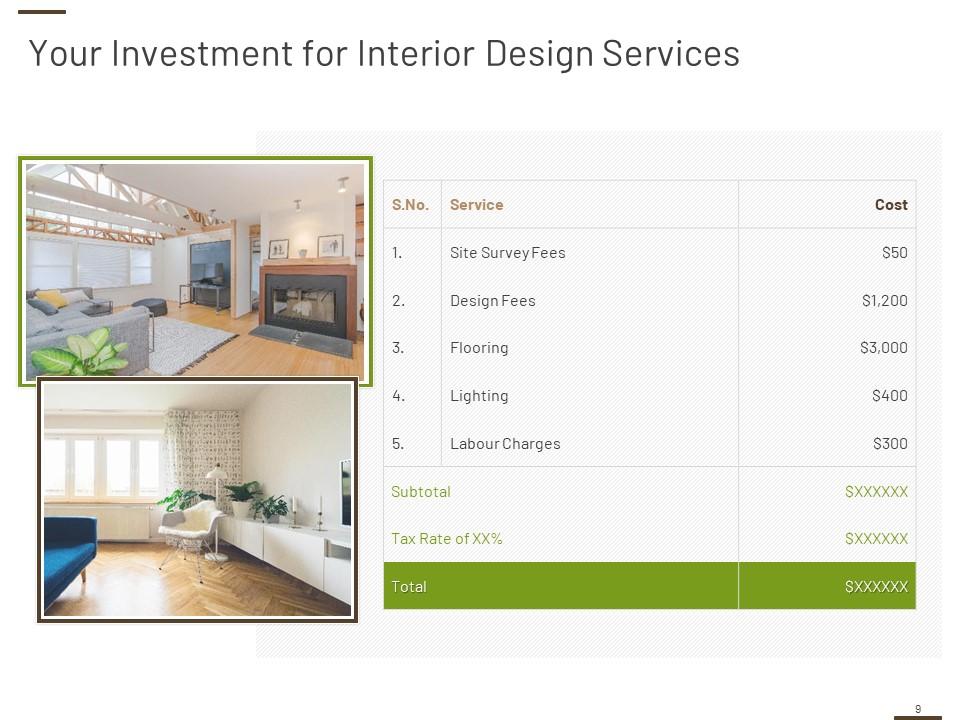
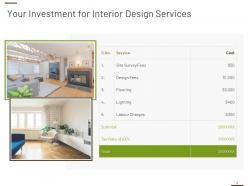
This PowerPoint covers the financial elements of delivering interior design services to clients in a simple manner. It features a properly laid-out table that lists each service and pricing, from preliminary site surveys to finishing lighting touches. The design is simple and easy to understand, with a space for the subtotal, applied tax, and total investment. The slides in this work, supported by high-quality photos, successfully bridge the cost-value gap, giving the consumer 100% of the most comprehensive information necessary to make an informed decision. It is invaluable to any designer who wants to deliver to the client a very clear, precise, and concise document outlining the costs involved in the offering, demonstrating both professionalism and detailed attention as part of good business practice.
Crafting Excellence: The Brushstroke in Your Design Proposal Journey
An interior design proposal template must address the capturing of the tale, incorporating creativity and the vision required to bring a concept to life via meticulous preparation. It's a complete suite created for creatives that transform empty spaces into stories—functionality braided with aesthetic appeal. The templates supplied here are more than just a set number of slides. They describe the design philosophy, which emphasizes cooperation, clarity, and precision.
Each of these templates, from the cover letter that sets the tone for the client relationship to the precise cost breakdown, represents a stage in the dance of client engagement, project management, and final execution. They will undoubtedly ensure that your presentation is as well-planned and executed as the places you create, leaving the same powerful impact on your audience; in a market where precision and design matter, the Interior Design Proposal Template is the ambassador for your brand's success.
It's a must-have for professionals who sell an experience rather than a service. Whether it's the first point of contact or the final approval on a job well done, these templates will help you articulate your value and vision for the work elegantly and compellingly. So, from concept to completion, let these templates drive your client journey in the pursuit of excellence, making it as simple and beautiful as the locations you design.
PS Use our Interior Design Process Template to make your concept a reality. Click SlideTeam.net to begin building locations that make a difference!
Interior design proposal template powerpoint presentation slides with all 25 slides:
Use our Interior Design Proposal Template Powerpoint Presentation Slides to effectively help you save your valuable time. They are readymade to fit into any presentation structure.
FAQs for Interior design proposal template
So you'll need project overview, design concept with mood boards, timeline with milestones, and budget breakdown. The budget section is make-or-break territory - be crazy transparent about what costs what and where extra fees kick in. Oh, and definitely add an "about us" part with your past work. Clients eat that stuff up. Don't skip the boring stuff either: revision limits and what happens when they inevitably want to change everything halfway through. Actually, that scope creep clause might save your sanity later.
Start by really digging into how they actually live - favorite colors, textures they're obsessed with, daily routines. I'm always creeping on their Pinterest too lol, it's honestly the best way to get inside their head. When you write the proposal, use their exact words back at them. Don't just throw in random pretty room photos either. Pick visuals that actually match their vibe. Every material and layout choice should connect to something specific they told you they wanted. Oh and honestly? Skip the generic designer speak - they'll smell that BS from a mile away. Make it clear you actually get their style instead of just pushing whatever's trendy.
Residential stuff is all about the feels - throw in mood boards with cozy textures, family layouts, maybe some clever storage ideas. Commercial projects? Totally different beast. You need floor plans that actually work, brand stuff, how people move through the space, plus all that boring ADA compliance junk. Here's the thing - homeowners want to know how it'll *feel* to live there. Business clients just want ROI and efficiency numbers. So residential proposals should have lighting for ambiance, but commercial ones focus on productivity and brand experience. Honestly, it just comes down to this: are they sleeping there or trying to make bank? Design accordingly.
Oh definitely use visuals! Most clients can't picture what you're describing otherwise. I usually do mood boards first to nail the overall vibe, then throw in some sketches or renderings for layouts. Honestly, it's the difference between looking like a pro vs. just handing over a boring text document. Try for 2-3 visual pieces per room - that's usually enough without going overboard. Colors and textures especially need to be shown, not just described. Trust me, they'll get way more excited about your ideas when they can actually see them.
Dude, you HAVE to get that budget sorted upfront. Break everything down - materials, labor, furniture, plus those random costs that always hit you later (trust me on this one). Honestly, clients get way too caught up in those Pinterest fever dreams without thinking about what stuff actually costs. Give them ranges instead of exact numbers so you're not stuck later. The whole point is avoiding those super awkward money conversations down the road. Nobody wants to explain why their dream kitchen costs more than a Tesla. Show them the breakdown from day one and you'll save yourself so much drama.
Okay so first thing - sit down with them and really hash out what they're expecting timeline-wise. During your proposal meeting, walk through every single phase instead of just handing over a document. Ask when they'll actually be available for decisions and site visits because honestly, clients ghosting you for two weeks is usually what kills schedules. I always pad in extra time for revisions and random stuff that comes up. Then explain what might slow things down - like if they want custom pieces or we're waiting on city permits. Oh and definitely get them to sign off on the timeline in writing! Trust me on that one.
Definitely add a risk management section - trust me on this one. Anticipate the usual suspects: late deliveries, budget creep, scope changes. For each problem, write down your backup plan. Maybe that's having 2-3 vendors lined up or padding your budget by 10%. Communication is huge too - spell out how fast you'll loop clients in when things go wrong and what solutions you'll bring. I've seen too many projects crash because nobody planned for the inevitable hiccups. Clients actually love seeing this stuff upfront because it shows you're not winging it.
Make a separate sustainability section in your proposal - honestly, clients eat this stuff up these days. Break down your eco choices: reclaimed wood, low-VOC paints, recycled furniture. Don't just say "eco-friendly" everywhere though, explain WHY each thing matters. LED lighting saves them money long-term, locally-sourced stuff cuts shipping emissions. Oh, and definitely mention any certifications you're going for like LEED. Create a separate budget line for the sustainable upgrades so they can actually see what they're investing in. The cost breakdown really helps sell it.
Look, start with the basics - scope, payment schedule, deadlines. The liability stuff is where people get burned though, so definitely spell out what happens if an install goes sideways or they hate everything. Make sure you nail down who owns the design ideas and how change orders work. Timeline-wise, figure out permits and contractor stuff upfront because that always gets messy. Dispute resolution is boring but necessary. I'd probably throw in a cancellation clause too - clients get cold feet all the time. Get a lawyer to look it over first though, seriously.
Testimonials and case studies are your secret weapon honestly. They show you've actually done the work, not just talked about it. Before/after photos with happy client quotes? Way more powerful than just saying you're good at design. Pick 2-3 examples that match what your prospect wants - similar style or project size works best. Always ask permission first though (learned that one the hard way). It shifts the whole conversation from "maybe she can do this" to "oh wow, look what she already did for someone just like me." Pure magic.
White space is your best friend - break everything up with clear headers so people don't get overwhelmed. Oh, and put images everywhere, not just dumped at the end. Seriously, clients buy with their eyes first. Skip those curly fonts nobody can read and stick to your brand colors throughout. Bullet points work great for timelines and project scope since people love to scan. One thing I learned the hard way - always end with a "what's next" section. Otherwise you'll get crickets and have to chase them down later.
Don't just stick your design philosophy in one random section - weave it throughout everything. Start with what actually drives your decisions (sustainability? making spaces feel like home?). Then show it in action when you're explaining why you picked certain materials or layouts. I always throw in a quick before/after example because honestly, visuals do the heavy lifting. Skip the fancy design jargon though. Clients see right through that corporate-speak nonsense. Make sure everything - your words, images, color choices - all backs up whatever core philosophy you led with.
Okay so the two big ones that'll kill your proposals? Being super vague about what you're actually doing, and not breaking down costs clearly. Clients hate guessing what they're paying for. Keep it short too - I learned this the hard way after sending someone like 12 pages about a living room redesign (oops). Show them work that actually matches their vibe instead of random pretty pictures. Oh, and timeline with milestones is huge. Be honest upfront about what costs extra - paint samples, site visits, whatever. Trust me, setting boundaries early saves you so much drama later when they want to add "just one more thing."
Dude, digital presentations are a game changer for interior design pitches. Clients get way more excited when they can actually walk through 3D spaces on your tablet instead of staring at flat sketches. I've seen people's faces just light up during those virtual walkthroughs. You can do before/after animations, change colors on the spot if they hate your first choice, switch up layouts instantly. It's honestly pretty cool how interactive you can make it. SketchUp is solid for beginners, or even Canva has decent templates - though I always forget Canva exists until someone mentions it. Don't overthink the tech part starting out.
Definitely include a communication plan - maybe weekly check-ins while you're planning, then bi-weekly once things get rolling. Spell out your preferred contact methods too (email, calls, whatever works). Clients freak out when they don't hear from you, honestly it's like the
-
Great experience, I would definitely use your services further.
-
Best Representation of topics, really appreciable.
-
Use of different colors is good. It's simple and attractive.