

Interior Design Consultation Proposal Powerpoint Presentation Slides





Try Before you Buy Download Free Sample Product
 Impress Your
 Audience
 100%
100% Editable
 Save Hours
 of Time


Explain in detail about the services your company offers and gain the confidence of your customer with the help of our topic-specific Interior Design Consultation Proposal PowerPoint Presentation Slides. By using this visually attractive interior design proposal PPT layout, you can determine the entire cost of the services that are documented by your company. You can show how your offered services can benefit your client and grab their attention. Highlight the important details of your business that hold the interest of your client. Talk about the type of services you provide, overall experience, the total number of satisfied clients, and many other details. Showcase the expert team of interior designers that work collaboratively and finish the task. This information will create a positive impression on the client that may lead to the acceptance of your proposal. Elaborate on the specific project given by the client that shows you have understood their needs or requirements completely. With the aid of this professionally designed interior design consultation proposal presentation template, you can mention the investment for interior design consultation services such as site survey fees, design fees, flooring, lighting, and labor charges. Included here is the table of content that consists of project context, services offered, service timeline, sample design, past project photos, client testimonials, agreement, etc. Give an overview of the advanced services you provide for new buildings, renovate, and office design that includes flooring, kitchen & bath design, lighting design & features, fireplace & mantel design, appliance & plumbing fixture selection, space planning & elevation, artwork, custom furniture, etc. Employ the professionally designed interior design proposal PowerPoint graphic and discuss your work structure that includes the connection, onboard meeting, proposal, design, presentation, and execution. Leave a lasting impression on your clients by downloading our ready-to-use interior architecture consultation proposal PPT presentation theme.
People who downloaded this PowerPoint presentation also viewed the following :
Content of this Powerpoint Presentation
Slide 1: This slide introduces Interior Design Consultation Proposal. State Client name, User name, Company name and begin.
Slide 2: This slide displays Cover Letter for Interior Design Consultation.
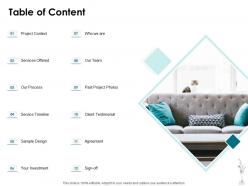
Slide 3: This slide displays Table of Content of the presentation.
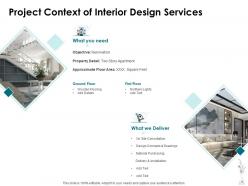
Slide 4: This slide describes Project Context of Interior Design Services.
Slide 5: This slide depicts Interior Design Services we Offered.
Slide 6: This slide showcases Our Interior Design Process.
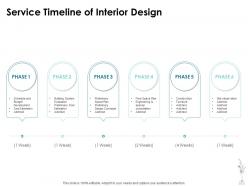
Slide 7: This slide shows Service Timeline of Interior Design.
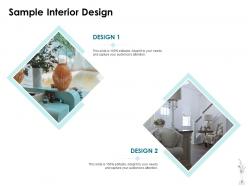
Slide 8: This slide describes Sample Interior Design.
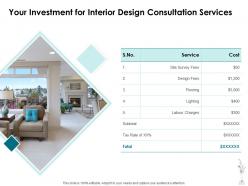
Slide 9: This slide represents Your Investment for Interior Design Consultation Services.
Slide 10: This slide showcases Who we are
Slide 11: This is Our Team slide with names and designations.
Slide 12: This is Our Team slide with names and designations.
Slide 13: This slide showcases Previous Project Photos.
Slide 14: This slide displays Client Testimonials.
Slide 15: This slide shows the Agreement.
Slide 16: This is Sign-off slide.
Slide 17: This is Contact Us slide with Address, Contact number and Email address.
Slide 18: This slide is titled as Additional Slides for moving forward.
Slide 19: This is About Us slide to showcase Company specifications.
Slide 20: This is Our Mission slide with Goal, Mission and Vision.
Slide 21: This is 30 60 90 Days Plan slide.
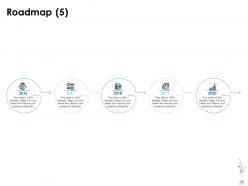
Slide 22: This slide displays Roadmap process.
Slide 23: This slide depicts Roadmap process.
Slide 24: This slide showcases Roadmap.
Slide 25: This slide depicts Timeline process.
Interior Design Consultation Proposal Powerpoint Presentation Slides with all 25 slides:
Encourage charity with our Interior Design Consultation Proposal Powerpoint Presentation Slides. Folks will be filled with compassion.










FAQs for Interior Design Consultation Proposal
Start with scope - which rooms, what changes, timeline stuff. Break down all costs super clearly because nobody wants surprise bills halfway through! Visuals are seriously everything in this game, so throw in mood boards or sketches so they actually get your vision. Floor plans if you're moving walls or whatever. I'd add material samples too when you can. Oh, and definitely spell out how decisions get made and what the next steps are. Being thorough now saves you from those awkward conversations later when everything goes sideways.
Okay so basically you gotta make them *see* it, not just describe it. Start with a mood board that nails the vibe. Floor plans are huge - show exactly where furniture goes so they can picture themselves there. Write like a little walkthrough story: "you walk in and see..." that kind of thing. Material samples and color swatches help tons too. Oh and definitely grab 2-3 photos of similar projects you've done before. Honestly the visual stuff does like 90% of the work for you. The whole point is making them feel like they're already living there before you touch anything.
Honestly, client feedback is everything - it's your entire roadmap. Get their input on style, budget, how they actually use the space. I made this mistake once where I designed this beautiful open kitchen and the family absolutely hated cooking smells everywhere! Their feedback stops you from screwing up like that. You're designing for real people, not Pinterest boards. Build in several feedback rounds from the start. Trust me, it beats doing endless revisions later when they're like "actually, we hate this whole thing."
Honestly, mood boards are everything in interior design. Your concept could be amazing, but if clients can't picture it? You're screwed. I always tell people - spend the extra time making killer visuals upfront. It's so much easier than doing a million revisions later because they "didn't get it." These boards show how colors and textures actually work together instead of leaving people guessing. Plus they keep you both on the same page style-wise throughout the whole thing. Trust me, it's the difference between a smooth project and total chaos.
Honestly, the worst thing you can do is be vague about what you're actually delivering and when. Clients will lose their minds if you spring surprises on them later. Never undercut your prices just to get the gig - I learned this the hard way and you'll end up hating the project. Skip the fancy design speak too, nobody wants to decode what you mean. Be super specific about deliverables and revision rounds upfront. That's where everything usually falls apart. Focus on solving their actual problem instead of showing off your style. And always end with what happens next!
Break down everything by category - design fees, furniture, materials, labor, all of it. Be super specific about markup percentages too. I always throw in a line for "unexpected stuff" because honestly, something always pops up that nobody saw coming. Show unit costs when you can, like per square foot or hourly rates. Timeline's crucial - spell out when payments are due and what triggers each one. The whole point is transparency so your client knows where their money's going. Trust me, it saves you from those weird conversations later where they're questioning every charge.
Dude, you've gotta totally switch up your approach depending on who you're talking to. Corporate clients? Hit them with ROI and efficiency numbers first - they eat that stuff up. But residential clients are way more emotional - they wanna know how amazing they'll feel in their new space. High-end people expect you to talk about luxury materials and exclusive details, while budget clients need those cost breakdowns spelled out clearly. I always creep on their previous work or check out their current style beforehand (sounds weird but it works). Then just copy how they communicate in your proposal. It's honestly like switching between different personalities sometimes!
Hey! So for the sustainability stuff - definitely call out recycled materials and things like bamboo or reclaimed wood in your specs. Energy-efficient everything too, obviously. Honestly, vintage pieces are my favorite recommendation because they're eco-friendly AND way more interesting than new stuff. Focus on quality that'll actually last instead of cheap things they'll replace in a few years. Oh, and local sourcing helps with the whole carbon footprint thing. I'd make a whole section about it - clients love seeing those long-term savings numbers.
Okay so liability stuff is huge - cover that first along with payment terms and IP rights. Project scope and timeline need to be crystal clear, plus what happens when they inevitably want changes halfway through (spoiler: they always do). Throw in clauses about material delays and permit responsibilities. Who's on the hook if installation goes sideways? That needs to be spelled out too. Design ownership is another big one - can they mess with your work later? Oh and don't skip termination clauses or how you'll handle disputes. Honestly, just pay a lawyer to review your template once. Worth every penny.
Dude, try switching to 3D tools like SketchUp or Enscape instead of boring floor plans. Clients go crazy for virtual walkthroughs - they can actually "walk" through their future space which is honestly pretty cool. VR headsets are next level if you can swing it. AR apps work great too since people can see how furniture looks in their actual room with just a tablet. Oh, and interactive mood boards during presentations? Game changer. Clients can play around with materials in real-time. I'd start with one 3D program and see how it goes.
Pick one main theme and stick with it throughout everything - that's honestly the biggest game-changer. Your design statement should be upfront, then keep referencing that same story when you talk about materials, colors, all of it. Mood boards are clutch for this because they show the vibe visually. Don't mix your language though - if you call something "rustic" once, don't switch to "farmhouse" later. Show how the spaces connect to each other conceptually. Your timeline needs to reflect this vision too so clients can actually see how it's all building toward something cohesive.
So here's what I do - break everything into chunks with actual dates, like "Week 1-2: space planning, Week 3-4: picking materials." Always build in extra time because trust me, clients will 100% change their minds. Set up approval checkpoints so when they drag their feet, it's obvious the delay isn't your fault. Oh, and be super upfront about stuff that takes forever - custom orders, permits, all that fun stuff. Honestly the biggest thing is making dependencies crystal clear. They don't sign off on sketches by Friday? Everything gets pushed back a week, period.
Okay so here's what I do - put testimonials right next to your project examples, not buried somewhere random. Pick quotes that actually say something useful like "boosted our home value by 15%" instead of boring "great to work with" fluff. For case studies, tell the story: what was broken, how you fixed it, what happened after. I grab 2-3 that match whatever problem this client's dealing with. Honestly, most people just slap testimonials at the end where they get ignored. Sprinkle them throughout instead so it feels like part of the conversation, not some desperate sales move.
Keep a revision log - seriously, just a simple spreadsheet or doc works fine. Track dates, changes, and why stuff got updated. Version numbers in file names are clutch too (like "SmithHome_V2.1_kitchen-updates"). I always screenshot or PDF the major versions because clients will 100% want to go back to some random thing from weeks ago. Note their feedback that triggered each round of changes. Trust me, this'll save you from that "wait which version?" nightmare that happens on literally every project. It's boring but you'll thank yourself later when things get messy.
Honestly, good visuals are like 80% of it. Before/after mockups, mood boards with real textures, 3D renderings if you can swing it. Don't dump paragraphs on them - clients' eyes glaze over instantly. I learned that one the hard way lol. Build a story from problem to solution. Stick with the same fonts and your brand colors throughout. Oh, and bring stuff they can actually touch - fabric samples, materials, whatever. Interactive beats staring at screens every time. Practice your timing too so you're not scrambling through the best parts at the end because you ran long.
No Reviews