


Successful Knowledge Transfer Plan Roadmap




Try Before you Buy Download Free Sample Product
 Impress Your
 Audience
 100%
100% Editable
 Save Hours
 of Time


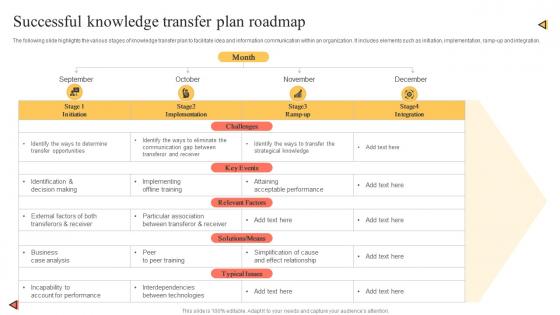
The following slide highlights the various stages of knowledge transfer plan to facilitate idea and information communication within an organization. It includes elements such as initiation, implementation, ramp-up and integration.
People who downloaded this PowerPoint presentation also viewed the following :
Successful Knowledge Transfer Plan Roadmap with all 6 slides:
Use our Successful Knowledge Transfer Plan Roadmap to effectively help you save your valuable time. They are readymade to fit into any presentation structure.





FAQs for Successful Knowledge
Honestly, job shadowing is where it's at - way better than drowning in documentation nobody reads anyway. You could set up mentoring pairs or cross-training programs. Wikis and process docs work if people actually use them (big if). Communities of practice are solid too, just people casually sharing what they know. Lunch-and-learns are pretty low-effort to start. Don't forget exit interviews when someone's leaving - that's knowledge walking out the door otherwise. Oh, and storytelling sessions sound cheesy but they're surprisingly effective. Just pick whatever won't make your team roll their eyes and go from there.
Honestly, tech just makes sharing knowledge between teams so much smoother. Slack or Teams work great for quick back-and-forth discussions. For documentation, shared wikis are solid. Screen recording is where it's at though - showing someone a process step-by-step beats explaining it any day. Cloud storage keeps everyone on the same page with updated files, and project management tools help organize everything by topic. Oh, and video calls obviously help when things get complicated. But here's the thing - pick tools your team will actually stick with. Fancy platforms don't mean anything if nobody uses them consistently.
Honestly, the usual suspects are teams that don't talk to each other and zero documentation anywhere. People hoard info thinking it makes them irreplaceable - which is so annoying but super common. Everyone's crazy busy too, so knowledge sharing feels like one more thing on the pile. Communication styles clash constantly. Your tech probably sucks for collaboration. Oh, and some people genuinely don't get why they should teach others their stuff. If your company doesn't actually reward helping teammates, that makes it worse. Pick whichever problem is killing you most and focus there first. Don't try fixing everything simultaneously - you'll just burn out.
Honestly, it all starts with leadership walking the walk. When execs actually ask questions and admit they don't know something, everyone else feels safer doing it too. The problem is so many places reward people for hoarding info instead of sharing it - super toxic if you ask me. You can push back by celebrating teammates who help others learn and maybe even working sharing into performance reviews. Create actual time for it though. People won't prioritize knowledge transfer if their workload doesn't allow for it. Safe spaces matter too, but time is everything.
Okay so you definitely want to mix hard numbers with the softer stuff. Track things like how long new people take to get up to speed, error rates, productivity - you know, the obvious metrics. But honestly the feedback surveys and confidence scores tell you just as much about what's actually working. Oh and seriously - measure how much knowledge you're grabbing from people before they quit. That's been a lifesaver for us multiple times. Don't go crazy trying to track everything though. Pick like 2-3 things that actually matter for what you're trying to do. Also throw in some retention tests if you can swing it.
Yeah, turnover is brutal because people basically take everything they know with them when they go. All that "how we actually do things" knowledge just vanishes - and let's be honest, most of it never gets written down anyway. You end up with new folks who have no clue about your systems or clients, plus all those random fixes that somehow keep the place running. My advice? Start documenting stuff while your experienced people are still around. Set up some kind of handoff process too. Otherwise you're just watching years of knowledge walk out the door, which sucks.
Dude, stories are like magic for getting people to actually remember stuff. Your brain just processes narratives differently than boring bullet points - creates real connections that stick around. I'd way rather hear about how Sarah fixed that database crash than read some dry manual, you know? Plus when you tell it like "here's what went wrong when..." people get the cause-and-effect way better. Honestly, I've seen teams go from glazed-over eyes to actually engaged just by switching from documentation dumps to real stories. Next time you're sharing knowledge, frame it as what happened rather than just listing steps.
Honestly, mentorship programs are super effective for getting knowledge passed down. You get the official training stuff, but also all those "here's what actually happens behind the scenes" conversations that make the real difference. What I love is how it works both ways - older employees pick up fresh ideas and new tech from their mentees too. The trick though? You need actual structure with goals and regular meetups. Otherwise it just turns into those awkward networking coffees that nobody remembers a week later. But when it's done right, people really absorb both the hard skills and company culture way faster than they would on their own.
Honestly, just give people reasons to randomly run into each other. Coffee chats work great, or those lunch-and-learn things where someone talks about their project while everyone eats. We started doing "brown bag" sessions at my last job - super casual but people actually showed up. If you're in an office, make sure there's spots where people naturally hang out. Oh, and Slack channels for random questions are clutch. Don't overthink it though. Maybe start with like a 15-minute weekly "what'd you learn" thing? The trick is making it feel natural, not like some corporate team-building nightmare.
You've gotta break down those silos that trap all the good knowledge in separate teams. When departments actually work together, people start sharing their expertise and war stories naturally. Different perspectives? You'll get exposed to approaches you never would've thought of - honestly, it's like free training from coworkers you barely know exist. Building those connections means you know exactly who to text when you need help with something random later. Try starting with joint projects or even grabbing coffee with people from other departments. Gets the knowledge flowing way faster than any formal process.
Dude, tacit knowledge is tricky but doable. Start by shadowing your best people - watch how they actually make decisions, not just what they decide. Video them explaining their process (way more effective than docs that sit around collecting dust). Document the "why" behind stuff - context, assumptions, what went wrong and why. Regular knowledge-sharing sessions help too, but make them conversational. People need to ask questions and dig into the nuances. Oh, and storytelling works better than bullet points - our brains are wired for stories anyway. Create multiple touchpoints over time since this isn't one-and-done learning.
Mix teams up more often - that's where the magic happens. Get departments talking through regular show-and-tells about their wins AND screwups (honestly the failures teach you more anyway). Rotate people around so they pick up different perspectives. Find your most creative folks and have them share what actually works, not just the theory. Mentorship programs help too. Oh, and don't make it feel like mandatory corporate BS - keep it organic. Maybe start with informal lunch sessions or something. The goal is getting ideas to bounce around naturally between groups who normally wouldn't collaborate.
So basically, knowledge transfer is what keeps your org from being dumb. When people share what they know, everyone gets smarter together - it's like compound interest but for brains. The worst part? Losing all that good stuff when someone quits (ugh, been there). Without decent processes, you're constantly reinventing the wheel. But get it right and you're building up this bank of institutional memory that helps people make faster, better calls. Honestly, I'd start documenting all those random "oh wait, here's how we actually do this" moments now before you forget them.
Honestly, social media completely changes how we share knowledge at work. Instead of those boring knowledge bases everyone ignores, you get real conversations happening. People post quick updates on LinkedIn or Slack and actually get responses - it's wild how much better engagement is. The trick is building little communities around specific projects or topics. I'd say start with whatever platform your team's already on (why reinvent the wheel?) and just begin sharing small insights regularly. Works way better than formal documentation, trust me.
Honestly, IP stuff is the biggest headache here. Double-check that you're not grabbing anything that technically belongs to their old companies. Confidentiality agreements can bite you too - some people literally can't share certain knowledge even if they want to. Non-competes are annoying but everywhere these days. The ethics part matters more than you'd think. Be upfront about documenting their expertise and give credit where it's due. Nobody wants to feel like you're just mining their brain without acknowledgment. Setting clear policies beforehand saves you drama later about what's actually shareable.
-
It's always a delight to see new templates from you! I am extremely pleased with the fact that they are easy to modify and fit any presentation layout in seconds!
-
You know what? I'm so glad I opted for this PPT design. It has been a total game-changer for me and my presentations. Thank you!