New Software Project Implementation Plan
Try Before you Buy Download Free Sample Product
Audience
Editable
of Time
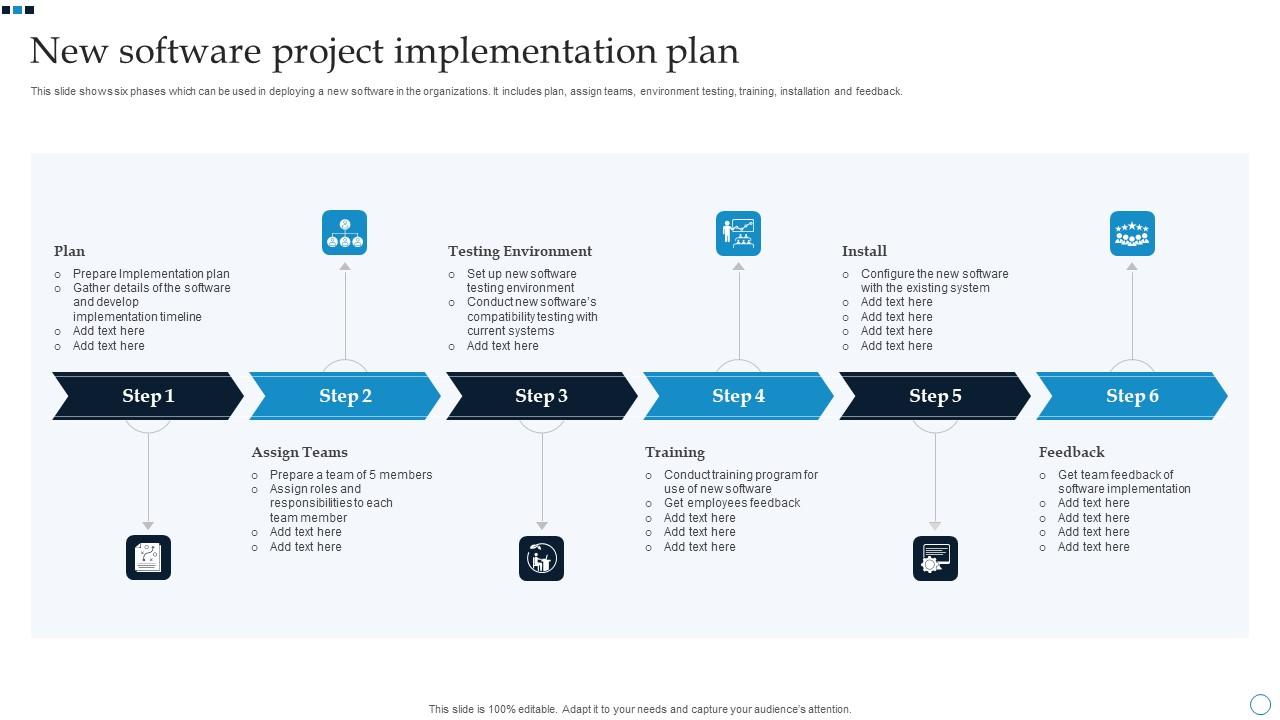
This slide shows six phases which can be used in deploying a new software in the organizations. It includes plan, assign teams, environment testing, training, installation and feedback.
People who downloaded this PowerPoint presentation also viewed the following :
New Software Project Implementation Plan with all 6 slides:
Use our New Software Project Implementation Plan to effectively help you save your valuable time. They are readymade to fit into any presentation structure.
FAQs for New Software
Honestly, start with requirements - figure out exactly what you're building before you write a single line of code. Planning your architecture comes next, then setting up your dev environment. Code in small pieces so you don't go insane. Testing is absolutely critical (I learned this the hard way last month when everything broke). Deploy to staging first, then production. Don't forget documentation and training users afterward. Oh, and break everything into milestones - stakeholders love seeing progress and you'll catch problems way earlier.
Map out where things could go wrong first - tech issues, resource problems, tight deadlines, users not adopting it. I make a quick risk matrix (nothing crazy, just impact vs likelihood) to figure out what to tackle first. Build your safety nets: test risky tech early, pad your timelines on critical stuff, keep stakeholders in the loop, have rollback plans ready. Honestly, your team will catch risks you totally missed, so get them involved. Document it all but keep it simple - nobody reads those massive binders anyway. You want something people will actually use when stuff hits the fan.
Oh man, user training can totally make or break your whole project. I've watched so many rollouts crash and burn because they treated training like some box to check at the end. Your team needs to get the "why" behind changes, not just button-clicking instructions. Start way earlier than you think - like, months before go-live. Make it specific to what each person actually does day-to-day. And don't just do one big session then disappear! People forget stuff, especially when they're stressed about change. Build in ongoing support or you'll get creative workarounds that'll drive you crazy later.
Okay so first things first - figure out what you're actually trying to fix. Like are you drowning in manual tasks? Customers complaining about slow responses? Write down your real problems, then see which software actually solves those specific issues. I made this mistake once where I got totally distracted by some cool dashboard feature we never even touched. Create a simple scoring system for must-haves vs nice-to-haves. Oh and definitely get input from whoever's gonna be stuck using this thing every day - they'll spot problems you won't think of.
Dude, get your users involved from the start - they need to feel like partners, not like you're doing something TO them. Find a few champions who'll sell it to their coworkers for you. Most resistance is just people being scared of change, so be super transparent about what's happening and when. Training has to actually matter - none of that generic demo BS. Listen when they complain and fix stuff fast. Even tiny improvements show you care. Oh, and make a big deal about early wins so everyone sees it's actually helping them. People love seeing success stories, honestly.
Look, software projects are chaos without some kind of framework - trust me on this. Methodologies give you actual structure so things don't completely fall apart. You'll avoid those awkward meetings where everyone's like "wait, what exactly are we building?" Plus stakeholders get better updates and you can spot problems early. Agile works great if your team likes iterating, or go traditional with Waterfall if that's more your speed. Honestly, pick whatever fits your vibe but then actually follow it. Don't switch halfway through because someone read a blog post.
Track the obvious tech stuff first - uptime, response times, error rates. Are people actually using it though? That's huge. Business metrics matter more tbh - cost savings, productivity, whatever you promised upfront. Here's the thing everyone screws up: get your "before" data NOW or you'll hate yourself later trying to prove ROI. User satisfaction surveys are clutch too because perfect tech that everyone despises is basically useless. Oh, and set up dashboards from the start. Trust me, scrambling for metrics six months in is the worst.
Do it in chunks, not all at once - trust me on this. Map out your current data structure first, then run validation scripts to catch formatting problems early. I had a nightmare migration last year that taught me this lesson! Always create backups at each step so you can roll back when things go sideways. Oh, and test everything in staging with real data samples first - you'll catch weird edge cases. Honestly, just assume it'll take way longer than you think. I always add 50% buffer time and still end up stressed.
Look, stakeholders can totally make or break your timeline. Get them involved early and you'll spot problems before they blow up your budget. But honestly? Too many people giving input just creates chaos and endless revisions. I learned this the hard way on my last project - we had like 8 people weighing in and nothing ever got decided. Set clear boundaries from day one about who actually makes decisions and when feedback windows slam shut. Find your key players, schedule regular check-ins, and don't budge on those deadlines. Trust me on this one.
Keep customizations super minimal and stick to what the vendor recommends - seriously, this is huge. I always document changes now because otherwise you'll forget what you tweaked. Use their built-in customization tools instead of messing with core files directly. Trust me, I got burned bad when an update nuked our custom modules! Oh and definitely test updates in staging first. Have a rollback plan ready too. When upgrade time hits, you don't want to be panicking about what'll break. Been there, it sucks.
Scope creep will absolutely destroy your timeline - trust me on that one. Also, don't skimp on user training because people hate change. Data migration? Yeah, that's gonna take way longer than anyone tells you upfront. I've seen projects tank because nobody kept stakeholders updated, so send those weekly emails even when it feels annoying. Spend real time on requirements gathering too. Changing direction halfway through is brutal. Oh and if executives aren't backing you from the start, you're kinda screwed. Build in extra time for literally everything.
Dude, vendor support can totally make or break your whole project. You'll hit weird issues that only their team has dealt with before. I've watched implementations get stuck for months just because the vendor was being slow or unhelpful - super frustrating. Response time during sales usually tells you everything you need to know about what's coming later. Good ones give you dedicated managers, proper training, quick answers to tech questions. Definitely ask for references before signing anything. Oh and test how fast they respond during the sales process too.
Honestly, change management is just about not having everyone hate the new software from day one. First thing - talk to people early about what's happening and why you're doing it. Training matters way more than you'd think because nobody wants to look stupid fumbling around with new tools. Get some allies on your side who can help convince the doubters (there's always a few). Communication should happen constantly, not just once in some all-hands meeting. Give people actual time to adjust instead of springing it on them. Oh, and definitely involve key people in planning - they'll resist way less if they feel like they had input.
Honestly, you gotta build in regular check-ins throughout your project - like after every sprint or big milestone. Document the technical stuff AND the process headaches as they happen. Post-mortems are clutch even when things go smoothly (there's always something). I get it, feels like busy work when you're deep in code. But making it systematic beats trying to remember lessons six months down the road. We started just throwing insights into a shared Google doc whenever something clicked or broke. Way easier than formal meetings about it later.
Set up check-ins at 30, 60, and 90 days after launch - seriously, put them in your calendar right now or you'll totally forget. Most teams bail on this step because they're already chasing the next shiny project, which is dumb. Track actual user adoption and performance numbers, not just what the higher-ups think. Get feedback from real users too. Oh, and when you do upgrades, do them when traffic's light and have a backup plan ready. This whole evaluation thing isn't a one-and-done deal - treat it like an ongoing thing.
-
“I always have a wonderful experience with SlideTeam. It's my ""go to"" when I need a template.”
-
SlideTeam is my one-stop solution for all the presentation needs. Their templates have beautiful designs that are worth every penny!