

Supplier compliance kpi dashboards key strategies to build an effective supplier relationship




Try Before you Buy Download Free Sample Product
 Impress Your
Audience
 100%
Editable
 Save Hours
of Time


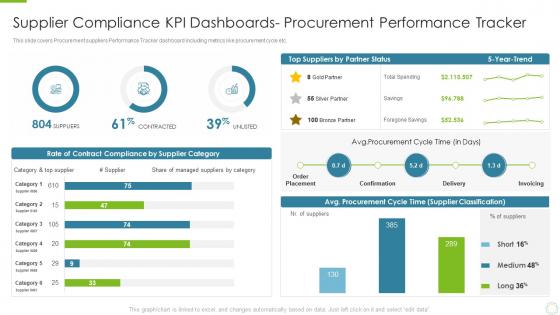
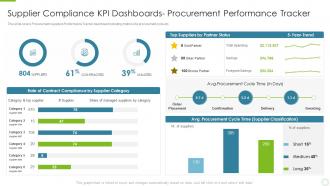
This slide covers Procurement suppliers Performance Tracker dashboard including metrics like procurement cycle etc.
People who downloaded this PowerPoint presentation also viewed the following :
Supplier compliance kpi dashboards key strategies to build an effective supplier relationship with all 7 slides:
Use our Supplier Compliance KPI Dashboards Key Strategies To Build An Effective Supplier Relationship to effectively help you save your valuable time. They are readymade to fit into any presentation structure.






FAQs for Supplier compliance kpi dashboards key strategies to build an
Critical Supplier Compliance KPIs include defect rates, on-time delivery performance, quality audit scores, corrective action response times, and regulatory compliance percentages. These metrics enable organizations to streamline vendor relationships, minimize supply chain disruptions, and enhance product quality, with many manufacturing and retail companies finding that comprehensive compliance tracking ultimately delivers improved customer satisfaction and competitive advantage.
Organizations effectively measure supplier adherence to regulatory requirements through compliance audits, certification tracking, performance scorecards, real-time monitoring systems, and regulatory reporting assessments. These comprehensive approaches enable companies to identify non-compliance issues early, streamline vendor relationships, and maintain operational standards, with many finding that proactive supplier oversight ultimately delivers reduced regulatory risks and enhanced supply chain reliability.
Continuous monitoring enables real-time tracking of supplier performance against compliance standards, identifying deviations quickly through automated alerts, regular audits, and data analytics. This proactive approach helps organizations prevent compliance failures, maintain consistent quality standards, and strengthen supplier relationships, with many companies finding that ongoing oversight reduces risks while enhancing operational efficiency and regulatory adherence.
Data analytics enhances supplier compliance visibility by consolidating compliance data from multiple sources, identifying patterns and trends, and providing real-time performance dashboards with predictive insights. Through advanced analytics platforms, organizations can monitor compliance scores, detect potential violations early, and benchmark supplier performance across categories, ultimately enabling proactive risk management and stronger supplier relationships.
Common challenges in tracking Supplier Compliance KPIs include inconsistent data formats across suppliers, manual reporting processes, lack of real-time visibility, and difficulty standardizing metrics across diverse vendor categories. These obstacles often result in delayed compliance assessments, increased administrative burden, and reduced supplier accountability, with many organizations finding that automated tracking systems significantly enhance transparency and streamline vendor management processes.
Organizations use Supplier Compliance KPIs to enhance supply chain resilience by monitoring delivery performance, quality standards, regulatory adherence, financial stability, and risk assessment metrics. These measurements enable proactive identification of potential disruptions, streamline vendor relationships, and facilitate strategic decision-making, with many companies finding that consistent tracking ultimately delivers reduced operational risks and stronger supply chain adaptability.
Lead time and delivery performance are critical Supplier Compliance KPIs that directly impact operational efficiency, inventory management, and customer satisfaction levels. These metrics enable organizations to identify bottlenecks, optimize supply chain scheduling, and maintain competitive advantage, with many manufacturing and retail companies finding that consistent delivery performance reduces costs while enhancing customer experiences.
Technology streamlines supplier compliance monitoring through automated data collection, real-time tracking systems, predictive analytics, and integrated reporting dashboards. These solutions enable organizations to continuously assess supplier performance, identify compliance gaps before they escalate, and maintain comprehensive audit trails, with many companies finding that automated compliance monitoring reduces manual oversight costs while enhancing supplier relationship transparency.
Key factors include industry standards, regulatory requirements, historical performance data, risk tolerance levels, and strategic business objectives. Organizations should evaluate supplier capabilities, market conditions, and operational complexity, with many companies finding that benchmarks combining quantitative metrics like delivery accuracy with qualitative assessments ultimately deliver stronger vendor relationships and enhanced supply chain resilience.
Supplier Compliance KPIs directly impact business risk management by providing early warning indicators, enabling proactive mitigation strategies, and ensuring regulatory adherence across supply chains. These metrics help organizations identify potential disruptions, financial exposures, and compliance gaps before they escalate, with manufacturing and healthcare sectors finding that comprehensive KPI monitoring reduces operational risks and enhances strategic decision-making capabilities.
Supplier audits complement compliance KPIs by providing on-site verification of reported metrics, uncovering root causes behind performance gaps, and validating data accuracy through direct observation. These comprehensive assessments enable organizations to move beyond numerical tracking, with many companies finding that combining audit insights with KPI trends delivers deeper supplier relationships, enhanced risk mitigation, and more strategic compliance improvements.
Organizations align Supplier Compliance KPIs with sustainability goals by integrating environmental metrics, social responsibility standards, ethical sourcing requirements, and carbon footprint measurements into their supplier evaluation frameworks. Through strategic KPI alignment, companies in manufacturing, retail, and technology sectors streamline sustainability reporting, enhance supply chain transparency, and achieve regulatory compliance, ultimately delivering competitive advantage while meeting increasingly demanding stakeholder expectations.
**INPUT**: What are best practices for reporting Supplier Compliance KPI results to stakeholders? **OUTPUT**: Best practices include creating standardized dashboards with real-time metrics, establishing regular reporting cadences, segmenting data by risk levels and supplier categories, and providing actionable insights alongside raw numbers. These approaches enhance transparency by streamlining communication, enabling quick decision-making, and highlighting both compliance successes and areas requiring attention, ultimately delivering improved supplier relationships and operational efficiency.
Teams managing Supplier Compliance KPIs require training in regulatory frameworks, data analytics, risk assessment methodologies, audit procedures, and vendor relationship management. Through comprehensive programs covering compliance standards, monitoring tools, and reporting protocols, organizations enhance oversight capabilities, minimize compliance risks, and strengthen supplier partnerships, with many procurement departments finding that well-trained teams deliver faster issue resolution and improved supplier performance.
Feedback loops enhance Supplier Compliance KPIs by enabling real-time adjustments, identifying performance gaps early, and facilitating continuous improvement through data-driven insights. Through regular supplier consultations and automated monitoring systems, organizations streamline compliance processes, reduce audit failures, and strengthen vendor relationships, with many procurement teams finding that collaborative feedback mechanisms ultimately deliver better risk management and operational efficiency.
-
Great product with highly impressive and engaging designs.
-
Best way of representation of the topic.