


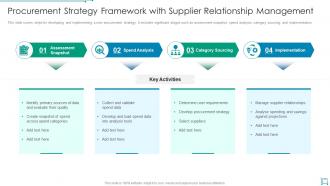
Procurement strategy framework with supplier relationship management





Try Before you Buy Download Free Sample Product
 Impress Your
 Audience
 100%
100% Editable
 Save Hours
 of Time


This slide covers steps for developing and implementing a new procurement strategy. It includes significant stages such as assessment snapshot, spend analysis, category sourcing, and implementation.
People who downloaded this PowerPoint presentation also viewed the following :
Procurement strategy framework with supplier relationship management with all 6 slides:
Use our Procurement Strategy Framework With Supplier Relationship Management to effectively help you save your valuable time. They are readymade to fit into any presentation structure.





FAQs for Procurement strategy framework with
You need four main things: spend analysis, supplier segmentation, sourcing strategies, and performance tracking. Honestly, most teams are shocked when they see where their money actually goes - so start there if you haven't done it recently. After that, group your suppliers by risk and value. Each category gets its own sourcing approach. Set up KPIs to monitor how suppliers are doing. Don't forget governance processes and getting all departments on the same page (finance always has opinions lol). The spend analysis will show you quick wins and basically guide everything else you do.
First thing - figure out what your company actually cares about most. Growth? Cutting costs? Going green? Whatever it is, that should drive your procurement choices. Like if they're all about innovation, don't just pick the cheapest vendor - find suppliers who'll bring fresh ideas to the table. I learned this the hard way honestly. Check in with leadership regularly so you're not flying blind, and make sure everything from supplier selection to contracts supports those bigger company goals. It's way simpler than people make it sound once you get the hang of it.
Dude, risk management is what keeps your procurement from totally falling apart. Look at supplier reliability first - are they actually dependable? Then check market volatility, political drama, supply chain mess. I got burned hard during that whole chip shortage thing, so trust me on this. Build backup plans everywhere: multiple suppliers, extra inventory for must-have stuff, alternative sources ready to go. Honestly, just assume something will break and plan around it. Map out where you're most screwed if things go sideways, then work backwards to fix those weak spots.
Honestly, tech can be a game-changer for procurement stuff. Start with automating the boring tasks - purchase orders, approvals, all that paperwork nobody wants to touch. E-procurement platforms handle most of it automatically. The AI analytics are pretty cool too, way better than those endless spreadsheets for spotting where you can save money. Real-time spending visibility is huge. Digital portals make dealing with vendors less of a headache - though setting them up initially is kind of annoying. I'd focus on whatever manual process eats up most of your time first, then expand from there.
So I'd focus on the basics first - cost savings, how your suppliers are actually performing, and cycle times. Nobody wants to wait ages for approvals, right? Financial stuff like cost reduction percentages matter, but supplier scorecards are gold for tracking quality and delivery. Risk metrics are pretty crucial too - things like supplier diversity and contract compliance. Oh, and don't skip stakeholder satisfaction because if your internal people hate the process, you're screwed. Honestly though, pick 3-4 metrics that actually match your business goals. Tracking everything just creates noise.
Working closely with your suppliers can totally flip your procurement game. They've got insider info on market shifts and capacity issues you'd never spot otherwise. I always loop in my top suppliers when planning strategy - they catch risks early and suggest alternatives I wouldn't think of. Honestly, some random supplier chat once saved me from a huge mess. The relationships also mean better pricing and they'll prioritize you when supply gets tight. Maybe start with your 3-4 most critical suppliers? Set up regular strategy talks with them.
Honestly, people hate change - that's your biggest headache right there. Getting everyone on board is brutal when they're stuck in their old ways. Data's all over the place too, scattered across departments where nobody can see the full picture. Oh, and don't get me started on trying to connect ancient systems that were never meant to work together. The whole field's gotten way more strategic lately, so most teams just aren't equipped for it yet. Here's what worked for me: grab some easy wins first to prove your point. Once leadership sees results, then you can fix the messy stuff.
Just build the environmental and social stuff right into how you pick vendors. Update your RFP templates with sustainability requirements first - that's honestly the hardest part. Then score suppliers on carbon footprint, labor practices, waste reduction, all that. Once you've got the framework down, it's actually pretty straightforward. Your procurement team needs clear sustainability KPIs, and you'll want to audit supplier performance regularly. Don't try to overhaul everything at once though. Pick one category to start with and expand from there. Makes it way less overwhelming.
Do your research first - check out their competitors and what market pricing looks like. Build connections with more than just the sales guy too. I got burned once when my main contact bounced right in the middle of negotiations, ugh. Don't negotiate stuff one thing at a time either. Bundle everything together so you can swap things like higher volume for better rates, or longer payment terms for upgraded service. Oh and start these conversations way earlier than you think you need to. Give them time to actually run ideas up the chain and come back with something that works for everyone.
Honestly, market analysis is like your secret weapon for procurement. Do some digging on supplier landscapes and pricing trends before you negotiate - it's way better than going in blind. You'll figure out if it's a buyer's or seller's market, spot backup suppliers, and time your purchases right. Plus you can avoid those terrible long-term contracts (learned that one the hard way). The innovation opportunities you'll find are pretty cool too. Just spend like 20 minutes researching before any big purchase decision. Trust me, you'll walk into those negotiations actually knowing what you're talking about.
Honestly, just talk to your suppliers regularly - like actual conversations, not just when stuff goes wrong. I'd set up quarterly reviews with performance metrics that matter beyond just "did we save money?" Treat them more like partners than people you're trying to squeeze dry. When you can, share your forecasts so they're not flying blind - helps everyone out in the long run. Oh, and document everything in a simple scorecard system (nothing fancy). Focus your energy on the relationships that actually move the needle. If there's performance issues, bring it up early instead of letting it fester.
Honestly, legal stuff controls way more of your procurement choices than you'd think. Contract laws, data protection, industry regs - they all need to be part of your strategy from day one. Anti-corruption and trade restrictions are the real killers though. Miss those and your whole deal's toast. Get your procurement people talking to legal early so you can spot issues before they bite you. Build compliance checks into vendor selection too. Your contracts should actually cover your ass when things go sideways (which they will). Seriously - call legal before you sign anything big.
Honestly, most places I've seen do a mix of both. Centralized buying gets you better bulk deals - like 10-20% savings usually - but your teams can't move as fast when they need something specific. Decentralized is the opposite - super quick but you lose that buying power. Think Costco vs specialty shops, you know? What tends to work is centralizing the big stuff like IT equipment and office space, then letting departments buy their own specialized gear directly. That way you're not waiting three weeks for approval on a $50 cable while still getting decent rates on laptops.
Set spending targets for minority, women-owned, and small businesses first. Track those numbers religiously. Your supplier database probably sucks right now - expand it beyond the same old companies you always use. Honestly, there's so much untapped talent out there. Break big contracts into smaller chunks when you can. Help smaller vendors through mentorship programs so they can actually meet your requirements. Don't make your qualification process a nightmare either. Make sure your procurement team is diverse and gets bias training. Check progress quarterly or you'll forget about it.
Automation's everywhere now - repetitive sourcing stuff is basically done by AI, plus you get predictive analytics for supply risks. COVID made everyone realize (finally) that putting all your eggs in one basket is stupid. Diversify your suppliers, seriously. ESG compliance is massive too, so suppliers need legit sustainability proof. Risk management tools got way better, which helps. Oh, and digital transformation obviously. Start by mapping who you're currently using and spot where you're too dependent on single sources. That's where you'll get burned if something goes wrong.
-
Out of the box and creative design.
-
Out of the box and creative design.