


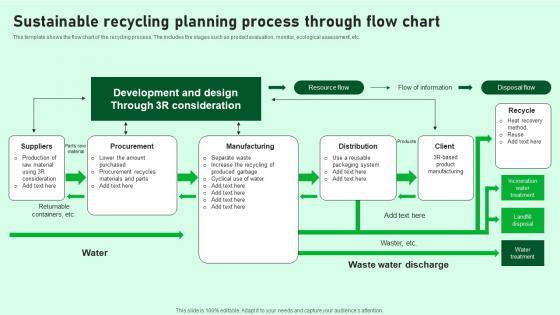
Sustainable Recycling Planning Process Through Flow Chart




Try Before you Buy Download Free Sample Product
 Impress Your
 Audience
 100%
100% Editable
 Save Hours
 of Time


This template shows the flow chart of the recycling process. The includes the stages such as product evaluation, monitor, ecological assessment, etc.
People who downloaded this PowerPoint presentation also viewed the following :
Sustainable Recycling Planning Process Through Flow Chart with all 6 slides:
Use our Sustainable Recycling Planning Process Through Flow Chart to effectively help you save your valuable time. They are readymade to fit into any presentation structure.





FAQs for Sustainable Recycling Planning Process
Honestly, getting people to care about recycling is all about making it real for them. Face-to-face stuff works best - local workshops, school visits, partnering with community groups. Skip the scary climate lectures though, they just tune out. Instead show them cool stuff like "hey, your water bottle becomes this park bench in a month." Social media helps too, but pair it with actual demos where they can watch the process happen. Oh, and throw in some friendly competition - recycling challenges with little prizes get people weirdly competitive about their trash habits.
So Germany's crazy strict about sorting but it works - they've got those deposit machines everywhere. Japan does this super detailed waste separation thing, and Sweden literally imports other countries' trash for energy (honestly kind of genius). The Netherlands figured out how to turn plastic into fuel, which is cool. Korea uses RFID chips to track food waste - bit much? But whatever works I guess. The places that nail it mix good policies with teaching people what to actually do, plus some kind of reward system. If you want better recycling locally, push for clearer labels and make it convenient. People are lazy but they'll do it if it's easy.
Dude, community buy-in is everything for recycling programs. I've watched expensive initiatives completely bomb because they skipped the grassroots part. You need people who actually get what goes in which bin - and honestly, that takes time to build. Start with your neighbors first. Get local businesses involved early too. The programs that actually work? They're the ones where residents organize their own education stuff and push for better pickup schedules themselves. Oh, and peer pressure works - people will sort better when their neighbors are watching. Don't underestimate how much easier you need to make it for folks though.
Honestly, AI sorting is a game changer for recycling - those robotic systems can identify materials way faster than humans and sort thousands of items per hour. Smart bins with sensors help too since they optimize truck routes so drivers aren't wasting fuel on half-empty pickups. Oh, and blockchain tracks everything through the whole chain so stuff doesn't just disappear. I know it sounds super high-tech, but even smaller companies can look into automated sorting for their waste streams. The technology's gotten pretty accessible lately, which is cool.
Dude, recycling's actually pretty clutch for the environment. You're keeping tons of stuff out of landfills and cutting way back on mining/drilling for new materials. Energy savings are insane too - aluminum recycling uses like 95% less energy than making it fresh, which is wild. Manufacturing pollution drops since you're not producing as much new crap. Oh and obviously your carbon footprint shrinks. Honestly though, I'd start by just looking at what you're throwing away most - that's where you'll see the biggest wins without going crazy about it.
Honestly, CSR programs are kind of genius for this. Companies hate looking like hypocrites, so once they announce green goals publicly, they actually have to deliver. Your executives will suddenly care about recycling because it's tied to the company's reputation now. Plus - and this part always cracks me up - they usually discover it saves money too since less waste means lower disposal costs. Leadership gets real incentives to fund better programs and find eco-friendly suppliers. If you're pitching recycling initiatives internally, definitely frame it as CSR strategy rather than just "hey let's recycle more." Way more likely to get budget approval that way.
Honestly, the money part hits first - setting up collection systems and training everyone costs way more than you'd think. Plus people are terrible at sorting, so you'll constantly deal with contamination ruining whole batches. Getting your boss and coworkers actually caring is another battle entirely. Local regulations are all over the place depending where you are. Oh, and the market for recycled stuff goes up and down like crazy, which messes with whether it's even worth it financially. I'd say pick one material type first and see how that goes before diving into everything.
Honestly, start by checking what your city actually takes - I was shocked at how much I'd been doing wrong. Clean your stuff first; nobody wants your gross peanut butter jar. Don't just throw random things in hoping they'll figure it out (guilty of this myself). Try bugging your city council about better programs if yours sucks. But real talk? The best thing is just buying less crap to begin with. Check your city's recycling site this week - it's probably more specific than you think.
Honestly, I'd start with diversion rates - that's your bread and butter for showing how much you're keeping out of landfills. Contamination rates matter too because dirty recycling is basically worthless to buyers. Track recovery rates by material, especially the good stuff like metals and electronics. Cost per ton and energy use are kind of boring but your budget will thank you later. The real test? See if your recycled materials actually become new products downstream. I know it's tempting to track everything, but pick 3-4 solid metrics first or you'll go crazy with data overload.
So circular economy is like recycling but way more thought-out from the beginning. Instead of just dealing with stuff when it's trash, you design products to be reused and repaired forever basically. Traditional recycling feels like cleanup duty after the mess is made. This approach stops the mess entirely by keeping materials moving in loops rather than that whole take-make-toss cycle we're used to. Pretty smart honestly. When you're working on projects, flip the question - instead of "how do we recycle this?" ask "how can this thing have multiple lives?" Makes you think differently about design.
Okay so there's some pretty sick stuff happening with materials right now. Chemical recycling can actually break plastics back down to their original molecules - way better than the regular stuff. Bio-based polymers are everywhere now since they're made to decompose naturally. The smart packaging thing is crazy though - sensors literally tell facilities what they're dealing with. Oh and materials that change color at different temps for sorting? That's just wild. Honestly P&G's doing some interesting work if you wanna see real examples, but Unilever's packaging stuff is probably easier to find online.
Dude, recycling basically lives or dies by what we actually do with it. One greasy pizza box can mess up a whole batch - kinda crazy how that works. Participation rates keep these programs running since they need steady volume to make financial sense. When you rinse stuff properly and sort it right, workers don't have to dig through everything by hand. I learned this the hard way after tossing a yogurt container that still had food in it. Check what your city actually accepts though. Some places are picky about plastics. Getting it right at home is honestly where you make the biggest difference.
Hands-on workshops are where it's at - people actually retain stuff when they're sorting through bins themselves. Digital apps and contamination games work surprisingly well too. The gross-out factor is honestly your secret weapon here... showing what contaminated recyclables actually look like really drives the point home. Focus on local examples since every area has different rules. Try partnering with your waste facility for site visits if you can swing it. Make it super relevant to what they do daily - like, show them their exact bins and what belongs where. Oh, and start with an office waste audit so they can see immediate results in their own space.
Honestly, it's about hitting companies where it hurts - their wallets. Those Extended Producer Responsibility laws are pretty genius because suddenly manufacturers have to pay for disposal costs throughout the product's whole life. When you're shopping, pick brands doing modular designs and recyclable stuff. Patagonia's killing it with this approach, though we definitely need more companies jumping on board. Vote for politicians pushing design-for-recycling standards. Oh, and boycott the worst offenders - nothing changes corporate minds faster than lost profits. We've got to make sustainable design more lucrative than the current throwaway BS they're pulling.
Yeah, the startup costs are brutal - we're talking millions for facilities and equipment. But honestly? The numbers work out pretty well long-term. You'll create jobs, cut waste management expenses, plus make money selling the recycled stuff. Those landfill fees alone will kill your budget otherwise. Most operations break even in 5-10 years depending on your scale. The real smart play is getting ahead of rising disposal costs and potential carbon taxes down the road. I'd probably run a feasibility study for your area first though - every region's different.
-
“Love it! I was able to grab an exciting proposal because of SlideTeam.”
-
They had the topic I was looking for in a readymade presentation…helped me meet my deadline.