


SWOT Analysis For Personal Leadership Development Top Leadership Skill Development Training




Try Before you Buy Download Free Sample Product
 Impress Your
 Audience
 100%
100% Editable
 Save Hours
 of Time


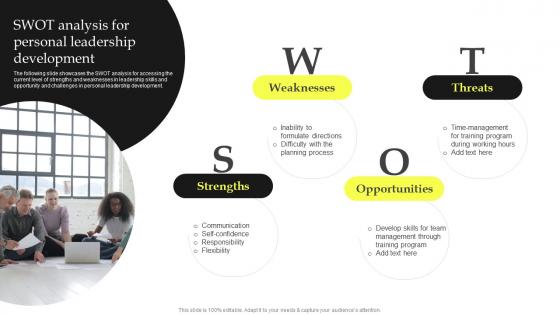
The following slide showcases the SWOT analysis for accessing the current level of strengths and weaknesses in leadership skills and opportunity and challenges in personal leadership development.
People who downloaded this PowerPoint presentation also viewed the following :
SWOT Analysis For Personal Leadership Development Top Leadership Skill Development Training with all 9 slides:
Use our SWOT Analysis For Personal Leadership Development Top Leadership Skill Development Training to effectively help you save your valuable time. They are readymade to fit into any presentation structure.








FAQs for SWOT Analysis For Personal Leadership Development Top Leadership
So SWOT breaks down into four parts: Strengths and Weaknesses are internal stuff you control, while Opportunities and Threats are external market forces you don't. The magic happens when you start connecting them though. Your strengths might help you grab opportunities faster. Weaknesses could make threats way more dangerous. I always tell people to look for these crossovers - like if you've got a killer brand reputation, maybe that's your ticket into some new market before everyone else catches on. Don't just make lists and call it done. Figure out which combinations actually matter for what you're doing next.
Honestly, SWOT is just a way to get your head straight before making big moves. You map out what you're good at, what sucks, plus the external stuff - opportunities and threats. Then you can actually see which strategies make sense instead of just guessing. Like, maybe you've got this killer team (strength) and there's a gap in the market (opportunity) - boom, that's your play. I've watched so many businesses spin their wheels because they skip this step. The trick is being real about your weak spots too, not just the good stuff. Once you've got it all laid out, decisions become way clearer.
Any business can use SWOT analysis, but startups really need it to figure out where they stand against competitors. Works great for established companies too when they're thinking about big changes or expansions. Small businesses love it - no expensive consultants required, just brutal honesty about your strengths and weak spots. Perfect for new product launches or breaking into fresh markets. The trick? Don't sugarcoat your problems and be realistic about what opportunities actually exist. I'd say run one every quarter if you can stay disciplined about it.
You'll want to update it at least once a year, but quarterly is better if things move quickly in your space. New competitors or big market changes? That's your cue to jump back in and refresh it. I've watched teams cling to SWOT analyses from like two years ago - totally pointless at that point. Think of it more as something that evolves with your business. Set a reminder on your phone or whatever. Oh, and don't overthink small tweaks when stuff shifts. Better to keep it current than perfect, you know?
Look, without proper market research, your SWOT analysis is basically just educated guessing. You'll want to dig into competitor analysis, customer feedback, and industry trends first. Otherwise how do you know if that "opportunity" is real or just wishful thinking? Research gives you the actual data to spot genuine strengths and weaknesses in your company. Plus it reveals external threats you'd totally miss otherwise. I learned this the hard way on a project last year - thought we had this amazing opportunity until the research showed the market was already oversaturated. Get your data sorted before you even touch that SWOT framework.
Honestly, yeah you can turn weaknesses into strengths - just don't try to fix everything at once because that's a recipe for burnout. Pick the ones that would actually move the needle if you solved them. Like if your team sucks at digital marketing, invest in training or hire someone who knows their stuff. Boom, weakness becomes an advantage. Some things just aren't worth fixing though - be real about what's actually changeable versus what you should work around. I'd start by listing which weaknesses would create the biggest impact, then make actual plans with deadlines. Otherwise you'll just keep talking about it forever.
Honestly, the worst thing you can do is be super vague - like writing "good customer service" without any real details. Also don't let Steve from accounting hijack the whole thing (you know there's always one person). Focus on both internal AND external stuff - threats and opportunities matter just as much. Oh, and here's something people mess up constantly: they list like 15 things in each box instead of picking what actually matters. I'd stick to maybe 3-5 solid points per section. Way more useful than a giant messy list nobody will look at again.
So for non-profits, flip the script from profit margins to actual mission impact. Your volunteer network and donor relationships? Those are your real assets (or weaknesses if they're shaky). Startups should play up that agility advantage - you can pivot fast when bigger companies can't. But don't sugarcoat the resource crunch or market risks. Both types need to watch external stuff closely - funding opportunities, regulatory shifts, all that. Honestly, the whole point is ditching cookie-cutter business metrics for what actually keeps your organization alive and thriving.
Yeah, SWOT definitely works better when you mix it with other stuff. I'd start there then feed those findings into Porter's Five Forces or use them to set up your SMART goals. Way more useful than just doing SWOT by itself, honestly. PESTLE analysis gives you the bigger picture context too - probably should've mentioned that first. Your strengths and opportunities can guide scenario planning really well. The whole point is treating SWOT like your foundation, not the final answer. It's basically raw material that other frameworks help you actually turn into real strategy.
Yeah so the basic SWOT structure doesn't change, but what you actually look at is totally different depending on your industry. Tech companies focus on dev speed, scalability issues, security gaps, new tech coming down the pipeline. Healthcare though? That's all about regulatory stuff, patient outcomes, licensing headaches, population changes. Think of it like - same template, completely different content based on what actually matters in your space. I'd honestly start by figuring out what really drives results in your specific industry first, then just plug those factors into the four boxes. Way easier than trying to force generic categories.
Just go with the standard 2x2 grid - honestly, it's boring but it works. Strengths and weaknesses on top, opportunities and threats below. I'd stick to 3-5 bullets per box since people's attention spans are terrible these days. You could break it into four separate slides if you need more detail, but that's probably overkill. The main thing? Don't just dump your analysis and walk away. Always add a follow-up slide explaining what you're actually gonna DO with all this info. Nobody cares about your fancy SWOT if it doesn't lead to real decisions.
Definitely mix up who's in the room - different departments, various levels. In-person works way better for this stuff, trust me. Have people write ideas individually first (sticky notes are clutch), then talk through everything together. You'll avoid that weird groupthink thing. Get someone good to facilitate who won't let the loud people dominate. The quiet ones usually have the best insights anyway. Most important part? People need to feel safe being honest about real problems and threats. Otherwise you're just wasting time. Write it all down and have someone compile it later - don't try doing that during the actual session.
Track both numbers and softer stuff to see if your SWOT strategies actually work. Numbers-wise: ROI, revenue growth, market share, customer acquisition costs. The specific ones really depend on what you were trying to fix though. For the qualitative side, monitor brand perception, employee happiness, customer feedback scores. Honestly, competitive positioning is huge too but harder to measure. Set your baseline before you start changing things, then maybe do quarterly check-ins? Don't go crazy with metrics - pick 3-5 max or you'll get overwhelmed by all the data.
SWOT analysis is perfect for spotting risks before they bite you. The weaknesses section shows your internal vulnerabilities straight up. Threats reveal what's coming from outside that could mess things up. But here's what's cool - your strengths tell you what tools you already have to fight back. Like if you've got solid cash flow, you can ride out rough patches better. I know it seems basic, but it actually works really well. Watch out though - those opportunities might also be openings your competitors are eyeing. Once you're done, tackle the scariest risks first and make backup plans for your biggest weak spots.
Honestly, visuals are a game changer for SWOT presentations. Nobody wants to stare at boring bullet points - I literally watched half my team check their phones last time someone did that. Try making a colorful quadrant chart or throw in some icons. Different colors for each section work great too. Short attention spans are real, so infographics help people actually absorb the info instead of zoning out. Plus you'll get way better discussion afterward when people can quickly reference the visual. Even simple graphics beat walls of text every time.
-
I am so thankful for all of the templates I've found on your site. They have saved me hours every week and helped make my presentations come alive. Keep up with these amazing product releases!
-
SlideTeam’s pool of 2Million+ PPTs has really benefited my team, everyone from the IT department to HR. We are lucky to have crossed ways with them.