


System development lifecycle stages ppt presentation




Try Before you Buy Download Free Sample Product
 Impress Your
 Audience
 100%
100% Editable
 Save Hours
 of Time


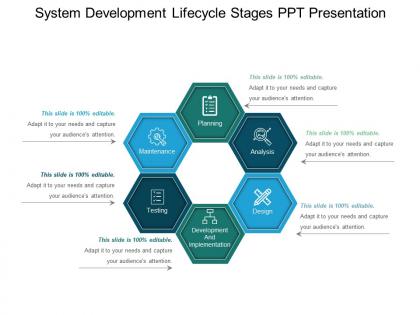
Show your substantial data through our, system development life cycle stages PPT presentation. Implement and design new working patterns along through the example of this PPT solution. We have shown engaging color patterns and icons here to make this PPT design more interactive. We have shown six stages here to demonstrate the process, which is, planning, analysis, design, development, and interpretation, testing, maintenance. Icons used here can be used to display the graphical depiction of the system development matters. Include your key points and get your ideas across through the help of a PowerPoint template by editing the text boxes shown here. This engaging system development framework can easily portray your company data and helps you to make rapid growth in the corporate world. So Just click on the download button and our system development life cycle stages PPT presentation will help you create a long-lasting impression and building a solid foundation. Dynamic System Development Lifecycle Stages Ppt Presentation design help you show your work in your best light. Make sure that your next presentation is a success.
People who downloaded this PowerPoint presentation also viewed the following :
System development lifecycle stages ppt presentation with all 5 slides:
Get full benefit from our System Development Lifecycle Stages Ppt Presentation. You will deserve every bit of credit.





FAQs for System development lifecycle
The distinct phases of the System Development Lifecycle include requirements analysis, system design, implementation, testing, deployment, and maintenance. These phases streamline software development by establishing clear objectives, minimizing risks, and ensuring quality control, with many organizations finding that following structured SDLC methodologies ultimately delivers faster project completion and enhanced system reliability.
The requirements gathering phase directly determines project success by establishing clear objectives, defining scope boundaries, identifying stakeholder needs, and creating measurable success criteria from the outset. Through comprehensive stakeholder interviews and documentation, organizations minimize costly scope changes, reduce development rework, and accelerate delivery timelines, with many finding that thorough upfront planning ultimately delivers stronger ROI and user satisfaction.
Design phase methodologies include object-oriented design, structured design, prototyping, user-centered design, and component-based design approaches. These methodologies streamline development by creating clear architectural frameworks, reducing coding errors, and ensuring scalability, with many software teams finding that strategic design choices ultimately deliver faster deployment timelines and enhanced system maintainability.
The implementation phase involves coding, configuring, and building the actual system components, while deployment focuses on installing, releasing, and making the system operational in the live environment. Implementation emphasizes development activities like programming and integration testing, whereas deployment handles production rollout, user training, and go-live activities, with many organizations finding that clear separation streamlines project management and reduces operational risks.
Testing is critical in the SDLC because it identifies defects early, reduces costly post-deployment fixes, and ensures software meets functional and performance requirements before reaching users. Organizations should conduct unit testing, integration testing, system testing, user acceptance testing, and performance testing, with many finding that comprehensive testing strategies ultimately deliver higher quality products, enhanced user experiences, and significant long-term cost savings.
Agile principles integrate into traditional SDLC through iterative development cycles, continuous stakeholder feedback, and flexible requirement management at each phase. This strategic combination enables organizations to maintain structured project oversight while delivering faster releases, reducing development risks, and enhancing customer satisfaction, with many software teams finding that hybrid approaches ultimately streamline delivery timelines.
Documentation serves as the foundation for communication, knowledge transfer, and quality assurance throughout SDLC stages, including requirements specifications, design documents, code comments, and testing records. Effective documentation management involves establishing standards early, maintaining version control, and ensuring accessibility across teams, with many organizations finding that well-documented projects reduce development time and enhance long-term maintainability.
Project stakeholders influence the SDLC through requirement definition, resource allocation, timeline decisions, and acceptance criteria establishment, directly shaping project scope and deliverables. Effective communication strategies include regular sprint reviews, stakeholder mapping, collaborative requirement workshops, and transparent progress dashboards, with many organizations finding that structured feedback loops and cross-functional alignment ultimately deliver faster development cycles and higher user satisfaction.
Maintenance phase challenges include legacy code complexity, evolving user requirements, system performance degradation, integration difficulties with newer technologies, and resource allocation constraints. Organizations address these through automated testing frameworks, modular architecture designs, and proactive monitoring systems, with many finding that strategic refactoring and documentation updates ultimately deliver enhanced system longevity and reduced operational costs.
Risk management integrates throughout SDLC stages through threat modeling during planning, security reviews in design, vulnerability testing during development, and comprehensive security assessments before deployment. These systematic approaches enable organizations to identify potential issues early, minimize costly late-stage fixes, and ultimately deliver more secure, reliable systems while reducing project risks and enhancing stakeholder confidence.
Post-deployment feedback techniques include user surveys, analytics monitoring, help desk analysis, focus groups, and direct user interviews. These methods enable organizations to identify performance issues, usability concerns, and enhancement opportunities, with many companies finding that systematic feedback collection ultimately delivers improved user satisfaction, reduced support costs, and strategic insights for future system iterations.
The choice of SDLC model significantly impacts project outcomes by influencing development speed, flexibility, risk management, and stakeholder collaboration throughout the project lifecycle. Waterfall delivers structured predictability for well-defined projects, while Agile enables rapid adaptation and continuous feedback, with many organizations finding that model selection directly affects delivery timelines, budget adherence, and customer satisfaction rates.
Best practices for SDLC phase transitions include thorough documentation reviews, stakeholder sign-offs, comprehensive testing completion, clear deliverable verification, and formal phase gate approvals. These practices streamline project continuity by ensuring requirement traceability, minimizing rework, and maintaining quality standards, with many development teams finding that structured transition protocols ultimately deliver faster deployment cycles and reduced project risks.
Technology advancements significantly transform SDLC stages by introducing automation tools, cloud platforms, AI-driven testing, and DevOps practices that streamline development processes. These innovations enable faster prototyping, continuous integration, automated quality assurance, and real-time deployment, with many organizations finding that modern technologies ultimately deliver reduced development cycles and enhanced software quality.
Regulatory requirements fundamentally reshape SDLC by mandating extensive documentation, rigorous testing protocols, compliance checkpoints, and audit trails throughout development phases. In sectors like healthcare, financial services, and pharmaceuticals, organizations integrate regulatory frameworks directly into planning, design, and deployment stages, ultimately delivering compliant solutions while maintaining competitive advantage through systematic risk management.
-
I discovered this website through a google search, the services matched my needs perfectly and the pricing was very reasonable. I was thrilled with the product and the customer service. I will definitely use their slides again for my presentations and recommend them to other colleagues.
-
Excellent template with unique design.