

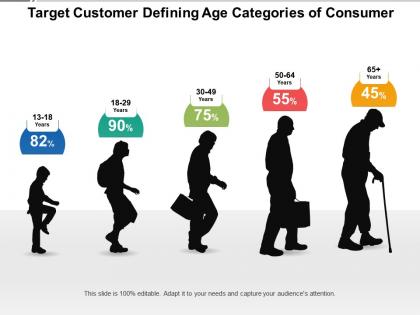
Target customer defining age categories of consumer




Try Before you Buy Download Free Sample Product
 Impress Your
 Audience
 100%
100% Editable
 Save Hours
 of Time


Give them a guarantee with our Target Customer Defining Age Categories Of Consumer. They will believe in you explicitly.
People who downloaded this PowerPoint presentation also viewed the following :
Target customer defining age categories of consumer with all 5 slides:
Our Target Customer Defining Age Categories Of Consumer cover fresh ground. They generate a lot of bright ideas.
FAQs for Target customer defining age
You'll want to focus on demographics first - age, income, where they live. Then dig into psychographics like their values and lifestyle stuff. But honestly? Behavioral data is where the gold is. It shows what people actually buy, not just what they claim they'd buy in surveys (which is usually BS). Location matters if your product varies by region. I'd say pick maybe 2-3 factors that really move the needle for your specific thing, then add more later. You can always get fancy with it down the road, but don't overthink the initial segmentation.
Look, demographic data is basically your starting point for figuring out who your customers actually are. Age, income, location, education - all that stuff helps you spot patterns and create segments that make sense. Like obviously you're not gonna market luxury cars the same way to college students vs wealthy retirees, right? I'd say it's probably the most straightforward way to begin if you're just getting into segmentation. What really works though is mixing demographics with how people actually behave on your site. Start by checking out your current customer data to see who's most valuable, then build your campaigns around those types of people.
So psychographics is basically understanding what makes people tick - their values, interests, how they live, what drives them to actually buy stuff. Demographics just tell you surface-level facts about someone. But this digs into the emotional stuff that really matters. Two women who are both 35 could want the same product for completely different reasons based on what they care about. Honestly, once you nail this it makes such a difference in your messaging. I'd start by just asking your current customers about their interests and what they prioritize (beyond the usual boring demographic questions). It's kind of a game-changer when you get it right.
Look at your customer data first - purchasing patterns, lifetime value, how much they actually engage. Demographics matter, but honestly the psychological stuff and what triggers them to buy is way more valuable. Google Analytics or your CRM can help you segment by which groups bring in the most revenue. Here's the thing though - don't go crazy with like 20 different segments. Stick to 3-5 solid groups that actually behave differently and make you money. Then A/B test different messaging for each one. You'll quickly see which segments convert better and spend more. That's your starting point.
Start with Google Analytics 4 for behavioral stuff and Facebook Audience Insights for demographics. Hotjar or Crazy Egg are clutch for seeing how people actually use your site - those heatmaps are weirdly satisfying to browse through, not gonna lie. Excel clustering works fine for deeper dives, or Python with pandas if you're into that. Don't sleep on Typeform surveys either. Analytics only tell you what happened, not why. Quick surveys asking "why did you do X?" fill those gaps perfectly. Mix the numbers with actual human feedback and you'll spot patterns you'd miss otherwise.
Every quarter is usually good, but honestly depends on your industry. Tech and fashion move crazy fast - I'd say every 2-3 months for those. More stable stuff? Twice a year works. Watch for big shifts in customer data, new competitors, or weird buying patterns. Also check when you launch something new or if conversion rates suddenly tank. Just set a reminder and actually follow it - I can't tell you how many people skip this step. What worked last year could be completely useless now. The market doesn't wait for anyone.
Honestly, the worst part is dealing with crappy data that's all over the place. You'll also get stuck in analysis paralysis - like, there are SO many ways to slice your audience that you just freeze up. Audiences keep shifting too (pandemic really messed things up). A lot of companies figure out their segments but then... do nothing with them? Or they create these "perfect" segments they can't even reach through their existing channels. Oh, and segments go stale fast if you're not paying attention. Just pick 2-3 segments you can actually target and build from there.
Honestly, segmentation is a game changer - you stop throwing money at people who'd never buy your stuff anyway. Generic ads are trash. But when you actually talk to working moms about their specific problems? Or hit tech startups with messaging that gets their world? Night and day difference. Your click rates go up, conversions improve, and you're not bleeding cash on the wrong people. I'd start simple though - pick your top 2-3 customer types and run separate campaigns. You'll figure out pretty quick which audiences are actually worth it.
Honestly, I'd go with a mix approach. Surveys and your analytics will give you the hard data - demographics, behavior stuff, you know. But interviews are where you get the real gold about why people actually buy. Your sales team probably knows more than anyone since they're on calls all day. I always tell people to check social media too - customers vent about everything there, it's crazy helpful. Oh, and start with whatever's already in your CRM first. Then maybe add 2-3 other methods to fill in the blanks.
Honestly, digital behavior beats surveys every time - people lie about what they'll do but their clicks don't. I'd look at your website patterns, email opens, social stuff, purchase history. Cart abandoners are way different from instant buyers, right? Way more useful than just age/location demographics. Pick maybe 3-4 spots where you interact with users most and group them by how they actually engage there. Oh and purchase history is gold if you have it. This approach shows you real user journeys instead of guessing.
So buyer personas are basically when you stop thinking about vague "target demographics" and start picturing actual people instead. Like instead of "millennials 25-35" you're thinking about Sarah - she's got two kids, always shopping on her phone between meetings, needs stuff delivered fast. Game changer honestly. Your messaging gets so much better when you're writing for a real person with actual problems. I'd start with maybe 2-3 solid personas for your biggest customer groups. Oh and don't go overboard with the details - you're not writing a novel lol. But seriously, once you nail this your whole marketing strategy just clicks into place.
Honestly, it's like comparing apples to oranges. B2B is all about company stuff - what industry they're in, how big they are, revenue, who calls the shots. You've got multiple people involved and it takes forever to close deals. B2C? Totally different game. You're looking at individual people - their age, what they care about, how they shop. Way more emotional too. For B2B, focus on company traits and figure out their buying committee (trust me, there's always a committee). B2C is more about building customer personas based on demographics and behavior. Start by mapping who actually has the final say - that's your real target.
Honestly, you can't just ignore cultural differences - they totally change how people buy stuff and react to ads. Colors alone are crazy different - red screams "lucky!" in China but "danger!" here in the US. Values matter too. Some cultures are super family-focused while others push individual success. Plus communication styles vary wildly. I'd definitely research cultural dimensions in whatever markets you're targeting first. Test your messaging with different cultural groups before you go live with anything big. Holiday seasons, buying habits, even how people respond to authority figures - it all shifts depending on where your audience is from.
Customer feedback is honestly a goldmine for this stuff. Go through your reviews, surveys, support tickets - you'll notice different groups complain about totally different things. Enterprise customers vs small businesses? Completely different worlds. Their language, priorities, pain points - it's wild how much they vary. Social listening helps too since people naturally cluster themselves when they talk online. I'd start mapping feedback themes against your current segments. Those gaps you find? That's where the magic happens. Sometimes the best segments are hiding in plain sight in your complaint folders.
Ugh, the worst thing you can do is go too broad or stupidly narrow. Like "millennials" tells you nothing useful, but "left-handed vegetarian dog owners in Denver" - seriously? Good luck with that audience size. Most brands just guess what matters instead of checking actual customer data. Then they build these perfect segments and... send the exact same email to everyone anyway. What's the point? Honestly, just start with your real customer info first. Build maybe 3-5 groups that actually make sense and you can write different stuff for. Don't overthink it.
No Reviews