


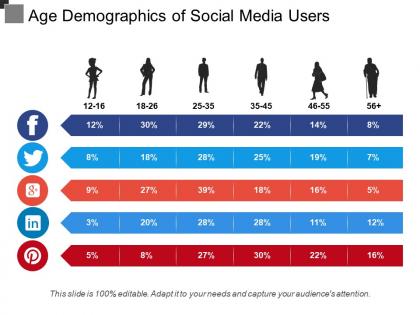
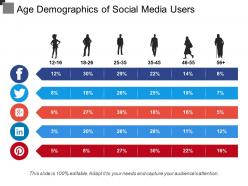
Age demographics of social media users




Try Before you Buy Download Free Sample Product
 Impress Your
 Audience
 100%
100% Editable
 Save Hours
 of Time


Conduct discussions in a cordial environment with our Age Demographics Of Social Media Users. They create a healthy climate.
People who downloaded this PowerPoint presentation also viewed the following :
Age demographics of social media users with all 5 slides:
Force folks to accept that you are correct with our Age Demographics Of Social Media Users. Be able to corner your critics.
FAQs for Age demographics of
Honestly, Gen Z is way pickier with money than millennials ever were. They'll research the hell out of everything before buying - like, they don't trust regular ads at all. Want real reviews from actual people, not some influencer pushing stuff. Millennials would pay extra for convenience or stick with brands they liked, but Gen Z? They'll dump you instantly if your values suck or someone else offers better deals. Oh, and everything better work perfectly on mobile or you're screwed. Focus on being upfront about prices and actually caring about social issues.
Honestly, the age thing at work is real but not as bad as people think. Gen Z wants constant feedback while Boomers are fine waiting for yearly reviews. Communication styles clash too - some people live in Slack, others still prefer actual phone calls (which is kind of endearing tbh). But mixed-age teams actually work really well when you let everyone play to their strengths. Younger folks know all the tech stuff and see things differently. Older employees have years of experience and they're usually great mentors. Just don't force everyone into the same communication style.
Dude, forget flashy stuff with Boomers. They want simple, clear messaging and bigger fonts they can actually read. Email beats social media by a mile for this crowd. Honestly, I'd skip the trendy angle completely - focus on quality and reliability instead. Make sure they can find a real phone number to call (this is huge for them). Keep your checkout dead simple and give them multiple ways to pay. Oh, and test everything with actual Boomers first! What works for millennials usually bombs with this group. Trust me on that one.
Dude, age totally changes how people use social media. Gen Z and millennials are all over TikTok and Instagram - they're obsessed with quick videos and visual stuff. Meanwhile, your parents' generation? They're still posting vacation photos on Facebook and using LinkedIn for work stuff. It's like watching different species sometimes, honestly. Older folks actually read posts and leave real comments, but younger users just double-tap and move on. Oh, and boomers share the weirdest articles lol. For marketing though, you gotta go where your audience actually is and speak their language.
Oh totally, age makes or breaks campaigns. Like, you can't hit a 25-year-old and 55-year-old with identical content - it's weird how different they are! Gen Z wants that authentic TikTok stuff while Boomers are still crushing it on Facebook and email. My neighbor literally screenshots Instagram posts to show her friends later, which is... a choice. But yeah, figure out where each age group hangs out first. Then switch up your tone and messaging for each platform. The 20-somethings need different energy than the 50-somethings, you know?
Dude, age demographics completely change your marketing game. Japan's got all these older consumers who shop totally different than like a 22-year-old in Kenya, you know? The media they consume, what they actually spend money on - it's night and day. Honestly, the age gaps between countries will blow your mind when you see the actual data. You can't just copy-paste campaigns across regions anymore. Map out median ages first, then build different personas for each market. What clicks with young Africans will probably fall flat with middle-aged Germans. Different ages, different approaches.
So basically, different age groups learn totally differently. Boomers and Gen X love structured stuff - give them clear instructions and text-heavy materials. Younger folks want videos, interactive elements, bite-sized content. Gen Z lives on their phones, so your design better work mobile-first or you're screwed. Match your examples and language to whoever you're targeting. A 60-year-old doesn't care about TikTok references, you know? Survey your actual users first though - that'll tell you way more than guessing what they want. Short sentences work for some people. Others need more detailed explanations with proper flow.
Yeah, so people living longer has totally changed how older folks spend money. My parents are kinda the same way - they're not just hoarding cash for medical bills anymore. They're actually buying stuff and going places because they figure they've got like 15-20 more good years than their parents had. Makes sense when you think about it. Home renovations, trips, nicer things - they see it as investing in those extra decades they'll be around. It's wild how different that mindset is from before, but honestly pretty smart.
Dude, the aging population thing is gonna flip healthcare on its head. More chronic diseases, way more geriatric specialists needed, long-term care facilities everywhere. People are living longer but with multiple conditions - my grandmother's literally got appointments with six doctors, it's wild. Healthcare systems can't just do acute care anymore. They've gotta shift to preventive stuff and home services. Honestly, if your org isn't adapting already, you're behind. The silver tsunami isn't coming - it's here.
Dude, age diversity is actually huge for teams. Younger people are naturally good with tech and jump on new stuff fast. Meanwhile, older employees have tons of experience and know how things really work. When you mix them together on projects, you avoid that echo chamber thing where everyone thinks the same way. Some people want to move fast and shake things up, others prefer what's proven to work - and honestly that back-and-forth creates way better solutions. I've seen it work really well when you intentionally pair different generations together. The perspectives clash in a good way, you know?
Gen X gets totally overlooked while everyone's chasing Millennials and Boomers - which is crazy because they've got serious spending power. Thing is, they hate flashy marketing bullshit and want you to just tell them what it does. Right now they're making good money but also dealing with teenagers AND aging parents, so anything that saves time wins. They're not digital natives but way more online than their parents think. Oh, and don't try to be trendy with them - they'll see right through it. Stick to practical benefits and honest messaging.
Honestly, it's all about matching what each generation expects to see. Millennials love clean, minimal slides with good infographics. Boomers? They actually want more text and traditional charts - don't ask me why, but it works. Gen Z needs bold colors and quick animations, basically TikTok in PowerPoint form. Gen X just wants straightforward stuff without getting too fancy. Before you start designing, figure out who's mostly in your audience. Then adjust your colors, fonts, and how you present data. Oh, and slide pacing matters too - younger crowds get bored faster.
So basically, age data shows you exactly where to put your policy focus. Look at your elderly population - do they have enough healthcare? Tons of young families around? They'll need childcare and school funding. I always think it's wild how much the numbers reveal when you actually look at them. Map out your current age groups against what services exist and you'll spot gaps immediately. Plus it helps predict what's coming next so you're not caught off guard when things shift. Short sentences mixed with longer ones make it easier to digest, you know?
So younger people basically dive headfirst into new apps and features, while older folks stick with what they know works. Gen Z lives on mobile-first stuff with all the social bells and whistles. Millennials want that sweet spot between useful and convenient. Boomers? Desktop all the way (though honestly, some of them are getting scary good with tablets). It comes down to how much risk they're willing to take. Young users will try anything. Older ones need to see real benefits before they'll switch from their tried-and-true setup.
Age pyramids are your best bet - they show everything at once without being confusing. Heat maps work well too if you've got geographic data to play with. Honestly, cohort analysis is solid when you're looking at trends over time. Just don't use pie charts, they're awful for age stuff since there's no flow between categories. Focus on dependency ratios (working vs non-working age) and use the generational labels everyone knows. People get "Millennial" way better than "ages 28-43." Oh, and always lead with median age instead of average - sounds more official and actually tells the real story better.
-
Qualitative and comprehensive slides.
-
Informative design.