


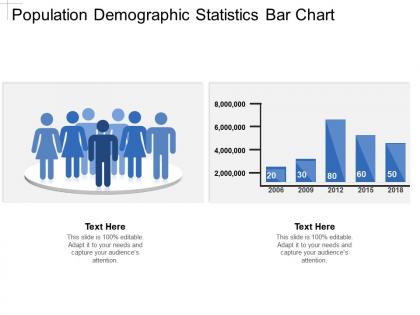
Population demographic statistics bar chart




Try Before you Buy Download Free Sample Product
 Impress Your
 Audience
 100%
100% Editable
 Save Hours
 of Time


Execute the judgement with our Population Demographic Statistics Bar Chart. Ensure implementation of each individual clause.
People who downloaded this PowerPoint presentation also viewed the following :
Population demographic statistics bar chart with all 5 slides:
Strike the iron while its hot. Give it the shape you want with our Population Demographic Statistics Bar Chart.




FAQs for Population demographic
So basically it's death rates dropping while birth rates stay high, especially in developing countries. Better healthcare means people live longer, but families in places like sub-Saharan Africa are still having lots of kids. Medical advances happened way faster than people changing their minds about family size - kind of crazy when you think about it. Rural families still need more hands for farming too. Oh, and here's the thing - if you want to predict where growth will actually slow down, look at women's education levels and how urban an area is getting. Those are like the best indicators.
So basically people are ditching rural areas and flocking to cities - you know how everyone's obsessed with moving to Austin or Denver lately? Same thing but way bigger. Cities become these massive population magnets while the countryside just empties out. Young people especially bail from small towns. You end up with this weird situation where some metro areas are exploding and rural counties are basically dying off. Honestly, the contrast is pretty crazy when you look at the numbers. Always check urban vs rural breakdowns in demographic data - that's where the real story is.
So demographics totally control how economies work - it's wild when you think about it. Younger populations mean more workers and people spending money. Older populations? They need healthcare but can't work as much. Birth rates are tricky though - they stress resources at first but help growth later. I always check age breakdown and education stats when I'm looking at markets because that's where the real story is. Oh, and education levels basically determine if a place can innovate or just has basic skills available. Countries with shrinking populations are screwed for workers.
So migration basically changes everything about a country's population. Young people moving in? You'll see more workers, cities growing, the whole age thing shifts younger. But when people leave, you're left with older folks and not enough workers - kinda depressing honestly. I was just reading about this the other day actually. Housing markets go crazy with immigration, tax money changes, all that stuff. Short sentences, long impacts. If you're trying to figure out population trends anywhere, you can't ignore people moving around - both inside the country and internationally. One policy tweak and boom, everything's different.
Honestly, countries need to hit this from all sides. Pushing retirement ages back, fixing pension systems, pumping money into healthcare. The smart ones are also tweaking immigration to get younger workers in and actually helping families with stuff like childcare to boost birth rates. Japan's basically the cautionary tale here - they waited way too long and now they're scrambling. Nordic countries seem to have figured it out though, they're crushing it with how they balance everything. Starting early is crucial before things get really messy. Oh, and seriously, look at Sweden's approach - it's pretty impressive how they've managed it all.
Okay so overpopulation is seriously messing with city environments. Air gets gross, water systems can't handle the load, and don't even get me started on the trash situation. Cities turn into these crazy heat islands that are way hotter than anywhere else around them. Transportation and energy use just pump out more emissions. Green spaces? Yeah, those disappear under all the concrete. It's honestly pretty depressing for wildlife too. But if you're doing urban planning stuff, vertical gardens are actually cool solutions. Better public transit helps a ton, and cities really need to get their waste management together.
Honestly, it's kinda complicated. Dense cities give you way better healthcare access and less car crashes since everyone takes transit. But then you're breathing gross air and diseases spread like wildfire - remember how fast COVID tore through NYC? Plus the housing situation is usually terrible and stressful. The infrastructure thing is wild too - like NYC's subway is incredible but their water pipes are falling apart. Really comes down to whether the city actually planned ahead or just let things happen. The places that invested early definitely have healthier people.
So there's a few things that actually work pretty well. Better education and job opportunities help a ton - people naturally have fewer kids when they've got more options. Improving healthcare is huge too, especially for moms and babies. Here's the weird part though - when infant mortality drops, families actually get smaller over time. Makes sense if you think about it. Family planning resources matter, and so does empowering women to make their own choices. Oh, and look at countries that have figured this out already - they're basically your blueprint. The goal is giving people real options, not forcing anything.
Yeah, culture totally drives how countries handle population stuff. Religious beliefs about contraception, traditional ideas on family size - it all matters. China's one-child thing? Completely went against their whole Confucian respect-for-elders vibe, which was... predictably a disaster. Catholic countries push back on birth control programs while places like Sweden go all-in on comprehensive planning since they're big on gender equality. Honestly, if you're doing global health work and don't get the local culture first, you're basically setting money on fire. Communities will just reject whatever you're trying to do.
Yeah, so here's the thing - more education actually means fewer babies. It's super consistent across different countries. People stay in school longer, so they start families later. Women get better career options too. Plus living in cities (where educated people usually end up) makes kids crazy expensive. Oh and educated folks have better access to birth control, which obviously helps. Demographers actually use education stats to predict population changes because the pattern's so reliable. Honestly if you want to guess where a country's population is heading, just look at their school enrollment first.
So basically, we've gotten way better at tracking population data thanks to tech. Satellites and phone data give us real-time info instead of waiting around for the next census. GPS surveys beat knocking on doors any day - honestly, who even answers anymore? Machine learning spots patterns in huge datasets that would take forever to find manually. The coolest part? We don't have to wait ten years between official counts to know what's happening. AI algorithms can analyze movement and demographics instantly, which is pretty wild when you think about it.
Oof, this gets messy fast. Bodily autonomy is huge - can governments really dictate how many kids you have? China's one-child policy was a disaster for obvious reasons. Religious and cultural beliefs clash hard with these policies too. Marginalized groups always get hit worst, which is super unfair. Enforcement becomes authoritarian nightmare fuel pretty quickly. Honestly if this is for work, I'd steer toward education and economic incentives instead. Way less controversial than mandates. The whole reproductive freedom angle makes this a minefield - people don't like being told what to do with their bodies.
So basically these international groups like the UN Population Fund handle the big stuff - funding family planning and maternal health programs, mostly in developing countries. WHO deals with health outcomes. UNICEF focuses on kids. But here's what's kinda crazy - the data collection they do might be the most crucial part. Governments use that demographic info to plan infrastructure and figure out what services they need. They're also trying to balance things out, you know? Some countries have aging populations while others are growing super fast. You can see their impact in national policies and those education campaigns everywhere.
So fertility rates totally change how societies work. Countries with lots of babies get young populations - great for labor but schools and hospitals get swamped. The flip side? Look at Japan - they're aging fast with fewer workers and crazy pension costs. Poor countries often can't handle all the kids they're having. Rich countries with low birth rates? Their economies start stagnating because there's nobody to replace retiring workers. I swear demographic data tells you more about a country's future than most economic reports do. Social programs, job markets, even what politicians care about - it all shifts based on whether people are having kids or not.
Yeah, more people definitely means more carbon emissions, energy use, all that stuff. It's kinda scary when you zoom out and think about it globally - like, we need more food production, housing, water. Deforestation gets worse. But honestly? How we consume matters just as much as how many of us there are. Rich countries waste so much compared to developing ones. Your individual choices help, but the real game-changer is supporting education and sustainable development policies. Those naturally slow population growth while actually improving people's lives. Win-win situation there.
-
Very well designed and informative templates.
-
Awesome presentation, really professional and easy to edit.