


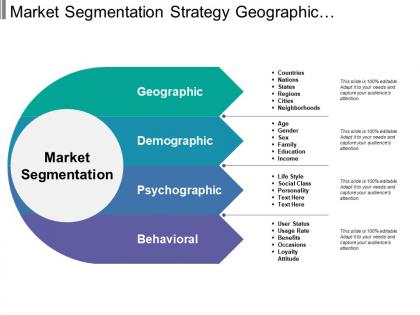
Market segmentation strategy geographic demographic psychographic behavioral





Try Before you Buy Download Free Sample Product
 Impress Your
 Audience
 100%
100% Editable
 Save Hours
 of Time


Canvas for your cause with our Market Segmentation Strategy Geographic Demographic Psychographic Behavioral. Get folks familiar with important details.
People who downloaded this PowerPoint presentation also viewed the following :
Market segmentation strategy geographic demographic psychographic behavioral with all 5 slides:
Adapt to changing circumstances with our Market Segmentation Strategy Geographic Demographic Psychographic Behavioral. Display agility and alter your approach.
-

Market segmentation strategy geographic demographic psychographic behavioral
-
Market segmentation strategy geographic demographic psychographic behavioral
-
Market segmentation strategy geographic demographic psychographic behavioral
-
Market segmentation strategy geographic demographic psychographic behavioral
-
Market segmentation strategy geographic demographic psychographic behavioral
FAQs for Market segmentation strategy geographic
So basically you want segments that are measurable, reachable, big enough to matter, and actually respond differently to your marketing. Otherwise why bother segmenting at all? You need to be able to size them up and actually reach these people through whatever channels you're using. Most companies totally blow this part though - they'll create these elaborate segments they can't even execute against. Keep it simple at first. Maybe start with 2-3 segments max, then see what works. Oh and make sure they're stable enough that you can actually run campaigns without everything shifting under you constantly.
So demographic data is your starting point for breaking down your market into groups that actually matter. Age, income, education, location - all the basic stuff that shows you who's buying. Honestly, it's the simplest way to begin targeting. But here's the thing - you've gotta combine demographics with how people behave to make segments that work for your business. Sure, knowing your customers are millennials helps, but millennials who care about sustainability? That's way more valuable. I'd start by checking your current customer demographics, then hunt for patterns that tie to buying habits. Works every time.
So psychographic segmentation is basically figuring out *why* people buy stuff - their values, attitudes, what they're into. Way more useful than just knowing someone's age, honestly. Two 35-year-old women could shop completely differently depending on if they care more about sustainability or convenience, you know? It reveals what actually drives purchasing decisions instead of surface-level demographics. You can craft messages that hit emotionally and predict behavior better. Oh, and start by surveying your current customers about their interests - that's probably the easiest way to build these profiles.
Honestly, geographic targeting is a game-changer if you do it right. Look at your customer data by zip code first - you'll spot buying patterns pretty quick. Like that clothing brand example? They're smart pushing coats in Minnesota while Florida gets swimwear ads. Sounds basic but tons of companies still screw this up somehow. You can tweak pricing for different regions too, work with local influencers, time stuff around regional holidays. Oh and climate matters way more than people think - don't sleep on that factor when you're planning campaigns.
Look, Google Analytics is probably your best starting point - it's free and shows you what people are actually doing on your site. SurveyMonkey's solid for getting direct feedback from customers about their preferences. If you're dealing with tons of data, R or SPSS will handle the heavy statistical lifting way better than Excel (trust me on that one). Your CRM might already have segmentation built in too - HubSpot and Salesforce are pretty decent for this stuff. Honestly though, I'd just start with whatever tools you can access right now rather than buying new software immediately.
B2B is all about company stuff - what industry they're in, how big they are, who makes the decisions. Takes forever to close deals because everyone and their manager needs to weigh in. You'll segment like "mid-size manufacturing" or whatever. B2C? Totally different game. You're looking at personal demographics, lifestyle, emotions. Way faster decisions since it's just one person buying for themselves. Main thing to remember - B2B buyers have budgets and solve business problems. B2C customers buy what they want or need personally. Oh and B2B decision-making is a nightmare with committees, but that's just how it goes. Figure out who actually signs the checks first.
Ugh, the complexity is brutal honestly. You're basically running like 5 campaigns at once - different messaging, different channels, way more budget. Tracking everything becomes this huge mess. Plus if you're not careful the messaging gets all over the place and your brand starts feeling scattered? Not cute. I'd say start super small though - maybe 2 or 3 segments tops. Get those dialed in first before you even think about expanding. Way better to crush a few segments than half-ass a bunch of them, you know?
Honestly, start by digging into your customer data - look for weird patterns like "eco-conscious millennials who refuse to shop in physical stores." Demographics and behavior stuff will show you these underserved groups that bigger companies totally ignore. The sweet spot? Small enough that Amazon doesn't care, but big enough to actually make money. Then craft messaging that hits their specific problems hard. I'd test with tiny campaigns first though - way cheaper to fail small than go all-in on something that flops. Trust me on that one.
Track your money metrics first - revenue per segment, conversion rates, customer lifetime value. That's the obvious stuff. But also watch how people actually behave differently across segments. Email opens, time on site, how often they buy. If all your segments are acting basically the same, then your segmentation is garbage (learned that the hard way). Most companies just stare at revenue numbers and think they're done. Wrong move. Pick maybe 3-4 metrics that actually matter to your business goals. Don't go overboard tracking every tiny thing or you'll drown in data.
Honestly, segmentation is a game changer because you're not just throwing generic stuff at everyone and hoping something sticks. You can actually speak to what each group cares about. Like instead of "buy our thing!" you'd tell busy parents "this saves you 2 hours every week." Demographics, behavior, interests - whatever makes sense for splitting them up. The cool part is you'll start seeing patterns, like which groups respond better to emotional stuff versus just straight facts. I'd say pick maybe 2-3 segments to start with and test different messages. Don't overcomplicate it at first.
Dude, the whole game's shifting toward crazy detailed personalization right now. Companies are ditching basic demographics for real behavioral data and AI stuff. Micro-segmentation is everywhere - like creating these super narrow audience groups instead of those old broad categories. Also, since cookies are basically dead, everyone's scrambling for zero-party data. Value-based segmentation's picking up steam too, where you group people by actual lifetime value rather than just what they bought. Honestly, it's getting pretty wild how granular this stuff is getting. I'd probably start by looking at your current segments and see where you can add more behavioral triggers.
Honestly, you've gotta bake flexibility right into your segmentation from day one. I'd set up quarterly reviews - maybe every six months if you're swamped - to check if your segments actually still make sense. Real-time data helps you catch shifts before they bite you. Companies get way too attached to their original segments, which is kinda crazy when you think about it. Create segments that can overlap instead of putting customers in rigid boxes. Oh, and treat this as ongoing work, not something you do once and forget. Schedule that first review session today before you get distracted by other fires.
Look, just don't be sketchy about it. Avoid using race, religion, gender stuff to exclude people from opportunities - that's both wrong and probably illegal. Be upfront about collecting customer data too, nobody likes feeling stalked by companies. Watch out for targeting vulnerable groups in predatory ways or reinforcing gross stereotypes. Honestly, I think the best test is imagining your segmentation strategy on the front page of a newspaper. Would you cringe? Then maybe try a different approach. There are plenty of ways to reach your audience without being shady about it.
Dude, culture totally changes how you should segment markets globally. What works amazing in one country can bomb spectacularly somewhere else. McDonald's learned this the hard way in India - had to completely flip their menu because of dietary restrictions. You can't just take your US segmentation and slap it onto Japan or Brazil, you know? Values, traditions, communication styles, even what colors mean - it all matters. I mean, red might symbolize luck in China but danger in other places. Research each market's quirks first, then tweak your segmentation variables. Don't be lazy and copy-paste your domestic strategy.
Honestly, customer feedback is like a mirror for your market segments - shows you if you're actually right about who your customers are. Use surveys and interviews to check if your groups make sense. You might find out you've been mixing up totally different types of people! The feedback uncovers pain points you never thought of too. I'd start simple though - just ask your current customers which group they think they belong in and see what they say. Sometimes their answers will surprise you way more than any fancy analysis.
-
Much better than the original! Thanks for the quick turnaround.
-
Perfect template with attractive color combination.