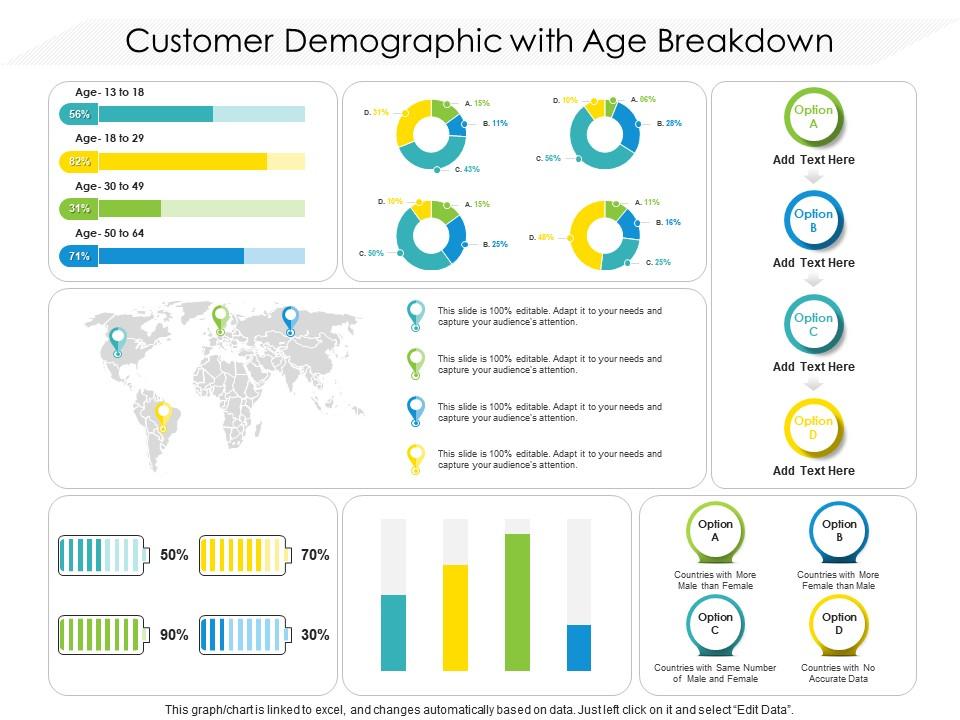
Customer demographic with age breakdown
Try Before you Buy Download Free Sample Product
Audience
Editable
of Time
Our Customer Demographic With Age Breakdown are topically designed to provide an attractive backdrop to any subject. Use them to look like a presentation pro.
People who downloaded this PowerPoint presentation also viewed the following :
Customer demographic with age breakdown with all 2 slides:
Use our Customer Demographic With Age Breakdown to effectively help you save your valuable time. They are readymade to fit into any presentation structure.
FAQs for Customer demographic
Honestly, start with the obvious stuff - age, gender, income, education, where they live, what they do for work. That's your base layer. Household size matters too, and whether they're married or single makes a huge difference in how people spend money. Parents vs singles? Totally different shopping habits. Geographic location is actually underrated - someone in rural Montana shops way differently than someone in downtown LA. If you can swing it, try to figure out hobbies and values, but don't stress if that's harder to collect. Just build on what you've got and add more details as you go.
So demographic data helps you figure out where your customers actually hang out and how to talk to them. Older audience? Hit up Facebook and email instead of TikTok. Sounds basic but tons of companies still mess this up somehow. You can tweak everything - your tone, images, even product features based on their age, income, where they live. I mean, trying to sell luxury stuff to broke college kids is just setting yourself up to fail. The smart move is splitting your audience into groups first, then making specific campaigns for each one instead of that generic spray-and-pray approach.
So Google Analytics is probably your best bet to start - it's free and shows you age, gender, interests, that kind of stuff. If you want to get fancier later, HubSpot or Mixpanel track how people actually use your site. Oh and surveys are clutch too - Typeform's pretty slick for that. I'd honestly just pick GA plus maybe one survey tool for now. No point dropping serious cash on the expensive stuff until you know what you're looking for, you know? The real trick is actually doing something with whatever data you get instead of just collecting it and forgetting about it.
Honestly, the generational gaps in shopping are wild when you think about it. Boomers still love their traditional shopping and stick with brands they trust. Gen X does this interesting mix of online research plus actual store visits. Millennials? They'll spend forever researching online first and only buy from companies that match their values - super into social proof too. Then there's Gen Z who basically live on their phones and can spot fake marketing from a mile away. They want real, not perfect. You've gotta tailor your approach instead of blasting everyone with the same message.
Demographic trends are like a crystal ball for your customer base. Aging populations? Healthcare and convenience services will boom. More ethnic diversity means chances for culturally-specific stuff and multilingual campaigns. And Gen Z - honestly, they're gonna want everything digital-first (wouldn't surprise me if they start ordering groceries through TikTok). Income changes tell you whether to go premium or budget. I'd say track 3-5 year demographic projections in your target markets - my cousin does this for her startup and it's been pretty solid. Then just tweak your product roadmap based on what you find.
Honestly, most companies just guess at who their customers are instead of actually finding out. Survey people who already buy from you and figure out who you're completely missing. Here's the thing though - if your whole marketing team looks the same, they'll have the same blind spots no matter how good your data is. Mix up your models and voices, but make it feel real, not like you're checking boxes. Test stuff with different groups before you go live. Oh, and audit your content regularly - you'd be surprised what patterns you don't notice until you actively look for them.
Where your customers live matters way more than most people think. Income levels change drastically between regions - plus you've got cultural differences, climate needs, all that stuff. Urban vs rural customers shop totally differently. I learned this the hard way when I tried selling winter coats to people in Florida lol. Local laws vary too, which can mess with your strategy. Weather patterns alone will shift buying seasons completely. Start by breaking down your customer data by location first - you'll spot trends that aren't obvious when you look at everything mixed together.
So basically, demographic segmentation means grouping your customers by stuff like age, income, where they live - you know, the obvious markers. Way better than sending the same boring message to everyone. You can actually target people properly, like pushing luxury products to people who can afford them or creating those weird TikTok ads for younger crowds. Honestly works so much better for getting people to actually buy things. Plus you'll find gaps you didn't even know existed - maybe there's a whole age group you're completely ignoring. Just dig into whatever customer data you've got and see what patterns jump out.
Okay so three main things to watch out for. First, get real consent - not that sneaky fine print bullshit nobody reads. Second thing is bias, which honestly trips up way more companies than you'd think. Demographic data can totally screw people over if you're not careful about targeting. Third is just being upfront about what you're collecting and why. Oh and definitely audit your stuff regularly. Like, would you be cool with someone using your info the same way? If not, that's probably your answer right there.
So income's obviously the big factor here - rich people buy quality and luxury stuff, poor people hunt for deals. But age makes it way more interesting than I thought. Young rich folks blow money on experiences and gadgets, while older wealthy people want things that'll last forever. Poor millennials? They're obsessed with finding trendy knockoffs, but older budget shoppers just stick with what works. Honestly, most companies totally miss this and only look at income. You've gotta target both age AND income together or you're basically throwing money away on ads.
Honestly, demographics are pretty overrated. They tell you *who* your customers are but miss the *why* behind their choices. Like, two soccer moms from the same zip code could have totally different values and spending habits, you know? People are way more complex than age brackets suggest these days. What really drives purchases are the psychological factors - their motivations, lifestyle preferences, past buying patterns. I'd definitely start collecting feedback directly from customers and tracking their actual behavior. Way more useful than just knowing someone's 32 and lives in Ohio.
Honestly, just start with the free stuff - Google Analytics and your social media insights are pretty solid for basic demographics. Your current customers are where the real gold is though, so hit them up with quick surveys via email or throw some questions into checkout. Facebook's audience insights tool is actually really good for seeing who's engaging with your posts. Age, location, interests - start there and don't overthink it. You can always go deeper later. The whole point is using this stuff to actually change your messaging and ads, not just hoarding data like some kind of marketing packrat.
The crazy thing is how much boomers started buying stuff online after 2020 - like they went from barely touching e-commerce to ordering groceries more than some millennials. Gen Z's obviously glued to their phones for shopping and buys everything through Instagram. Millennials? They're subscription addicts lol. But here's what's wild - age doesn't predict shopping behavior like it used to. When you're setting up campaigns, you'll get way better results targeting based on actual buying patterns instead of just throwing everyone into age groups. Trust me on this one.
Honestly, the worst thing you can do is assume demographics tell the whole story. Like yeah, maybe most millennials are on social media, but within that group there's massive variation. I see companies mess this up constantly with income assumptions too - thinking older folks won't buy new tech or that all Gen Z kids are broke. Don't lean on old data either. Your rural customers might surprise you with how tech-savvy they actually are! Skip the guessing game and just survey your actual customers. Look at what they're really buying instead of what you think they should be buying.
Dude, demographics are like your cheat code for product development. You see who's actually spending money, then build stuff they want. Say your customers are mostly busy millennials with cash - you'd focus on making things convenient instead of cheap, right? Age, income, how they live their lives... all that reveals what problems they need solved. Plus you might realize you're totally ignoring some age group that would buy your product if you just tweaked it a bit. I always tell people to survey their customers regularly - that data should basically drive your whole product roadmap.
-
Illustrative design with editable content. Exceptional value for money. Highly pleased with the product.
-
Great quality product.
-
Professional and unique presentations.
-
Editable templates with innovative design and color combination.
-
It saves your time and decrease your efforts in half.