

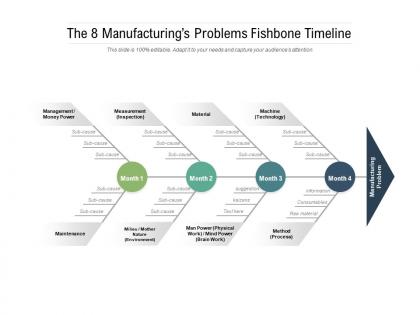
The 8 manufacturings problems fishbone timeline




Try Before you Buy Download Free Sample Product
 Impress Your
 Audience
 100%
100% Editable
 Save Hours
 of Time


Give brilliant inputs with our The 8 Manufacturings Problems Fishbone Timeline. Astonish folks with your incisive ideas.
People who downloaded this PowerPoint presentation also viewed the following :
The 8 manufacturings problems fishbone timeline with all 2 slides:
Astonish folks with your incisive ideas through our The 8 Manufacturings Problems Fishbone Timeline. Be able to give brilliant inputs.

FAQs for The 8 manufacturings
Dude, manufacturing is brutal right now. Supply chains are still completely messed up from all the global chaos - honestly feel bad for anyone dealing with that mess. Quality issues can destroy your reputation instantly. Equipment breaking down at the worst possible times, labor shortages everywhere, and don't even get me started on material costs eating into profits. The skills gap thing is wild too - experienced guys are retiring way faster than companies can train new people. My advice? Start with predictive maintenance and diversifying your suppliers. Those two moves will save you the most headaches down the road. Everything else can wait.
So lean manufacturing is basically about cutting out all the crap that wastes time and money. You know - making too much stuff, people waiting around, inventory piling up everywhere. Map out your whole process first to see where things get stuck (trust me, there's always more problems than you think). Instead of just cranking out products, switch to only making what people actually order. Oh and definitely get your team involved when you're walking through everything - they'll spot the obvious time-wasters way faster than management will. Just pick one process to start with though, don't try to fix everything at once.
Dude, you gotta get some tech in your quality control process. IoT sensors can watch everything in real-time, and AI vision systems catch tiny flaws way better than people can. I've been to factories that still do everything manually - honestly feels like they're stuck in the past. Machine learning finds defect patterns nobody would even think to look for. Oh, and predictive analytics helps you stop problems before they start, which is pretty cool. Pick one critical spot and automate the inspection there first. You'll probably see payback super quick.
Ugh, supply chain issues are the worst - they'll completely mess up your timeline and blow your budget. Your suppliers flake on deliveries, then you're stuck with workers sitting around doing nothing while production stops. Emergency sourcing costs a fortune, and don't even get me started on rush fees. Plus you end up working with sketchy new vendors who might send garbage quality materials. Honestly, the whole thing cascades into missed customer deadlines and inventory nightmares. My advice? Start building backup supplier relationships now, not when everything's already on fire.
Honestly, just focus on your people first. Good training and decent pay keep folks around longer - way cheaper than constantly hiring. Cross-training saved my butt so many times when people called out sick. You don't want to be that guy whose whole line stops because Steve's the only one who knows the fancy machine, you know? Safety meetings are boring but they work. Regular check-ins help too. Oh, and map out what skills you're actually missing before you waste money on random training programs. That's where you'll see real results.
Ugh, breakdowns are the worst - total domino effect. You're instantly behind on orders, customers start getting pissed, and you're bleeding money while still paying your crew to stand around. Repair bills? Don't even get me started. The whole mess can drag on for weeks if you're not prepared. Honestly, preventive maintenance is your lifeline here. Schedule regular check-ups and stock spare parts for your critical equipment. Won't prevent every breakdown, but it'll save your sanity when things inevitably go sideways.
Honestly, lean manufacturing is your best bet here. Map out what you're doing now and you'll spot the bottlenecks pretty quick. Don't overproduce - just make what you need when you need it. Quality checks early on save you from expensive fixes later (learned that the hard way). Keep your equipment maintained or you'll deal with those random breakdowns that waste everything. Short sentences work. Oh, and see if you can reuse materials somewhere - sometimes it's not obvious at first. Pick one area to start with and actually measure the waste reduction. The small changes really do add up faster than you'd think.
Don't jump into the deep end right away - pick some low-stakes area to test things out first. Map what you're already doing so you know where automation actually makes sense. I've seen way too many companies try to automate everything overnight and it's a nightmare. Focus on the boring, repetitive stuff that does high volume. Your current team needs to learn this stuff too, otherwise they'll just fight you on it. Honestly? Master one process completely before you even think about expanding. The layout changes alone will kill you if you go too big too fast.
IoT sensors are your best bet - they track temperature, vibration, pressure, all that stuff in real time. Wireless ones save you from running cables everywhere, which is honestly such a pain. Your SCADA and PLC systems probably already collect some data you can use. Mobile apps work great for techs to log observations too, though sometimes they forget to actually use them. I'd hook up your most critical machines first - no point going crazy with sensors on equipment that barely matters. Once you see how much downtime you're preventing, expanding the whole network becomes way easier to justify.
Ugh, compliance is such a pain - it totally disrupts everything. Your costs skyrocket because you're buying expensive eco-friendly materials and hiring environmental experts. The permitting alone can push back launches for months (I've seen companies lose their minds over this). Then there's all the monitoring and paperwork that just drains your team. Sometimes regulations force you to scrap entire processes or find new chemicals. My advice? Budget for compliance from day one and try to stay ahead of rule changes. Way better than playing catch-up later when you're already behind schedule.
Look, globalization's kinda tricky for manufacturing. Yeah, you're gonna deal with way more competition from cheap overseas stuff, which totally sucks for your margins. Supply chains get messier too since everything's connected globally now. But here's the thing - you also get access to way better tech and suppliers you'd never find locally. I'd probably focus on mixing global resources with local backup plans. Like, spread out your suppliers so you're not screwed if one country has issues. Automation might be worth it too, even though it's expensive upfront.
Don't just do training once when people start - that's where most places screw up. Do regular check-ins to see what skills people are missing, then build programs around that. Cross-training is massive because when someone calls out sick or quits, you're not totally screwed. I swear, every job I've had there's always that one guy who's the only person who knows some critical process. Partner with trade schools nearby or get equipment vendors to come in for the technical stuff. Just gotta budget for it consistently instead of scrambling when things go wrong.
Dude, material shortages are gonna wreck your production lines. You'll see output drop, lead times stretch out forever, and honestly? Some lines might just shut down completely when you run out of key stuff. Costs go crazy too - materials get pricey, you're paying rush fees, air freight becomes your expensive best friend. Then there's all the bonus pain: workers sitting around getting paid while machines are down, overtime later to catch up, plus you'll need buffer inventory that costs money to store. My advice? Start mapping your critical materials today and make friends with backup suppliers before everything hits the fan.
Honestly, good communication fixes so many manufacturing headaches it's crazy. Your floor workers usually know exactly what's breaking before anyone else does - they just need a way to actually tell management about it. Daily huddles work great for catching problems early instead of waiting for things to completely fall apart. Real-time updates help everyone spot patterns way faster too. The trick is making sure info goes both directions, not just managers talking down to workers. I'd probably start small with quick morning check-ins where people can flag issues right away. It's one of those things that sounds obvious but most places still suck at it.
Your customers are basically doing free quality testing for you - they'll catch stuff your QA team misses because they're using products in ways you never thought of. Track patterns in their complaints and returns. Like, if five people complain about the same thing, that's probably not user error, you know? Set up a system where customer service can quickly flag repeated issues to manufacturing. That way you're fixing the actual problem instead of just putting band-aids on symptoms. Honestly, customer feedback beats internal testing sometimes because real-world use is way messier than lab conditions.
No Reviews