


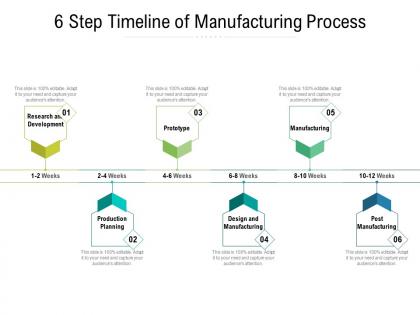
6 step timeline of manufacturing process




Try Before you Buy Download Free Sample Product
 Impress Your
 Audience
 100%
100% Editable
 Save Hours
 of Time


Bring back the cheer on every face with our 6 Step Timeline Of Manufacturing Process. It allows you to handle the jeers.
People who downloaded this PowerPoint presentation also viewed the following :
6 step timeline of manufacturing process with all 2 slides:
Our 6 Step Timeline Of Manufacturing Process ensure that your ideas jell. They begin to assume a definite form.
FAQs for 6 step timeline
So basically you've got design/planning first, then sourcing materials, setting up production, the actual manufacturing, quality checks, and shipping. Honestly the setup phase is where everything goes to hell - coordinating equipment and staff is such a pain. Oh and don't do quality control just at the end, run it alongside manufacturing or you'll hate yourself later. Everything takes way longer than you think it will (learned that the hard way). I'd add buffer time between each step and check progress weekly. Short sentences help you catch problems before they snowball.
So process mapping is basically drawing out every step in your manufacturing flow - sounds boring but it actually rocks for finding problems. You'll spot bottlenecks instantly. Plus all those steps that take forever for no good reason. I always tell people to start with just one product line because honestly, you don't want to overwhelm yourself right away. Once you see everything laid out visually, redundant steps become super obvious. Same with weird sequences that make zero sense. Materials getting stuck somewhere? You'll catch that too. Then you can figure out what to automate or just cut entirely.
So lean manufacturing is like decluttering your whole production process. All those random delays and pointless steps that drive you crazy? Lean helps you spot them and cut them out. The goal is getting work to flow smoothly between stages without stuff just sitting around or hitting weird bottlenecks. I've seen companies shave 20-30% off their timelines just by ditching tasks that weren't actually adding value - which is honestly pretty impressive. Start by mapping out what you're doing now and look for anywhere things get stuck or workers are just waiting around. You'll probably be surprised how much time gets wasted on nothing.
Yeah, supply chain issues can totally wreck your manufacturing schedule - I'm talking anywhere from a few days to months of delays. It really depends on how critical those missing parts are. When your main suppliers can't deliver, you're just sitting there waiting around, and then everything else gets backed up too. COVID was a perfect example of how quickly things fall apart, honestly. My advice? Build in some cushion time when you're planning schedules. Also try to line up backup suppliers before you actually need them - not when you're already in crisis mode. Oh, and maybe keep some extra inventory of your most important components on hand.
Most manufacturers I know swear by MES systems and ERP software like SAP or Oracle - they handle the big picture timeline stuff. Real-time dashboards are everywhere now, plus IoT sensors tracking machines and catching bottlenecks live. Gantt charts still work but honestly they're a nightmare once things get complicated. RFID and barcode scanning track your materials through each step. Predictive analytics are getting popular too for catching delays early. Oh, and start by figuring out where your timeline issues actually are first - saves you from buying tech you don't need.
Honestly, you gotta weave those quality checks right into your production flow instead of cramming them all at the end. Trust me on this - I've watched so many companies try to rush QC as a final step and it's a disaster every time. Do smaller checks as you go. Catches problems early before they snowball into bigger headaches. Your timelines become way more reliable too. The trick is being upfront with customers about realistic delivery dates. Like, don't promise miracles just because they want it fast. Map out what "quick but solid" actually means for your process and stick to it.
Okay so JIT is basically produce-only-what-you-need manufacturing, which sounds great in theory but honestly makes everything super time-sensitive. No more buffer inventory to save you when things go wrong. Your suppliers better be on point because one delayed shipment screws your whole line. Production stages have to sync up perfectly too - it's like choreography but with forklifts lol. The payoff though? You're not drowning in excess inventory or dealing with overstock headaches. Definitely try it on just one production line first to figure out the timing. Trust me, you'll want to iron out those kinks before going company-wide.
Honestly, it's all over the map depending on what you're making. Cars and planes? Years, because nobody wants lawsuits when stuff breaks. Tech moves crazy fast though - look at how often phones come out. Pharma takes forever thanks to clinical trials, but food companies can pivot pretty quick even with FDA stuff. Fashion's weird because they're locked into seasons, so maybe 6-12 months? The real trick is finding 3-4 companies doing exactly what you're doing and seeing their timelines. Way better than trying to compare across industries - a medical device isn't gonna move like a t-shirt, you know?
Honestly, the biggest game-changer is doing stuff in parallel instead of one thing after another. Get your suppliers looped in super early - like, during design phase early. Rapid prototyping saves you weeks if you're willing to screw up fast and learn from it. Oh, and cross-functional teams are actually worth the headache because you skip all those annoying handoffs between departments. Real-time collaboration tools keep everyone on the same page. Start by looking at your current timeline and see what you can overlap or just cut out completely. Some steps are probably pointless anyway.
Dude, project management methodologies are game-changers for manufacturing timelines. They give you way better visibility into each phase plus actual control over the chaos. You get clearer milestone tracking and smarter resource allocation - honestly feels like having GPS instead of just hoping everything works out. Lean or Agile are solid choices since they help spot bottlenecks early before they wreck your schedule. Teams stay way more coordinated too. The trick is finding what fits your specific setup and not abandoning it after two weeks (we've all been there). Risk management becomes actually manageable instead of just crossing your fingers.
Break your product development into phases first - concept, design, prototyping, testing, production. Then estimate based on similar projects you've done before. Always add 20-30% buffer time though, seriously everything takes way longer than expected. Set up regular checkpoints so you can adjust as you go. Don't forget about supplier lead times and regulatory stuff - that's where people usually get burned. Oh and plan for design iterations because your first version probably won't be perfect. Better to be realistic now than deal with angry stakeholders later when you miss deadlines.
So from what I've seen, you're looking at maybe 30-70% faster timelines once automation kicks in. Really depends how complex your stuff is though. The repetitive things like assembly and packaging - that's where you'll see crazy improvements since machines don't need coffee breaks, you know? Fair warning: setup is honestly kind of a nightmare at first. Getting everything calibrated takes forever. But once it's dialed in? Your cycle times become super predictable and throughput goes through the roof. I'd focus on whatever's creating your biggest bottlenecks right now - start there instead of trying to automate everything at once.
Honestly, start with cycle time - that's how long each production step actually takes. Then track throughput (units you're cranking out per hour/day). OEE is super useful too since it combines availability, performance, and quality into one number. Lead time from order to delivery matters big time. Also watch your work-in-progress inventory - that stuff just sitting there is literally cash doing nothing. Setup times between product runs and first-pass yield rates will show you exactly where things are getting stuck. Pick maybe 3-4 of these based on whatever's driving you crazy right now, then add more metrics later.
Honestly, just getting your design, production, and quality people in the same room regularly fixes SO many headaches. You'll catch problems early instead of - surprise! - finding them the day before launch. We do these quick 15-minute weekly check-ins and it's amazing how much smoother things run. No more waiting around for someone else's input or doing work twice because nobody communicated. When everyone sees the full timeline, they actually know what to focus on first. It sounds obvious but most teams skip this step and then wonder why everything's always on fire.
Honestly, the biggest pain is gonna be pushback from production teams - they hate changing what already works. Equipment limits will screw you over too. What sounds perfect in theory might be impossible with your actual machines. Getting real data on current performance is weirdly difficult, so you're basically planning blind half the time. Oh, and changing one thing messes up everything downstream - it's like dominoes. Start with small pilot tests first. Get your floor supervisors on board early because they can totally sink your whole plan if they're not feeling it.
No Reviews