


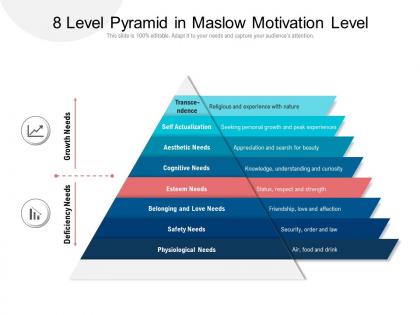
8 level pyramid in maslow motivation level




Try Before you Buy Download Free Sample Product
 Impress Your
 Audience
 100%
100% Editable
 Save Hours
 of Time


Appear highly coordinated with our 8 Level Pyramid In Maslow Motivation Level. All your ideas will gel correctly.
People who downloaded this PowerPoint presentation also viewed the following :
8 level pyramid in maslow motivation level with all 2 slides:
All your ideas gel correctly due to our 8 Level Pyramid In Maslow Motivation Level. You will appear highly coordinated.

FAQs for 8 level pyramid in
So Maslow's hierarchy goes: physiological needs at the bottom, then safety, love/belonging, esteem, and self-actualization at the top. Food and shelter come first obviously. Safety's next. The belonging part is huge - like, we all need people and community (remote work really messed this up for a lot of us). Esteem covers both respecting yourself and getting respect from others. Self-actualization is when you're actually growing and becoming who you're meant to be. You can't really focus on the higher stuff until you've got the basics covered first.
So Maslow's hierarchy is actually pretty useful for figuring out what drives your team members. Like, if someone's stressed about getting laid off, they're not gonna care about some cool creative project - they just want to know their job is safe. Basic stuff first, you know? Once people feel secure though, that's when recognition and growth opportunities start mattering way more. I've seen this play out so many times. The trick is reading where each person sits on that pyramid. Then you can match your approach to what they actually need right now instead of just guessing.
Honestly, start with the basics - kids can't learn when they're hungry or stressed, so breakfast programs and safe classrooms come first. Once that's covered, build community through group work and boost confidence with personalized feedback. I swear, half the time when "academic interventions" fail, it's because we're trying to teach self-actualization to a kid who's worried about lunch money. Do a quick mental check of where your struggling students actually are on that pyramid - like, are they even feeling safe and included? It usually explains why nothing else is sticking.
Honestly, Maslow's hierarchy gets way more complicated when you factor in real people. Your background totally changes what you prioritize - like someone from a family-focused culture might put belonging way above personal success. I've seen artists chase their creative dreams while barely scraping by (probably not the smartest financial move, but hey). Past trauma, personality, mental health - all that stuff shuffles the pyramid around. Don't just assume everyone needs security before wanting respect. When you're dealing with people, actually ask what drives them instead of following some textbook order.
Look, the biggest issue is it's way too rigid - like, tons of struggling artists chase creative fulfillment over paying rent, you know? Also super Western-biased since it's all about individual achievement. In collectivist cultures, family/community often comes first, not personal goals. Honestly, the research backing up this whole "you must climb each step" thing is pretty weak. Plus people's motivations are just messier than a clean pyramid suggests. I'd use it more as loose inspiration than some strict roadmap. Oh, and it totally ignores how someone might bounce between different levels depending on what's happening in their life.
So basically, you've gotta figure out where your client is stuck first. Like if someone can't afford groceries, don't dive into their daddy issues yet - deal with the basics. Sleep, food, safety stuff comes before working on relationships or confidence. I learned this the hard way watching other therapists jump straight to deep therapy when clients were still figuring out where they'd sleep that night. It's like building a house without a foundation, honestly. Once they're stable at one level, then you can move up Maslow's pyramid. Pretty straightforward approach but easy to mess up.
Yeah, culture totally changes how Maslow's hierarchy works in real life. Like safety needs - Americans worry about job security, but in other cultures it's way more about keeping your family/community safe. The self-actualization thing is weird too. We're obsessed with personal success here, but tons of cultures see fulfillment through helping your group instead. Even food isn't just survival - it's identity and connection. Honestly, the whole pyramid feels super Western when you break it down. Don't just assume everyone thinks like us when you're using this stuff.
So basically, start with the foundation stuff - decent pay and job security handle the survival needs. Build belonging through team activities and making sure everyone feels included. Recognition and growth opportunities boost people's confidence and self-worth. Here's the thing though - most companies check these boxes and still can't figure out why good people quit. The real difference happens at the top level where people actually find meaning in what they do. Give them autonomy and help them see their purpose. I'd honestly just map out what you're currently offering against each level and see what's missing.
You know when work doesn't feel like actual work? That's self-actualization kicking in. It's this drive to become who you're meant to be - pursuing stuff that matches your values instead of just chasing paychecks. Honestly, it's what makes people suddenly switch careers or dive into new skills that actually excite them. Money and status become less important than finding roles where you can use your real strengths. The whole thing boils down to one question: am I actually growing into the person I want to be, or just sleepwalking through my days?
So Maslow's hierarchy is basically your roadmap for understanding what drives people to buy stuff. Food companies hit you with safety messaging, but luxury brands? They're all about making you feel important or helping you "find yourself" - whatever that means lol. Car commercials are perfect examples - some focus on crash ratings while others sell you the fantasy of looking successful. Here's what I'd do: figure out which level of needs your product actually satisfies, then write copy that speaks to people sitting at that exact spot. Map your benefits to the different levels and see what gets people responding.
Look at Google and Salesforce - they actually get Maslow's hierarchy right. Google starts with decent pay and job security, builds strong teams where people feel like they belong, celebrates wins publicly, then gives that famous 20% time for personal projects. Salesforce has their whole Ohana thing going on (their employee satisfaction numbers are honestly crazy good). What's smart is they don't just throw ping pong tables at people and call it culture. They work through each need level systematically - fair compensation first, psychological safety, then meaningful work that feels purposeful. Worth checking how your workplace stacks up against each level, tbh.
So basically, Maslow's hierarchy explains why you can't expect people to care about education or voting when they're worried about where their next meal's coming from. Think about it - nobody's learning calculus on an empty stomach, right? That's why anti-poverty programs need to tackle the basics first: food, housing, safety. Once people aren't in survival mode, then they can actually focus on job training or getting involved in their community. It sounds obvious when you put it like that, but so many programs get this backwards. Build from the bottom up, not the other way around.
Maslow's hierarchy is basically everywhere in psychology - connects to self-determination theory since autonomy and competence match up with his higher needs. Attachment theory links in too because secure relationships early on help you move up the levels easier. Cognitive dissonance creates that same tension when needs aren't met. Honestly, I think that's why it's stuck around so long - gives you the big picture while other theories get super specific about mechanisms. Social learning theory overlaps with how we model self-actualization behaviors. Try matching your current stuff against the hierarchy sometime. It actually helps clarify what's really motivating you underneath all the noise.
Oh totally! Kids are basically glued to the bottom levels - they need their parents for safety and love before worrying about confidence. Then you hit your twenties and it's this weird ping-pong between wanting friends and trying to feel successful (quarter-life crisis much?). Middle-aged people finally get to explore who they really are once everything else is sorted. But honestly? Maslow oversimplified it. You're usually juggling multiple levels at once - like I know people crushing their careers while still dealing with relationship drama. Bottom line: don't expect someone to focus on personal growth when they're still stressed about basic stuff.
Honestly, Maslow had it right - you gotta work bottom to top. Can't expect someone to pursue their dreams when they're stressed about paying bills or feeling unsafe. Build up those relationships first, help them feel like they belong somewhere. Boost their confidence too. Once that stuff's handled, then you can push them toward creative projects and personal growth. Give them challenges that actually mean something to them - not just busy work. Oh and don't try skipping steps, it never works. People need that foundation solid before they'll take bigger risks.
No Reviews