

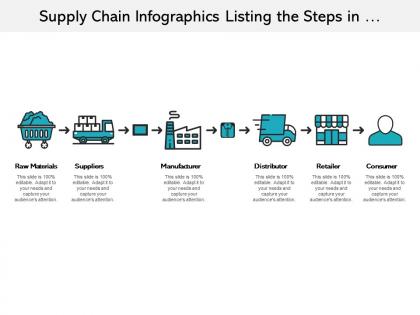
Supply chain infographics listing the steps in manufacturing process




Try Before you Buy Download Free Sample Product
 Impress Your
 Audience
 100%
100% Editable
 Save Hours
 of Time


Create the impression you intended with our Supply Chain Infographics Listing The Steps In Manufacturing Process. Convey your brainwave exactly as you had imagined.
People who downloaded this PowerPoint presentation also viewed the following :
Supply chain infographics listing the steps in manufacturing process with all 5 slides:
Our Supply Chain Infographics Listing The Steps In Manufacturing Process save precious time. Multiple options for whatever requirement.



FAQs for Supply chain infographics listing the steps
Okay so basically you've got five main stages: planning/design, getting your raw materials, actually making the stuff, quality checks, and getting it out there. Planning is where you really can't mess around - figure out your specs and what resources you need or you'll hate yourself later. Obviously production is the fun part, but honestly? Quality control might be even more important since fixing problems early is way cheaper. Oh and the handoffs between teams - that's where things usually go sideways. I'd start by mapping your workflow first, then figure out where things typically get stuck in your space.
Honestly, automation is a total game-changer for manufacturing. Machines don't get tired or make stupid mistakes like we do. They can run all night while everyone's sleeping, which is pretty sweet for productivity. Your cycle times get way faster since there's no inconsistency - you know how some days people are just off their game? Machines don't have that problem. Quality becomes super predictable too. The cool part is it actually makes jobs better for people because they can stop doing boring repetitive stuff and work on interesting problem-solving instead. I'd start by looking at whatever manual process eats up the most time - that's usually your best bet.
Look, supply chain management is basically what keeps your whole manufacturing thing from falling apart. You need the right stuff showing up when you need it, or you're screwed. Trust me on this one - nothing's worse than your production line sitting there doing nothing because someone forgot to order parts. It's about managing your suppliers, timing deliveries, keeping track of inventory levels. Oh and definitely have backup suppliers lined up before things go sideways. Build in some buffer time too because stuff always takes longer than expected. It covers everything from raw materials to vendor relationships.
Look, catching defects early saves you a ton of headaches down the road. Way better than dealing with angry customers later - trust me on that one. Set up checkpoints throughout your process so you can spot problems before they snowball. This keeps your standards consistent and cuts down on waste big time. Your production line runs smoother too. Here's what I'd do: map out where defects usually pop up in your process, then put quality checks right before those trouble spots. It's honestly one of those things that pays for itself pretty quickly.
Dude, start with IoT sensors and AI predictive maintenance - that's where the money is. 3D printing is everywhere now too. Robotics went crazy advanced, like they're doing quality control that used to need humans. Oh and digital twins are pretty sick - you can test your whole production line virtually first. Cloud manufacturing systems connect everything instantly, so you'll spot problems right away. My buddy's company saved tons just from that visibility alone. But honestly? Get your data collection sorted first. Can't fix what you can't see, right? Once that's dialed in, the rest follows.
So lean manufacturing is all about killing the "7 wastes" - overproduction, waiting, transportation, over-processing, inventory, motion, and defects. Map out your value stream first to catch bottlenecks. Just-in-time production cuts down on all that excess inventory sitting around (warehouses are money pits, honestly). 5S keeps your workspace organized, and continuous improvement gets everyone looking for ways to do things better. Don't try to fix everything at once though. Pick one line and walk through it with your operators - they'll spot stuff you missed.
Honestly, start by measuring what you're doing now - that's the only way to know where you're bleeding efficiency. Raw material waste is usually the biggest culprit. Water usage can be insane depending on your process (seriously, some operations are just water hogs). Switch to energy-efficient equipment when you can. Chemical byproducts need proper handling - that's non-negotiable. Don't forget packaging and shipping either, those add up fast. Most places track carbon footprint these days anyway, so you might as well jump on that train. Focus on the biggest waste sources first rather than trying to fix everything at once.
Dude, don't even think about adding safety stuff later - build it right into your process from the start. Do your hazard assessments while you're designing everything, then add guards and lockout procedures. Your SOPs should mix safety steps with production tasks, not separate them. I've watched companies try to bolt safety on afterward and it's such a mess. Short sentences work here. Train people on why they're doing safety stuff, not just what to do - they'll actually stick to it that way. Oh, and treat safety checkpoints exactly like you'd handle quality checks throughout your workflow.
Honestly, just pick a couple areas to start with - don't try to fix everything at once or you'll go crazy. LED lighting is super easy and saves money fast. For materials, lean manufacturing cuts waste big time, plus find suppliers who actually care about the environment. Water conservation is where you can see insane savings (like, jaw-dropping amounts). Renewable energy's great if you can swing it. Oh, and packaging - go minimal or biodegradable. The whole supply chain thing sounds overwhelming but you'd be surprised how much impact small changes make. Start simple, build from there.
Honestly, the worst stuff is usually quality control going sideways, equipment dying on you, and supply chain delays screwing your whole timeline. Material defects spiral out of control if you miss them early - learned that the hard way. Regulatory compliance and safety protocols slow everything down, but you can't skip those obviously. Capacity planning sucks too - you're either drowning in orders or twiddling your thumbs. Here's what actually works: pad your schedules with buffer time and stay on top of preventive maintenance. Oh, and keep your suppliers' numbers handy because most disasters come from communication breakdowns.
So production scheduling is basically like being the traffic cop of your factory floor. Jobs get sequenced by priority, when machines are free, and delivery deadlines - no more wondering what to build next. Picture Tetris but for manufacturing... everything clicks into place without gaps. Honestly, the difference is huge. Machines stop sitting around doing nothing, you don't get inventory backing up everywhere, and customers actually get their stuff on time. I'd start by sketching out how work flows through your shop right now. Find those spots where jobs always seem to get jammed up - that's where better scheduling really pays off.
OEE is what you want - it rolls availability, performance, and quality into one number and honestly saved my butt when I was trying to figure out what was going wrong. Also track cycle time so you can spot bottlenecks before they kill you, plus defect rates to keep quality in check. Throughput's important too since it shows your actual output vs what you should be hitting. Oh and cost per unit if the finance people are breathing down your neck (they always are). But seriously, start with OEE - it'll give you the clearest picture of what's actually happening on your line.
Think of prototyping as your best friend before going all-in on production. Test your design, materials, and processes without blowing your whole budget. Catch those annoying flaws early when fixes are cheap instead of brutal later on. Honestly? There's something really cool about holding that first physical version of your idea - even if it's rough around the edges. Start simple and keep refining based on what breaks or works. I'd say plan for at least 2-3 rounds of prototypes. Don't rush it - that's where people usually mess up.
Honestly, working closer with your suppliers is a game changer for efficiency. You'll get way better visibility into what they're doing, which means no more scrambling when stuff shows up late. Regular check-ins help too - share your forecasts and they can actually give you solid advice on materials or cheaper alternatives. They know their products better than anyone, obviously. Coordinating deliveries better cuts down on how much inventory you're sitting on, which saves money. Oh, and production scheduling becomes so much easier when you're not guessing about lead times. Start with your main suppliers first.
So basically, robots and AI are handling all the boring repetitive stuff now. Companies can't ignore sustainability anymore either - it's become like a requirement, not a nice-to-have. Those smart factories with sensors everywhere let you see what's happening instantly, though honestly the tech doesn't always cooperate. 3D printing is totally changing prototyping too. After all the supply chain chaos, everyone's scrambling for local suppliers and backup plans. My advice? Don't go crazy trying to digitize everything at once. Pick one process and start there.
No Reviews