

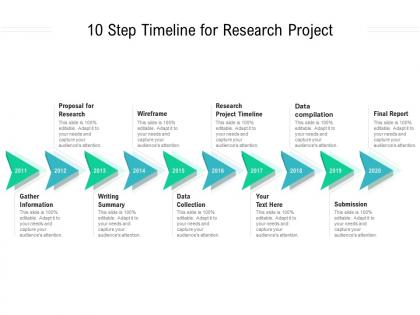
10 step timeline for research project




Try Before you Buy Download Free Sample Product
 Impress Your
 Audience
 100%
100% Editable
 Save Hours
 of Time


Our 10 Step Timeline For Research Project help conduct gala events. Be able to arrange a befitting jubilee.
People who downloaded this PowerPoint presentation also viewed the following :
10 step timeline for research project with all 2 slides:
Jubilees are fun due to our 10 Step Timeline For Research Project. Folks are bound to enjoy the gala.
FAQs for 10 step timeline
Key stuff to nail down: lit review done, proposal approved, when you're starting/finishing data collection, analysis chunk, and draft deadlines. Seriously though, pad everything with extra time - data collection is where timelines go to die. Don't forget ethics approvals and how many participants you need. Oh, and any defense or presentation dates. Be specific enough that you can actually track where you're at, but not so rigid that you panic when things shift around (because they will). I check mine monthly and give people updates if anything major changes.
Break it down into chunks - lit review, data collection, analysis, writing. Honestly, data collection is the worst part and will definitely take longer than you think. Factor in recruitment delays, crappy response rates, all that fun stuff. Look at similar projects you've done or bug your colleagues about their timelines. I always tack on an extra 20-30% buffer time because research is chaos. Oh and make a Gantt chart so you can actually track where you're at and pivot when things inevitably go sideways.
What kind of project are we talking about? Microsoft Project's the classic choice, but honestly Excel works fine for basic Gantt charts if you're not doing anything too crazy. Asana and Trello are solid for team stuff - way better for keeping everyone in the loop on milestones. Monday.com's pretty good too, though I feel like it tries to do everything at once sometimes. Google Sheets is surprisingly powerful if you don't mind building your own setup. For research projects specifically, Airtable's clutch because it handles both timeline tracking and organizing all your sources. Start with whatever your team already knows, then switch later if needed.
Honestly, I always pad my timelines by like 20-30% because Murphy's Law is real and stuff will go sideways. Instead of one massive deadline, chunk everything into smaller milestones - way easier to catch problems early. I keep this random running list of things that could go wrong and brainstorm backup plans when I'm procrastinating (actually useful procrastination for once). Your timeline isn't some sacred contract. Check it weekly and move stuff around when life happens. Way better than panicking at the end when you realize you're screwed.
Honestly? You'll probably need way more time than you think. Research gets weird and messy - I always tell people to double whatever timeline they first come up with. Participants flake, stuff breaks, your data does something totally unexpected. Don't dump everything at the end either. That's like academic suicide. Spread your big milestones out so you're not frantically writing and analyzing in those final weeks when you're already stressed. Start with your deadline and work backwards. Figure out your non-negotiable checkpoints first, then fill in everything else around those.
Honestly, it totally depends on your team's communication game. Good communication = faster results because everyone's working in parallel and catching each other's mistakes. But when people can't get on the same wavelength? Total nightmare. You'll waste so much time going back and forth on every little decision. I'd definitely set up regular check-ins from day one - maybe weekly or whatever works. Those shared project tools are clutch too. Oh, and figure out who's doing what before you start, or you'll have three people working on the same thing while other stuff gets ignored.
Honestly, your budget controls everything - who you can hire, what gear you can afford, how long the project runs. Tight money? You're stretching tasks way out or chopping stuff completely. Grant deadlines are the worst because they don't care about your research timeline at all. Here's the thing that sucks: good research is slow, but funds disappear crazy fast. I learned this the hard way on my last project. Start with what you can actually afford, then figure out what's doable within those limits. Don't plan the perfect timeline first - you'll just disappoint yourself.
Honestly, just decide upfront what "good enough" looks like for each part of your project. I used to try reading literally everything - huge mistake. Time-block your research and actually stick to it. Go broad first, then get specific as deadlines creep up. You'll want buffer time too because you know something random will catch your eye and derail you for hours. Perfect research is a myth anyway. Weekly self check-ins help keep you honest about whether you're still making progress or just procrastinating with fancy academic papers.
Honestly, don't just guess at timelines - look at what you're actually dealing with. Task complexity matters a ton, plus how everything connects together. Your team's real capacity too, not some fantasy version. Lit reviews? Maybe 3-4 weeks if you're doing it right. Data collection is all over the place depending on your methods. And analysis... ugh, that always drags on forever, so definitely build in extra time there. Oh, and factor in holidays and conference deadlines - that stuff sneaks up on you. Work backwards from your final date and be brutally honest about timing.
Honestly, I'd check every 2 weeks if your project's complicated. Monthly reviews sound reasonable but trust me - delays stack up fast and suddenly you're scrambling. Research is unpredictable as hell. One week you're stuck on something stupid, next week you get breakthrough results. Bi-weekly hits the sweet spot. You can catch problems early, move deadlines around, shift resources if needed. Weekly feels excessive unless you're in panic mode. Just throw it on your calendar so you don't forget - I always forget these things otherwise!
Honestly, just start with weekly check-ins with your team or boss - makes a huge difference. Use some kind of shared tracker so everyone can see where you're at. I swear by publicly committing to deadlines because it's way harder to slack off when people are watching. Break everything down into smaller pieces with actual deliverables you can point to. Find someone who'll genuinely call you out when you're dragging behind (not just someone who'll be "supportive"). The accountability thing really works if you pick the right person. Schedule your first milestone review this week and go from there.
Honestly? Make a visual timeline right away - like a basic Gantt chart or whatever works for you. Show all the big milestones and deadlines so nobody's guessing. I can't tell you how many projects I've watched crash because everyone had totally different ideas about timing. Define what "done" actually looks like for each step too. Set up regular check-ins to catch problems early. Oh, and share everything with the whole team - don't assume they know what you're thinking because they definitely don't. Better to over-communicate than deal with confused people later.
Honestly, break it into 3-6 month chunks with clear goals for each phase. Genome projects do this really well - sample collection first month, lab work for months 2-3, then data analysis and writing. Clinical trials are forced to plan like this (legal requirements and all that), but it actually works. Weekly check-ins beat waiting until the end of each phase to realize you're behind. Oh, and definitely build in buffer time between phases because stuff always takes longer than you think. Try looking at papers in your field and work backwards from their methods - you'll see how they structured everything timeline-wise.
Don't wait until the end to get feedback - that's a recipe for disaster! Build in review points after every major chunk: lit review, methodology, preliminary results, etc. I totally screwed this up once and had to redo half my project at month 8 (nightmare). After each feedback session, give yourself buffer time for revisions. Trust me on this one. Set up regular check-ins too - maybe bi-weekly if it's a shorter project? Monthly works for longer ones. The whole point is making feedback feel normal instead of this scary last-minute thing where everyone panics.
Look, making a timeline forces you to actually think through your whole process instead of winging it. You'll spot problems early - like realizing you need IRB approval way before recruiting people. No more panic-writing at 3am because you planned realistic chunks of time for each step. It keeps you from going down random rabbit holes too (scope creep is real). Honestly, the best part? You'll have time to actually revise your work instead of just hitting submit on whatever hot mess you threw together. Trust me, your data quality will thank you later.
No Reviews