


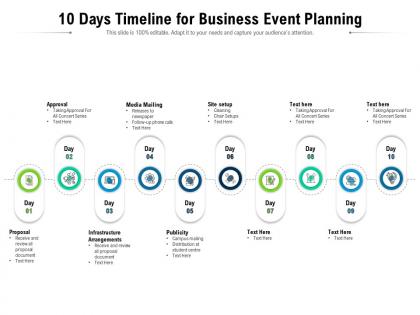
10 days timeline for business event planning




Try Before you Buy Download Free Sample Product
 Impress Your
 Audience
 100%
100% Editable
 Save Hours
 of Time


Our 10 Days Timeline For Business Event Planning are topically designed to provide an attractive backdrop to any subject. Use them to look like a presentation pro.
People who downloaded this PowerPoint presentation also viewed the following :
10 days timeline for business event planning with all 2 slides:
Use our 10 Days Timeline For Business Event Planning to effectively help you save your valuable time. They are readymade to fit into any presentation structure.
FAQs for 10 days timeline for
Ok so definitely book your venue and lock down the date like 6-12 months ahead - that's the big one. After that, work backwards: save-the-dates around 4-6 months out, then nail down vendors and detailed stuff at 3-4 months. Invites go out 6-8 weeks before, final headcount about 1-2 weeks prior. Honestly, I'd add a buffer week somewhere because trust me, something will go sideways. Also don't forget milestone check-ins for catering and AV - that technical stuff always takes forever. My sister learned this the hard way! Everything takes way longer than you think it will.
Honestly, it totally depends on what you're planning. Big corporate stuff needs like 6-12 months - venues get booked up crazy early and coordinating speakers is a nightmare. Weddings are even worse, start 12-18 months out if you want any decent venue options. But smaller things? Team meetings or casual networking events work fine with 4-6 weeks. Guest count matters too, obviously. I always add extra time though - whatever timeline you think sounds reasonable, bump it up by like 25%. Oh and definitely work backwards from your event date once you know what you actually need. Makes everything way less stressful.
Honestly, there's so many good timeline tools out there. Asana and Monday.com are solid if you need to assign tasks and set deadlines for your team. Trello's my go-to though - love those visual boards, makes everything click for me. Google Sheets works too if you're on a budget, just throw together a basic Gantt chart. Microsoft Project is overkill unless you're managing something massive. Oh, and here's a tip - whatever your team already knows how to use, start there. Nobody wants to learn new software when they're already swamped. You can always switch later if it's not cutting it.
So for smaller stuff under 50 people, you can probably get away with 3 months. Bigger events though? I'd say 6 months minimum - I've watched people try to pull together conferences in 8 weeks and it's just chaos. You want time to actually get the venue you want, not whatever's leftover. Plus vendors give you way better deals when you're not desperate. Oh and honestly, something always changes last minute anyway, so having that buffer saves your sanity. Start with date and venue first, then figure out budget. Everything else is easier once you've got those locked down.
Start with the big three: date, venue, budget. Everything else flows from those decisions. Get a rough guest count going too - doesn't have to be perfect yet. Book your major vendors ASAP because the good caterers and DJs disappear fast (learned that one the hard way!). Yeah, month one feels crazy overwhelming. Don't stress about centerpieces or linens right now though. Focus on the skeleton of your event first. Make a timeline if you're organized like that. Ask for help if people offer it. The pretty details come later - right now you're just building the foundation so you can actually have fun planning the rest.
Honestly, just bake in way more time than you think you need - like 20-30% buffer for big stuff. Something WILL go wrong, that's basically guaranteed. Keep backup vendors and venues ready to go so you're not panicking at the last minute. Two weeks before? Lock it down - no more changes unless it's absolutely critical. Oh, and give your team actual decision-making power so they don't have to run everything by you. The biggest thing though is telling people about changes immediately. I've seen tiny problems turn into complete disasters just because someone waited too long to speak up.
Oh man, the biggest thing? People always underestimate setup time - like, always. You need way more buffer periods than you think for vendor stuff and venue prep. Approval cycles are the worst too, committees make everything take forever. I learned this the hard way lol. Don't pack too much into that final week either, it'll stress you out. Start planning 3-6 months ahead depending on size. Honestly just add 20% extra time to every big milestone and have a backup plan ready. Trust me on this one.
Honestly, just bake feedback windows right into your timeline from the start. After big decisions like venue or catering, block out review time - and add extra days because people are terrible at deadlines. Give stakeholders clear due dates and tell them exactly what you need at each stage. Way better to control when they chime in than deal with random comments later. Oh and use shared docs or simple forms to collect everything - saves you from digging through a million emails. Trust me, being proactive about this will save your sanity.
Honestly, your budget is gonna control your whole timeline. More money means you can book those fancy vendors who need like a year's notice (which is ridiculous but whatever). Tight budget? You'll be spending way more time hunting for deals and figuring out what you can DIY. I'd start planning your budget stuff at least 6-8 months out - trust me on this one. Otherwise you'll be stuck with whoever's left or paying crazy last-minute prices. The research alone takes forever when you're trying to save money.
Okay so first things first - book your venue and catering ASAP because those fill up crazy fast. Same with photographers, DJs, whatever big vendors you need. Then handle stuff with long deadlines like invitations (ugh, printing takes forever). I'd make a list of what's urgent vs what can wait - like you can't really plan decorations until you know your venue layout, you know? Oh and honestly? Don't do what I did and leave the printing until two weeks before. Never again lol. When you're stressed later you'll thank yourself for getting the big stuff locked down early.
Honestly, I'd start by figuring out who's good at what - put your detail person on vendor stuff, social person handles guest communications, you know? I used to try doing everything myself and it was a nightmare. Give everyone specific deadlines but build in extra time because something always goes wrong (usually multiple somethings). Check in with people regularly instead of crossing your fingers. Oh, and start this whole process like 8 weeks early so nobody's stressed. The ownership thing is huge - people care more when it's actually their responsibility, not just busywork you dumped on them.
Make your timeline the go-to spot for everything - stick it in Slack, on a shared drive, or honestly just print the thing out and tape it up somewhere. During meetings, pull it up to see what's coming and catch problems early. Everyone needs to actually use it though, which is the tricky part. I'd do weekly check-ins where people can say "hey I'm behind" or ask for backup. That way you avoid those awkward moments when someone's like "wait, this was due today?" Just keep it updated and make sure it's not sitting there collecting digital dust.
Start your timeline 8-12 weeks out with save-the-dates and early registration. Social media should kick in around week 6-8. Email sequences? Begin those at 4-6 weeks before. Speaker announcements and content teasers need to happen throughout - honestly, consistency here is everything. The final two weeks are make-or-break time. Reminder emails, social proof, last-chance messaging. I know it feels pushy but trust me, people forget stuff constantly. Oh, and definitely make a content calendar with actual dates. Otherwise you'll be scrambling at the last minute wondering what you forgot to post.
Honestly, flexible timelines are a lifesaver. You know how events always go sideways? Vendors show up late, clients flip their entire vision the day before - it's just what happens. I used to stress so hard about this stuff until I started building in buffer time. Now when things inevitably get weird, I'm not running around like a headless chicken. Makes you look way more professional too since you're not visibly panicking in front of everyone. My rule now is always add 20% extra time to big milestones and have a backup plan ready to go.
Always pad your timeline with 20% extra buffer, especially for vendor setup and tech stuff. Weather's gonna be your biggest wildcard - I learned that the hard way. Have backup plans ready: alternative venues, different caterers, indoor options if you're doing outdoor. Map out your hard deadlines too, like when you absolutely have to make the call to move inside or switch vendors. The trick is figuring out what might go wrong before it does. Don't wait until you're panicking to come up with Plan B - have it ready to go.
-
Graphics are very appealing to eyes.
-
Use of icon with content is very relateable, informative and appealing.
-
Great experience, I would definitely use your services further.
-
Professional and unique presentations.
-
Editable templates with innovative design and color combination.