


The Life Cycle Of Taenia Solium PPT Template ST AI SS




Try Before you Buy Download Free Sample Product
 Impress Your
 Audience
 100%
100% Editable
 Save Hours
 of Time


Explore the intricate life cycle of Taenia Solium with our professional PowerPoint presentation template. This visually engaging deck features detailed diagrams, informative slides, and expert insights, perfect for educational purposes. Enhance your presentations on parasitology and public health with this comprehensive and customizable resource.
People who downloaded this PowerPoint presentation also viewed the following :
The Life Cycle Of Taenia Solium PPT Template ST AI SS with all 9 slides:
Use our The Life Cycle Of Taenia Solium PPT Template ST AI SS to effectively help you save your valuable time. They are readymade to fit into any presentation structure.









FAQs for The Life Cycle Of Taenia Solium PPT Template
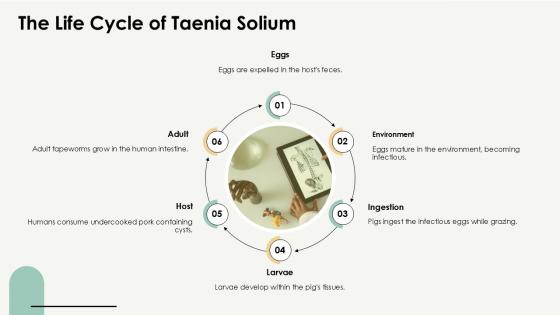
Okay so basically Taenia solium uses pigs and humans in this weird two-part cycle. Pigs are the intermediate hosts, we're the definitive ones. If you eat undercooked pork with cysticerci, you'll get adult tapeworms in your intestines - that's taeniasis. But here's the really scary part: accidentally swallow the eggs from contaminated food or water and you become the intermediate host instead. That means larvae can end up in your brain, muscles, even your eyes - it's called cysticercosis and honestly sounds like a nightmare. Way more dangerous than just having a regular tapeworm. Cook your pork well!
So basically, humans can be both types of hosts but pigs can only be one. If you eat undercooked pork with those cyst things, you'll get regular tapeworms in your gut. But here's the gross part - swallow the actual eggs (from contaminated water or whatever) and you become like the pig, getting cysts in your tissues instead. Pigs can't get adult worms, just the cyst version. Honestly the whole thing is pretty nasty when you think about it. Just cook your pork well and wash your hands if you're around this stuff.
So there's two main ways you can get this - eating undercooked pork with the larvae in it, or the fecal-oral route (gross but important). The pork thing just gives you regular intestinal tapeworms. But the fecal-oral transmission is way worse because those larvae can end up in your brain tissue. That happens when you accidentally ingest eggs from contaminated water, food, or surfaces touched by infected feces. Always cook your pork well and wash your hands religiously, especially if you're traveling somewhere this stuff is common. Honestly the brain part freaks me out the most.
So cysticercosis symptoms totally depend on where those cysts decide to set up shop in your body. Seizures are usually what brings people to the ER first - that's the scary neurocysticercosis stuff along with headaches and pressure in the brain. Eye involvement messes with vision and hurts like hell. You might feel lumps under your skin too, which is weird but not as dangerous honestly. Muscle cysts don't really bug you unless they calcify and get all inflamed. If there's any chance it's in the brain, imaging is non-negotiable - CT or MRI will show what's actually going on in there.
Start with stool microscopy for eggs or proglottids - that's your easiest bet. The eggs look exactly like T. saginata though, which is super frustrating. Proglottids help since T. solium has fewer uterine branches. If you're thinking neurocysticercosis, CT or MRI will show the cysts. Serology's useful too - CDC has solid ELISA tests. Oh, and definitely screen family members since it spreads person-to-person. I always forget that part initially but it's crucial.
Cook your pork to 145°F minimum - yeah I know, seems obvious but people mess this up. Wash hands after bathroom trips since that's how the eggs spread around. Raw veggies in sketchy areas? Skip them if they might've been exposed to contaminated water or sewage. Same goes for untreated water - just don't risk it. The weird thing about this parasite is humans can be both the main host AND get infected as an intermediate host, which honestly makes it more annoying to deal with. Breaking that poop-to-mouth cycle is basically your main defense here.
So it spreads wherever free-range pigs meet bad sewage systems - pretty nasty combo. Pigs eat human waste, become hosts, then people get infected from undercooked pork. Rural areas get hit hardest since traditional farming doesn't mix well with poor sanitation. Breaking the cycle isn't too complicated though - better pig pens and making sure pork gets cooked properly. Those two things alone can stop most transmission. I mean, the whole process is disgusting when you really think about it, but at least the solution is straightforward.
So basically, proper sewage treatment is huge for stopping Taenia solium spread. Human waste carries the eggs, and without good sanitation they just contaminate everything - soil, water, you name it. Pigs pick them up when they're rooting around in gross areas (which they love to do, unfortunately). Better toilets and waste management in affected areas cuts down contamination big time. I'd definitely focus on sanitation infrastructure if you're dealing with this stuff. It's one of those unsexy solutions that actually works really well alongside other prevention methods.
Dude, T. solium is honestly way more expensive than you'd think. Diagnostics cost a fortune, and neurocysticercosis treatment drags on forever - we're talking years of management. Surgery becomes necessary when meds don't control the seizures. People miss tons of work because of seizures and brain fog, which tanks productivity. I know it sounds like some random tropical disease, but the costs really pile up in endemic areas. Short version: budget for long-term care expenses because these patients aren't one-and-done cases.
Rural areas in developing countries get hit hardest - especially Latin America, sub-Saharan Africa, and Southeast Asia. It's basically a nasty cycle where poor sewage systems contaminate pig feed with human waste (ugh, right?). Backyard pig farming without proper hygiene makes it worse. Limited access to clean water doesn't help either. If you're headed somewhere endemic, cook your pork really well. Actually, just be paranoid about water sources and wash your hands constantly. I learned this the hard way during my semester abroad.
So there are basically two main drugs - praziquantel and albendazole. Both work well for killing tapeworms in your gut. Praziquantel's usually what doctors go with first since it's faster, but honestly either one will do the trick. Now if the larvae actually get into your tissues (that's called cysticercosis), you'll need the same meds but for way longer. Sometimes they add steroids too because of swelling. The brain version is the worst - you might need seizure meds on top of everything else. Definitely get properly diagnosed first though, since treatment's totally different depending on where exactly these things are hanging out in your body.
So the whole approach to dealing with T. solium has totally changed - it's not just about treating sick people anymore. Now they do these massive community programs that hit everything at once: drug campaigns, better sanitation, vaccinating pigs, educating locals. Makes sense honestly, since just medicating humans wasn't working. The WHO came up with this "One Health" thing because you have to break that cycle between people, pigs, and contaminated environments. They're also big on mapping where it's endemic and doing targeted surveillance. If you're dealing with this stuff in the field, definitely push for those multi-sector approaches instead of just medical fixes.
Honestly, we're still figuring out how this thing even spreads between people - asymptomatic carriers are a total mystery. Diagnostic tools suck too, which makes it impossible to track properly. Control programs might be working, but nobody really knows long-term effectiveness. There's barely any research on the socioeconomic stuff driving transmission, which seems backwards to me. WHO wants more surveillance data but most places can't afford it anyway. Oh, and endemic regions are basically flying blind without proper resources. If you're diving into this field, I'd tackle diagnostics first - that's where you'll actually move the needle.
So basically, warmer temps from climate change help these parasite eggs survive way longer in soil, which is pretty gross when you think about it. More rain means they spread easier too. But here's the real kicker - people and infected pigs are migrating to new areas because of climate shifts, bringing T. solium with them. It loves places with crappy sanitation and backyard pig farming. As those conditions pop up in regions that used to be too cold, the parasite just follows along. We should definitely watch for new hotspots emerging.
Yeah, TSOL18 is looking pretty solid right now - it targets the oncosphere stage and did well in pig trials. Honestly, focusing on vaccinating pigs makes way more sense than trying to vaccinate humans since it breaks the whole cycle at the source. They're also messing around with recombinant protein and DNA vaccines, but those seem further out. The real problem isn't even the science at this point - it's getting any of this stuff cheap enough for places that actually need it. TSOL18's probably your best shot for something that'll actually get deployed in the next few years, so I'd watch those trials closely.
-
“Easy to use. I always wanted to have a quick search for products and SlideTeam has helped me have it.”
-
Wonderful ideas and visuals. I'm really pleased with the templates, which are unique and up to date.