


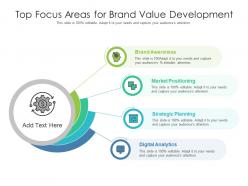
Top focus areas for brand value development





Try Before you Buy Download Free Sample Product
 Impress Your
 Audience
 100%
100% Editable
 Save Hours
 of Time


Our Top Focus Areas For Brand Value Development are topically designed to provide an attractive backdrop to any subject. Use them to look like a presentation pro.
People who downloaded this PowerPoint presentation also viewed the following :
Top focus areas for brand value development with all 2 slides:
Use our Top Focus Areas For Brand Value Development to effectively help you save your valuable time. They are readymade to fit into any presentation structure.
FAQs for Top focus areas for
So there's basically three ways to value a brand. Cost approach just adds up what you spent building it - marketing, R&D, whatever. Market approach compares it to similar brands that sold recently, but honestly good comparables are hard to find. Income approach is what most people use though - you estimate future cash flows and discount them back. That one makes the most sense to me. Most valuators mix all three since each method has gaps. I'd probably start with the income one if you're just doing this internally.
Your brand's perception literally controls what you can charge. Positive perception means premium prices and loyal customers - both pump up your valuation. Think about it - would you rather be seen as the cheap generic option or something people actually crave? Bad perception kills your sales and forces those awful price cuts we've all seen companies do. Meanwhile, strong perception lets you charge more AND grow faster. Honestly, most businesses don't track this stuff nearly enough. By the time you notice perception shifting, it's already hitting your profits. Check those metrics regularly.
Your brand's value rides the wave of whatever's happening in your market. Declining industry? Your brand gets dragged down even if it's solid internally. Growth markets boost everyone though. Pricing power and market share both shift with trends - and valuators obsess over that stuff in their calculations. Honestly, investors will throw way more money at brands riding hot trends versus ones stuck in boring, outdated categories. You'll want to watch those industry forecasts and maybe spin your brand story around whatever sectors are actually growing. It's kind of crazy how much outside forces matter.
Look, your brand's financial numbers are what actually matter when it comes to valuation. Revenue growth and profit margins show investors that your brand isn't just pretty marketing - it's making real money. Brand awareness is cool, but cash flow is what counts. The better your financials, the more your brand is worth. Honestly, I've seen too many companies get caught up in vanity metrics. When you're planning brand stuff, always connect it to financial goals so you can prove it's working and get budget for more.
Honestly, emotional connections are huge for brand value. People who feel attached to your brand will pay more and stay loyal longer - that's money in the bank. Look at Apple fanboys camping out for new phones (totally insane but brilliant for business). Your customers become walking billboards too, spreading word-of-mouth for free. The trick is actually measuring this stuff through brand equity studies and tracking metrics like customer lifetime value. I'd focus on loyalty scores and how much extra people will pay. It sounds fluffy, but investors love seeing those numbers because they directly impact your bottom line.
So basically, tangible brand stuff is anything you can actually touch - your branded products, signs, packaging, company cars, whatever. Pretty straightforward to value since there's real market prices. Intangible assets though? That's where it gets interesting (and honestly more valuable). We're talking brand recognition, how much customers actually love you, trademark rights, reputation - all that fuzzy emotional stuff. Way harder to put a number on, but usually worth way more than the physical things. I'd spend most of your time figuring out those intangibles. That's probably where the real money is hiding anyway.
Honestly, global markets make brand valuation a total headache. You're juggling different currencies, what people actually think of your brand in each region, plus completely different competitive scenes. Like, your brand could be huge in the US but nobody's heard of it in Southeast Asia. The old single-model approach? Forget it. Now you've got to break everything down by region and figure out local brand equity - which sounds boring but it's actually pretty fascinating how differently brands perform. Different markets mean different ways to make money too. My take: get some market-specific tracking going ASAP so you'll have real data instead of guessing.
Dude, brand rep is huge for company value. Strong reputation means you can charge more and customers stick around longer. Plus recruiting becomes way easier when people actually want to work for you. Wells Fargo is a perfect example of how fast things can go south - their scandal absolutely destroyed their value overnight. Trust affects everything from how much it costs to get new customers to your actual stock price. I mean, it's basically the difference between people choosing you or your competitor. Don't think of reputation management as just marketing BS - there's real money behind it.
Honestly, brand valuation is a game changer because it gives you actual numbers instead of just guessing. Like, you'll finally know if that big marketing budget is worth it or which products actually deserve more money. When I first saw our brand's dollar value, it was wild - way different than what I expected. Plus it's super helpful for negotiations, whether you're doing partnerships or licensing deals. Even if you're thinking about selling down the road. I'd start with getting a baseline done so you have something to compare against later. That way you can actually see if your moves are working.
Honestly, start with market share - both how much you're selling and what it's worth compared to competitors. Brand awareness is huge too. Are people actually thinking about you when they shop? Check your pricing power - can you charge more than the other guys without losing customers? I'd also look at share of voice in marketing. Sometimes companies think they're shouting but they're actually whispering. Net Promoter Score and repeat buys tell you if customers genuinely like you or just tolerate you. Social sentiment tracking is clutch for catching brand perception shifts early. Do quarterly benchmarks against your top 5 competitors - makes it way easier to see patterns.
Honestly? Do it annually at minimum, but that's pretty basic. Major changes like acquisitions or market expansion mean you'll need quarterly check-ins - maybe even more if things get crazy. Most brands stick with yearly since it matches their financial reporting anyway. Plus you get decent trend data to actually see what's working. Block time in Q4 for next year's assessment though, trust me on this one. Way better than scrambling when you suddenly need the numbers. If your brand's pretty stable, annual works fine. But don't be rigid about it - sometimes the market moves faster than your calendar.
Digital brands can literally change everything overnight - that's the real nightmare here. Traditional valuation methods? Forget it. Your whole brand value depends on algorithms, data, and platforms that shift constantly. Look at TikTok creators who lose their entire audience when the algorithm tweaks. Plus there's all this weird stuff like user content and network effects that financial models weren't built for. Honestly, the speed of everything is insane. You'll need multiple valuation methods and update them way more often than normal brands - maybe quarterly instead of yearly?
M&As are wild - your brand value can totally tank or skyrocket depending on how things go. Usually you're paying extra for their brand reputation when acquiring, which sometimes works out and sometimes... doesn't (tech companies are notorious for this). Poor integration can mess up your own brand, but nail it right and you'll come out stronger. The target company? Their brand just gets rolled into whatever the buyer thinks it's worth. Honestly though, most people skip the brand analysis part and just look at numbers - big mistake if you ask me.
So there's some solid specialized stuff out there - Interbrand's valuation tools, Brand Finance analytics, BrandZ database. Excel handles most of the financial modeling honestly (maybe 80% of what you need). Unless you're doing crazy complex scenarios, then something like @RISK works better. For consumer data, Qualtis is pretty standard for surveys. Brandwatch and Hootsuite Insights are good for tracking what people actually say about brands online - that social listening stuff is huge now. Oh, and don't blow your budget right away. See what you can access first before buying the expensive packages.
Look, trademarks are what actually make your brand *yours* - otherwise anyone can rip off your name and logo. Think about it: Nike's swoosh wouldn't mean anything if knockoffs could legally use it too. Your IP portfolio is basically what investors look at when they're valuing your company. Registration gives you the power to license stuff out for extra revenue, which is pretty sweet. Filing early is clutch because trademark law gets messy if you wait. I'd honestly rather have solid IP than a flashy marketing budget. Get your key stuff protected now before some competitor swooshes in.
-
Innovative and attractive designs.
-
Presentation Design is very nice, good work with the content as well.
-
Excellent template with unique design.
-
Great product with highly impressive and engaging designs.
-
Designs have enough space to add content.