


Trade Marketing Plan To Increase Market Share Strategy CD
Here is a competently designed Trade Marketing Plan to Increase Market Share PowerPoint Presentation. It highlights strategies businesses employ to connect with consumers and supply chain partners, aiming to achieve broader audience reach, increased profitability, higher sales, improved revenue, lead conversion, market expansion, and website traffic enhancement. Additionally, the Trade Shows PPT slides present an overview of trade marketing, encompassing its benefits, components, necessities, key users, and functions, is presented. Addressing the firms challenges and providing viable solutions is a crucial discussion aspect. Furthermore, the techniques to engage the target audience, such as trade shows, promotions, market research, branding, and digital marketing, are explored. This includes leveraging survey findings, product giveaways, competitor analysis, sales data assessment, landing page creation, discounts, social media utilization, and software adoption for efficient company operations. Lastly, the Deals and Discounts templates emphasize the favorable outcomes of successful trade marketing implementation, budget allocation, and spending on various techniques and incorporate a case study to illustrate these concepts. The template is fully editable, customizable, and compatible with Google Slides. Download now to access this comprehensive resource.











































You must be logged in to download this presentation.


Do you want to remove this product from your favourites?
 Impress your
 audience
 100%
100% Editable
 Save Hours
 of Time
PowerPoint presentation slides
This complete presentation has PPT slides on wide range of topics highlighting the core areas of your business needs. It has professionally designed templates with relevant visuals and subject driven content. This presentation deck has total of sixty nine slides. Get access to the customizable templates. Our designers have created editable templates for your convenience. You can edit the color, text and font size as per your need. You can add or delete the content if required. You are just a click to away to have this ready-made presentation. Click the download button now.

People who downloaded this PowerPoint presentation also viewed the following :
Content of this Powerpoint Presentation
Slide 1: This slide introduces Trade Marketing Plan to Increase Market Share. State your company name and begin.
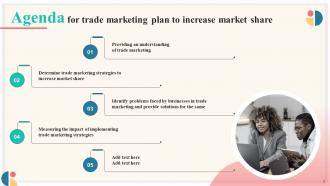
Slide 2: This is an Agenda slide. State your agendas here.
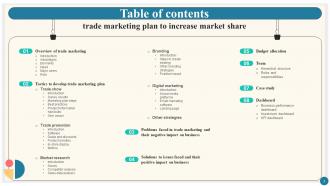
Slide 3: This slide shows Table of Content for the presentation.
Slide 4: This slide shows title for topics that are to be covered next in the template.
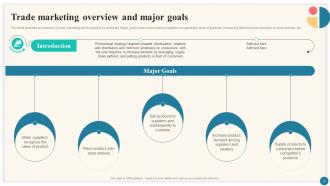
Slide 5: This slide provides an overview of trade marketing and its goals to be achieved.
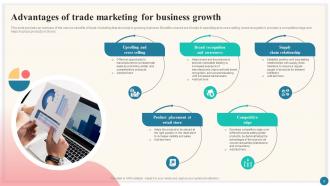
Slide 6: This slide displays an overview of the various benefits of trade marketing that also help in growing business.
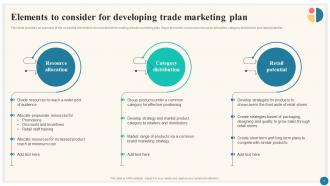
Slide 7: This slide presents an overview of the essential elements to be included while making a trade marketing plan.
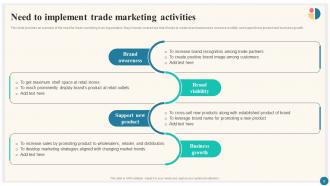
Slide 8: This slide provides an overview of the need for trade marketing in an organization.
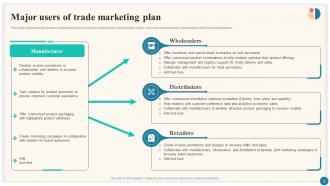
Slide 9: This slide showcases the audience that uses target marketing to achieve the set objectives.
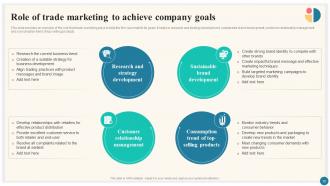
Slide 10: This slide provides an overview of the role that trade marketing plays to help the firm accomplish its goals.
Slide 11: This slide shows title for topics that are to be covered next in the template.
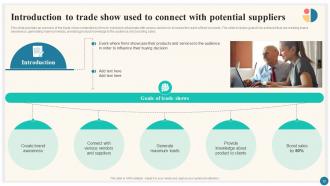
Slide 12: This slide provides an overview of the trade show conducted by firms to meet and collaborate with various vendors to increase the reach of their products.
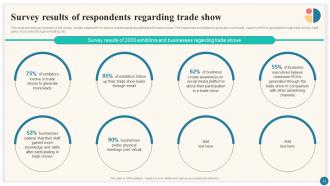
Slide 13: This slide displays an overview of the survey results obtained from various businesses that participated in trade shows.
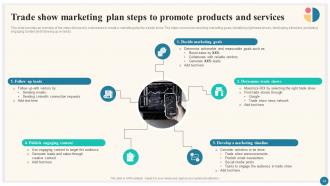
Slide 14: This slide provides an overview of the steps followed by businesses to create a marketing plan for a trade show.
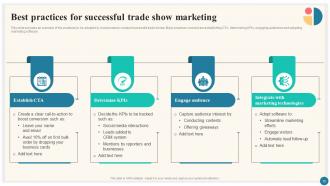
Slide 15: This slide displays an overview of the practices to be adopted by businesses to conduct successful trade shows.
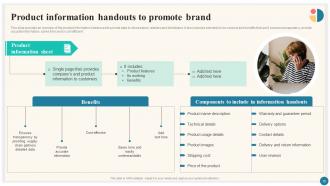
Slide 16: This slide provides an overview of the product information sheet used to provide data to wholesalers, retailers and distributors.
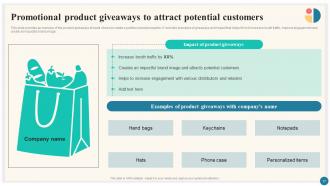
Slide 17: This slide displays an overview of the product giveaways at trade shows to create a positive brand perception.
Slide 18: This slide shows title for topics that are to be covered next in the template.
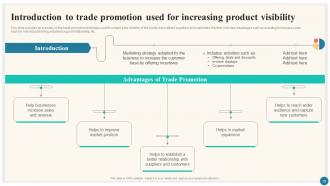
Slide 19: This slide provides an overview of the trade promotion technique used to enhance the visibility of the product and attract suppliers and customers.
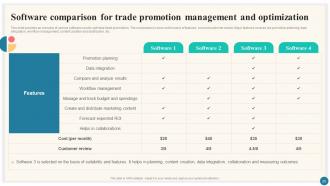
Slide 20: This slide displays an overview of various software used to optimize trade promotions.
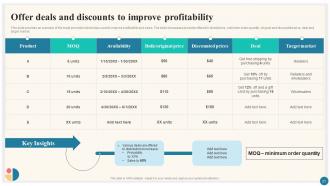
Slide 21: This slide provides an overview of the trade promotion technique used to improve profitability and sales.
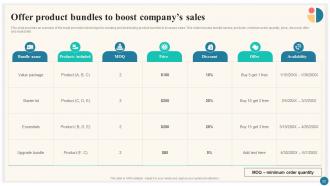
Slide 22: This slide displays an overview of the trade promotion technique for creating and distributing product bundles to increase sales.
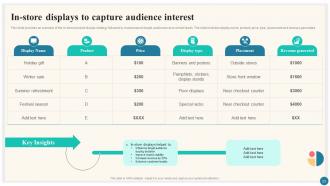
Slide 23: This slide provides an overview of the in-store product display strategy followed by businesses to target audiences and convert leads.
Slide 24: This slide displays an overview of the various metrics used to track the success of trade promotions.
Slide 25: This slide shows title for topics that are to be covered next in the template.
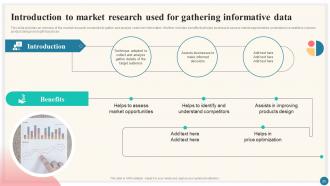
Slide 26: This slide provides an overview of the market research conducted to gather and analyze customer information.
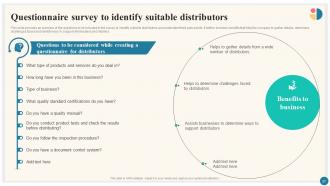
Slide 27: This slide displays an overview of the questions to be included in the survey to identify suitable distributors and understand their pain points.
Slide 28: This slide provides an overview of the competitive analysis conducted to determine competitors’ strengths and weaknesses.
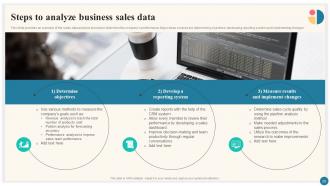
Slide 29: This slide displays an overview of the sales data analysis process to determine the company’s performance.
Slide 30: This slide shows title for topics that are to be covered next in the template.
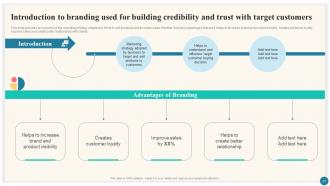
Slide 31: This slide provides an overview of the branding strategy adopted by firms to sell products and increase sales.
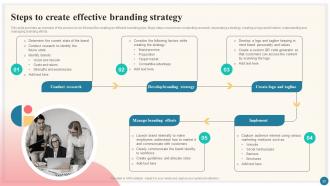
Slide 32: This slide displays an overview of the process to be followed for creating an efficient branding plan.
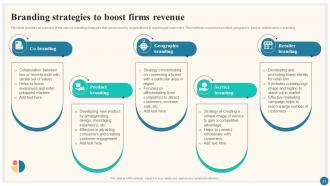
Slide 33: This slide provides an overview of the various branding strategies that can be used by organizations to reach target customers.
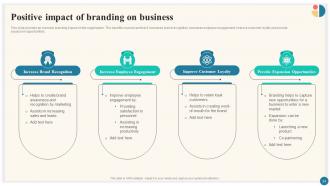
Slide 34: This slide displays an overview branding impact on the organization. The benefits covered are that it increases brand recognition, increases employee engagement etc.
Slide 35: This slide shows title for topics that are to be covered next in the template.
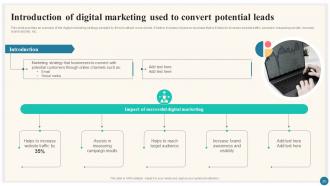
Slide 36: This slide provides an overview of the digital marketing strategy adopted by firms to attract more clients.
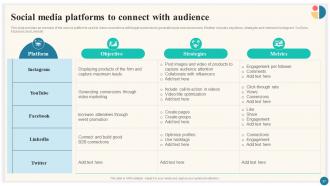
Slide 37: This slide displays an overview of the various platforms used to make connections with target customers to generate leads and conversions.
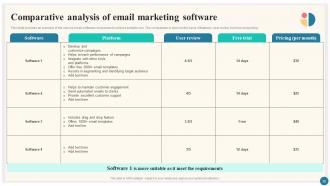
Slide 38: This slide provides an overview of the various email software comparison to select a suitable one.
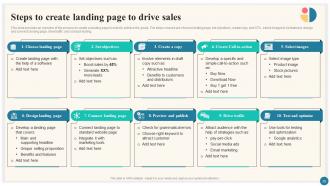
Slide 39: This slide displays an overview of the process to create a landing page in order to achieve the goals.
Slide 40: This slide shows title for topics that are to be covered next in the template.
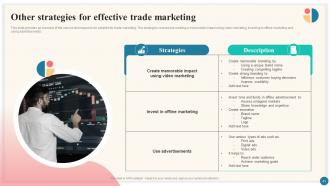
Slide 41: This slide provides an overview of the various techniques to be adopted for trade marketing.
Slide 42: This slide shows title for topics that are to be covered next in the template.
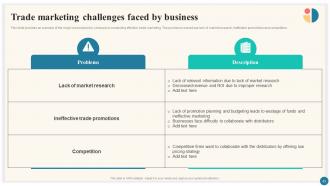
Slide 43: This slide provides an overview of the major issues faced by company in conducting effective trade marketing.
Slide 44: This slide displays an overview of the negative impact of poor trade marketing on the business.
Slide 45: This slide shows title for topics that are to be covered next in the template.
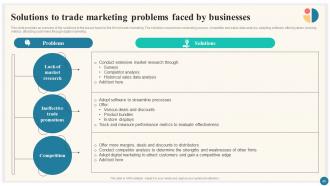
Slide 46: This slide provides an overview of the solutions to the issues faced by the firm in trade marketing.
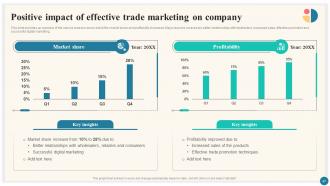
Slide 47: This slide displays an overview of the various reasons due to which the market share and profitability increased.
Slide 48: This slide shows title for topics that are to be covered next in the template.
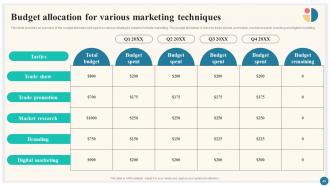
Slide 49: This slide provides an overview of the budget allocated and spent on various strategies adopted in trade marketing.
Slide 50: This slide shows title for topics that are to be covered next in the template.
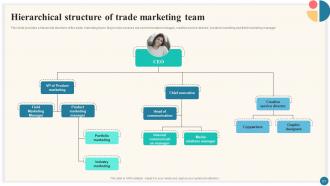
Slide 51: This slide provides a hierarchal structure of the trade marketing team. Major roles covered are communication manager, creative service director etc.
Slide 52: This slide displays an overview of the marketing team that helps to capture the audience and encourage conversions.
Slide 53: This slide shows title for topics that are to be covered next in the template.
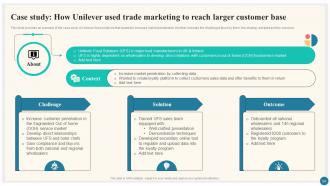
Slide 54: This slide provides an overview of the case study of Unilever food solutions that wanted to increase market penetration.
Slide 55: This slide shows title for topics that are to be covered next in the template.
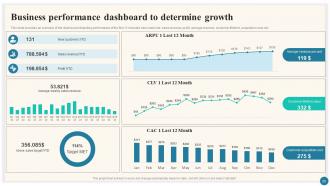
Slide 56: This slide provides an overview of the dashboard depicting performance of the firm. It includes new customer, sales revenue, profit, average revenue etc.
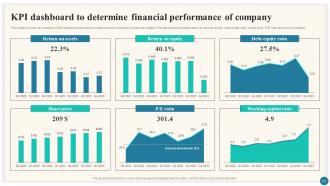
Slide 57: This slide displays an overview of the dashboard that helps to determine the company’s financial position.
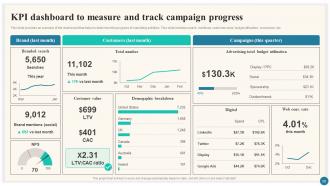
Slide 58: This slide provides an overview of the dashboard that helps to determine the progress of marketing activities.
Slide 59: This slide shows all the icons included in the presentation.
Slide 60: This slide is titled as Additional Slides for moving forward.
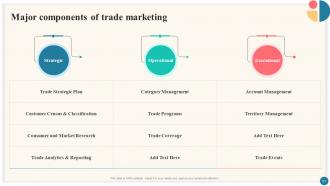
Slide 61: This slide presents Major components of trade marketing with additional textboxes.
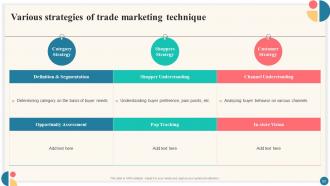
Slide 62: This slide presents Various strategies of trade marketing technique with related icons and text.
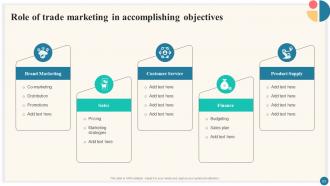
Slide 63: This slide presents Role of trade marketing in accomplishing objectives with additional textboxes.
Slide 64: This slide provides Clustered Column chart with two products comparison.
Slide 65: This slide displays Mind Map with related imagery.
Slide 66: This slide showcases Magnifying Glass to highlight, minute details, information, specifications etc.
Slide 67: This slide presents Roadmap with additional textboxes.
Slide 68: This is a Quotes slide to convey message, beliefs etc.
Slide 69: This is a Thank You slide with address, contact numbers and email address.
Trade Marketing Plan To Increase Market Share Strategy CD with all 78 slides:
Use our Trade Marketing Plan To Increase Market Share Strategy CD to effectively help you save your valuable time. They are readymade to fit into any presentation structure.
-
The website is jam-packed with fantastic and creative templates for a variety of business concepts. They are easy to use and customize.
-
A big thanks to SlideTeam! An incredible and diverse library of templates helped me with my business project presentation.
