


Digital Marketing Strategies To Increase Company Sales Powerpoint Presentation Slides MKT CD V





Try Before you Buy Download Free Sample Product
 Impress Your
 Audience
 100%
100% Editable
 Save Hours
 of Time


Business marketing involves the process of selling products or services to other businesses. Our Complete Digital Marketing Strategies to Increase Company Sales, template is designed to help companies scale their businesses, enhance brand awareness, and convert potential leads into actual sales. This comprehensive Marketing Strategy PPT covers a range of strategies that can be implemented effectively. Moreover, the B2B Marketing Powerpoint provides a competitive analysis section, enabling businesses to identify their strongest competitors in the industry. Additionally, our Marketing Strategy Presentation encompasses online strategies such as influencer marketing, video marketing, email marketing, search engine optimization SEO, and offline marketing channels. Furthermore, the Online Marketing template showcases essential software tools that marketers can leverage to streamline their operations and enhance efficiency. Lastly, our Lead Generation deck equips managers with key performance indicator dashboards to evaluate the performance of B2B marketing strategies and ensure ongoing success. Get access to our powerful digital marketing ppt templates now.
People who downloaded this PowerPoint presentation also viewed the following :
Content of this Powerpoint Presentation
Slide 1: This slide introduces Digital Marketing Strategies to Increase Company Sales.
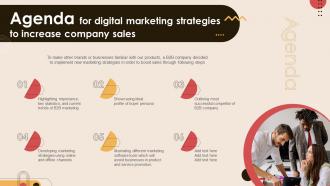
Slide 2: This slide depicts the Agenda of the presentation.
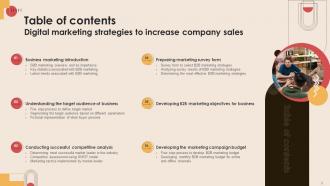
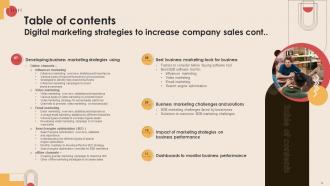
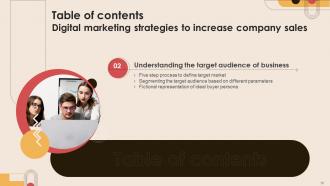
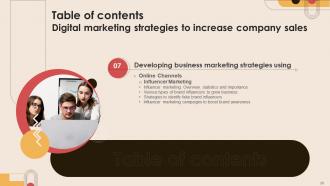
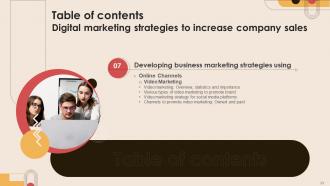
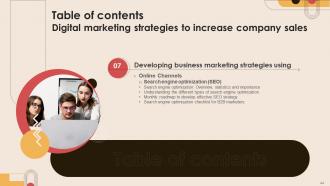
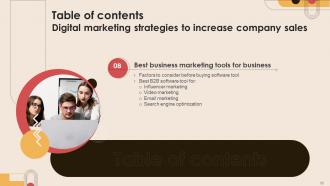
Slide 3: This slide incorporates the Table of contents.
Slide 4: This slide highlights the Title for the Topics to be covered further.
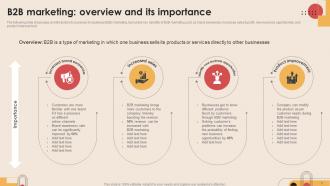
Slide 5: The following slide showcases an introduction to business-to-business (B2B) marketing.
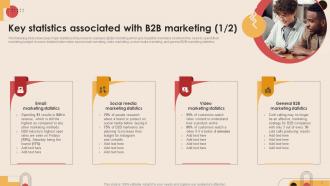
Slide 6: This slide states the Key statistics associated with B2B marketing.
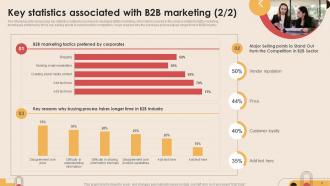
Slide 7: This slide continues the Key statistics associated with B2B marketing.
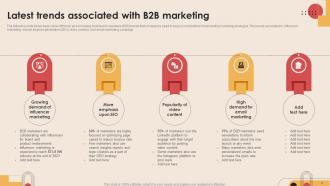
Slide 8: This slide reveals the Latest trends associated with B2B marketing.
Slide 9: This slide indicates the Heading for the Components to be discussed in the following template.
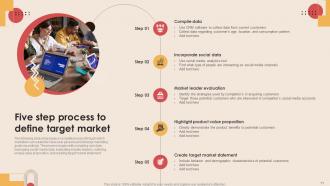
Slide 10: This slide states the Five step process to define target market.
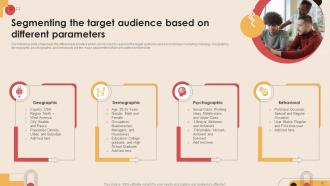
Slide 11: This slide talks about Segmenting the target audience based on different parameters.
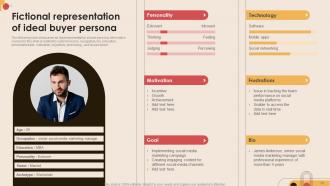
Slide 12: This slide displays the Fictional representation of ideal buyer persona.
Slide 13: This slide portrays the Title for the Ideas to be covered in the forth-coming template.
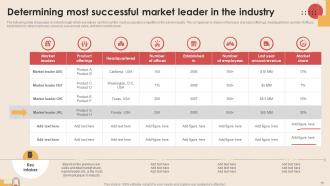
Slide 14: This slide deals with Determining most successful market leader in the industry.
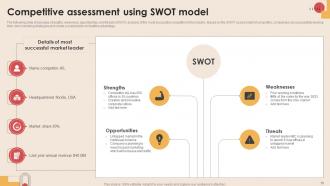
Slide 15: This slide showcases the Competitive assessment using SWOT model.
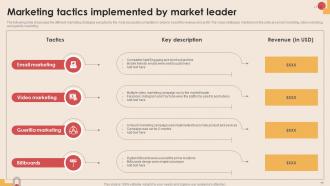
Slide 16: This slide exhibits the Marketing tactics implemented by market leader.
Slide 17: This slide displays the Heading for the Ideas to be discussed in the following template.
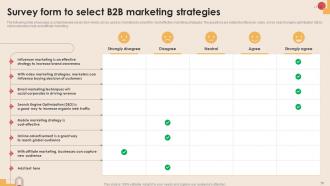
Slide 18: This slide highlights a Survey form to select B2B marketing strategies.
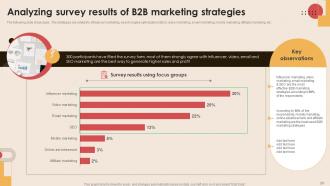
Slide 19: This slide deals with Analyzing survey results of B2B marketing strategies.
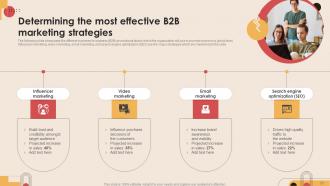
Slide 20: This slide focuses on Determining the most effective B2B marketing strategies.
Slide 21: This slide includes the Title for the Contents to be covered next.
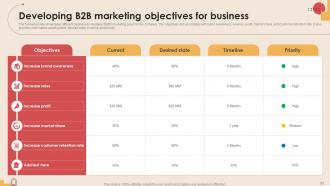
Slide 22: This slide emphasizes on Developing B2B marketing objectives for business.
Slide 23: This slide contains the Heading for the Topics to be covered in the next template.
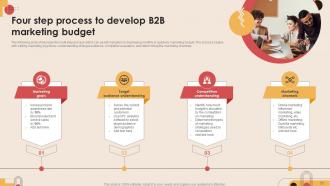
Slide 24: This slide dpeicts the Four step process to develop B2B marketing budget.
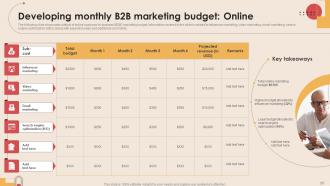
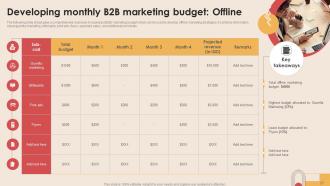
Slide 25: This slide mentions about Developing monthly B2B marketing budget.
Slide 26: The following slide showcases a comprehensive business-to-business (B2B) marketing budget to develop offline marketing strategies.
Slide 27: This slide portrays the Title for the Ideas to be discussed next.
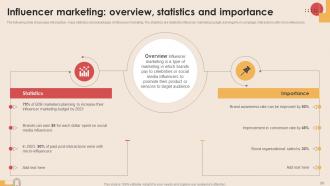
Slide 28: This slide showcases introduction, major statistics and advantages of influencer marketing.
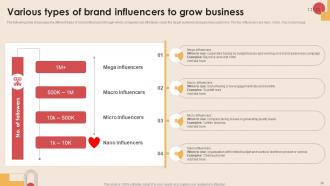
Slide 29: This slide exhibits the Various types of brand influencers to grow business.
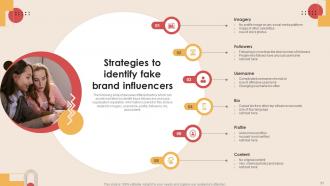
Slide 30: This slide presents the Strategies to identify fake brand influencers.
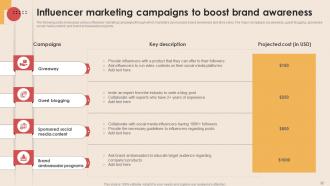
Slide 31: This slide talks about the Influencer marketing campaigns to boost brand awareness.
Slide 32: This slide reveals the Heading for the Ideas to be covered in the following template.
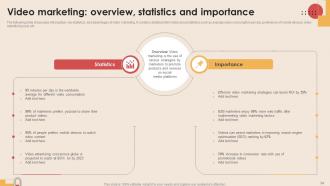
Slide 33: This slide outlines the introduction, key statistics, and advantages of video marketing.
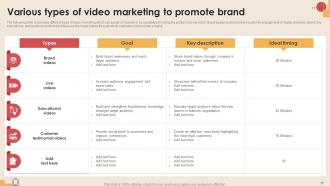
Slide 34: This slide states the Various types of video marketing to promote brand.
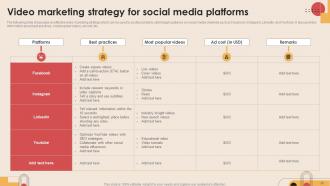
Slide 35: This slide portrays the Video marketing strategy for social media platforms.
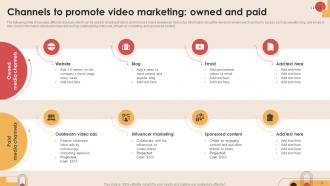
Slide 36: This slide indicates the different channels which can be used to broadcast videos and increase brand awareness.
Slide 37: This slide includes the Title for the Components to be discussed further.
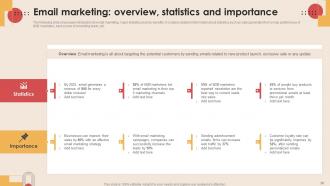
Slide 38: The following slide showcases introduction to email marketing, major statistics and key benefits.
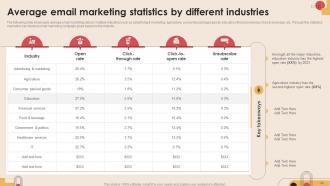
Slide 39: This slide represents the Average email marketing statistics by different industries.
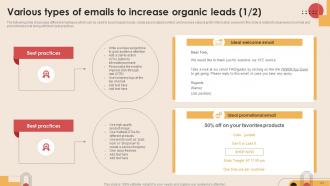
Slide 40: This slide exhibits the Various types of emails to increase organic leads.
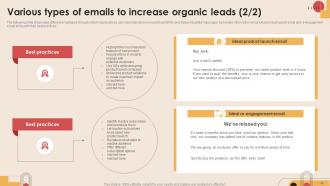
Slide 41: This slide continues the Various types of emails to increase organic leads.
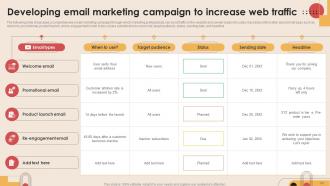
Slide 42: This slide deals with Developing email marketing campaign to increase web traffic.
Slide 43: This slide reveals the Heading for the Topics to be covered next.
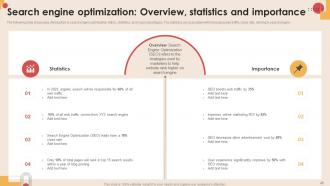
Slide 44: This slide showcases introduction to search engine optimization (SEO), statistics, and major advantages.
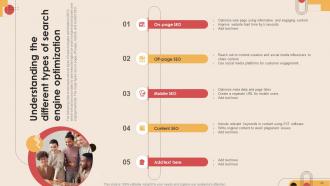
Slide 45: This slide focuses on Understanding the different types of search engine optimization.
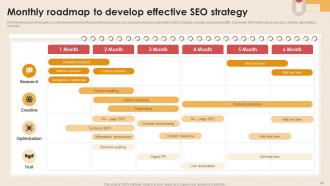
Slide 46: This slide elucidates the Monthly roadmap to develop effective SEO strategy.
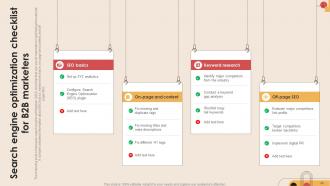
Slide 47: Thsi slide deals with Search engine optimization checklist for B2B marketers.
Slide 48: This slide includes the Title for the Topics to be discussed in the upcoming template.
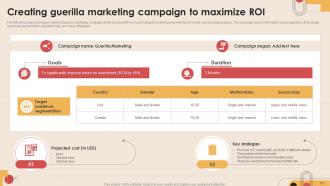
Slide 49: This slide emphasizes on Creating guerilla marketing campaign to maximize ROI.
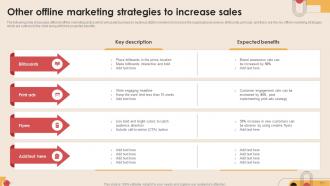
Slide 50: This slide mentions about the Other offline marketing strategies to increase sales.
Slide 51: This slide exhibits the Heading for the Contents to be covered next.
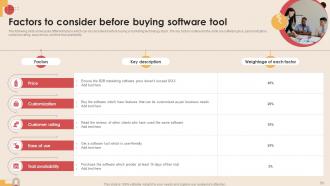
Slide 52: This slide states the Factors to consider before buying software tool.
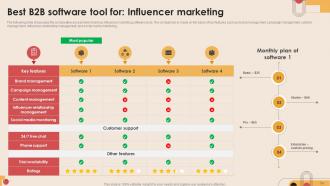
Slide 53: The following slide showcases the comparative assessment of various influencer marketing software tools.
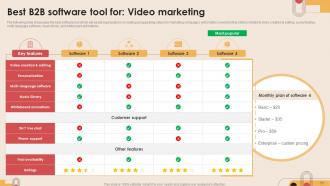
Slide 54: This slide reveals the best software tool for creating an appealing videos for marketing campaigns.
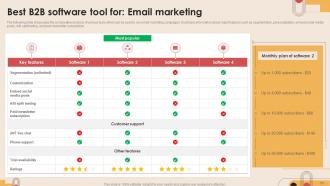
Slide 55: This slide indicates the comparative analysis of various tools to run email marketing campaigns.
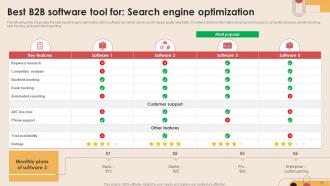
Slide 56: The following slide showcases the best search engine optimization (SEO) software tool which can be used to target quality web traffic.
Slide 57: This slide reveals the Title for the Ideas to be discussed further.
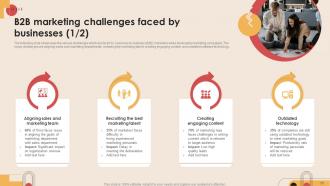
Slide 58: This slide talks about the B2B marketing challenges faced by businesses.
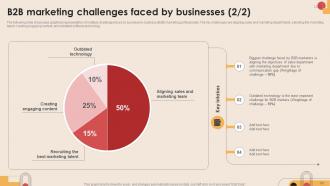
Slide 59: This slide continues the B2B marketing challenges faced by businesses.
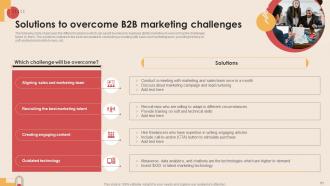
Slide 60: This slide represents the Solutions to overcome B2B marketing challenges.
Slide 61: This slide contains the Heading for the Ideas to be covered in the forth-coming template.
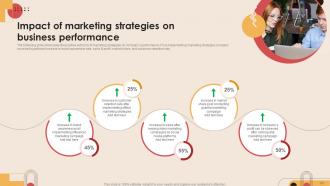
Slide 62: This slide highlights the Impact of marketing strategies on business performance.
Slide 63: This slide depicts the Title for the Contents to be discussed further.
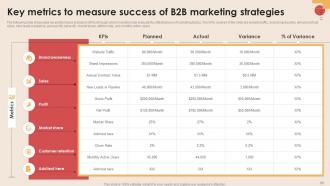
Slide 64: This slide exhibits the Key metrics to measure success of B2B marketing strategies.
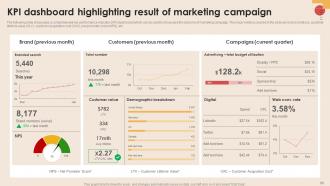
Slide 65: This slide illustrates the KPI dashboard highlighting result of marketing campaign.
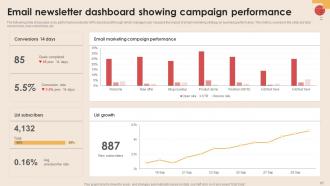
Slide 66: This slide presents the Email newsletter dashboard showing campaign performance.
Slide 67: This is the Icons slide containing all the Icons used in the plan.
Slide 68: This slide dipslays the Additional information.
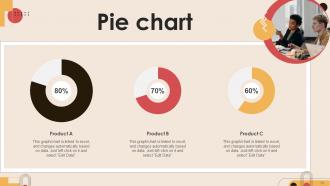
Slide 69: This slide elucidates the Pie chart.
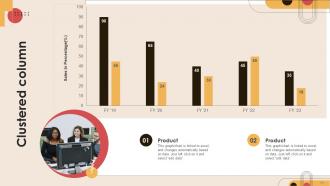
Slide 70: This is the Clustered column sldie with related imagery.
Slide 71: This is the About us sldie. State your company-related information here.
Slide 72: This slide presents the organziation's vision, mission and goal.
Slide 73: This is Meet our team slide. State your team-related information here.
Slide 74: This is the Idea generation sldie for encouraging fresh ideas.
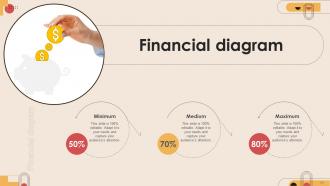
Slide 75: This slide represents the Financial diagram.
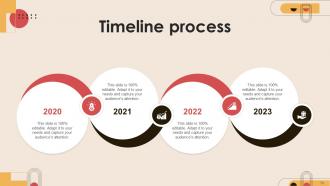
Slide 76: This slide exhibits the firm's Timeline process.
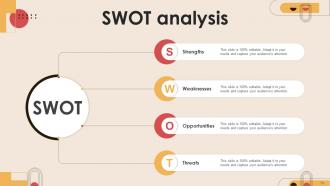
Slide 77: This slide reveals the SWOT analysis.
Slide 78: This is the Puzzle slide with related imagery.
Slide 79: This is the Magnifying glass for minute details.
Slide 80: This is the Quotes sldie for motivation.
Slide 81: This slide showcases the Roadmap of the firm.
Slide 82: This is the Thank You slide for acknowledgement.
Digital Marketing Strategies To Increase Company Sales Powerpoint Presentation Slides MKT CD V with all 89 slides:
Use our Digital Marketing Strategies To Increase Company Sales Powerpoint Presentation Slides MKT CD V to effectively help you save your valuable time. They are readymade to fit into any presentation structure.
















FAQs for Digital Marketing Strategies To Increase Company Sales Powerpoint Presentation Slides
Key components of a successful digital marketing strategy include content marketing, social media engagement, search engine optimization, email campaigns, and data analytics. These elements work together by targeting specific audiences, building brand awareness, and driving conversions across multiple touchpoints, with many organizations finding that integrated approaches deliver higher ROI and sustained customer engagement.
Small businesses can effectively leverage social media for brand awareness by creating consistent, valuable content, engaging directly with their target audience, utilizing platform-specific features like Instagram Stories and LinkedIn articles, and collaborating with local influencers or micro-influencers. These strategies enable businesses to build authentic relationships, showcase their unique value propositions, and compete with larger competitors, with many small retailers and service providers finding that regular posting and community engagement significantly increases local visibility and customer loyalty.
SEO serves as the foundation of digital marketing success by improving website visibility, driving organic traffic, and establishing long-term brand authority in search results. Through keyword optimization, quality content creation, and technical improvements, businesses across retail, healthcare, and professional services enhance their online presence, reduce customer acquisition costs, and ultimately achieve sustainable competitive advantage over paid advertising alone.
Content marketing integrates into digital strategies through blog content, social media posts, video marketing, email campaigns, and SEO-optimized materials that build brand authority and engage audiences. These approaches work together by attracting qualified leads, nurturing customer relationships, and driving conversions across multiple touchpoints, with many organizations finding that consistent, valuable content ultimately delivers higher engagement rates and stronger customer loyalty.
Effective digital marketing measurement includes tracking conversion rates, cost per acquisition, return on ad spend, engagement metrics, and customer lifetime value. These analytics enable businesses to optimize budget allocation, refine targeting strategies, and demonstrate ROI across channels, with many organizations finding that integrated dashboards streamline reporting while delivering actionable insights for competitive advantage.
Email marketing enhances customer retention by delivering personalized content, targeted offers, automated follow-ups, and consistent brand touchpoints that keep customers engaged throughout their journey. Through segmentation and behavioral triggers, businesses like e-commerce retailers and SaaS companies nurture relationships more effectively, ultimately reducing churn rates while increasing lifetime value and repeat purchases.
Online reviews and testimonials significantly enhance digital marketing efforts by building trust, improving search rankings, increasing conversion rates, and providing authentic social proof that influences purchasing decisions. Through strategic review management, businesses streamline customer acquisition, enhance brand credibility, and deliver competitive advantages, with many organizations finding that positive testimonials boost sales conversions by up to 270%.
Digital marketing strategies can be tailored through demographic segmentation, behavioral analysis, platform-specific content creation, personalized messaging, and adaptive campaign optimization. Through data-driven insights, businesses streamline audience targeting across social media, email, and search platforms, while geographic and psychographic customization enables enhanced engagement rates, improved conversion outcomes, and ultimately competitive advantage in increasingly diverse markets.
Emerging digital marketing trends include AI-powered personalization, voice search optimization, interactive content experiences, social commerce integration, and privacy-first marketing approaches. These strategies enhance customer engagement by delivering targeted experiences, streamlining purchase journeys, and building trust through transparent data practices, with many organizations finding that early adoption delivers significant competitive advantages in increasingly crowded digital landscapes.
Marketers can leverage data analytics to enhance strategies by tracking customer behavior patterns, measuring campaign performance across channels, identifying high-value audience segments, and optimizing content timing for maximum engagement. Through predictive analytics and real-time insights, businesses streamline resource allocation, personalize customer experiences more effectively, and achieve significantly higher conversion rates, ultimately delivering measurable ROI improvements.
Influencer marketing delivers enhanced brand credibility, expanded audience reach, authentic content creation, improved engagement rates, and targeted demographic access. Through strategic partnerships with relevant influencers, businesses streamline customer acquisition, generate higher conversion rates, and build stronger brand trust, with many companies finding that influencer collaborations significantly reduce advertising costs while delivering measurable ROI.
Businesses can optimize websites through faster loading speeds, intuitive navigation, mobile responsiveness, clear call-to-actions, and streamlined checkout processes. These enhancements deliver improved customer satisfaction, reduced bounce rates, and higher conversion rates, with many e-commerce and service companies finding that strategic UX improvements ultimately drive significant revenue growth and competitive advantage.
Video marketing serves as a cornerstone for consumer engagement through storytelling, product demonstrations, educational content, and interactive experiences that build emotional connections. Modern consumers, particularly across retail, hospitality, and e-commerce sectors, respond to video content with higher engagement rates and purchase intent, ultimately delivering enhanced brand loyalty and conversion rates for businesses.
Businesses ensure data privacy compliance by implementing transparent consent mechanisms, conducting regular data audits, establishing clear retention policies, and integrating privacy-by-design principles into their marketing platforms. Through comprehensive staff training and automated compliance tools, organizations streamline consent management, minimize data collection risks, and enhance customer trust, ultimately delivering competitive advantage while avoiding costly regulatory penalties.
Essential digital marketing automation tools include customer relationship management (CRM) systems, email marketing platforms, social media schedulers, analytics dashboards, and marketing automation software. These technologies streamline campaign management, audience segmentation, and performance tracking across multiple channels, with many organizations finding that integrated platforms deliver enhanced customer engagement, improved conversion rates, and significantly reduced manual workload while enabling data-driven decision making.
-
Fantastic and innovative graphics with useful content. The templates are the best and latest in the industry.
-
The designs are very attractive and easy to edit. Looking forward to downloading more of your PowerPoint Presentations.