

Entendendo a diversidade, inclusão, pertencimento e equidade






Try Before you Buy Download Free Sample Product
 Impress Your
Audience
 100%
Editable
 Save Hours
of Time


Este Módulo de Treinamento trata em detalhes das questões de Diversidade, Inclusão, Pertencimento e Equidade. Ele explica a Diversidade e a Inclusão e por que elas são desejáveis em uma organização. Também explica como as organizações podem desenvolver o senso de pertencimento entre uma força de trabalho diversificada. O Módulo de Treinamento também aborda os conceitos gêmeos de Equidade e Igualdade, como eles são diferentes e como a Equidade é o objetivo para organizações com uma força de trabalho diversificada. Também explica o Modelo de Processo de Diversidade e a Teoria das Dimensões Culturais de Hofstede. Este Módulo de Treinamento pode ser usado para sensibilizar os treinandos sobre vários aspectos da Diversidade e Inclusão. Também é igualmente eficaz no estabelecimento de metas organizacionais pela alta administração. Este módulo é projetado por especialistas para proporcionar uma experiência poderosa aos treinandos. Também contém materiais auxiliares úteis, como cartazes de diversidade e inclusão, e-mails, modelo de proposta de cliente, etc.
People who downloaded this PowerPoint presentation also viewed the following :
Conteúdo desta apresentação em PowerPoint
Slide 3
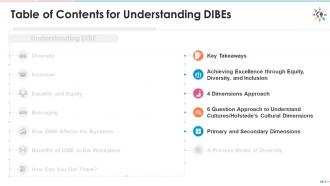
O slide destaca os múltiplos objetivos de aprendizagem da sessão de treinamento "Compreendendo DIBE (Diversidade, Inclusão, Pertencimento e Equidade)".
Slide 6
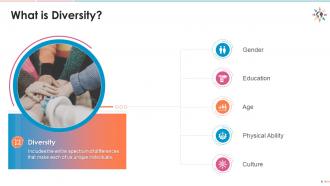
Este slide abrange uma breve descrição da diversidade. Também mostra que a Diversidade se refere ao que nos distingue e inclui nossas culturas, personalidades, experiências de vida e visões, bem como tudo mais que nos torna quem somos.
Slide 7
Este slide abrange uma breve descrição da inclusão no local de trabalho. Também mostra que a Inclusão é o processo de garantir que todas as pessoas tenham acesso igual a oportunidades e recursos.
Slide 8
Este slide abrange uma breve descrição de igualdade e equidade. Também mostra que a igualdade alcança o resultado desejado tratando todos igualmente, independentemente da necessidade, enquanto a equidade alcança isso tratando as pessoas de forma diferente com base em suas necessidades.
Slide 9
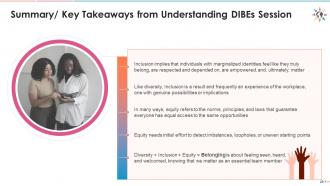
Este slide abrange uma breve descrição de Pertencimento. Também mostra que Diversidade mais Inclusão mais Equidade é igual a Pertencimento.
Slide 11
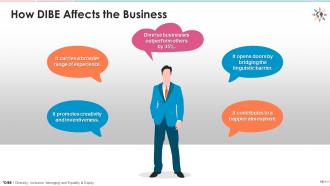
Este slide abrange os fatos positivos das práticas de diversidade, inclusão, pertencimento e igualdade e equidade no negócio geral.
Slide 12
Este slide abrange os benefícios de tornar a organização diversificada. Também mostra que as práticas de Diversidade, Inclusão, Pertencimento e Igualdade e Equidade criam um ambiente de aprendizagem.
Slide 13
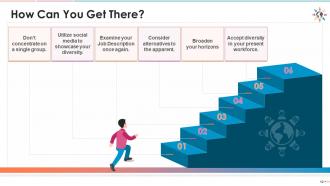
Este slide abrange as etapas para diversificar a empresa, como focar em múltiplos grupos, utilizar as mídias sociais para mostrar a diversidade no local de trabalho, etc.
Slide 14
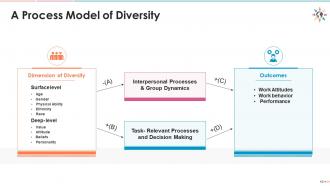
Este slide abrange um modelo de processo de diagrama de diversidade, incluindo dimensões de diversidade, processos interpessoais e dinâmica de grupo, processos relevantes para a tarefa, tomada de decisão e resultados.
Slide 16
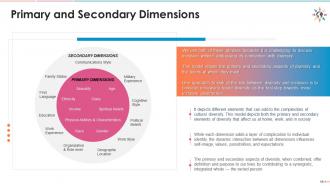
Este slide abrange as dimensões primárias e secundárias da diversidade. Também mostra o uso dessas frases porque é desafiador discutir inclusão sem abordar sua conexão com a diversidade.
Slide 17
Este slide abrange quatro camadas da abordagem de dimensão de diversidade, como personalidade, dimensões internas e externas e, por último, dimensões organizacionais.
Slide 18
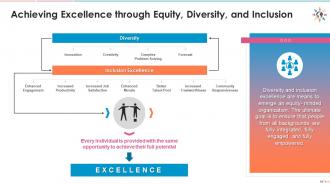
Este slide abrange uma estrutura para alcançar a excelência por meio da equidade, diversidade e inclusão na organização. Também mostra que a excelência em diversidade e inclusão são meios para emergir uma organização com mentalidade de equidade.
Slide 19
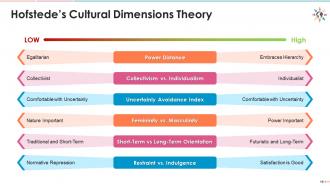
Este slide abrange os detalhes da teoria das dimensões culturais de Hofstede. Inclui o que é a teoria das dimensões culturais de Hofstede e seis dimensões culturais.
Slide 20
Este slide abrange as dimensões culturais de Hofstede e suas definições com alguns exemplos.
Slide 23
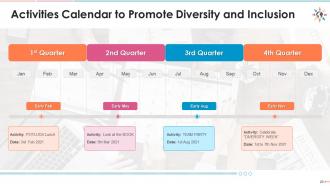
Este slide mostra o calendário de atividades para promover a diversidade e inclusão no local de trabalho. Inclui detalhes de cada atividade, juntamente com a data em que será realizada.
Slide 24
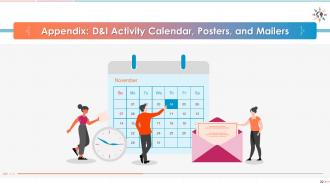
Este slide mostra os cartazes para promover a diversidade e inclusão no local de trabalho.
Slide 25
Este slide mostra os cartazes para conscientizar sobre diversidade e inclusão no local de trabalho.
Slide 26
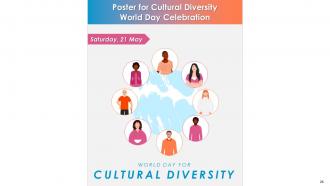
Este slide mostra o cartaz para promover e conscientizar sobre a diversidade cultural na organização.
Slide 27
Este slide consiste em um exemplo de comunicado aos funcionários para promoção da diversidade e inclusão na organização.
Slide 28
Este slide ilustra o cartaz de comunicado aos funcionários para conscientização sobre diversidade e inclusão na organização. Fornece informações sobre as vantagens de um alto nível de D&I.
Slides 36-51
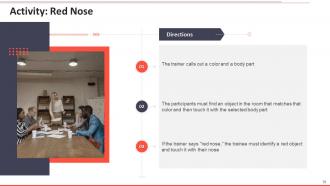
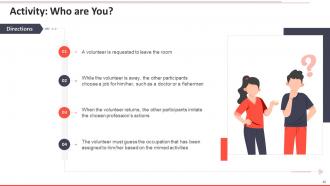
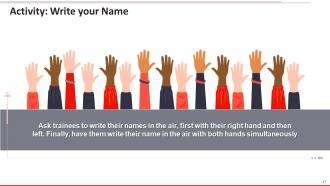
Estes slides contêm múltiplas atividades energizantes para manter os níveis de energia dos participantes altos durante toda a duração da sessão. Eles são cuidadosamente escolhidos para manter os participantes atentos, engajados e energizados. Essas atividades são acompanhadas por notas detalhadas do instrutor para uma condução bem-sucedida.
Slides 52-79
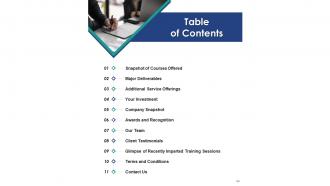
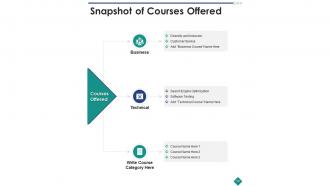
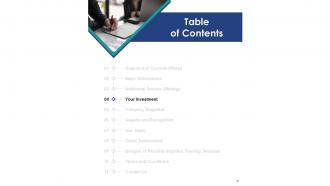
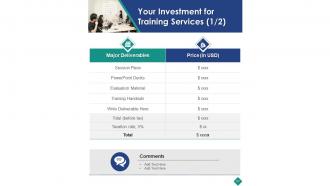
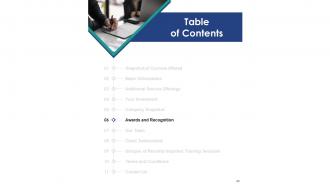
Estes slides contêm uma proposta detalhada que pode ser compartilhada pelo instrutor/agência com os clientes potenciais. Esta proposta de amostra é projetada para refletir confiança, experiência e profissionalismo. Esta proposta abrangente contém slides de amostra como Visão Geral do Curso, Principais Entregas, Investimento Necessário, Perfil da Empresa, Prêmios e Reconhecimentos, Depoimentos de Clientes, Termos e Condições e muito mais.
Gostaria que eu continuasse traduzindo os detalhes dos slides restantes? Deixe-me saber se precisa de mais informações.Módulo de treinamento sobre compreensão da diversidade, inclusão, pertencimento e equidade com todas as 82 slides:
Apresentando o Módulo de Treinamento sobre Diversidade e Inclusão Compreendendo DIBE Diversidade, Inclusão, Pertencimento e Equidade. Este deck de apresentação contém 18 slides bem pesquisados e exclusivamente projetados. Esses slides são 100% feitos no PowerPoint e são compatíveis com todos os tipos de tela e monitores. Eles também são compatíveis com o Google Slides. Suporte ao Cliente Premium disponível. Adequado para uso por gerentes, funcionários e organizações. Esses slides são facilmente personalizáveis. Você pode editar a cor, o texto, o ícone e o tamanho da fonte para atender às suas necessidades.































FAQs for Training module on understanding dibe diversity, inclusion,
Honestly, diverse teams just make better decisions - they catch stuff you'd totally miss otherwise. Different backgrounds mean more creative solutions and fresh perspectives. Your customers aren't all the same, so why should your team be? Companies with diverse leadership actually make more money too, which is pretty compelling. Innovation happens way more naturally when people think differently. I'd probably start with your hiring - are you only looking in the same places for candidates? Branch out to different networks and sources. It's one of those things that sounds nice in theory but actually moves the needle on performance.
Look, you want better problem-solving? Mix up your team. Different backgrounds = different ways of attacking problems. I've seen this work - when people don't all think the same way, they push each other toward solutions nobody would've found alone. Yeah, it gets a bit chaotic sometimes (honestly that's kind of the point). The clashing perspectives force everyone to go deeper instead of settling for obvious answers. If you're stuck on something tough, find teammates who'll challenge your assumptions. Trust me, breakthrough ideas don't come from echo chambers.
Honestly, it's all about avoiding that echo chamber trap. Different backgrounds mean people will call out stuff you'd never think twice about. I've seen teams make terrible calls just because everyone had the same blind spots - kind of painful to watch, actually. Short version: more perspectives = better solutions. Your customers aren't all the same, so why would your team be? When you're facing a big decision, find that one person who'll push back. They're usually right about something you missed.
Honestly, inclusive leadership is what makes diversity actually mean something. You can hire all the diverse talent you want, but without leaders creating psychological safety? People just leave or go silent. Diverse teams only crush it when everyone feels heard and valued - that's just facts. Good inclusive leaders actively hunt for different perspectives and challenge their own biases. They make real space for authentic contributions. Here's what I'd do first: watch your meeting dynamics closely. Who talks the most? Whose ideas get expanded on? Who's holding back? That'll tell you everything.
Okay so first you'll want to track the obvious stuff - representation numbers, promotion rates by group, retention data. That shows if things are actually changing. But honestly? The real insights come from employee surveys about belonging and psychological safety. People won't always be brutally honest in those though. Exit interviews are where you get the unfiltered truth - wish more companies actually listened to those! Set your baseline before starting any programs, then check progress every quarter or so. Don't just measure once and forget about it.
Honestly, the biggest pain points are usually people just not wanting change - especially when leadership isn't really behind it. Organizations treat it like checking boxes instead of actually shifting culture, you know? Employees push back thinking it's "reverse discrimination" which is annoying but happens all the time. Most places only care about hiring diverse people but then wonder why retention sucks. They forget about making inclusive environments where people actually want to stick around. My take? Start small first. Get leadership genuinely on board, then focus on psychological safety before doing any big rollouts.
Having people from different backgrounds on your team is honestly a game-changer for understanding customers. They'll catch cultural stuff that would fly right over a homogeneous team's head. Your customers feel way more connected when they're talking to someone who actually gets their perspective - or at least tries to. I've seen so many companies mess up their marketing because they didn't think about how it would land with different communities. It's kind of embarrassing when it happens. Use those different viewpoints when you're building experiences and writing copy. Trust me, it makes a huge difference.
Honestly, start by posting jobs everywhere - not just the usual spots. Partner with groups that work with underrepresented communities. Your job descriptions probably suck too (sorry, but they usually do) - cut out the ridiculous requirements that scare off good people. Make sure your interview panels aren't all the same type of person. Candidates notice that stuff immediately. Oh, and actually track where you're losing people in the process. You'll probably find some weird bottleneck you didn't even realize existed. It's like debugging code but for humans.
Yeah, it totally does! People stay way longer when they actually see themselves represented at work. Different backgrounds bring fresh ideas - honestly makes problem-solving so much better. Your job satisfaction scores will be higher too. But here's the thing though - you can't just hire diverse people and call it a day. The culture has to actually be inclusive or they'll leave for somewhere that treats them better. Make sure everyone feels heard and can actually move up. Short version: diverse teams just perform better overall.
Honestly, start with your hiring - ditch those cringe "rockstar developer" job posts and recruit from different places. Build some employee groups and make sure your leadership isn't all the same demographic. The psychological safety thing is huge too; people need to feel like they can actually be themselves at work. Bias training works but only if your executives aren't just checking boxes. Oh, and this should be obvious but apparently isn't - when someone brings up a real concern, don't just nod along. Actually do something about it or you'll lose credibility fast.
Honestly, your brain tricks you into seeing what you expect to see. You'll notice people who look like you way more often, or make assumptions about someone's background just from their appearance. It's crazy how automatic this stuff is. Sometimes you think your workplace is super diverse when it's really not, or you might dismiss diversity efforts that are actually working. Plus biases mess with how you view people's work - like thinking someone got promoted because of luck instead of talent. My advice? Don't trust your gut on this. Actually look at the numbers and question your first impressions.
Yeah, there's actually solid research backing this up - diverse teams crush homogeneous ones when it comes to complex problem-solving. Different perspectives catch blind spots that groupthink misses completely. You get way more creative solutions when people bring varied experiences to the table. But here's the thing (and this is kinda obvious but worth saying) - it only works if your team culture lets everyone actually speak up. Psychological safety is huge. Otherwise you're just collecting different backgrounds but not different ideas. Focus on making sure those diverse viewpoints are heard, not just present.
Honestly, tech can be a game-changer for diversity stuff. AI recruiting tools are pretty solid - they focus on actual skills instead of getting hung up on bias. Analytics help you spot gaps you'd probably miss otherwise. Short sentences work. There's this VR training that lets people experience different perspectives, which sounds a bit gimmicky but apparently works well. Collaboration platforms make remote teams feel more included too. Oh, and inclusive design software helps build products that don't accidentally exclude people. I'd start by looking at what tech you're already using and see where you can retrofit some of these features in.
Look, people can spot fake diversity efforts instantly, so you've gotta back up your words with real action. Post actual numbers and updates regularly - transparency beats corporate speak every time. Make sure diverse voices show up in your communications, whether that's leadership messages or employee features. Oh, and create different ways for people to give feedback, then actually do something with it. Your team will know if you're just going through the motions. Honestly, it's way better to admit you're still figuring things out than pretend everything's perfect when it's not.
Honestly, the companies that actually get this right don't treat diversity like some HR box to check. Leadership has to genuinely care - I'm talking about tying executive bonuses to diversity goals, not just lip service. Focus on building an inclusive culture first, and diverse hiring happens more naturally after that. Salesforce does these regular pay audits and actually fixes the gaps they find, which is pretty rare. Skip the one-off training sessions - they're mostly useless anyway. You need real changes: diverse interview panels, solid mentorship programs, spaces where people feel safe speaking up. Start by looking at your current processes and spotting where bias sneaks in.
-
It saves your time and decrease your efforts in half.
-
Topic best represented with attractive design.
-
Innovative and attractive designs.