


Training module on diversity and inclusion - understanding stereotype, prejudice, discrimination




Try Before you Buy Download Free Sample Product
 Impress Your
 Audience
 100%
100% Editable
 Save Hours
 of Time


Every large business with a diverse workforce has to fight the problems of Stereotype, Prejudice, and Discrimination on daily basis. Training on appropriate conduct, behaviour and Policies is imperative in todays work environment. This training module on Diversity and Inclusion Stereotype, Prejudice, and Discrimination is designed to sensitise the workforce on ills of Stereotyping, Prejudice, and Discrimination. It teaches in great deals, the various types of Stereotypes, Prejudices, and Discriminatory practices and how to deal with them. It is designed by experts to give a professional touch to your training sessions. It also contains additional slides like icons, illustrations related to Diversity and Inclusion. It also contains helpful collaterals like Diversity and inclusion posters, mailers, client proposal template etc.
People who downloaded this PowerPoint presentation also viewed the following :
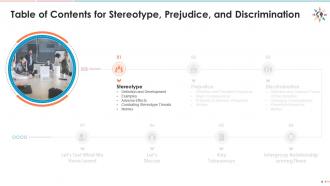
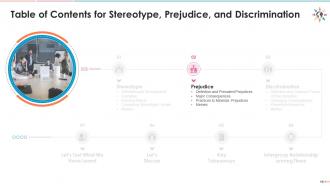
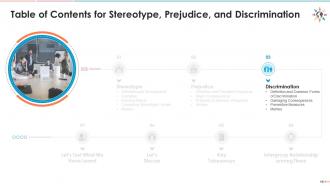
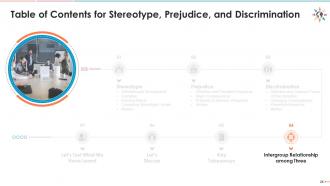
Content of this Powerpoint Presentation
Slide 3
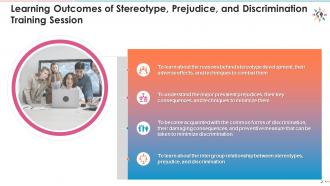
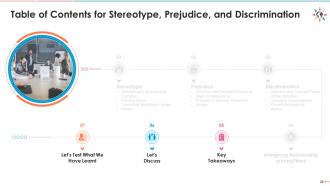
The purpose of this slide is to illustrate the multiple learning objectives of the “stereotype, prejudice, and discrimination” session of the D&I training module.
Slide 7
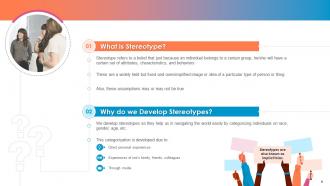
The purpose of the following slide is to provide an overview of implicit bias. It also contains details regarding ways through which this bias is developed, such as direct personal experiences, experiences of one's family members, friends, colleagues, and through media.
Slide 8
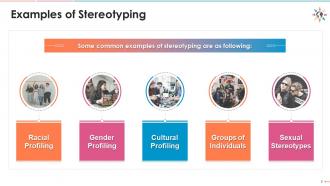
The purpose of this slide is to highlight the common examples of stereotyping such as racial profiling, gender profiling, cultural profiling, groups of individuals, and sexual stereotypes.
Instructor’s Notes:
- Racial Profiling:
- People from a certain racial profile are good at sports
- People from a certain nationality are good at mathematics
- Gender Profiling:
- People from a certain gender are messy and unclean
- People from a certain gender are not good at sports
- Cultural Profiling:
- People a certain religion are terrorists
- People a certain religion are greedy
- Groups of Individuals:
- Top management never cares about employees
- All teenagers are rebels
- Sexual Stereotypes:
- A feminine man and a masculine woman have a certain sexual orientation
Slide 9
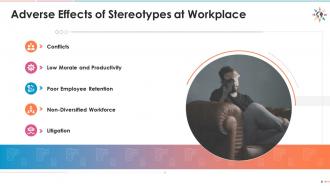
This slide highlights the negative effects of stereotypes at the workplace, such a conflict, low morale, low productivity, poor employee retention, and litigation.
Instructor’s Notes:
- Conflicts:
- Stereotyping employees/colleagues instead of evaluating them on capabilities result in conflicts. Thus, making the workplace toxic
- Low Morale and Productivity:
- When constantly subjected to negative comments or criticisms due to stereotyping, employees lose motivation to perform allocated tasks
- Poor Employee Retention:
- Since stereotyping results in a non-supportive and non-inclusive environment, it leads to a high attrition rate in employees
- Non-Diversified Workforce
- Stereotyping results in a non-diversified workforce as it results in hiring, promoting, and retaining individuals with similar viewpoints, impacting overall creativity at the workplace
- Litigation:
- A frustrated and stereotyped employee can file a discrimination case in court which can adversely impact the organization’s brand image.
Slide 10
The purpose of the following slide is to highlight the strategies to overcome stereotype threats at the workplace, such as look outing for undermining signals, re-allocating tasks, sharing diversity-rich content, and implementing policies that promote equal opportunities for all.
Instructor’s Notes:
- Lookout for Undermining Signals
- Managers should regularly conduct meetings with their team members and empathically ask if they are subjected to stereotyping
- Reallocating Tasks
- Ensure that each team working on a project has members from diverse genders, educational backgrounds, and cultures
- Sharing Diversity Rich Content
- Regularly share content with organization employees that focus on the importance of diversity via newsletters, infographics, and short videos.
- Implementing Policies
- Implement policies that help in breaking stereotyping, such as
- Providing equal career growth opportunities irrespective of gender and race
- Scrutinizing and updating the metrics used for hiring and promotion decisions
- Implement policies that help in breaking stereotyping, such as
Slide 13
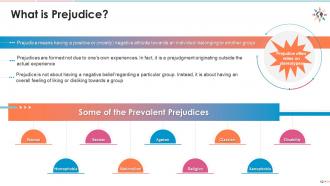
This slide provides an introduction to prejudices at the workplace. It also contains information regarding the significant prejudices in offices such as racism, sexism, ageism, classism, homophobia, nationalism, religion, and xenophobia.
Instructor’s Notes:
Examples of some prevalent prejudices at workplace are:
- Racism: Race is the social construct that groups individuals based on certain specific physical characteristics
- Immigrants from certain countries are loyal to their native country instead of their home nation
- Sexism: Certain gender’s honesty and emotions are used to undermine their claims about sexual assault and other forms of abuse
- Ageism: Both young and old employees are victims of this prejudice
- Young people are often prejudiced as uninformed, ignorant, or impulsive
- Older employees in the office are often overlooked while selecting team members for new projects
- Classism: Individuals from lower social classes are less likely to hold top management positions than people from higher social classes
- Disability: Employees with disability are considered to be a liability for team
- Homophobia: People with a certain sexual orientation are immoral and, hence, untrustworthy
- Nationalism: People from a certain nationality are antisemitic
- Religion: Discrimination against a certain religion as it is perceived to be source of terrorism
- Xenophobia: Immigrants are stealing business opportunities of host countries
Slide 14
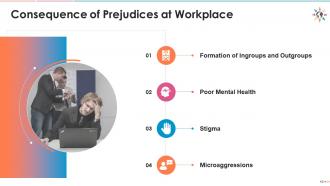
This slide highlights the negative effects of prejudices at the workplace such as formation of ingroups and outgroups, poor mental health, creation of stigma, and microaggressions.
Instructor’s Notes:
- Formation of Ingroups and Outgroups: Prejudice leads to the division of the workforce, leading to the formation of in-groups and outgroups in the company
- Ingroups: These consist of individuals belonging to a specific category of race, gender, age, sexual orientation, class, etc.
- Outgroups: All other individuals other than those in ingroups comes under outgroups
- It further leads to bias as individuals in ingroups tend to provide preferential treatment to the same group members
- Poor Mental Health: Employees that suffers prejudice at the workplace suffer from poor mental health conditions such as
- Depression and anxiety
- Impostor syndrome: It is doubting own capabilities and feeling like a fraud, and questioning achieved success regularly
- Creation of Stigma: The person targeted by prejudice becomes stigmatized, leading to low morale and poor performance
- Microaggressions: In day-to-day prejudice, employees from the marginalized group can feel microaggression by becoming victims of direct or indirect comments/actions
Slide 15
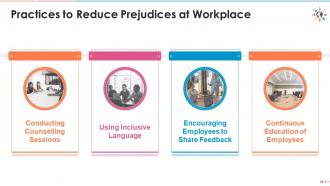
This slide showcases the practices to reduce prejudices at the workplace, such as continuous education of employees, using inclusive language, promoting equality and diversity, encouraging to share feedback, and conducting counseling sessions.
Instructor’s Notes:
- Conducting Counselling Sessions: Regularly conduct counseling sessions of employees to check if they face any mental health problems due to prejudiced workplace. If yes, then immediately provide necessary corrective actions and support
- Continuous Education of Employees: Conduct training sessions and provide learning material to employees to make them aware of the adverse effects of prejudice
- Using Inclusive Language: Use inclusive language to minimize prejudice by not using culturally specific jargons or masculine pronouns
- Encouraging Employees to Share Feedback: Encourage employees to share any prevailing prejudice they have faced (or someone they know in the organization is facing) by keeping their identity anonymous
Slide 16
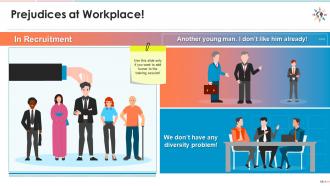
The purpose of this slide is to showcases meme collection for prejudices at workplace.
Slide 17
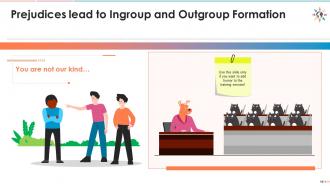
The purpose of this slide is to showcases meme collection for prejudices lead to in and out-group formation.
Slide 18
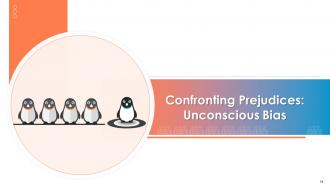
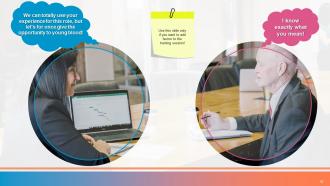
The purpose of this slide is to showcases a meme that reflects ageism prejudice at workplace.
Slide 21
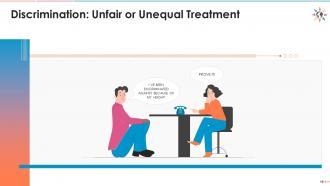
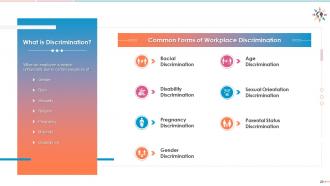
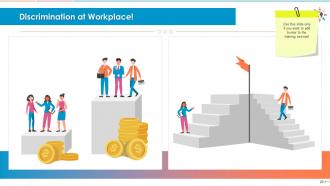
This slide provides information regarding the definition of discrimination. It also contains details of common forms of workplace discrimination such as race, disability, pregnancy, gender, age, sexual orientation, and parental status discrimination.
Instructor’s Notes:
Examples of workplace discrimination are discussed as follows:
- Racial Discrimination: Failing to recruit, train, mentor, or promote a person because he/she belongs to a particular race
- Disability Discrimination: Discriminating against a disabled person for a specific job role even if the role doesn’t have specific physical requirements
- Pregnancy Discrimination:
- Forcing a pregnant employee to take a shorter leave than what is allowed as per medical policy
- Not providing reasonable accommodation to a pregnant employee
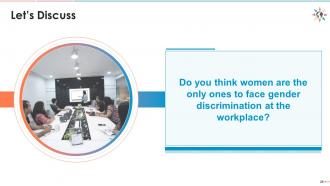
- Gender Discrimination: Giving unequal salaries to employees of different genders, i.e., male employees getting paid more than female colleagues for the same job position
- Age Discrimination:
- Laying off aged workers
- Taking harsher disciplinary actions towards younger employees
- Sexual Orientation Discrimination: Making hostile comments on employees belonging to specific gender identity
- Parental Status Discrimination: Remaining inflexible about work schedules for employees with childcare needs
Slide 22
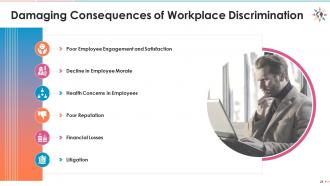
This slide provides information regarding the negative impact of discrimination at the workplace in terms of poor employee engagement and satisfaction, decline in morale, health concerns in employees, company’s poor reputation, financial losses, and litigation.
Instructor’s Notes:
The damaging consequences of workplace discrimination are as follows:
- Poor Employee Engagement and Satisfaction: When employees face constant discrimination, it results in poor employee engagement and satisfaction that makes the work environment toxic, leading to a high attrition rate
- Decline in Employee Morale: Unfair treatment of employees causes a decline in morale that results in poor performance at work
- Health Concerns in Employees: Discriminated employees faces both physical and mental health issues:
- Physical: Cardiovascular diseases, cancer, high blood pressure, and migraines
- Mental: Depression, anxiety, and loss of self-control
- Poor Reputation: Discriminatory practices negatively affect the organization's brand image, leading to the loss of customers over time
- Financial Losses: Companies have to incur a financial loss when a discriminated employee quits, as extra resources are required to hire and train the new employee
- Litigation: Discriminated employee can file lawsuit in court against the company causing
- Reputational damages to brand name
- Financial damages in terms of compensation
Slide 23
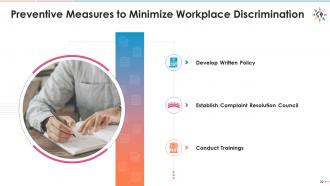
This slide provides information regarding the preventive measures to minimize workplace discrimination such as developing written policy, establishing complaint protocol, and conduct trainings.
Instructor’s Notes:
The following measures can be taken to minimize discrimination at the workplace:
- Develop Written Policy: Devise a policy that prohibits discrimination at workplace and ensure that policy is enforced properly
- Establish Complaint Resolution Council: Set up a council to resolve discrimination complaints promptly and confidentially
- Conduct Trainings: Train supervisors and managers on how to behave nondiscriminatory in the organization to foster a diversity-rich environment
Slide 24
The purpose of this slide is to showcases meme collection reflecting discrimination in the organizations.
Slide 26
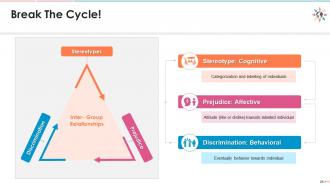
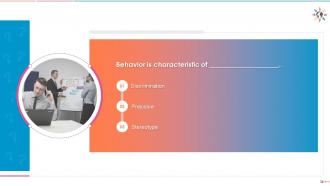
This slide visually presents the intergroup relationship between stereotypes, prejudice, and discrimination. It also provides information regarding the level at which each of them functions, i.e., stereotypes at cognitive, prejudice at affective, and discrimination and behavioral level.
Slide 28
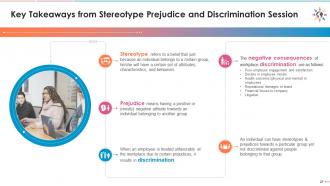
This slide depicts the summary of the stereotypes prejudice discrimination session. It also contains information regarding the negative consequences of workplace discrimination.
Slide 37
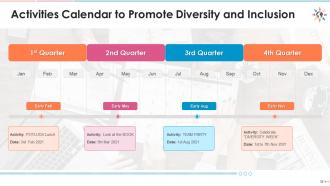
This slide showcases the activities calendar to promote diversity and inclusion at the workplace. It includes details of each activity along with the date on which it will be conducted.
Instructor’s Notes:
- Potluck Lunch: Organize inter-team lunch in which employees will bring food items of their respective cultures
- Look At the Book: Allocate influential D&I books to employees and ask them to share their learnings on the day of the event
- Organize Team Party: Organize a team party where employees can get to know each other better in an informal environment
- Diversity Week: Organize diversity week in which employees from different departments will spread awareness about D&I importance using the visual medium
Slide 38
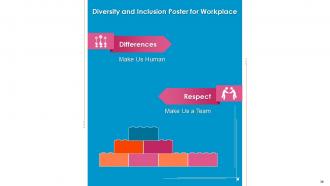
This slide showcases the posters to promote diversity and inclusion at the workplace.
Slide 39
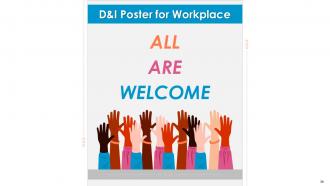
This slide showcases the posters to spread awareness regarding diversity and inclusion at the workplace.
Slide 40
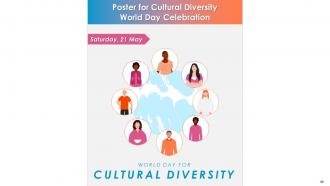
This slide showcases the poster to promote and spend awareness regarding cultural diversity in the organization.
Slide 41
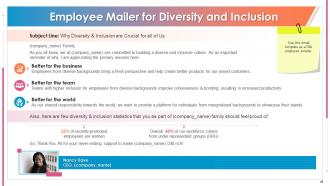
This slide consists of a sample employee mailer for diversity and inclusion promotion in the organization.
Slide 42
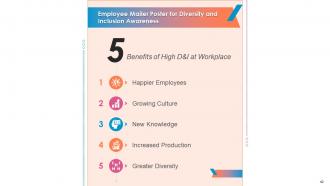
This slide illustrates the employee mailer poster for diversity and inclusion awareness in the organization. It provides information regarding the advantages of High D&I.
Slides 50-65
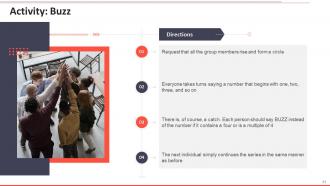
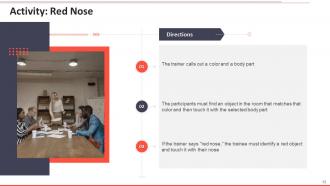
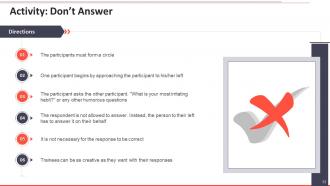
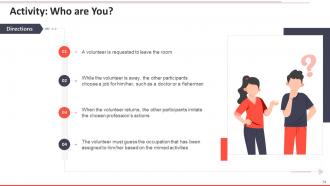
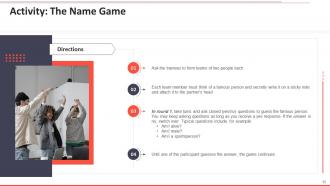
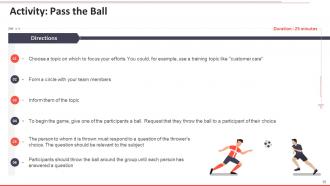
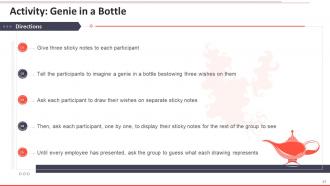
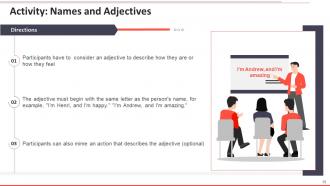
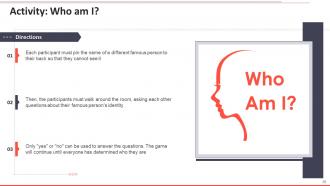
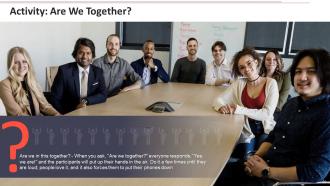
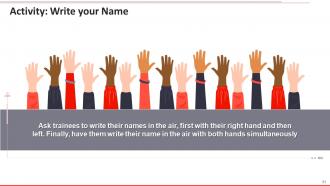
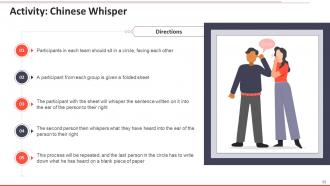
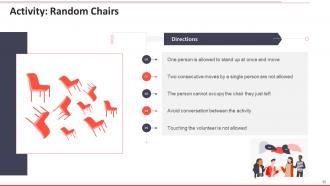
These slides contain multiple energizer activities to keep the participants’ energy levels high throughout the session duration. They are carefully chosen to keep the participants attentive, engaged and energized. These activities are accompanied by detailed instructor notes for a successful conduct.
Sides 66-93
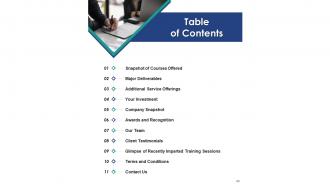
These slides contain a detailed proposal that can be shared by the trainer/agency with the potential clients. This sample proposal is designed to reflect trust, experience and professionalism. This comprehensive sample proposal contains sample slides like Course Snapshot, Major Deliverables, Investment Required, Company Profile, Awards and Recognition, Client Testimonials, Terms and Conditions and much more
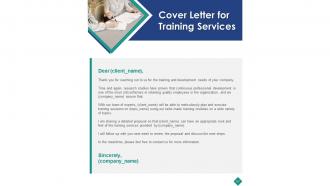
Slide 67
This slide highlights the cover letter for the training proposal. It includes details regarding what the company providing corporate training can accomplish for the client.
Slide 70
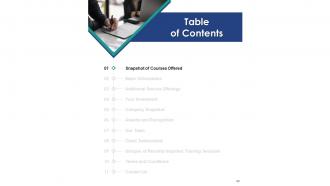
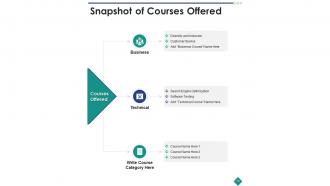
The purpose of this slide is to showcase the multiple types of courses offered by the training company.
Slide 72
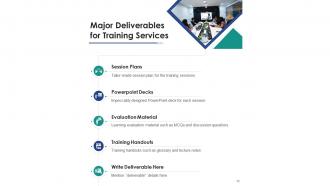
This slide indicates the major deliverables that the corporate training firm will provide to the client. The key deliverables highlighted are session plans, PowerPoint deck, evaluation material, and training handouts.
Slide 74
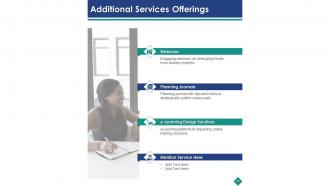
This slide represents the multiple additional services offered by the training firm to the client, such as webinars, planning journals, and e-learning design solutions.
Slide 76
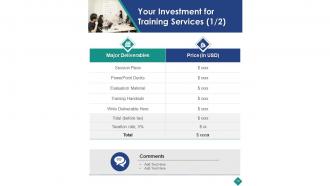
This slide tabulates the major deliverables offered by the training company to the client along with their associated costs.
Slide 77
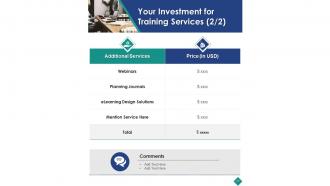
The purpose of this slide is to highlight the multiple additional services offered by the training firm along with their cost details.
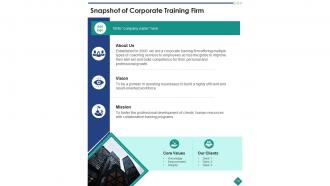
Slide 79
This slide provides an overview of the corporate training firm's vision and mission statements, core values, and key clients.
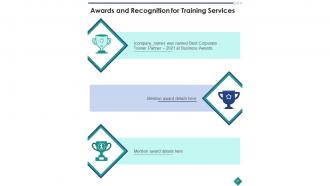
Slide 81
This slide highlights the major awards and recognition won by the training firm for their exceptional service to clients.
Slide 83
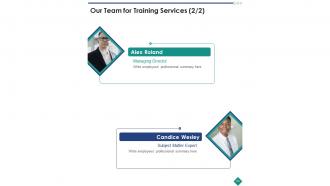
The slide provides information regarding the team members that would be providing the training services to the client. It includes details of the trainer and their respective designations.
Slide 84
The slide provides information regarding the team members that would be providing the training services to the client. It includes details of the employees’ names and their respective designations.
Slide 86
This slide provides information pertaining to testimonials given by satisfied clients of the training firm.
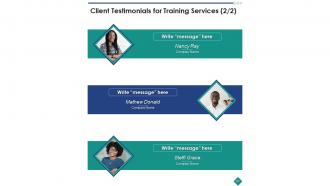
Slide 87
This slide highlights the testimonials from multiple satisfied clients of the training firm providing information regarding congratulatory messages, client name, and company details.
Slide 89
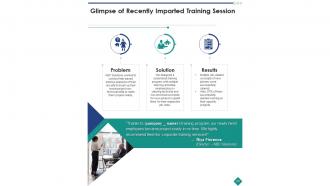
This slide showcases the case study for the training proposal. It includes information regarding the problem faced by the client and solutions offered by the training firm. It also covers details of the results and client testimonial.
Slide 91
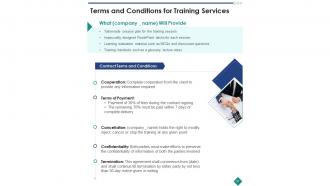
This slide provides information regarding the contract terms and conditions of the training proposal. It also includes details of deliverables that the training company will provide to the client.
Slide 93
The purpose of this slide is to provide the contact information of the corporate training firm. It includes the firm’s official address, contact number, and email address.
Slide 94
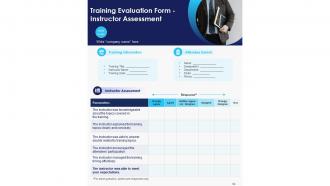
This slide highlights the training evaluation form for instructor assessment. It also includes sections to fill details of training information and attendee details.
Slide 95
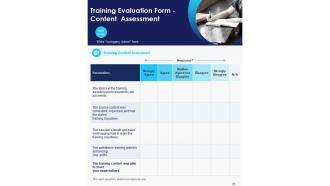
This slide showcases the questions for the assessment of the training content by the attendees.
Slide 96
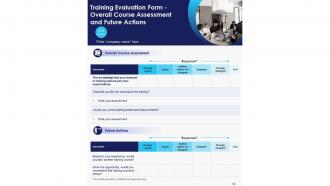
The slide indicates the evaluation form for course assessment. It also includes questions pertaining to the future actions of the attendees.
Training module on diversity and inclusion - understanding stereotype, prejudice, discrimination with all 96 slides:
Use our Training Module Understanding Stereotype Prejudice Discrimination Edu Ppt to effectively help you save your valuable time. They are readymade to fit into any presentation structure.








FAQs for Training module on diversity and inclusion - understanding
Honestly, diverse teams just perform better - there's solid research showing 35% better results when leadership is mixed up. Different backgrounds mean you catch mistakes and blind spots way easier. Innovation goes up too since people approach problems differently. Employee retention improves a ton because everyone feels valued. I mean, who wants to work somewhere they don't belong, right? My advice? Look at your hiring first - that's usually where bias creeps in. Then focus on making people comfortable enough to actually speak up in meetings. Small changes but they add up fast.
Track your hiring, promotion, and retention numbers broken down by demographics - that's your starting point. Employee surveys about inclusion experiences are huge too. Honestly, exit interviews are where you'll get the realest feedback since people have nothing to lose at that point. Don't just collect this stuff though. You need specific targets and should compare against what others in your industry are doing. Oh, and consistency matters way more than people think - one survey won't tell you much, but tracking changes over months? That's where patterns emerge.
Honestly, leadership makes or breaks D&I efforts. Your leaders basically control everything - budgets, hiring, company culture. I've watched great programs completely tank because executives just gave them lip service instead of real support. But flip side? When leaders genuinely care and model inclusive behavior, it creates this psychological safety where everyone feels valued. They'll actually hold people accountable and invest real resources. The trick is getting leadership that reflects the diversity you want to see. Oh, and they need to talk about inclusion regularly - not just when it's "D&I week" or whatever.
Honestly, you've gotta systemize this stuff or bias will creep in everywhere. Strip names and school info from resumes during initial screening - that unconscious bias hits fast. Get diverse people on your interview panels and ask everyone the same questions. I'd also track everything (yeah, more spreadsheets, sorry). See where people drop out and who you're actually hiring. Don't just set diversity goals for final hires though - do it for your whole pipeline. Makes the bias thing way harder to happen by accident.
Honestly, mixed teams crush it compared to groups where everyone thinks alike. Different backgrounds = different ways of attacking problems, you know? I've watched this happen so many times - the best breakthroughs come from totally unexpected directions. Plus diverse teams actually challenge each other's assumptions instead of just nodding along (groupthink is creativity's worst enemy). Oh, and don't just focus on hiring different demographics - you want people who literally think differently too. That's where the magic happens.
Honestly, remote work is kinda a mixed bag for diversity. Sure, you're not limited by location anymore and people with kids or disabilities can actually participate better. But then you get these weird new problems - like if someone doesn't have great tech or gets left out of those random Slack conversations that happen. I've seen teams where the remote culture accidentally excludes people just because they weren't in the "right" virtual spaces. You gotta be pretty deliberate about making meetings inclusive and creating actual ways for people to connect. Otherwise you're just trading old problems for new ones.
Honestly, the biggest pain points are always resistance to change and leadership that talks the talk but doesn't walk it. People get super defensive or think it's just trendy BS - and let's be real, sometimes it totally is! Measuring actual progress is tricky too. Most companies treat D&I like checking boxes instead of building real culture where people actually feel like they belong. Leadership needs to consistently model the behavior themselves, not just send emails about it. Oh, and tie everything to business results - nobody cares about good intentions when budgets get tight.
Oh, ERGs are solid! They're like work communities for people with shared backgrounds or interests. Think accessibility advocates or parents pushing for better policies. I've watched them get lactation rooms approved and change holiday schedules - pretty cool stuff. What's really helpful is the mentoring aspect. You can actually find people who've dealt with similar career stuff. My only advice? Leadership needs to give them real budget and listen to their ideas, otherwise it's just performative nonsense. Honestly, just join one if you're curious. You don't need to check every box to participate.
Honestly, skip the boring one-time lectures - they're useless. Interactive workshops work way better, especially with real workplace scenarios and small group stuff. Those Harvard implicit bias tests are actually pretty mind-blowing if you haven't done one. What really matters is follow-up though. Regular check-ins, refresher sessions, that kind of thing. Find trainers who give you actual strategies for hiring and meetings, not just theory. And definitely get leadership involved - people take it more seriously when the boss shows up.
Look, diverse teams just see things differently - they catch cultural stuff and blind spots that everyone else totally misses. Your workforce should actually reflect who you're selling to, right? That way you get real insights instead of just guessing what might work. I've watched companies bomb so hard because literally nobody on their team got their audience's actual experience. Different perspectives push back on assumptions during development and marketing too. But here's the thing - having diverse people in the room means nothing if they can't actually influence the decisions that matter for customers.
So intersectionality is when someone deals with multiple identities hitting them all at once in the workplace. Like, a Black woman isn't just experiencing being Black OR being a woman - it's both together, which creates totally different challenges than what a white woman or Black man would face separately. Pretty wild how that compounds, right? Add in age, disability, sexual orientation and it gets even messier. Don't do those generic diversity programs that treat everyone the same. Actually listen to what people need based on their whole experience, not just one part of who they are.
Okay so first thing - set some ground rules upfront. Like everyone assumes good intentions, focus on learning instead of being right, that kind of stuff. Leadership HAS to participate and be vulnerable too - I've watched so many sessions die because executives just sit there observing. Total psychological safety killer. Start with small groups before the big discussion, gives people time to actually think. Oh and get real facilitators who won't panic when things get uncomfortable. Don't jump straight into solutions either - do listening sessions first. Always follow up on whatever gets promised in these conversations or people will stop taking it seriously.
Honestly, first thing I'd do is dig through your current policies - you'll find so much outdated garbage hiding in there. When you're hiring, bake diversity right into the process from day one instead of tacking it on later. Promotion criteria need to be crystal clear so everyone knows what they're working toward. Track everything with actual numbers too, because hoping things improve doesn't work. And here's the thing - get employees from all levels involved when you're rewriting stuff. They spot things leadership totally misses, every single time.
Stories hit different than boring stats, you know? Like when someone shares how they felt excluded at work, you actually *feel* it instead of just nodding at pie charts. It's pure empathy. Plus stories make people realize their blind spots - those "oh crap, I do that" moments are gold. Your actions suddenly have faces attached to them. Honestly, PowerPoint slides about diversity training make me want to nap. Try this instead: next team meeting, ask someone to share when they felt genuinely valued. Way better conversation starter.
Honestly, tech can be a game-changer for D&I stuff. AI recruitment tools are pretty solid - they focus on actual skills instead of getting tripped up by unconscious bias. Analytics help you spot diversity gaps you might totally miss otherwise. VR training is wild now, like you can actually experience what it's like walking in someone else's shoes. There are also platforms that make it way easier for employee resource groups to connect and amplify voices that usually get drowned out. Oh, and don't overthink where to start - just pick somewhere you're already tracking data and see what jumps out at you.
-
Topic best represented with attractive design.