


Transportation And Fleet Management Powerpoint Presentation Slides




Try Before you Buy Download Free Sample Product
 Impress Your
 Audience
 100%
100% Editable
 Save Hours
 of Time


A logistics strategy is a set of principles essential for supply chain coordination. Grab our Transportation and fleet management template. It allows you to increase efficiency in the supply chain while enhancing the supply chain management process. Our Logistics management system deck helps to analyze the implementation of a logistic strategy to improve the operational and financial performance of the company. Additionally, it exhibits the current trends in logistics management, including automation and various strategies like warehousing strategy, strategic logistics planning, etc. Further, our Inventory management PPT incorporates a workflow chart, roles, and responsibilities of the HR manager and team. The module also contains cost analysis and comparative software assessment for enhancing overall performance. Lastly, it provides KPI dashboards and impact analysis for measuring the effectiveness of social media strategies. Get access to this powerful template now.
People who downloaded this PowerPoint presentation also viewed the following :
Content of this Powerpoint Presentation
Slide 1: This slide introduces Transportation & fleet management. Commence by stating Your company name.
Slide 2: This slide depicts the Agenda of the presentation.
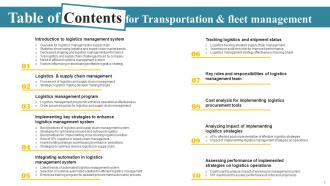
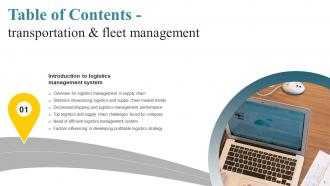
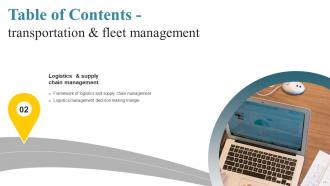
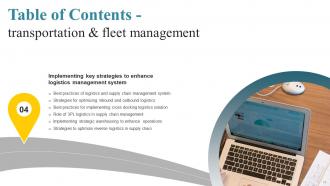
Slide 3: This slide incorporates the Table of Contents.
Slide 4: This slide highlights the Title for the Topics to be further discussed.
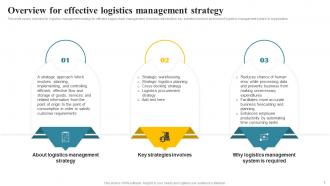
Slide 5: This slide covers the overview for logistics management strategy for efficient supply chain management.
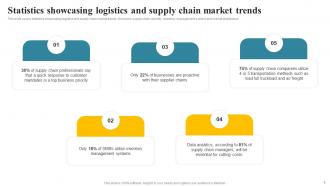
Slide 6: This slide highlights the Statistics showcasing logistics and supply chain market trends.
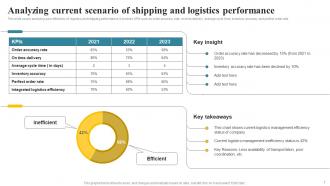
Slide 7: This slide deals with Analyzing current scenario of shipping and logistics performance.
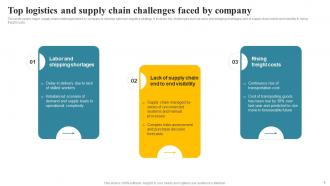
Slide 8: This slide talks about the Top logistics and supply chain challenges faced by company.
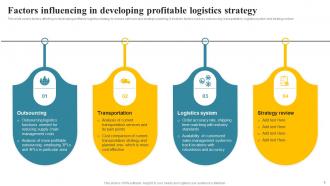
Slide 9: This slide states the Factors influencing in developing profitable logistics strategy.
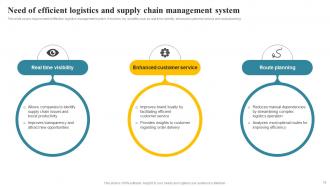
Slide 10: This slide presents the Need of efficient logistics and supply chain management system.
Slide 11: This slide portrays the Heading for the Components to be discussed next.
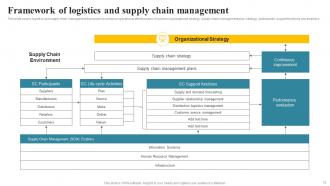
Slide 12: This slide showcases the Framework of logistics and supply chain management.
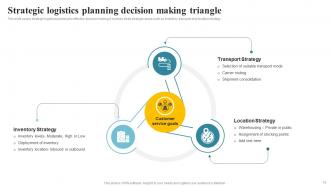
Slide 13: This slide covers strategic logistics planning for effective decision making.
Slide 14: This slide elucidates the Title for the Ideas to be further discussed.
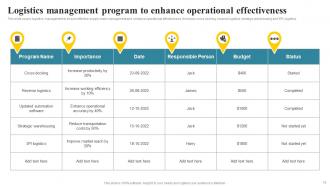
Slide 15: This slide talks about the Logistics management program to enhance operational effectiveness.
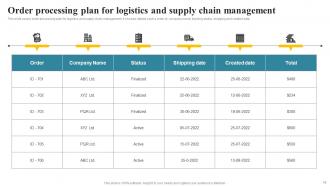
Slide 16: This slide focuses on Order processing plan for logistics and supply chain management.
Slide 17: This slide depicts the Heading for the Ideas to be covered in the forth-coming template.
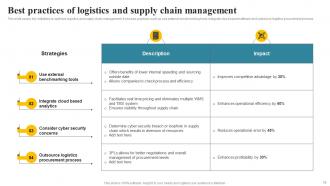
Slide 18: This slide reveals the Best practices of logistics and supply chain management.
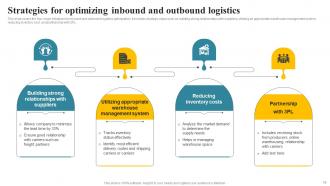
Slide 19: This slide incorporates the four major initiatives for inbound and outbound logistics optimization.
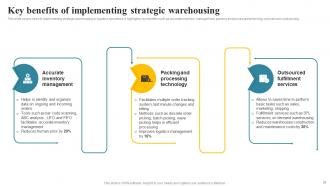
Slide 20: This slide states the Key benefits of implementing strategic warehousing.
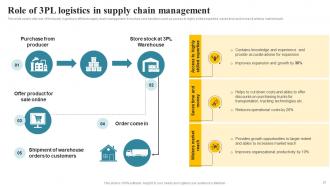
Slide 21: This slide mentions about the Role of 3PL logistics in supply chain management.
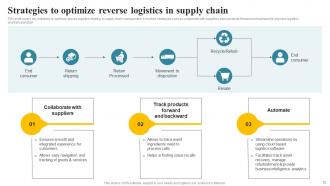
Slide 22: This slide covers key initiatives to optimize reverse logistics strategy in supply chain management.
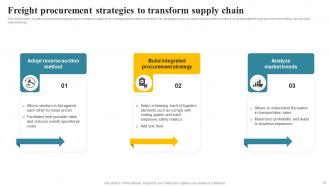
Slide 23: This slide indicates the Freight procurement strategies to transform supply chain.
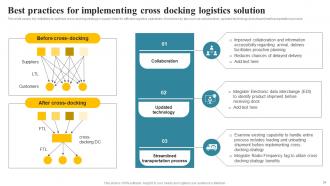
Slide 24: This slide highlights the Best practices for implementing cross docking logistics solution.
Slide 25: This slide showcases the Title for the Components to be further discussed.
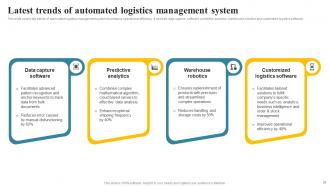
Slide 26: This slide talks about the Latest trends of automated logistics management system.
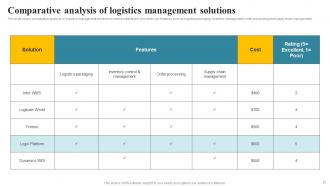
Slide 27: This slide elucidates the Comparative analysis of logistics management solutions.
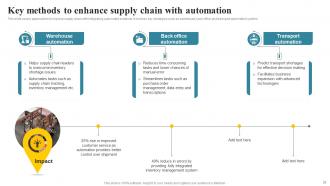
Slide 28: This slide represents the Key methods to enhance supply chain with automation.
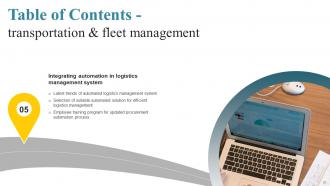
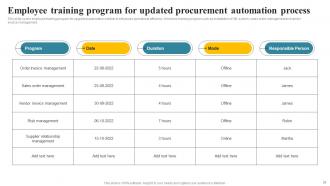
Slide 29: This slide depicts the Employee training program for updated procurement automation process.
Slide 30: This slide indicates the Heading for the Topics to be discussed in the forth-coming template.
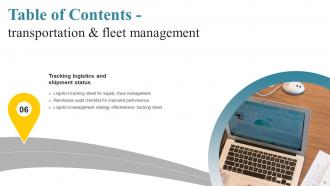
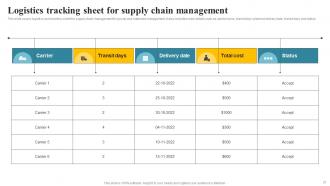
Slide 31: This slide covers logistics and inventory sheet for supply chain management for goods and materials management.
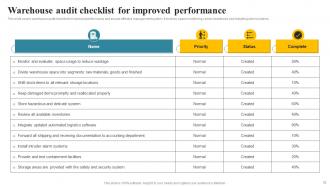
Slide 32: This slide deals with the Warehouse audit checklist for improved performance.
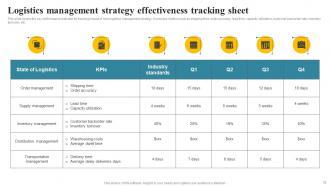
Slide 33: This slide emphasizes on the Logistics management strategy effectiveness tracking sheet.
Slide 34: This slide displays the Title for the Ideas to be discussed further.
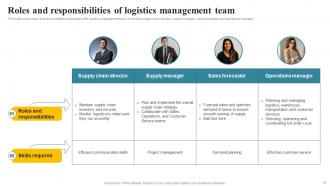
Slide 35: This slide portrays the Roles and responsibilities of logistics management team.
Slide 36: This slide shows the Heading for the Ideas to be covered in the next template.
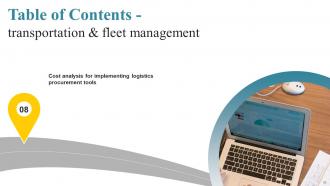
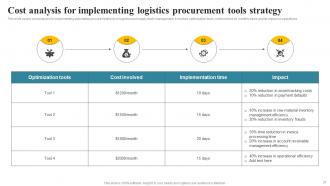
Slide 37: This slide talks about the Cost analysis for implementing logistics procurement tools strategy.
Slide 38: This slide exhibits the Title for the Contents to be discussed further.
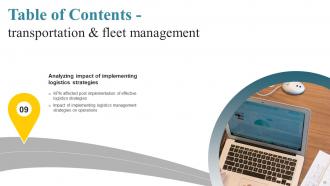
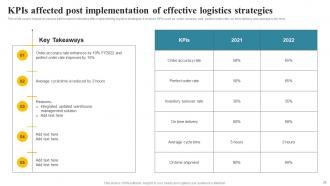
Slide 39: This slide mentions the KPIs affected post implementation of effective logistics strategies.
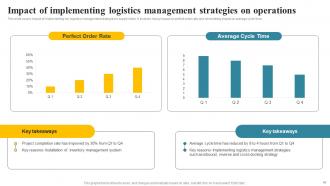
Slide 40: This slide covers impact of implementing key logistics management strategies in supply chain.
Slide 41: This slide elucidates the Heading for the Topics to be covered in the forth-coming template.
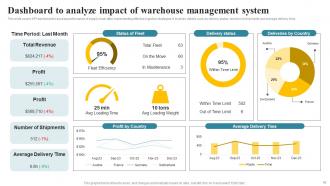
Slide 42: This slide illustrates the Dashboard to analyze impact of warehouse management system.
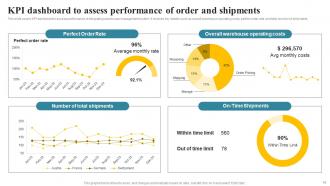
Slide 43: This slide reveals the KPI dashboard to assess performance of order and shipments.
Slide 44: This is the Icons slide containing all the Icons used in the plan.
Slide 45: This slide is used for depicting Additional information.
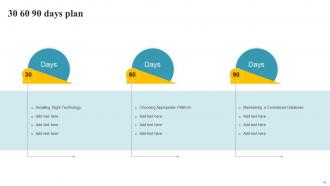
Slide 46: This is the 30 60 90 days plan sldie for effective planning.
Slide 47: This is Our team slide for stating the team-related information.
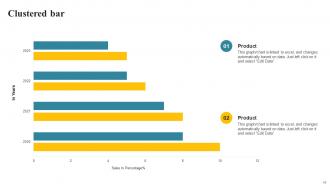
Slide 48: This slide shows he Clustered bar.
Slide 49: This is the Puzzle slide with related imagery.
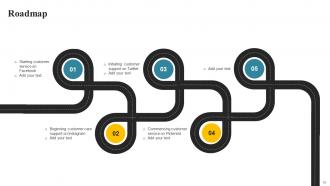
Slide 50: This slide presents the Company Roadmap.
Slide 51: This is the Venn diagram slide.
Slide 52: This slide contains the Post it notes for reminders and deadlines.
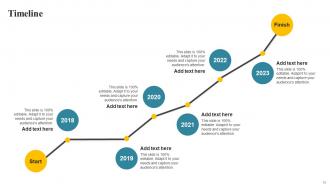
Slide 53: This slide illustrates the Organization's Timeline.
Slide 54: This is Our goal slide. State your firm's goals here.
Slide 55: This is the Thank You slide for acknowledgement.
Transportation And Fleet Management Powerpoint Presentation Slides with all 63 slides:
Use our Transportation And Fleet Management Powerpoint Presentation Slides to effectively help you save your valuable time. They are readymade to fit into any presentation structure.











FAQs for Transportation And Fleet Management
Honestly, route optimization is your biggest win here. Get real-time visibility into your shipments - companies still stuck on spreadsheets are just bleeding money for no reason. Your carrier relationships matter way more than most people realize too. Reliable partners mean fewer headaches and delays. Load consolidation saves tons if you can swing it. Oh, and definitely audit your current routes first - you're probably making stops that don't make sense or using carriers that aren't the best fit. Warehouse placement strategy helps with costs long-term, but start with the route stuff since that's quicker to fix.
Honestly, get a TMS platform - it'll change your life. No more phone tag nonsense because everything updates automatically. Your customers, drivers, everyone gets real-time info without you lifting a finger. GPS tracking shows you exactly where stuff is, and those "where's my order?" calls? Gone. Mobile apps let drivers report problems instantly instead of you finding out hours later that something's screwed up. Oh, and everything gets documented automatically, which is clutch for keeping records. Just pick one platform that connects everyone - seriously, don't overthink it.
So data analytics is what makes route optimization actually work - it crunches tons of real-time info like traffic, delivery windows, fuel costs, all that stuff. The algorithms spot patterns way better than we ever could manually. Pretty wild honestly. What's cool is the system learns from old routes and adapts to things like rush hour or seasonal changes. Oh, and weather too - forgot that one. Start tracking your delivery times and fuel usage if you aren't already. That data becomes super valuable for the optimization algorithms to work with.
So there's basically three things you can do - route optimization is huge and gives you results right away. Your routing software can cut miles and consolidate shipments, which saves money AND reduces emissions. Win-win. Then think about your fleet mix. Electric and hybrid vehicles actually make sense now in a lot of cases - the tech has come so far. Oh, and don't just pick carriers based on rates anymore. Look at their sustainability stuff too since most of the good ones are upgrading to cleaner trucks anyway. Honestly I'd start with the routing piece first because you'll see immediate data you can build from.
Customs delays are the worst - seriously, plan for everything to take twice as long. Each country has different rules and paperwork, which gets confusing fast. Transit times are all over the place too. Currency stuff will screw with your budget (happened to me last quarter, ugh). You're juggling multiple carriers who all speak different languages. Weather delays, political drama - there's always something. Oh and documentation requirements change constantly depending where you're shipping. Honestly? Build in extra time for everything and find local partners who actually know what they're doing in each region.
Compliance runs the whole show, honestly. Your TMS has to track DOT stuff and make sure drivers don't blow past HOS limits. Different state regs make it even messier - learned that one the hard way! It's not just paperwork either. Compliance directly affects which routes you pick, how you schedule everything, and which carriers you'll work with. Get a system that monitors this automatically or you'll be stressed out during every inspection. Trust me on that one.
Honestly, e-commerce changes everything about shipping. Instead of sending big bulk orders to stores, you're now handling thousands of tiny individual packages. Way more complicated. Your whole network becomes B2C focused, which means last-mile delivery costs go through the roof. Customers want free shipping and next-day delivery - Amazon really screwed us all on that expectation, didn't they? You'll need to rethink warehouse locations and probably work with multiple carriers for busy seasons. I'd start by looking at your delivery zones first and figuring out where you're bleeding money on shipping.
Track your on-time delivery rates and transportation costs per shipment first - those are huge. Carrier performance scores matter too. Most places I know also watch fuel efficiency and route optimization, though honestly that data gets crazy overwhelming fast. Customer satisfaction is where the real money is though. Your dashboard should show cost savings vs last quarter and delivery time improvements. Don't try to track everything at once - pick maybe 3-4 metrics that actually match what you're trying to accomplish. You can always add more later once you've got the basics down.
Hey! So transportation's getting wild right now. AI is crushing it with route planning and predicting when trucks need repairs - honestly blew my mind how accurate it's gotten. Electric fleets are everywhere now, plus you've got autonomous vehicles rolling out (though still kinda sketchy IMO). Real-time tracking platforms let you see everything from start to finish. Oh, and carbon reporting isn't optional anymore - everyone wants those sustainability metrics. The cool part? Everything's connecting into these integrated systems now. I'd probably start figuring out which tech will hit your operations hardest in the next year or so.
Honestly, getting everyone on the same page is a game changer for logistics. Your shippers, carriers, suppliers - when they're actually talking to each other instead of doing their own thing, you can coordinate routes way better and consolidate shipments. No more three trucks showing up at once (been there, it's chaos). Problems get caught early before they turn into massive delays. Set up weekly check-ins or shared dashboards - whatever keeps info flowing both ways. Way better than everyone scrambling separately and then blaming each other when stuff goes sideways.
Map out your main routes first, then figure out backups for when stuff inevitably goes wrong. Weather, closures, carrier drama - it all happens. I always build extra time into schedules because being late sucks way more than being early. Don't rely on just one carrier either, that's asking for trouble. Spread your supply chain around geographically if you can. Oh, and regularly test your plans against different disaster scenarios - sounds dramatic but it works. Basically, think about what could screw you over before it actually does.
You need to standardize maintenance schedules and driver training - even across totally different vehicles. Get fleet management software that handles various specs because tracking manually is a nightmare, trust me. Group vehicles by how they're actually used instead of just type. A city delivery truck beats the crap out of itself way differently than highway routes do. Consistent reporting helps you catch patterns fleet-wide. Oh and definitely audit what you have first to find the biggest process gaps. That'll save you from spinning your wheels later.
So basically GIS lets you visualize all your transport data instead of staring at boring spreadsheets. You'll spot traffic bottlenecks and weird routing issues you never saw before. Weather, construction, rush hour - you can actually see how this stuff impacts different areas. Pretty cool for planning future capacity too. Honestly, once you get the hang of it, going back to old methods feels painful. Even just mapping your current routes first will blow your mind - I guarantee you'll find inefficiencies everywhere. The predictive stuff comes later, but start simple and build from there.
Honestly, having everything in one place is a game changer - no more switching between like 5 different systems just to track one shipment. Real-time visibility means you actually know what's happening instead of playing phone tag with carriers all day. Your costs become way easier to control when all the data's flowing to the same spot. Plus automated load planning saves tons of manual work (my friend's logistics team went from spending hours on this to maybe 30 minutes). Carriers are happier too since they're not juggling different portals constantly. I'd figure out what's driving you crazy first, then tackle those features.
Look, training is huge for transportation stuff. Your drivers learn better fuel techniques, dispatchers get good with the scheduling software - boom, faster deliveries and lower costs. I've seen one messed up shipment totally wreck someone's quarterly numbers, so fewer mistakes = way better margins. Focus on the technical side but don't ignore customer communication skills either. Honestly, figure out what's breaking most in your operations first. Then build training around fixing those exact problems. You'll see results pretty quick once everyone knows what they're actually doing.
-
“The presentation template I got from you was a very useful one.My presentation went very well and the comments were positive.Thank you for the support. Kudos to the team!”
-
The pricing page of this website is very sorted. I felt no pain while buying the PPTs.