


Improving Customer Service In Logistics Powerpoint Presentation Slides




Try Before you Buy Download Free Sample Product
 Impress Your
 Audience
 100%
100% Editable
 Save Hours
 of Time


Logistics management aims to meet customer demand by planning supply chain processes that help companies reduce expenses and enhance customer service. Grab our competently designed Improving Customer Service in Logistics template that covers the challenges faced by logistics managers and costs involved in supply chain functions. Also, this deck caters to the organizational structure of the logistics department and critical activities to improve performance and efficiency. Further, this PowerPoint presentation shows vital strategies such as creating vendor compliance policy, handling reverse logistics, processing customer orders and enhancing customer satisfaction. This slide portrays the logistics outbound process, operational activities for inbound logistics, key considerations to improve warehousing operations, and a flowchart for managing inventory and picking, packing, and shipping process flow. Moreover, this presentation showcases the initiatives to reduce cost, selection of transport management systems, and metrics to track TMS performance. Also, it includes the cost involved in improving logistics services and the impact of logistics management on company performance. At last, this PowerPoint captures the dashboard to help track supply chain activities and inventory management status. Download it now.
People who downloaded this PowerPoint presentation also viewed the following :
Content of this Powerpoint Presentation
Slide 1: This slide introduces Improving Customer Service in Logistics. State Your Company Name and begin.
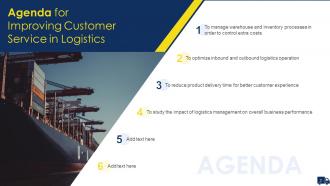
Slide 2: This slide states Agenda of the presentation.
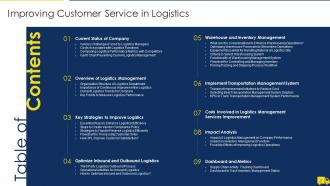
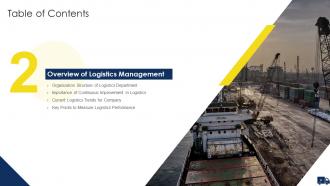
Slide 3: This slide presents Table of Content for the presentation.
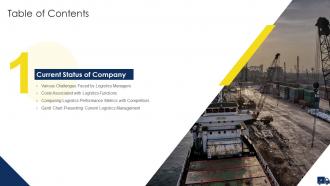
Slide 4: This slide highlights title for topics that are to be covered next in the template.
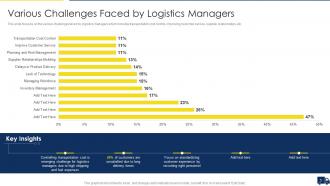
Slide 5: This slide showcases Various Challenges Faced by Logistics Managers.
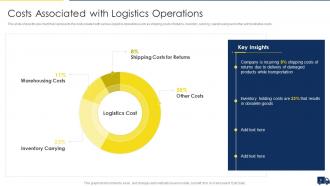
Slide 6: This slide shows Costs Associated with Logistics Operations.
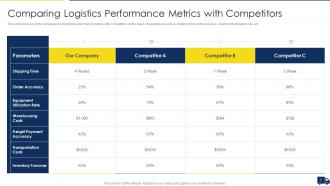
Slide 7: This slide presents Comparing Logistics Performance Metrics with Competitors.
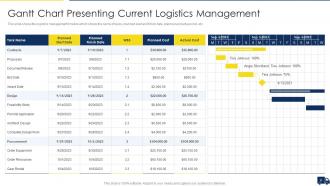
Slide 8: This slide displays Gantt Chart Presenting Current Logistics Management.
Slide 9: This slide represents title for topics that are to be covered next in the template.
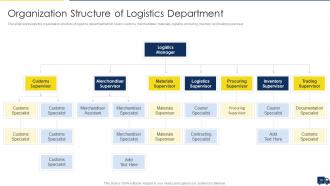
Slide 10: This slide showcases Organization Structure of Logistics Department.
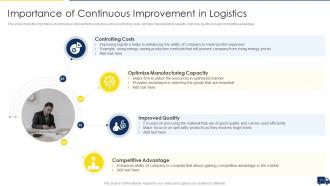
Slide 11: This slide shows the importance of continuous improvement in logistics.
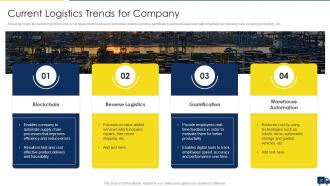
Slide 12: This slide presents current logistics trends for company which focuses on blockchain, reverse logistics, etc.
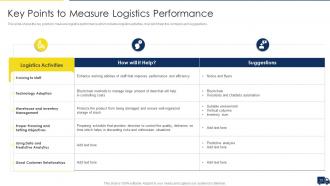
Slide 13: This slide displays the key points to measure logistics performance.
Slide 14: This slide represents title for topics that are to be covered next in the template.
Slide 15: This slide showcases Essential Ways to Enhance Logistical Efficiency.
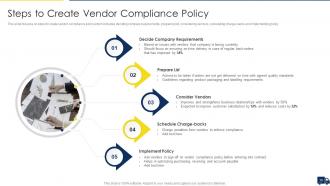
Slide 16: This slide shows steps to create vendor compliance policy which includes deciding company requirements, preparing list, etc.
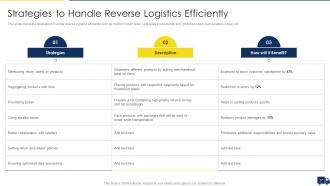
Slide 17: This slide presents the strategies to handle reverse logistics efficiently such as mention return label, segregate products with bins, etc.
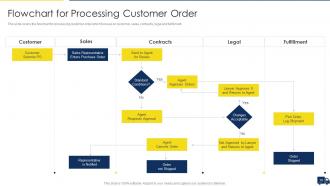
Slide 18: This slide displays flowchart for processing customer order which focuses on customer, sales, contracts, etc.
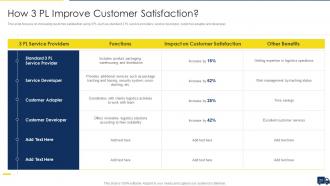
Slide 19: This slide represents increasing customer satisfaction using 3 PL such as standard 3 PL service providers, service developer, etc.
Slide 20: This slide showcases title for topics that are to be covered next in the template.
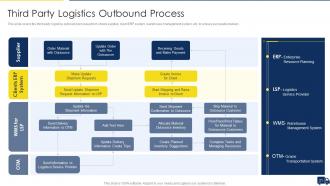
Slide 21: This slide shows Third Party Logistics Outbound Process.
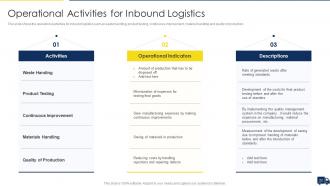
Slide 22: This slide presents the operational activities for inbound logistics such as waste handling, product testing, etc.
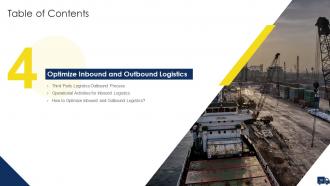
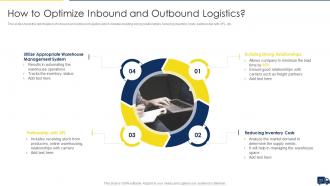
Slide 23: This slide displays the optimization of inbound and outbound logistics.
Slide 24: This slide represents title for topics that are to be covered next in the template.
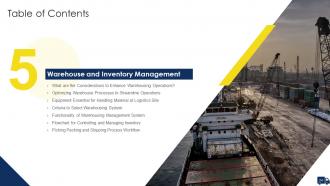
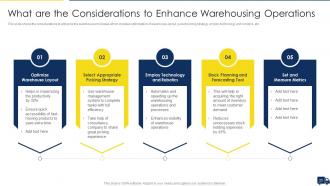
Slide 25: This slide showcases What are the Considerations to Enhance Warehousing Operations.
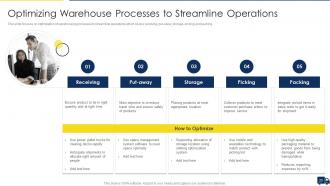
Slide 26: This slide shows Optimizing Warehouse Processes to Streamline Operations.
Slide 27: This slide presents the equipment essential for handling material at logistics site.
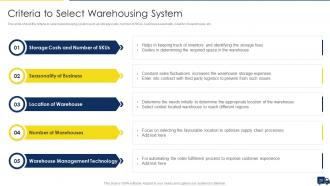
Slide 28: This slide displays the criteria to select warehousing system such as storage costs, number of SKUs, etc.
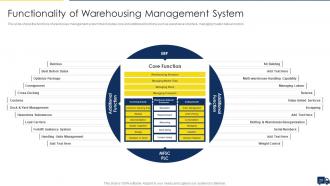
Slide 29: This slide represents the functions of warehouse management system that includes core and additional functions.
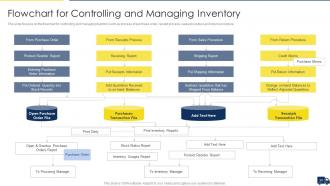
Slide 30: This slide showcases flowchart for controlling and managing inventory.
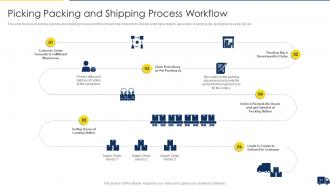
Slide 31: This slide shows Picking Packing and Shipping Process Workflow.
Slide 32: This slide presents title for topics that are to be covered next in the template.
Slide 33: This slide displays initiatives taken for improving transportation to reduce costs.
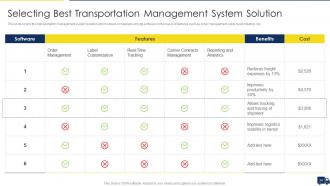
Slide 34: This slide represents Selecting Best Transportation Management System Solution.
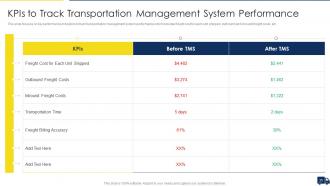
Slide 35: This slide showcases KPIs to Track Transportation Management System Performance.
Slide 36: This slide shows title for topics that are to be covered next in the template.
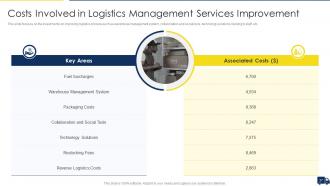
Slide 37: This slide presents Costs Involved in Logistics Management Services Improvement.
Slide 38: This slide displays title for topics that are to be covered next in the template.
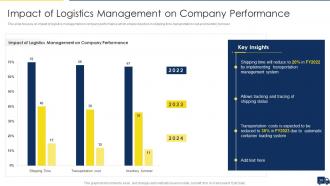
Slide 39: This slide represents Impact of Logistics Management on Company Performance.
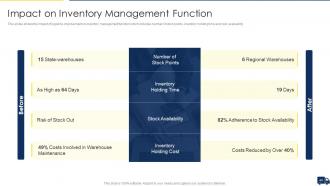
Slide 40: This slides showcases the impact of logistics improvement on inventory management function.
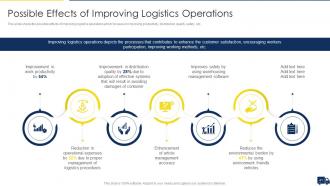
Slide 41: This slide shows the possible effects of improving logistics operations which focuses on improving productivity.
Slide 42: This slide presents title for topics that are to be covered next in the template.
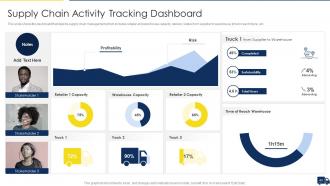
Slide 43: This slide displays the dashboard that depicts supply chain management.
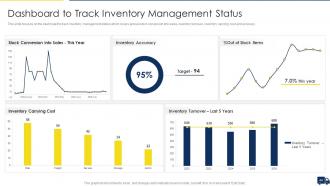
Slide 44: This slide represents Dashboard to Track Inventory Management Status.
Slide 45: This slide showcases Icons for Improving Customer Service in Logistics.
Slide 46: This slide is titled as Additional Slides for moving forward.
Slide 47: This slide shows Post It Notes. Post your important notes here.
Slide 48: This is an Idea Generation slide to state a new idea or highlight information, specifications etc.
Slide 49: This slide contains Puzzle with related icons and text.
Slide 50: This slide depicts Venn diagram with text boxes.
Slide 51: This is Our Target slide. State your targets here.
Slide 52: This is a Thank You slide with address, contact numbers and email address.
Improving Customer Service In Logistics Powerpoint Presentation Slides with all 57 slides:
Use our Improving Customer Service In Logistics Powerpoint Presentation Slides to effectively help you save your valuable time. They are readymade to fit into any presentation structure.















FAQs for Improving Customer Service In Logistics
Definitely focus on on-time delivery, order accuracy, and damage rates first - that's what customers actually notice. Customer effort score is massive too because people hate chasing down packages or dealing with messy returns. For support stuff, track first-call resolution since nobody wants to call three times about the same problem (been there, it's awful). Response time matters way more than you'd think, especially with business clients. Honestly, nail those basics before worrying about fancy metrics like Net Promoter Score.
Honestly, start with the basic stuff - tracking updates and delivery questions. AI handles those pretty well now, runs 24/7 without needing coffee breaks. Your actual people can focus on the messy situations, like when someone's package gets destroyed or delivery goes sideways. The cool part? It learns from each conversation and starts figuring out what customers want before they ask. Though I'd probably test it on simple tracking queries first - see how it goes before throwing everything at it. Way better than having your team answer "where's my package" a hundred times a day.
Dude, real-time tracking is a game changer for customer service. Your customers won't blow up your phone asking "where's my stuff?" because they can just check themselves. I swear it cuts support tickets in half. When things go sideways - which they will - you can shoot them a heads up before they're wondering why their package is sitting in some random warehouse. Makes you look way more professional too. Just hook up some tracking APIs to your customer portal and you're golden. Trust me, your support team will love you for it.
Honestly, it's all about using the data you already have. Look at each customer's shipping history - how often they order, where stuff goes, what problems they've had before. Some people want every tiny update, others only care if something's actually wrong. Figure out who's who and act accordingly. Text the people who like texts, call the phone people. The real game-changer is getting ahead of problems before customers even know about them. I'd start with your biggest accounts first - way easier to test things out on like 20 customers than trying to do everyone at once.
First thing - get a complaint tracking system that actually follows issues from start to finish. Your team needs to listen and validate the customer's frustration before diving into fixes. I swear, people just want to feel heard half the time! Make sure you've got clear escalation paths so tricky problems don't get dumped on your newest staff. Give your team some real power to fix things immediately - refunds, faster shipping, whatever makes sense. Oh, and definitely follow up after. Speed matters, but so does checking that they're actually happy with how it went down.
Cross-border shipping is honestly such a pain - customs delays and paperwork mess-ups make customers lose their minds when they can't track their orders. Get yourself a good customs broker who knows their stuff. Real-time tracking systems help tons too. But here's the thing - you've gotta be upfront about realistic delivery times from day one. I can't stress this enough: keep customers in the loop! Send updates about delays before they start calling you angry. Oh, and always build extra time into international shipments because something will go wrong at the border. Trust me on that one.
Honestly, skip the generic customer service stuff - it's useless for logistics. What works is mixing communication workshops with real scenarios your team deals with. Think delayed shipments, damaged packages, tracking nightmares. Role-play those situations specifically. Teach them to actually listen and calm angry customers down. Also huge - help them explain our industry jargon in normal words people understand. Cross-training between departments is clutch too since they'll get how everything connects. Oh, and definitely pilot it first using your worst customer horror stories as practice. Those are gold for training.
First, get your baseline numbers before changing anything - complaint resolution times, return rates, customer retention. Then track the softer stuff like NPS scores and repeat purchases. Here's the thing though: connecting these improvements to actual revenue is tricky but that's where you'll see if it's worth it. I'd calculate your training and system costs against increased customer lifetime value. Don't ignore operational efficiency gains either since better service usually means smoother processes overall. Track monthly for at least six months to spot real trends, not just random fluctuations.
Dude, just keep your customers in the loop from the start. Set up those automatic texts for pickup, transit, delivery - the whole thing. Most people just freak out when they don't know where their stuff is, honestly. Real-time tracking dashboards are clutch, especially for business clients. They hate surprises. Train your team to call about delays ASAP instead of waiting for angry customers to hunt you down. Oh, and being ahead of problems beats playing catch-up every single time. People appreciate knowing what's up before they have to ask.
Think of feedback loops as your operations radar - they catch what's breaking before it gets worse. Customers griping about late deliveries? That's pointing to specific warehouses or carriers you need to fix. Look for patterns in complaints, not just one-offs (though sometimes that one super pissed customer actually reveals what everyone else is quietly putting up with). The key part people miss is closing the loop - tell customers what you did with their feedback. Makes them way more likely to keep sharing useful stuff. Oh, and make sure feedback goes straight to your ops team, not some black hole.
Honestly, start with a solid tracking portal and automated notifications - that combo alone will cut your "where's my order?" calls in half. Real-time API integrations are clutch too. Customer portals let people check their own stuff instead of bugging you constantly. SMS and email alerts keep everyone updated without you doing any work. If you've got bigger clients, EDI systems help but they're kinda overkill for smaller operations. Oh and chatbots... they're hit or miss, some are still pretty terrible. But yeah, focus on those first two things and you'll notice the difference right away.
Look, transparency makes or breaks logistics customer service. Nobody wants to guess where their shipment is when things go sideways - and trust me, they always do at some point. Give your customers real-time tracking that actually works. Send proactive updates about delays before they have to call you asking what's up. Be honest upfront about what you can and can't do during quotes. Those 24/7 dashboards are clutch too - customers love checking status themselves instead of waiting for updates. The golden rule? Tell them about problems before they figure it out on their own.
So basically, you want your customer service team to see everything happening with orders in real-time. That way they can tell customers about delays before customers have to call asking where their stuff is. Your reps won't be blindsided anymore - they'll actually know if something's stuck in the warehouse or delayed by the carrier. The data you collect also helps spot patterns in what's going wrong. Honestly, those "where's my package" calls are the worst part of customer service. Start by hooking up your service platform to your logistics systems so everyone has the full picture from the start.
Look at your customer data to predict what they'll need before problems hit. Track their delivery preferences, complaints, and seasonal patterns - seriously, this info is incredibly valuable. Say someone always ships breakable stuff but skips extra padding? Reach out with protection suggestions. Delivery feedback shows you which routes suck too. Set up alerts when buying behavior shifts so you can contact them before they're pissed and calling support. I mean, catching issues early beats dealing with angry customers later, right?
Look, delivery times and getting orders right are basically everything in logistics. Mess up either one and customers will never forget it - which sucks because one screw-up can totally overshadow months of solid work. But nail those two things? Your reputation stays golden. I'd focus on being realistic about delivery windows upfront instead of overpromising. Also double-check orders before they go out the door. It's honestly crazy how much those simple steps can boost how customers see your whole operation. Trust me on this one.
-
Wonderful ideas and visuals. I'm really pleased with the templates, which are unique and up to date.
-
My team has been relying on SlideTeam’s professional PPT designs for a while now. It has greatly sped up quality work at my organization. So thanks!