


Logistic And Transportation Automation System Powerpoint Presentation Slides





Try Before you Buy Download Free Sample Product
 Impress Your
 Audience
 100%
100% Editable
 Save Hours
 of Time


Logistic and transportation automation system PowerPoint presentation provides an overview of a logistics companys designs, controls, and supply chain management information. Depending on the contractual agreement between the parties involved, this PPT deck also covers logistics business operations during supplier sourcing, storage, transit, order fulfilment, and distribution. A strong logistics management system is required, and this presentation also discusses the numerous causes of the companys poorly integrated shipping and logistics management. It also contains an automated solution to bridge the technological and business divide. Finally, by automating processes and using secure software to carry out various activities, this PPT seeks to outline affordable, simplified, and error-free alternatives. Adapt this fully editable transport and logistics presentation to your unique business requirements.
People who downloaded this PowerPoint presentation also viewed the following :
Content of this Powerpoint Presentation
Slide 1: This slide introduces Logistics and Transportation Automation System. State your company name and begin.
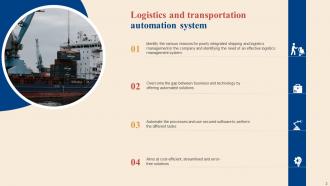
Slide 2: This slide states Agenda of the presentation.
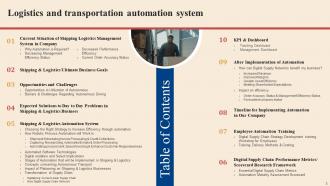
Slide 3: This slide shows Table of Content for the presentation.
Slide 4: This slide highlights title for topics that are to be covered next in the template.
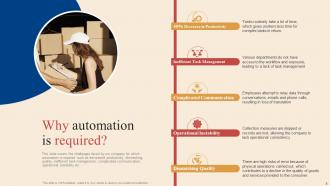
Slide 5: This slide covers the challenges faced by our company for which automation is required.
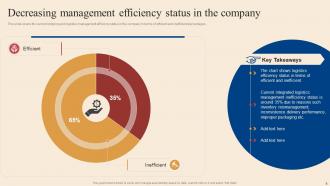
Slide 6: This slide presents Decreasing management efficiency status in the company.
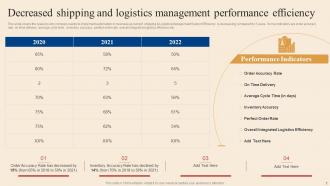
Slide 7: This slide displays Decreased shipping and logistics management performance efficiency.
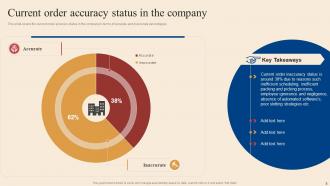
Slide 8: This slide represents Current order accuracy status in the company.
Slide 9: This slide highlights title for topics that are to be covered next in the template.
Slide 10: This is another slide highlighting title for topics that are to be covered next in the template.
Slide 11: This is another slide highlighting title for topics that are to be covered next in the template.
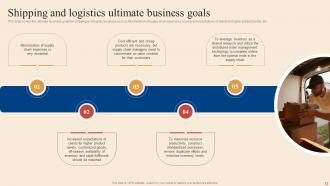
Slide 12: This slide shows Shipping and logistics ultimate business goals.
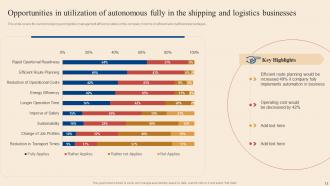
Slide 13: This slide covers the current shipping and logistics management efficiency status in the company.
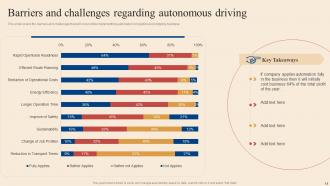
Slide 14: This slide presents Barriers and challenges regarding autonomous driving.
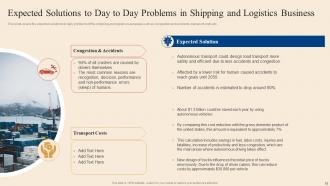
Slide 15: This slide displays Expected Solutions to Day to Day Problems in Shipping and Logistics Business.
Slide 16: This slide highlights title for topics that are to be covered next in the template.
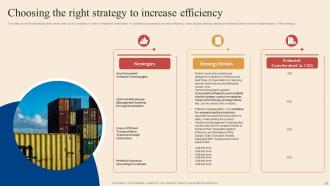
Slide 17: This slide represents Choosing the right strategy to increase efficiency.
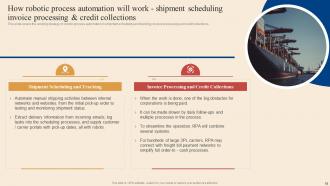
Slide 18: This slide covers the working strategy of robotic process automation.
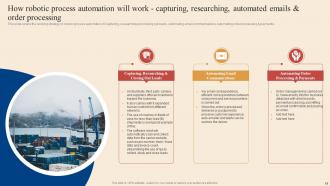
Slide 19: This slide displays working strategy of robotic process automation in Capturing, researching and closing out loads.
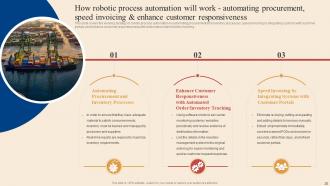
Slide 20: This slide represents working strategy of robotic process automation in automating procurement and inventory processes.
Slide 21: This slide highlights title for topics that are to be covered next in the template.
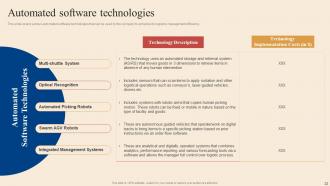
Slide 22: This slide covers various automated software technologies that can be used by the company.
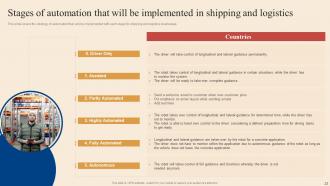
Slide 23: This slide showcases Stages of automation that will be implemented in shipping and logistics.
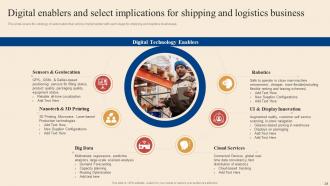
Slide 24: This slide shows Digital enablers and select implications for shipping and logistics business.
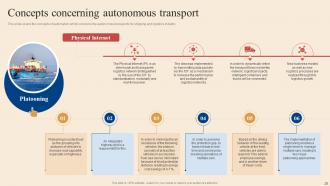
Slide 25: This slide presents Concepts concerning autonomous transport.
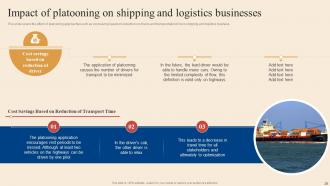
Slide 26: This slide displays Impact of platooning on shipping and logistics businesses.
Slide 27: This slide highlights title for topics that are to be covered next in the template.
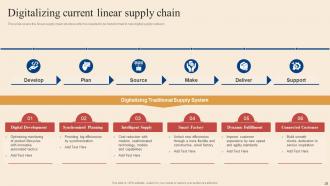
Slide 28: This slide covers the linear supply chain structure which is needed to be transformed In new digital supply network.
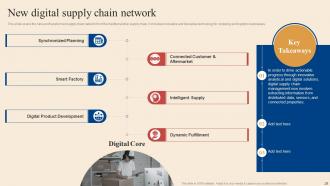
Slide 29: This slide represents New digital supply chain network.
Slide 30: This slide highlights title for topics that are to be covered next in the template.
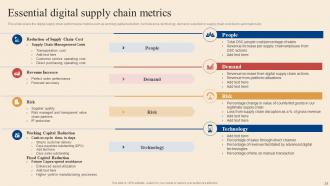
Slide 31: This slide showcases Essential digital supply chain metrics.
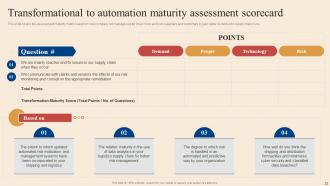
Slide 32: This slide shows Transformational to automation maturity assessment scorecard.
Slide 33: This slide highlights title for topics that are to be covered next in the template.
Slide 34: This is another slide highlighting title for topics that are to be covered next in the template.
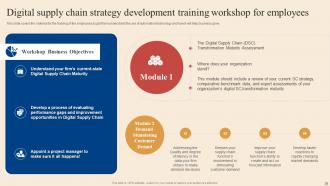
Slide 35: This slide covers the material for the training of the employees to get them understand the use of automation technology.
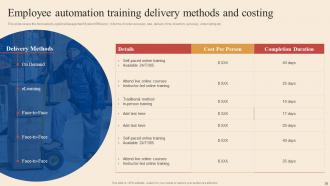
Slide 36: This slide displays Employee automation training delivery methods and costing.
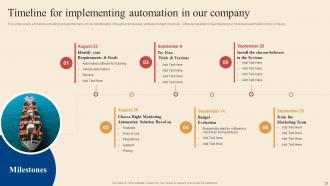
Slide 37: This slide represents Timeline for implementing automation in our company.
Slide 38: This slide highlights title for topics that are to be covered next in the template.
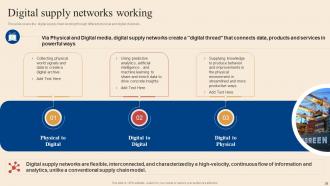
Slide 39: This slide showcases Digital supply networks working.
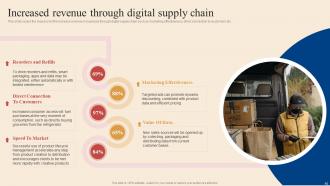
Slide 40: This slide represents Increased revenue through digital supply chain.
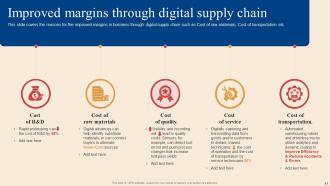
Slide 41: This slide displays Improved margins through digital supply chain.
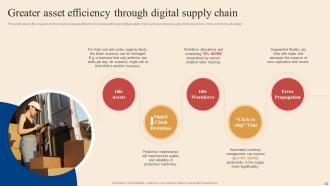
Slide 42: This slide presents Greater asset efficiency through digital supply chain.
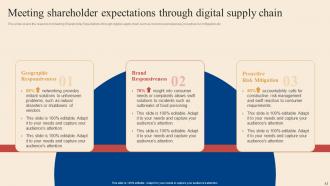
Slide 43: This slide shows Meeting shareholder expectations through digital supply chain.
Slide 44: This slide highlights title for topics that are to be covered next in the template.
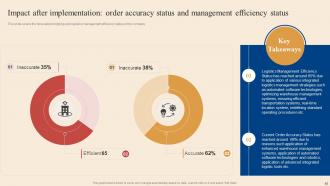
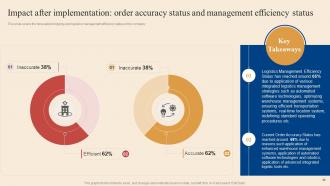
Slide 45: This slide presents Impact after implementation: order accuracy status and management efficiency status.
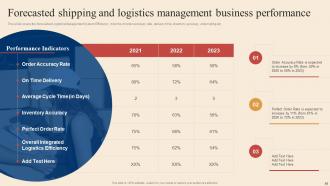
Slide 46: This slide displays Forecasted shipping and logistics management business performance.
Slide 47: This slide highlights title for topics that are to be covered next in the template.
Slide 48: This slide represents Impact after implementation: order accuracy status and management efficiency status.
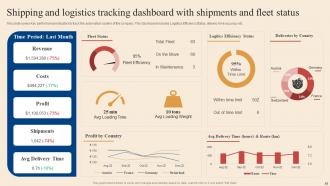
Slide 49: This slide showcases Shipping and logistics tracking dashboard with shipments and fleet status.
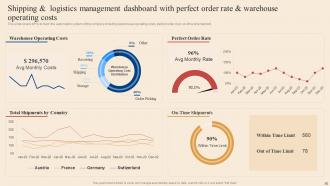
Slide 50: This slide covers KPI’s to track the automation system of the company.
Slide 51: This slide contains all the icons used in this presentation.
Slide 52: This slide is titled as Additional Slides for moving forward.
Slide 53: This is About Us slide to show company specifications etc.
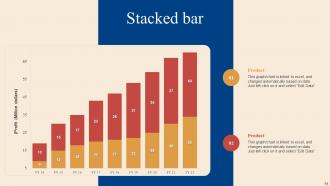
Slide 54: This slide represents Stacked Bar chart with two products comparison.
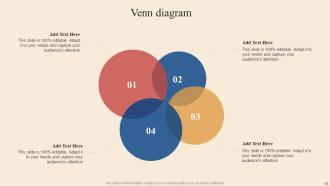
Slide 55: This slide depicts Venn diagram with text boxes.
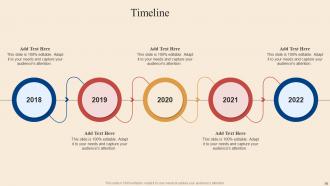
Slide 56: This is a Timeline slide. Show data related to time intervals here.
Slide 57: This is Our Goal slide. State your firm's goals here.
Slide 58: This is a Comparison slide to state comparison between commodities, entities etc.
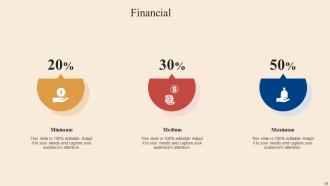
Slide 59: This is a Financial slide. Show your finance related stuff here.
Slide 60: This slide shows Post It Notes. Post your important notes here.
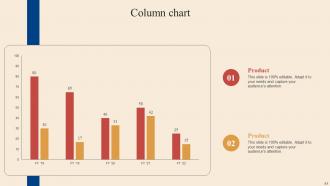
Slide 61: This slide displays Column chart with two products comparison.
Slide 62: This slide contains Puzzle with related icons and text.
Slide 63: This is a Timeline slide. Show data related to time intervals here.
Slide 64: This is a Thank You slide with address, contact numbers and email address.
Logistic And Transportation Automation System Powerpoint Presentation Slides with all 69 slides:
Use our Logistic And Transportation Automation System Powerpoint Presentation Slides to effectively help you save your valuable time. They are readymade to fit into any presentation structure.











FAQs for Logistic And Transportation Automation System
Honestly, the cost savings alone make it worth it - we're talking 20-40% reduction in labor costs. Speed goes through the roof too. Robots don't call in sick or need coffee breaks, so your accuracy gets way better. I'd start small though, maybe just automate picking first to show some real ROI. The inventory visibility boost is huge, and scaling becomes so much easier without constantly hiring. Best part? Your team can actually work on the important stuff instead of mindless repetitive tasks. Don't go crazy right away - prove it works on one process first.
Dude, automation saves you money in two big ways. First, you'll need way fewer people for warehouse work since machines handle sorting and packing. Second - and this is honestly the game changer - you basically eliminate human errors that cost a fortune to fix. Like when someone ships the wrong product and you're stuck paying for returns. Route optimization cuts fuel costs too, which adds up fast. Your inventory stays accurate so you're not stuck with tons of extra stock sitting around. Oh, and fewer stockouts mean happier customers. Start with whatever processes your team screws up most often.
So basically it's AI/machine learning, robotics, IoT sensors, and cloud platforms driving everything. Warehouse robots are doing the picking and packing now. Meanwhile, AI handles route optimization and demand forecasting - that stuff actually works pretty well these days. IoT tracks everything in real-time, which is honestly kind of crazy when you think about it. Cloud platforms connect it all so you can manage operations from your couch if you want. My advice? Don't go overboard initially. Pick one thing like inventory tracking first, then expand from there. Way less headache that way.
Honestly, automation is a game-changer for supply chains. It cuts out those annoying bottlenecks and human mistakes that slow everything down. Your order processing speeds up big time, and you get real-time inventory tracking that actually works. The demand forecasting gets way more accurate too. What I love most? It runs 24/7 without anyone complaining about overtime. Warehouse stuff like picking and sorting becomes way smoother, and predictive analytics help you dodge those "oh crap, we're out of stock" moments. Better visibility means you'll catch problems early before they cost you serious money. Start with whatever manual process drives you crazy - that's where you'll see results fastest.
So AI is like the smart layer that sits on top of all those automated logistics systems. It handles route optimization, predicting when you'll need more inventory (which honestly still blows my mind how accurate it gets), and real-time stuff like adjusting deliveries when things go sideways. Warehouse management gets way smarter too - the system starts learning your patterns. Here's what I'd do: look at which manual processes create the most data right now. That's your goldmine for where AI will actually move the needle first, instead of just trying to automate everything at once.
Before you get excited about fancy automation tools, do a full system audit first. Map out your whole logistics chain and find where things get stuck. Too many companies I know skipped this step and regretted it big time. Look for APIs and middleware that'll connect what you already have instead of ripping everything out. Test automation in just one area first - trust me on this. Your team needs training throughout, obviously. Oh, and set up clear metrics from the start so you can tell if it's actually working.
Honestly, the money upfront is brutal - that's usually what gets people first. Your team's gonna freak out about losing their jobs too, which I get. Integration with whatever ancient systems you're running? Good luck with that mess. Data quality issues will bite you in the ass if you're not careful. Finding a vendor who actually knows your industry instead of just throwing buzzwords around is harder than you'd think. Seriously though, don't try to automate everything at once. Pick one annoying process, make it work, show your boss the numbers improved, then expand from there. Way less painful that way.
Real-time stock visibility is honestly huge for inventory management. Your system automatically pings you when stuff hits reorder points, which cuts down on those annoying stockouts. Manual counting errors basically disappear, and the predictive analytics actually help you forecast demand way better than guessing. It syncs with your warehouse setup too - tracks everything from when items come in to when they ship out. I'd start simple though, maybe just automated stock tracking and basic reorder alerts. Once you see how much tedious work it eliminates, you can add more features. Trust me, you'll wonder how you managed before.
Focus on cost per shipment, order accuracy, delivery times, and warehouse throughput - those cover your main bases. ROI's gonna take like 12-18 months to really show, which is annoying but whatever. The quick wins are accuracy and processing speed, so track those weekly if you can swing it. Labor costs vs volume is huge too since that's usually why people automate in the first place. Oh and definitely set up some kind of dashboard. Doesn't have to be fancy, but you need to catch problems early before they snowball into bigger issues.
Honestly, your customers just want two things - speed and knowing where their stuff is. Automation nails both. Real-time tracking updates happen automatically (no one on your team has to remember to hit send), orders get processed way faster, and you'll mess up way less often. Manual processes are where things go wrong - wrong addresses, delayed shipments, all that headache stuff. I'd start with automated tracking notifications first. It's super easy to set up and customers notice it right away. Oh, and it frees up your team to actually work on important stuff instead of sending "your order shipped!" emails all day.
Yeah so automation is way better for the environment than old-school logistics. You'll see 15-30% less carbon emissions once everything's running. The routing gets smarter so less fuel waste, inventory management improves, electric vehicles are huge. Smart warehouses too - though the setup costs are pretty rough environmentally speaking. All that new tech has to get manufactured first, you know? But after that initial hit, it pays off big time. I'd definitely audit what you're doing now so you can actually track the difference later. Makes the whole investment feel more worth it.
So logistics automation is basically warehouses running themselves - robots and AI doing most of the work instead of people. Same-day delivery becomes normal, not special. Everything from tracking inventory to packing orders gets handled automatically. Honestly, it makes traditional warehouses look ancient. Your customers get stuff faster, you spend less on workers, and mistakes drop way down. Oh, and accuracy improves like crazy too. Companies not thinking about this now are gonna be playing catch-up later. It's pretty wild how fast this stuff is moving.
Honestly, data analytics is probably the biggest thing - you're always digging through reports and metrics to figure out what's working. Don't stress about being a coding expert, but knowing warehouse management systems and basic robotics definitely helps. When stuff breaks down (and it will), strong problem-solving skills save the day. Communication is weirdly important too since you're constantly dealing with IT people, operations teams, and vendors who all speak different languages. The tech changes so fast that being adaptable is non-negotiable. I'd start with learning popular WMS platforms and basic data analysis - those skills work anywhere.
Honestly, just start with inventory tracking and shipping software - saves me like 3 hours a week, no joke. Don't go crazy trying to automate everything at once though. Pick one thing that's actually driving you nuts, like manually creating shipping labels (ugh). Cloud stuff is usually pretty cheap and grows with you. I always do the free trials first because half the time the "game-changing" tools are just... not. Focus on what's actually broken in your process right now, not whatever shiny new tech everyone's hyping up. You'll thank yourself later.
So Amazon's Kiva robots are probably what everyone thinks of first - they basically bring whole shelves to workers instead of making people walk around, which cuts processing time by like 75%. Pretty wild. DHL's got these sorting systems handling 23,000 packages an hour (honestly those numbers seem insane). Walmart uses robots that just cruise the aisles scanning shelves and updating inventory automatically. FedEx's Memphis operation is crazy automated too - their conveyor systems can handle millions of packages overnight. If you're thinking about this for your business, I'd start small though. Maybe try automated inventory tracking first, then build from there once you see what actually works.
-
Wonderful ideas and visuals. I'm really pleased with the templates, which are unique and up to date.
-
Wonderful templates design to use in business meetings.