

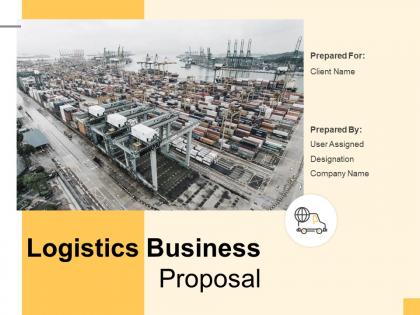
Logistics Business Proposal Powerpoint Presentation Slides




Try Before you Buy Download Free Sample Product
 Impress Your
 Audience
 100%
100% Editable
 Save Hours
 of Time


Our Logistics Business Proposal Powerpoint Presentation Slides are topically designed to provide an attractive backdrop to any subject. Use them to look like a presentation pro.
People who downloaded this PowerPoint presentation also viewed the following :
Logistics Business Proposal Powerpoint Presentation Slides with all 22 slides:
Use our Logistics Business Proposal Powerpoint Presentation Slides to effectively help you save your valuable time. They are readymade to fit into any presentation structure.






FAQs for Logistics Business Proposal
So the main stuff you need: executive summary, company background, what logistics services you actually do, and your operational plan with timelines. Pricing structure too - yeah, that part's always awkward but just be upfront about costs. Market analysis is huge because clients want to see you get their industry headaches. Include case studies if you've got them, team qualifications, and clear next steps. Oh, and focus on fixing their specific problems instead of throwing your entire service menu at them. Trust me, less is more here.
Look, market analysis basically shows you're not just winging it with random numbers. Solid data on market size, competitor pricing, industry trends - that's what convinces investors you've actually done the work. It also helps you find those sweet spots where your logistics services could crush it. Maybe last-mile delivery sucks in certain areas, or there's crazy demand for cold chain transport nobody's handling well. Honestly, the whole point is using that research to back up why your solution makes total sense right now. Otherwise you're just another person with a "great idea" but zero proof.
OK so break your financials into sections that actually make sense. Start with revenue - but be realistic about volumes, don't just dream big. Then hit operational costs: fuel, labor, equipment, all that stuff. Monthly cash flow for year one, then quarterly after that. I always screw up the timeline part first try, honestly. You'll want different scenarios too - best case, realistic, conservative. Logistics is unpredictable as hell. Show your break-even point and when they'll see ROI. The whole thing works better when you're upfront about your assumptions so they can actually follow your thinking.
Don't just throw tech buzzwords at them - figure out what's actually broken first. Real numbers work way better than features. Like "we cut their processing time by 40%" hits different than talking about "advanced capabilities." Honestly? Everyone gets excited about AI bells and whistles, but boring integrations usually move the needle more. Connect each tech piece to actual money saved or time freed up. Throw in a timeline so they're not wondering if this'll take forever to roll out. Oh and definitely use examples from stuff you've done before - clients eat that up.
Honestly, start with company size and industry - that's huge. A massive manufacturer isn't gonna have the same needs as some mid-sized online store, you know? Shipping volume patterns matter too. Don't forget about location though - industrial areas vs rural spots are like night and day for logistics stuff. Growth stage is another big one since scrappy startups care way more about saving money while bigger companies just want things to work reliably. Figure out what they're currently spending and what's driving them crazy. Then just bucket your prospects based on this stuff and adjust your pitch from there.
Dude, supply chain stuff will totally make or break your proposal. Clients care about realistic costs and timelines, so you've got to factor in port delays, driver shortages, fuel prices going crazy. The whole supply chain is honestly a mess right now - feels like something new breaks every week. That's actually good for you though, because clients desperately need partners who can handle the chaos. Show them you get their specific problems. Build in backup plans and flexible pricing so they know you're not living in fantasy land. Make it clear you'll pivot when things go sideways.
Yeah, so sustainability isn't optional anymore in logistics proposals. Companies are literally asking for it upfront now. You've gotta show carbon reduction - route optimization, electric vehicles, shipment consolidation, whatever works. The big corporations especially need this stuff to hit their own green targets. Honestly, I was shocked when I first saw proposals getting rejected just for skipping environmental impact. Include real numbers too - fuel savings percentages, CO2 cuts, that kind of thing. Smart move is showing how going green actually saves them cash. It's kind of a win-win when you frame it right.
Look, case studies are gold for this stuff. They prove you actually deliver instead of just talking big. Show how you cut 20% off shipping costs for another company - boom, instant credibility. Way better than saying "trust me, I can do this." Pick 2-3 that match your prospect's situation closely. Real metrics, real outcomes, real clients (or anonymized ones if you have to). Decision-makers eat this up because it's proof, not promises. I've seen deals close just because someone had the perfect case study ready. It's honestly the fastest way to get them thinking "okay, maybe these people know what they're doing."
Okay so you've got three timelines to juggle here. Implementation comes first - how long until you're actually running once they say yes. Then there's your own proposal timeline because honestly, rushed proposals look like garbage and clients notice. Don't forget their decision process too - procurement moves slower than molasses sometimes. Oh, and if they're retail or ag, seasonal stuff matters big time. I always work backwards from their go-live date, then tack on extra time for the inevitable delays and revision rounds. Trust me on the buffer time thing.
Skip the whole "excellent service" thing - everyone says that. What actually sets you apart? Real-time tracking, specialized gear for their specific industry, maybe routes nobody else covers. Don't lead with pricing either (they've heard "competitive rates" a million times). Instead, hit them with concrete stuff - how much faster you are, your damage rates, dedicated account reps. Oh, and back everything up with actual numbers from similar clients you've worked with. Honestly, make it obvious that going with someone else would be a downgrade.
Start by mapping out everything that could go wrong - supply delays, weather, carriers flaking out, tech crashes. The usual suspects. Then build backup plans right into your proposal. I always throw in alternative routes and extra buffer time because honestly, clients eat that stuff up when they see you've actually thought it through. Don't sleep on technology failures either, that one's burned me before. Oh, and offer different service levels so they can pick what works for their budget and risk comfort zone. Makes you look proactive instead of just scrambling when things inevitably go sideways.
Honestly, just hit them with hard numbers they can actually track. Cost savings from transportation, faster deliveries, lower inventory costs - whatever applies to their situation. Even ballpark estimates work if you can justify them. The key is showing before vs after with real dollar amounts. Like "you're spending $50K annually on this, here's how we get it down to $30K." Give them a clear timeline for when they'll break even too. I've seen deals close fast when the math is obvious - nobody argues with saving money they can actually measure.
So liability and insurance stuff is absolutely critical - you're dealing with other people's property after all. Transportation regs, licensing, certifications... all that boring but necessary paperwork. GDPR compliance if you're touching customer data (ugh, what a headache). Your contracts need solid dispute resolution built in too. Risk management strategies are pretty much non-negotiable. Oh, and logistics regs change constantly, so maybe flag that uncertainty upfront? Honestly I'd get a lawyer to look over the liability parts before you submit - that's where things can go sideways fast if you miss something important.
Dude, client feedback can literally make or break your logistics proposal. You'll never guess their actual pain points or budget stuff without asking directly. I always schedule a call within 48 hours of sending - don't just fire it off and pray. Ask them about their current headaches, timeline, what success looks like. One good feedback session can totally flip your whole approach. Honestly, I've watched proposals go from meh to game-changing just because someone bothered to listen. The companies that skip this step? They're usually the ones complaining about low win rates later.
Start with the money stuff - compare your actual transport, warehouse, and labor costs to what you were spending before. Track delivery times and order accuracy too. Customer satisfaction is honestly the biggest indicator since they feel logistics problems immediately. Don't sleep on team productivity metrics either - I've seen great-looking proposals turn into total nightmares for staff. Monthly dashboard works well, but stick to maybe 5-6 key things. More than that and you'll get lost in spreadsheets instead of actually fixing issues. Oh, and inventory turnover is worth watching if you're dealing with stock.
-
Great quality product.
-
Best way of representation of the topic.
-
Attractive design and informative presentation.