


Improving Supply Chain Management And Logistics Using Automation Powerpoint Presentation Slides




Try Before you Buy Download Free Sample Product
 Impress Your
 Audience
 100%
100% Editable
 Save Hours
 of Time


Supply chain and logistics automation use digital technologies to improve efficiencies, connect applications and streamline processes within supply chain operations. Supply chain automation allows the company to shift human time and effort away from tedious, time consuming procedures and toward jobs that especially demand a human touch. Check out our efficiently designed Improving Supply Chain Management and Logistics Using Automation template that provides information about the companys overall supply chain challenges. Warehouse operating cost and time management challenges, and declining performance of the companys supply chain and logistics, the PPT deck highlights supply chain optimization needs and trends, automation tools, and techniques for operation such as procurement, warehouse, back office, and transportation. This presentation covers a roadmap for implementing supply chain and logistics automation and a post automation conceptual framework on logistics and supply chain management. Furthermore, the PowerPoint slides include the impact of automation on overall organization, supply chain and logistics performance, warehousing cost, and time spent order picking. Lastly, it provides KPI dashboards for tracking the automation of processes such as procurement, warehouse, supply chain, and transportation. Download our supply chain management ppt now.
People who downloaded this PowerPoint presentation also viewed the following :
Content of this Powerpoint Presentation
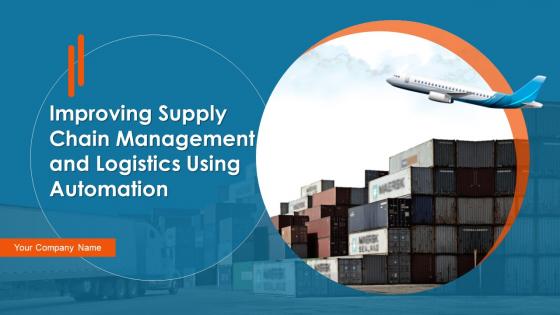
Slide 1: This slide displays title i.e. 'Improving Supply Chain Management and Logistics Using Automation' and your Company Name.
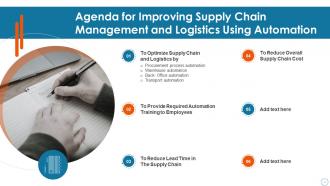
Slide 2: This slide presents agenda.
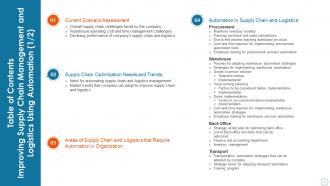
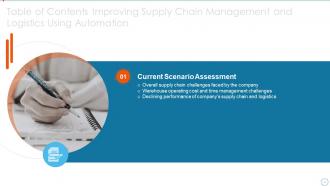
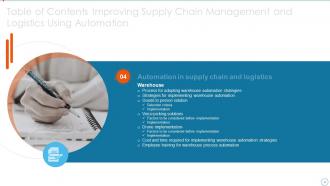
Slide 3: This slide exhibits table of contents.
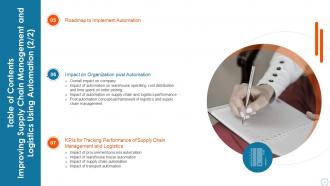
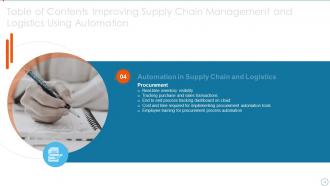
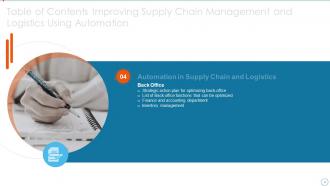
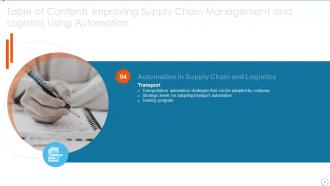
Slide 4: This slide also shows table of contents.
Slide 5: This slide depicts title for three topics that are to be covered next in the template.
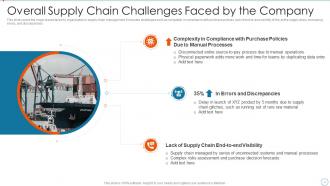
Slide 6: This slide covers the major issues faced by organization in supply chain management.
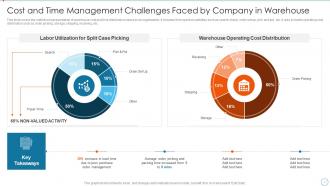
Slide 7: This slide covers the statistical representation of warehouse cost and time distribution issues in an organization.
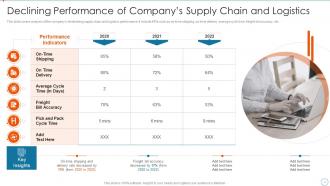
Slide 8: This slide covers analysis of the company’s diminishing supply chain and logistics performance.
Slide 9: This slide depicts title for two topics that are to be covered next in the template.
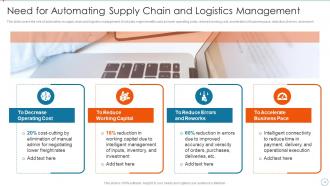
Slide 10: This slide covers the role of automation in supply chain and logistics management.
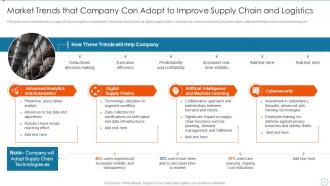
Slide 11: This slide covers recent trends in supply chain and logistics management.
Slide 12: This slide depicts title for the topic that are to be covered next in the template.
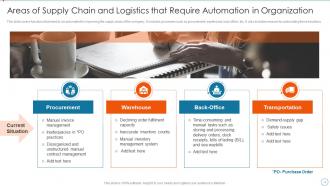
Slide 13: This slide covers functions that need to be automated for improving the supply chain of the company.
Slide 14: This slide depicts title for five topics that are to be covered next in the template.
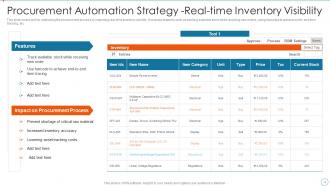
Slide 15: This slide covers tool for optimizing the procurement process by improving real-time inventory visibility.
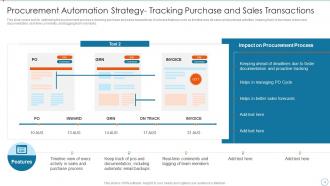
Slide 16: This slide covers tool for optimizing the procurement process by tracking purchase and sales transactions.
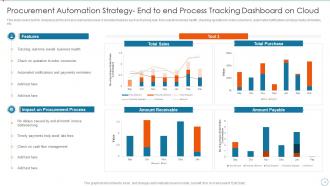
Slide 17: This slide covers tool for analysing end to end procurement process.
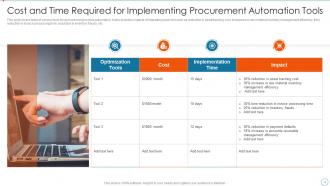
Slide 18: This slide covers table of various tools for procurement process automation.
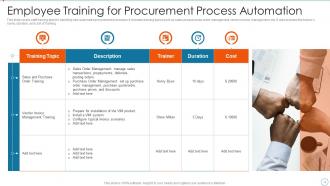
Slide 19: This slide covers staff training plan for handling new automated procurement processes.
Slide 20: This slide depicts title for twelve topics that are to be covered next in the template.
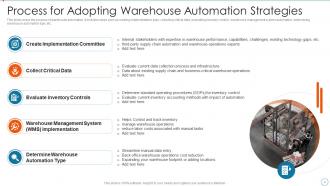
Slide 21: This slide covers the process of warehouse automation.
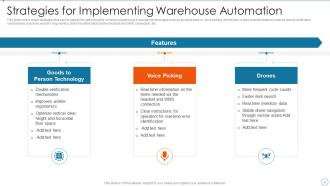
Slide 22: This slide covers major strategies that can be applied for optimizing the company warehouse.
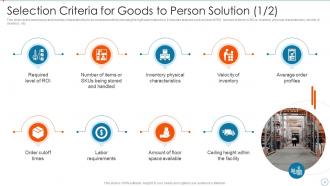
Slide 23: This slide covers warehouse and inventory characteristics to be considered while choosing the right automation tool.
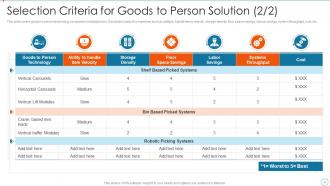
Slide 24: This slide covers goods to person technology comparison in tabular form.
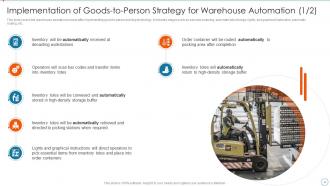
Slide 25: This slide covers the warehouse operation process after implementing good-to-person picking technology.
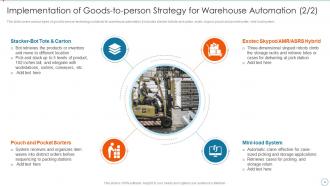
Slide 26: This slide covers various types of good-to-person technology solutions for warehouse automation.
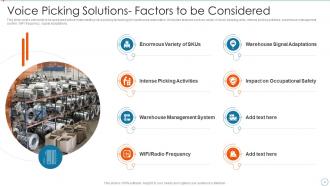
Slide 27: This slide covers elements to be assessed before implementing voice picking technology for warehouse automation.
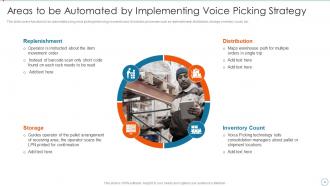
Slide 28: This slide covers functions to be automated using voice picking technology in warehouse.
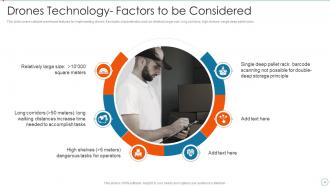
Slide 29: This slide covers suitable warehouse features for implementing drones.
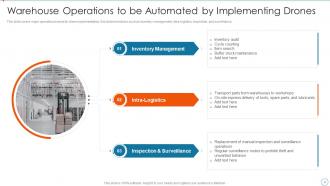
Slide 30: This slide covers major operational areas for drone implementation.
Slide 31: This slide covers comparative table for selecting the best warehouse automation tool.
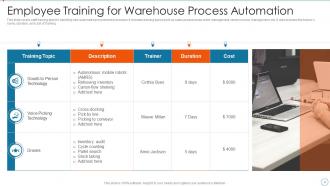
Slide 32: This slide covers staff training plan for handling new automated procurement processes.
Slide 33: This slide depicts title for five topics that are to be covered next in the template.
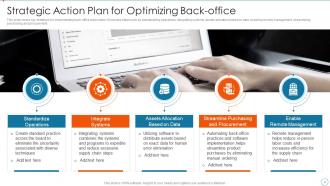
Slide 34: This slide covers key initiatives for implementing back-office automation.
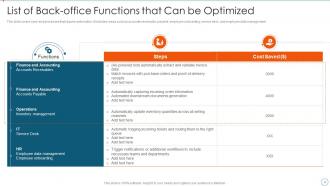
Slide 35: This slide covers back-end processes that require automation.
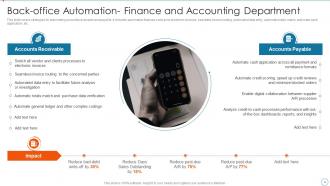
Slide 36: This slide covers strategies for automating accounts receivable and payable.
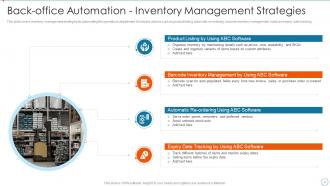
Slide 37: This slide covers inventory management strategies for automating the operations department.
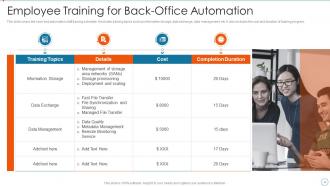
Slide 38: This slide covers the back-end automation staff training schedule.
Slide 39: This slide depicts title for three topics that are to be covered next in the template.
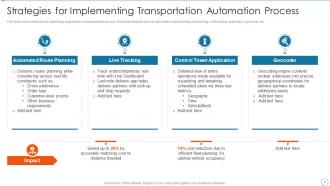
Slide 40: This slide covers strategies for optimizing organization’s transportation process.
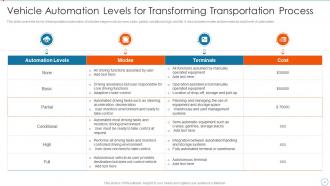
Slide 41: This slide covers the forms of transportation automation.
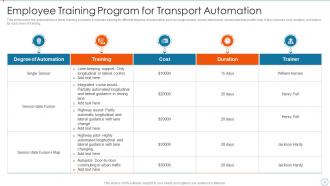
Slide 42: This slide covers the automatic truck driver training schedule.
Slide 43: This slide depicts title for topics that are to be covered next in the template.
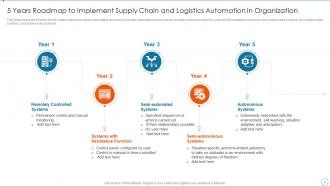
Slide 44: This slide covers the timeline for the supply chain and logistics automation process.
Slide 45: This slide depicts title for four topics that are to be covered next in the template.
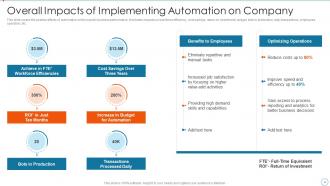
Slide 46: This slide covers the positive effects of automation on the overall business performance.
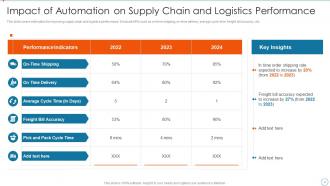
Slide 47: This slide covers estimation for improving supply chain and logistics performance.
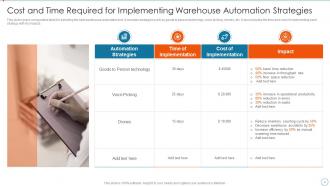
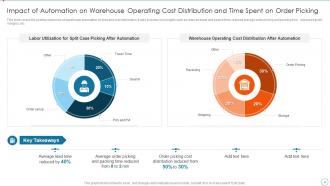
Slide 48: This slide covers the positive outcomes of warehouse automation on time and cost distribution.
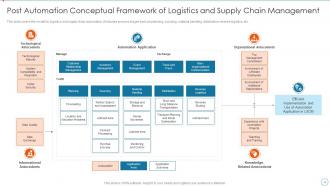
Slide 49: This slide covers the model for logistics and supply chain automation.
Slide 50: This slide depicts title for four topics that are to be covered next in the template.
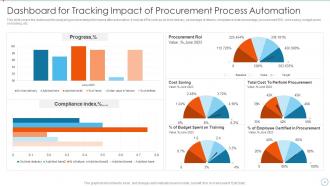
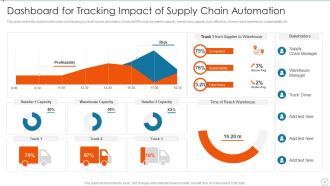
Slide 51: This slide covers the dashboard for analysing procurement performance after automation.
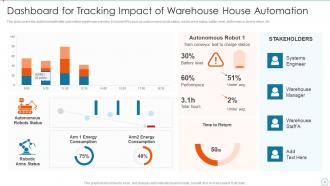
Slide 52: This slide covers the dashboard with after automation warehouse overview.
Slide 53: This slide covers the dashboard for back-end tracking of overall impact automation.
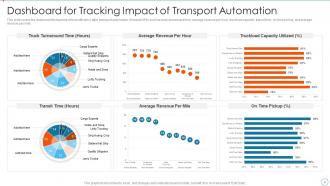
Slide 54: This slide covers the dashboard for tracking vehicle efficiency after transport automation.
Slide 55: This is the icons slide.
Slide 56: This slide presents title for additional slides.
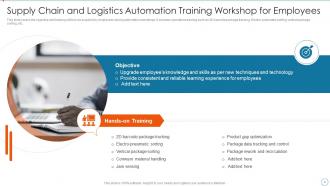
Slide 57: This slide covers the objective and training skills to be acquired by employees during automation workshops.
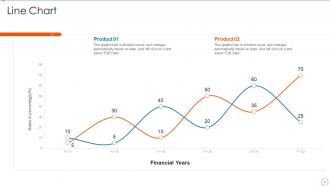
Slide 58: This slide exhibits yearly sales line charts for different products. The charts are linked to Excel.
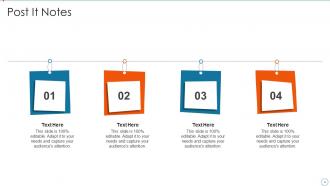
Slide 59: This slide depicts posts for past experiences of clients.
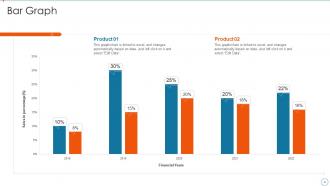
Slide 60: This slide exhibits yearly sales bar graph for different products. The charts are linked to Excel.
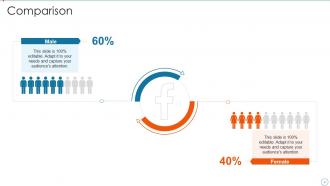
Slide 61: This slide highlights comparison of products based on selects.
Slide 62: This slide displays targets of the company.
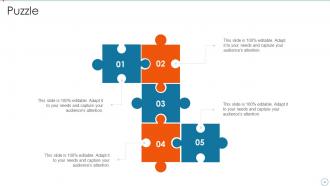
Slide 63: This slide shows puzzle for displaying elements of company.
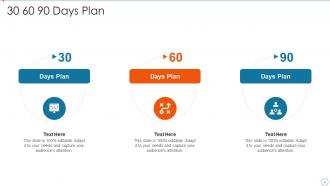
Slide 64: This slide depicts 30-60-90 days plan for projects.
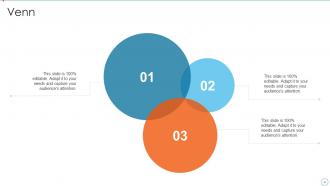
Slide 65: This slide displays Venn.
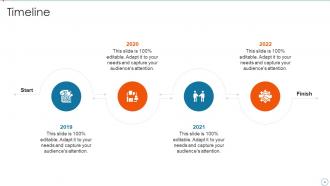
Slide 66: This slide exhibits yearly timeline of company.
Slide 67: This is thank you slide & contains contact details of company like office address, phone no., etc.
Improving Supply Chain Management And Logistics Using Automation Powerpoint Presentation Slides with all 72 slides:
Use our Improving Supply Chain Management And Logistics Using Automation Powerpoint Presentation Slides to effectively help you save your valuable time. They are readymade to fit into any presentation structure.







FAQs for Improving Supply Chain Management And Logistics Using Automation
Supply chain automation delivers reduced operational costs, improved accuracy, faster processing times, enhanced visibility, and better scalability across operations. Through automated inventory management, predictive analytics, and streamlined workflows, companies in manufacturing, retail, and logistics achieve 30-50% efficiency gains while minimizing human error, ultimately enabling faster response to market demands and stronger competitive positioning.
Automation improves inventory management through real-time tracking systems, predictive analytics, automated reordering, and demand forecasting algorithms that minimize human error and optimize stock levels. These technologies enable retailers and manufacturers to reduce carrying costs, prevent stockouts, and streamline warehouse operations, ultimately delivering faster fulfillment and enhanced customer satisfaction.
Key technologies driving supply chain automation include AI-powered demand forecasting, robotic process automation, IoT sensors, autonomous vehicles, and blockchain integration. These technologies increasingly work together through cloud platforms and machine learning algorithms, with manufacturers and retailers finding that strategic combinations deliver faster inventory turnover, reduced operational costs, and enhanced supply chain visibility.
Data analytics enhance supply chain automation by providing predictive insights, optimizing inventory levels, identifying bottlenecks, and enabling real-time decision-making across operations. Through advanced algorithms and machine learning, organizations streamline procurement processes, reduce operational costs, and improve delivery accuracy, with many manufacturing and retail companies finding that data-driven automation delivers significant competitive advantages.
Companies face challenges including high initial investment costs, workforce resistance and retraining needs, integration complexity with existing systems, data quality and standardization issues, and vendor selection difficulties. While these obstacles present significant hurdles, many organizations find that strategic phased implementation, comprehensive change management, and partnering with experienced automation providers ultimately delivers enhanced operational efficiency, reduced costs, and improved competitive positioning in an increasingly digital marketplace.
Automation helps achieve sustainability goals by optimizing routes to reduce fuel consumption, minimizing waste through precise inventory management, and enabling circular economy practices through better tracking. Smart sensors and AI-driven systems allow companies to monitor carbon footprints, streamline resource allocation, and implement eco-friendly logistics, with many manufacturers finding that automated processes deliver both environmental benefits and operational cost reductions.
Artificial intelligence serves as the strategic backbone of future supply chain automation, enabling predictive analytics, intelligent demand forecasting, autonomous decision-making, and real-time optimization across operations. Through machine learning algorithms, companies streamline inventory management, enhance supplier relationships, and minimize disruptions, with manufacturers and retailers finding that AI-driven automation delivers significantly faster responses and competitive advantage.
RPA improves order fulfillment by automating data entry, inventory checks, shipping calculations, and status updates across multiple systems simultaneously. Through intelligent automation, organizations streamline processing times, reduce manual errors, and enhance customer visibility, with many retail and manufacturing companies finding that RPA delivers faster order cycles and significantly lower operational costs.
Businesses should track key performance indicators including order fulfillment speed, inventory turnover rates, cost per transaction, error reduction percentages, and customer satisfaction scores. These metrics enable organizations to measure operational efficiency gains, with many companies finding that automated supply chains deliver 20-30% faster processing times and significantly reduced labor costs, ultimately providing measurable competitive advantage.
Supply chain automation enhances collaboration through real-time data sharing platforms, automated communication systems, integrated planning tools, and synchronized inventory management systems. These technologies streamline information flow between organizations, enable faster response times to demand changes, and provide shared visibility into production schedules, ultimately delivering stronger partnerships and more agile supply networks.
Supply chain automation transforms workforce dynamics by shifting roles from manual tasks to strategic oversight, data analysis, and system management. While automation reduces routine positions, it creates opportunities in robotics maintenance, supply chain analytics, and process optimization, with many organizations finding that reskilling programs help workers transition to higher-value roles requiring technical and analytical expertise.
Companies ensure data security in automated supply chains through encryption protocols, multi-factor authentication, blockchain technology, secure APIs, and regular vulnerability assessments. These technologies streamline operations by protecting sensitive vendor information, transaction data, and inventory details, with many manufacturing and retail organizations finding that strategic security integration ultimately delivers enhanced operational efficiency while maintaining customer trust and regulatory compliance.
Common pitfalls include inadequate change management, insufficient data quality assessment, over-automating without human oversight, poor vendor selection, and unrealistic timeline expectations. These challenges can derail automation initiatives across manufacturing, retail, and logistics sectors, with many organizations finding that gradual implementation, comprehensive staff training, and robust data governance ultimately deliver smoother transitions and better ROI.
The COVID-19 pandemic has accelerated supply chain automation adoption by exposing vulnerabilities in manual processes, increasing demand for contactless operations, and highlighting the need for resilient logistics networks. Organizations across retail, manufacturing, and healthcare are implementing automated warehousing, predictive analytics, and robotic fulfillment systems, ultimately delivering greater operational flexibility and reduced dependency on disrupted labor markets.
Successful supply chain automation implementations include Walmart's automated distribution centers, Amazon's robotic fulfillment networks, Maersk's predictive shipping analytics, Toyota's lean manufacturing systems, and Zara's demand-driven inventory management. These organizations streamline operations, reduce costs, and enhance customer experiences by leveraging robotics, AI, and real-time data integration, ultimately delivering competitive advantages in increasingly complex global markets.
-
A library of engaging, customizable and content-ready templates.
-
“Thank you to the SlideTeam. Your presentations look really skillful and have made my life so much easier.”