


Supply Chain Management Introduction Powerpoint Presentation Slides





Try Before you Buy Download Free Sample Product
 Impress Your
 Audience
 100%
100% Editable
 Save Hours
 of Time


Are you planning to design a professional PPT on the concept of supply chain management introduction? Do not worry! SlideTeam has come up with the predesigned supply chain management introduction PowerPoint presentation slides. Using this supply chain management overview PPT presentation, you can highlight the supply process of goods and services to the customers and manufacturers. This demand chain management presentation PPT includes a template on the relevant subjects such as introduction, components of the supply chain, company timeline, supply chain management advantages, SCM, supply chain management goals, SCM bifurcation, supply chain management and logistics, and SCM control tower. Using these supplier relationship management PowerPoint slides, you can describe the idea of customer relationship management, customer service management, demand-management style, order fulfillment, manufacturing flow management, supplier relationship management, product development, returns management, production planning, operation management, quality management, and enterprise resource planning. Use our supply chain management ppt PowerPoint presentation; you can throw the light on the supply chain tasks. So, do not delay, download our supply chain management introduction description presentation PPT. Boost deflated egos with our Supply Chain Management Introduction Powerpoint Presentation Slides. Give them cause to be full of confidence again.
People who downloaded this PowerPoint presentation also viewed the following :
Content of this Powerpoint Presentation
Slide 1: This slide introduces Supply Chain Management Introduction. State the Subtitle Here and begin.
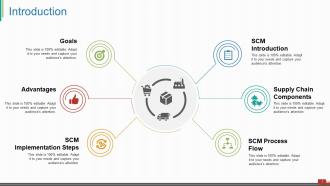
Slide 2: This slide shows Introduction with these six of the parameters- SCM Process Flow, SCM Introduction, Supply Chain Components, SCM, Implementation Steps, Advantages, Goals.
Slide 3: This slide presents Introduction (1/2) which further showcases some points.
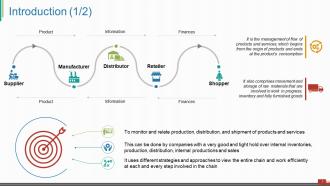
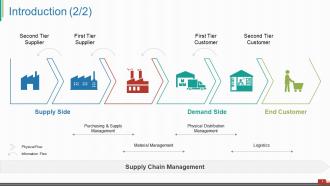
Slide 4: This slide showcases Introduction (2/2). You can use the stages and add as per you want.
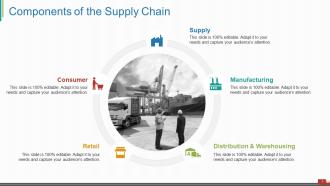
Slide 5: This slide Components of the Supply Chain with these five stages- Supply, Manufacturing, Distribution & Warehousing, Retail, Consumer.
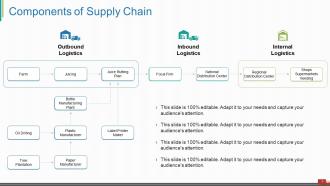
Slide 6: This slides showcases Components of Supply Chain.
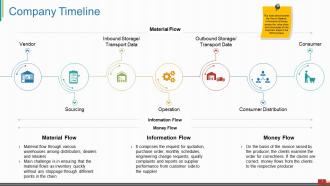
Slide 7: This slide presents Company Timeline. This slide demonstrates the flow of Material, Information & Money across the value chain and showcases all the important steps in the SCM process.
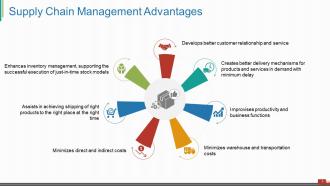
Slide 8: This slide shows Supply Chain Management Advantages.
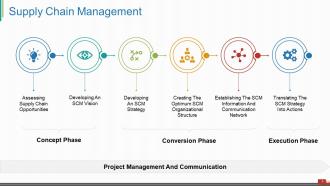
Slide 9: This slide presents Supply Chain Management which further presents Project Management And Communication.
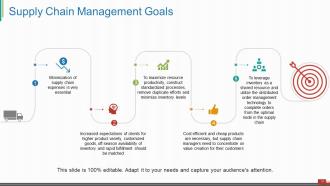
Slide 10: This slide showcases Supply Chain Management Goals.
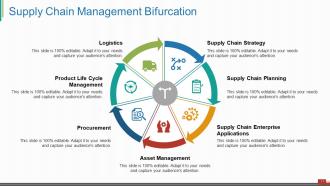
Slide 11: This slide presents Supply Chain Management Bifurcation with these parameters- Supply Chain Strategy, Supply Chain Planning, Supply Chain Enterprise Applications, Asset Management, Procurement, Product Life Cycle Management, Logistics1.
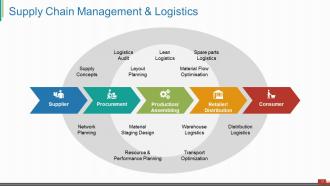
Slide 12: This slide showcases Supply Chain Management & Logistics Layout Planning, Lean Logistics, Material Flow Optimisation, Material Staging Design, Warehouse Logistics, Supply Concepts, Logistics Audit, Spare parts Logistics, Network Planning, Distribution Logistics, Transport Optimization, Resource & Performance Planning, Procurement, Production/ Assembling, Supplier, Retailer/ Distribution, Consumer.
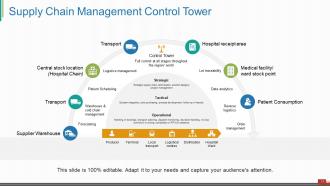
Slide 13: This slide showcases Supply Chain Management Control Tower.
Slide 14: This slide is a Coffee Break image for a halt.
Slide 15: This slide forwards to Charts & Graphs.
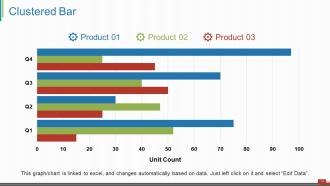
Slide 16: This slide presents Clustered Bar. You can compare the product by using it.
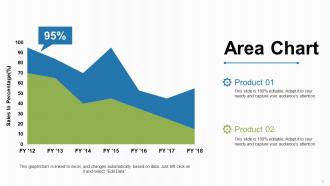
Slide 17: This is an Area Chart slide for product/entity comparison.
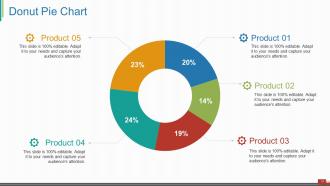
Slide 18: This slide showcases Donut Pie Chart that can be used for comapring product.
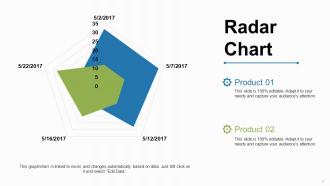
Slide 19: This is a Radar Chart slide for product/entity comparison.
Slide 20: This slide is titled Additional Slides to move forward.
Slide 21: This is a Vision, Mission and Goals slide. State them here.
Slide 22: This is an Our Team slide with name, image&text boxes to put the required information.
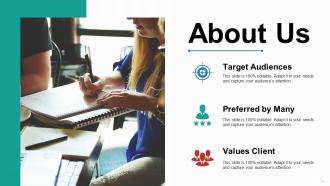
Slide 23: This is an About Us slide showing Our Company, Value Client, and Premium services as examples.
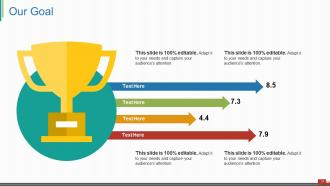
Slide 24: This is an Our Goal slide. State them here.
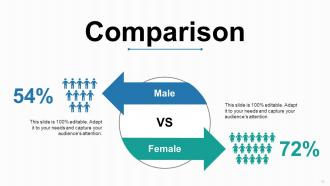
Slide 25: This slide shows Comparison of Positive Factors v/s Negative Factors with thumbsup and thumb down imagery.
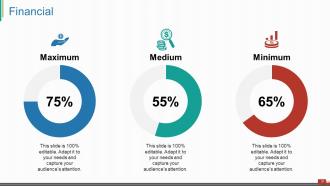
Slide 26: This is a Financial Score slide to show financial aspects here.
Slide 27: This is a Quotes slide to convey message, beliefs etc.
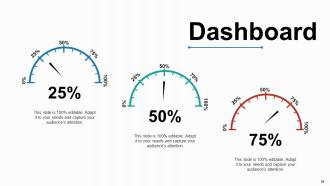
Slide 28: This is a Dashboard slide to show- Strategic System, Success, Goal Process, Sales Review, Communication Study.
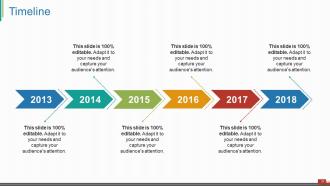
Slide 29: This is a Timelines slide to show- Plan, Budget, Schedule, Review.
Slide 30: This slide shows Target image with text boxes.
Slide 31: This is a Puzzle image slide to show information, specification etc.
Slide 32: This slide shows a Mind map for representing entities.
Slide 33: This slide displays a Bulb or idea image.
Slide 34: This is a Thank You image slide with Address, Email and Contact number.
Supply Chain Management Introduction Powerpoint Presentation Slides with all 34 slides:
Conquer the audience with our Supply Chain Management Introduction Powerpoint Presentation Slides. They will bow before your excellence.



FAQs for Supply Chain Management Introduction
You need demand planning, supplier relationships, inventory optimization, and logistics coordination working together. Most companies screw this up by keeping everything in separate buckets - big mistake. Get good tech that gives you real-time visibility across the whole operation. Risk management is critical now (learned that the hard way these past few years). Find the balance between keeping costs down and staying flexible enough to pivot when stuff breaks. Oh, and map out what you're doing now first. Seriously, just sketch it out and find your biggest pain points - start there.
Dude, the combo of AI and IoT is actually game-changing for supply chains. You get real-time tracking of everything - inventory, shipments, equipment health. AI crunches all that data to predict demand spikes and route problems before they screw you over. My cousin's company started with just sensors in one warehouse (smart move tbh), then expanded once they saw the money rolling back in. You can automate reorders, catch defects early, reduce waste. It's wild how much visibility you suddenly have. Start small though - don't go crazy right out the gate.
Think of data analytics as your supply chain fortune teller - it takes all that chaos and turns it into stuff you can actually work with. You'll spot demand trends, catch bottlenecks early, and figure out which suppliers are solid vs the ones who ghost you when things get tough. Honestly, most companies I know who skip analytics end up putting out fires constantly. Start simple though - maybe just tackle demand forecasting first? Once you get the hang of reading that data, you can branch out to the fancier predictive stuff. Trust me, it beats flying blind.
Dude, global events are like dominoes falling everywhere at once. Factories shut down, shipping gets blocked, workers can't show up - everything hits your supply chain simultaneously. Pandemics close ports while political drama suddenly slaps tariffs on your stuff or cuts off entire trade routes. Your just-in-time delivery? Yeah, that becomes a nightmare real quick. Honestly, it's wild how fragile these networks are when you depend on single suppliers. You've gotta build backup plans now - spread your suppliers around, keep some extra inventory of the critical stuff, and scout alternative shipping routes. Don't wait until you're scrambling.
Honestly, you're gonna hate supply chain visibility the most - it's like trying to manage something with a blindfold on. Demand forecasting is another nightmare. One week you've got way too much inventory sitting around, next week customers are pissed because you're out of stock. Your suppliers will drive you crazy too with their delays and quality problems. I swear half my job used to be having awkward calls about missed deadlines. Rising costs don't help either. My advice? Map out your most critical suppliers first and keep extra inventory for your top-selling products. Trust me on this one.
Track the big ones first - delivery times, inventory turnover, order accuracy. Cost per shipment matters too. Lead times are honestly what make or break customer relationships, way more than people think. Also keep an eye on supplier performance and quality metrics. But here's the thing - don't go crazy with data. I'd stick to maybe 5-7 KPIs that actually connect to your goals. Dashboard helps you catch problems early. You can always compare against industry benchmarks later once you've got your basics down.
Dude, sustainability isn't optional anymore - customers and investors are breathing down everyone's necks about it. Your brand reputation is literally on the line. The crazy part? Most companies find it actually saves money long-term through better efficiency. Carbon tracking, ethical sourcing, smarter shipping routes - all that stuff reduces waste and costs. I'd start by looking at your current suppliers and figuring out where you're most exposed environmentally. My cousin's company did this last year and they were shocked at some of the gaps. It's honestly become make-or-break competitive now.
Start with demand forecasting - dig into your historical data and see what patterns emerge. ABC analysis is huge here - it categorizes inventory by value so you're not obsessing over cheap stuff that doesn't matter. Just-in-time ordering works great until your supplier screws you over, so don't go crazy lean. Set automated reorder points based on actual lead times, not wishful thinking. Safety stock levels are your friend. Honestly, most people overthink this - you just want enough inventory to hit demand without drowning in cash tied up in products collecting dust.
Honestly, don't put all your eggs in one basket - spread your suppliers around different regions so one disaster doesn't wreck everything. Build real relationships with multiple vendors. Get some visibility tools that actually show you what's happening in real-time, because catching problems early saves your butt later. Map out your whole supply network, not just the obvious first-tier guys - you'd be surprised how many hidden vulnerabilities are lurking deeper. Keep some safety stock for critical stuff and have backup plans ready. The companies that survive disruptions are the ones who saw it coming.
Working closely with your suppliers really pays off - you'll get better inventory control, fewer headaches when things go sideways, and lower costs overall. The trick is being transparent with info and getting them involved in planning early on. Pick your top 3-5 suppliers first (don't try to do this with everyone at once, trust me). Set up regular check-ins where you can work together on forecasting demand and fixing quality issues. When suppliers feel like actual partners, they'll have your back when you need them most. It's honestly a game-changer.
So supply chains are getting totally flipped right now. AI's handling demand forecasting and warehouse stuff, which is honestly pretty wild to see in action. Companies are also going crazy with sustainability - carbon tracking, circular economy models, all that. Digital twins are blowing up too (basically virtual copies of your whole supply chain to test what happens when things go wrong). The pandemic made everyone realize that cheap isn't always better, so nearshoring's replacing globalization. Resilience beats cost savings now. I'd start by figuring out which trends hit your operations hardest, then tackle them one by one.
Honestly, robots are crazy good at the boring stuff - picking, packing, sorting orders way faster than people can. Your error rates drop big time too. The best part? They work around the clock without needing coffee breaks or sick days (kinda jealous tbh). Real-time tracking becomes so much easier when everything's connected. I'd say start small though - figure out where you're getting jammed up most. Warehouses are usually a safe bet for testing this stuff before you go all in.
Honestly, the money side alone makes it worth it - you're cutting disposal costs while actually making revenue from stuff you'd normally toss. Your supply chain gets way more stable too since you're not relying on virgin materials (and wow, those prices have been insane lately). Customers and investors are really pushing for sustainability now, so there's that box checked. Plus you might stumble onto cool new opportunities through refurbishing products. I'd say start by figuring out your biggest waste streams first - that's where you'll see results fastest.
Basically blockchain creates this permanent record that tracks everything in your supply chain - raw materials all the way to delivery. Nobody can mess with the data once it's there, which is actually pretty neat. All your suppliers and manufacturers add info to the same digital ledger that everyone can see. Quick tracing becomes super easy when there's contamination or you need to verify if something's authentic. Customers love being able to see ethical sourcing too. My advice? Don't go crazy at first - just test it with one important product line to see how much better your traceability gets before expanding it everywhere.
Honestly, CRM is a game-changer for supply chain stuff. You get all this customer data that shows buying patterns and seasonal trends - super helpful for forecasting demand without ending up with too much inventory sitting around (or worse, running out of popular items). Your customers will thank you for better communication about shipping delays too. Nobody wants to wonder where their order disappeared to! The cool part is taking that customer info and actually using it to make smarter purchasing decisions. I'd start by figuring out how to connect your CRM data with your supply planning - sounds boring but it works.
-
Very well designed and informative templates.
-
Unique design & color.