

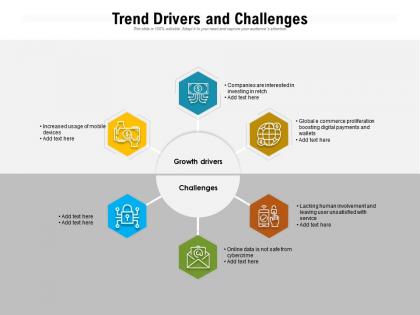
Trend drivers and challenges




Try Before you Buy Download Free Sample Product
 Impress Your
 Audience
 100%
100% Editable
 Save Hours
 of Time


Our Trend Drivers And Challenges are explicit and effective. They combine clarity and concise expression.
People who downloaded this PowerPoint presentation also viewed the following :
Trend drivers and challenges with all 2 slides:
Give your audience a fulfilling experience. They will find our Trend Drivers And Challenges elevating.
FAQs for Trend
Honestly, it's mostly tech disruption and supply chain weirdness driving everything right now. AI's flipping entire industries upside down while companies are still scrambling to fix their supply chains from all that pandemic mess. Consumer behavior's totally different now too - everyone wants sustainable stuff, convenience, personalized everything. Then you've got interest rates and geopolitical drama (Ukraine, China tensions) messing with energy costs and trade. Oh, and monetary policy's been all over the place lately. I'd say just watch how these trends hit your specific industry because they're all connected and things are moving stupid fast right now.
Consumer behavior changes are what actually drive market trends - like, they're literally the force behind everything. People start shopping differently or caring about new stuff, and boom, markets scramble to keep up. Look at how the digital shift made retailers panic and go online, or suddenly everyone's health-obsessed and organic food explodes. Honestly, retail can be brutal that way. You've gotta stay tight with your customers though. Watch their feedback, check what they're saying on social, and spot those early patterns before everyone else catches on. That's where the real advantage is.
Tech totally flips how markets work - look at Amazon destroying traditional retail or how TikTok trends can make products blow up overnight. Companies use AI to predict what we'll buy (honestly pretty scary how accurate it gets). But here's the wild part: tech doesn't just change existing markets, it creates completely new ones. Like Uber literally invented ride-sharing from nothing. The tricky thing is these disruptions happen super fast. So you gotta keep an eye on what's coming for your industry, because by the time everyone's talking about it, you're already behind.
Dude, supply chain issues basically create fake shortages that jack up prices like crazy. Same demand, way less supply = everything costs more. It's been insane lately - remember when lumber prices went nuts? Or the whole chip shortage mess. The wild part is how it spreads everywhere, not just the obvious stuff. My advice? Don't put all your eggs in one basket with suppliers. Actually get to know who THEY buy from too, because that's usually where the real problems start. Trust me, you don't want to be frantically calling around when your main supplier suddenly can't deliver.
Honestly, globalization is like turning up the volume on everything in your market. Competition gets fierce - companies from anywhere can suddenly compete with you. But flip side? You get access to way more customers and cheaper suppliers globally. The tricky part is local quirks start disappearing. Like, every city has the same chain stores now, which is kinda sad if you think about it. Your prices might tank since people can compare you to everyone worldwide. Plus you're suddenly affected by random economic stuff happening in other countries. My advice? Think bigger than just your local area when planning, because everyone else already is.
Look, GDP growth, unemployment, inflation (CPI), and interest rates are the big four - they move markets more than anything else. Consumer confidence tells you if people are actually spending money. Housing starts are weirdly helpful since real estate touches everything. The yield curve thing is honestly pretty boring but it'll warn you about recessions coming. Oh, and manufacturing PMI if you care about industrial stuff. Start with those main four indicators though. You'll pick up on the patterns once you've been watching them for a bit.
Honestly, regulations are super unpredictable for competition. Sometimes they totally screw over small businesses with crazy compliance costs while big corporations just absorb it. But then you get stuff like banking regs that actually opened doors for all those fintech startups - which was pretty cool to watch. Big companies usually adapt faster since they've got the cash and legal teams. You should probably start tracking what's coming down the pipeline in your space now. Don't wait until it hits because by then the big players will already be three steps ahead of you.
So basically, demographic shifts totally change who's buying your stuff and what they actually want. Aging populations? Healthcare and accessible products boom. Younger crowds drive all the tech adoption and they'd rather spend on experiences than things. New population growth opens up markets, but man, timing that entry right is such a pain. Income shifts matter too - they push people between premium and budget options. You really need to keep tabs on demographic changes in your target areas because this stuff creeps up slowly then BAM, suddenly you're scrambling to adjust your forecasting and product plans.
Honestly, you've gotta treat market research like your radar system - constantly scanning, not just checking once in a while. Too many businesses I know got completely wrecked because they only looked at old data instead of watching what's coming. Set up regular pulse surveys and social listening tools so you can catch sentiment shifts early. Track stuff like new tech adoption rates and regulatory changes before they hit. The companies that survive are the ones spotting patterns while everyone else is still clueless. Oh, and don't just do those big expensive studies once a year - that's basically useless now.
Listen, don't put all your eggs in one basket - spread out your revenue sources first. Cash reserves are clutch for when things get weird. Your customers will literally tell you what's coming next way before any fancy report does, so actually listen to them. Oh, and make sure your supply chain can pivot fast. I've seen too many companies get stuck because they couldn't adapt quickly enough. Build a team that rolls with change instead of fighting it. Honestly? Do a quick check right now - if you had to completely shift direction tomorrow, how screwed would you be?
Honestly, competitive analysis is like being a detective for your business. You're watching what other companies do with pricing, features, how they position themselves - and it helps you catch trends early. I do this way more than I probably should, but it's paid off. Short bursts work better than marathon research sessions. When you see gaps they're missing, that's your opening. Sometimes you'll realize you need to pivot, other times you'll double down on what's already working. Just don't make it a one-and-done thing - check in regularly.
Honestly, social media has completely changed how people shop. Your customers are constantly seeing product reviews, unboxing videos, and recommendations from people they actually trust - which hits way harder than regular ads. Instagram and TikTok are basically shopping apps now with those instant purchase features. People expect brands to be active on social too, it's just weird if you're not there. Oh, and here's the thing - treat these platforms like actual sales channels, not just places to post pretty pictures. Focus on real engagement instead of corporate fluff. That authentic connection is what drives sales now.
Honestly, seasonal trends are pretty reliable if you know what to look for. Retail stocks go crazy during Q4 with holiday shopping. Energy companies spike in summer (driving season) and winter when everyone's cranking the heat. Tourism peaks in summer, obviously. There's even weird niche stuff - like tax software companies crushing it in early spring because everyone's scrambling to file. I never thought about that one until recently. Point is, if you track these cycles in whatever sector you're watching, you can time your buys and sells way better. The patterns repeat year after year.
So inflation basically messes with everything - prices go up, people stop buying random stuff they don't need, and companies get hit with higher costs for materials. Supply chains turn into a nightmare because everyone's hoarding inventory before prices spike more. The Fed usually jumps in with rate hikes, which makes borrowing super expensive. Growth stocks tend to get hammered while value stocks do better (though honestly, predicting this stuff is harder than it looks). I'd watch inflation data closely and maybe shift toward commodities or those inflation-protected bonds. Less growth-heavy stuff for now.
So tracking customer behavior and sales data is your starting point - that stuff's gold. Social media sentiment analysis is actually pretty amazing because you get real opinions way faster than waiting for survey results. I'd also dig into historical data for seasonal patterns, then use predictive modeling for demand forecasting. Economic indicators help too, obviously. But here's the thing - don't put all your eggs in one basket with data sources. Mix it up! The magic happens when you combine everything rather than just looking at one metric. Oh, and competitor tracking is clutch for spotting shifts early.
No Reviews