Triage flow process for patient prioritization

Rating:
80%
Triage flow process for patient prioritization
Slide 1 of 2
Favourites Favourites

Try Before you Buy Download Free Sample Product

Audience Impress Your
Audience
Editable 100%
Editable
Time Save Hours
of Time
The Biggest Sale is ending soon in
0
0
:
0
0
:
0
0
AI-Ready
Upload this template to AI and ask it to make any changes to content or color
100% editable Powerpoint Template for AI-assisted presentations. Finish your work in less time. ​
Works with
Microsoft PowerPoint
Microsoft 365
Claude for PowerPoint
ChatGPT
Google Slides
Microsoft Copilot
Rating:
80%
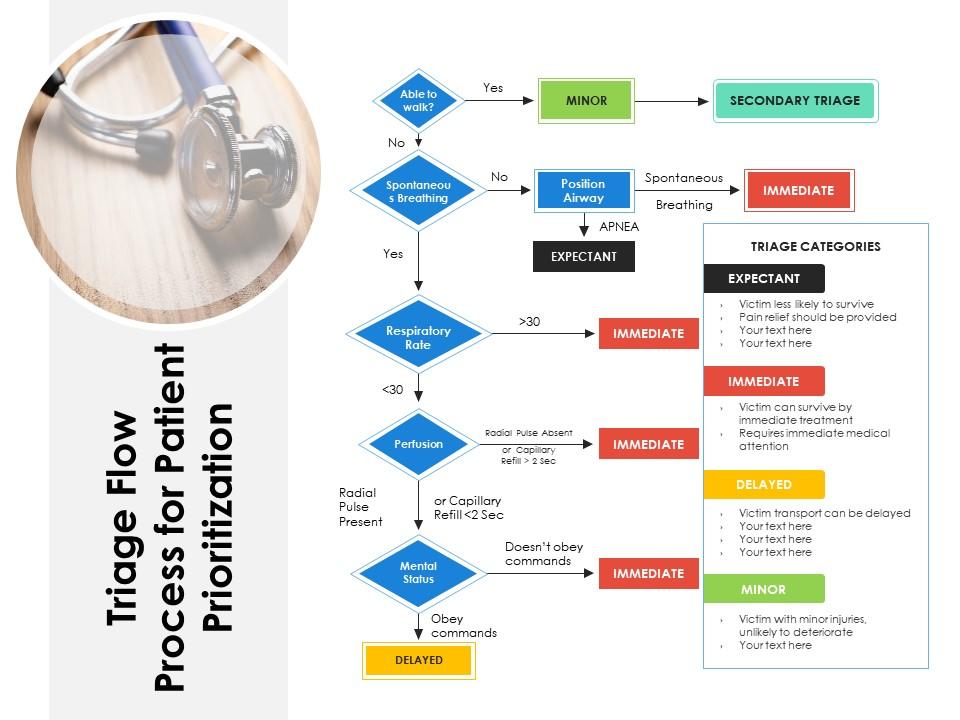
Presenting our set of slides with name Triage Flow Process For Patient Prioritization. This exhibits information on one stages of the process. This is an easy-to-edit and innovatively designed PowerPoint template. So download immediately and highlight information on Minor, Secondary Triage, Position Airway, Immediate, Expectant, Respiratory Rate, Spontaneous Breathing, Mental Status.

People who downloaded this PowerPoint presentation also viewed the following :

FAQs for Triage flow process

So basically you're sorting patients by who's most likely to survive, not who got there first. There's four main groups: immediate (critical but saveable), delayed (hurt but stable), minor (the walking wounded), and expectant - which honestly sucks but it's people who probably won't make it with what you've got. The whole thing is about saving the most lives possible. You can't waste 30 minutes on one person while three others are dying. Conditions change super fast too, so you gotta keep checking on everyone.

So basically it's the same idea - you rank stuff by how urgent and impactful it is. Medical triage is obviously way more intense since you're deciding who gets life-saving care based on injury severity and survival odds. That's some heavy stuff right there. But for things like IT issues or customer complaints, you're still doing the same sorting process. Just different factors - like how many people are affected, business impact, deadlines, that kind of thing. Quick assessment, put things in priority buckets, then tackle them in order. Honestly the hardest part is just being clear about what your priority levels actually mean upfront.

Dude, tech has totally changed triage work. Electronic tracking follows patients the whole way through, and AI helps catch the really sick ones faster - which honestly saves lives. Real-time dashboards show wait times and bed availability, mobile apps make everything flow better. Oh and telemedicine is huge now, you can start assessments before people even show up. The biggest win though? Way less human error and quicker decisions. I'd say use whatever tech your place has - makes your job so much easier and you'll catch things you might've missed otherwise.

Look, triage is basically sorting patients by who's most critical and who you can actually help. You've got four categories - immediate, urgent, delayed, expectant. Sounds harsh but you can't save everyone when you're overwhelmed, so focus on the ones who need help NOW and have good odds. Otherwise you'll spread your team too thin and lose more people. Honestly the whole system feels pretty cold but it works. Train everyone on the protocols before shit hits the fan though - you don't want people figuring it out mid-crisis.

Honestly, triage is brutal on your mental health. You're making life-or-death calls under crazy pressure, and that guilt just builds up over time. Even when you follow every protocol perfectly, you'll still wonder if you made the right choice. Sleep gets weird, anxiety kicks in - the whole thing is exhausting. During mass casualties or COVID, it was especially rough. I can't stress this enough though: find someone to talk to about it. Debrief with your team, see a counselor, whatever works. You can't just bottle this stuff up and expect to be okay.

Honestly, training is what separates complete chaos from actually knowing what you're doing when everything hits the fan. Run scenario-based drills that feel as real as possible - the closer to actual situations, the better your team will handle them. Repetition builds that muscle memory so people can quickly sort patients without second-guessing themselves. Some units I know actually time their assessments during practice (sounds crazy but it totally works). You need regular refreshers too since these skills get rusty fast. Try monthly simulations using real patient scenarios from your unit. You'll probably see improvements in just a few weeks.

Honestly, it's pure chaos most of the time. You're dealing with way too many patients and not enough supplies. Life-or-death calls happen constantly and there's zero time to second-guess yourself. Communication falls apart when everyone's panicking - even the most experienced teams struggle with this part. Plus you've got distraught families demanding updates, transportation issues, and your own crew running on fumes. Weather makes everything worse too. The emotional toll on staff is brutal and affects performance more than people realize. Regular training helps, but nothing really prepares you for the real thing. Having rock-solid protocols that everyone memorizes is probably your only saving grace.

So basically triage is a total game-changer because it gets the sickest people treated first. Heart attack patient? They're going straight back while someone with a sprained ankle waits. Makes sense, right? Without it you'd have this crazy free-for-all where people could literally die waiting behind minor stuff. The numbers consistently show it saves lives and stops patients from getting worse while they wait. Key thing though - your triage nurses need solid training and clear protocols they actually follow. I've seen some hospitals where the system breaks down because staff aren't on the same page.

Track accuracy first - are cases getting the right priority? Processing times matter too, from contact to response and overall resolution by tier. Satisfaction scores are critical because people hate being ignored when they think something's urgent. Also watch if your best people are wasting time on low-priority stuff (happens more than you'd think). Pull these monthly instead of daily - you'll drive yourself crazy looking at every little dip. Oh, and compare trends over time rather than individual months.

Oh man, culture stuff really messes with triage assessments. Some patients are super stoic - won't even flinch when they're dying inside. Others are way more dramatic about a paper cut, you know? Language barriers are the obvious problem, but there's also weird dynamics with eye contact, gender stuff, and who gets to make medical decisions. I've seen patients completely clam up or let their family speak for them. Honestly, cultural liaisons are lifesavers when you can get them. Otherwise just double-check everything through different assessment methods instead of trusting what people say.

Look, the worst part is having to choose who gets treated first when you don't have enough resources. You're literally deciding who lives or dies based on survival odds, age, how much equipment they'll need - it's honestly brutal. "Greatest good for greatest number" sounds clean on paper, but gets messy fast when it's real people in front of you. Follow your protocols religiously. Get ethics committees involved whenever you can. Document everything so your reasoning is clear later. And yeah, you can't save everyone - focus on saving the most people you possibly can with what you've got.

So basically you take normal hospital triage but blow it up for disasters - way more people, way fewer resources. The big difference? You're planning for when doctors aren't available, so regular folks need to handle the initial sorting. Color-coded tags work great for this. Set up your staging areas ahead of time and train community volunteers on basic "who needs help first" decisions. Honestly, the decision trees have to be dead simple or people freeze up under stress. Run some practice drills with your emergency teams first though - you'll be surprised what breaks down when everyone's panicking.

So triage actually started with Napoleon's army surgeon back in the 1800s - this guy Larrey basically said "screw military rank, let's save who we can save first." Smart move, honestly. Both world wars made the system way better, then hospitals grabbed it for ERs in the '60s. What you're using now with ESI? It's all built on those battlefield lessons. Crazy how wartime medicine shapes what we do today. The whole thing balances who needs help most urgently with what resources you've actually got available.

So urban places have way more staff and fancy equipment - they can get super detailed with their triage categories. But rural? You're basically working with whoever's around and way less resources. Transport times are brutal too, which makes that first assessment so much more important. Rural nurses need to know a bit of everything since they might be the only experienced person there. The big difference is urban systems ask "what category?" while rural is more like "can we deal with this or do they need to get out of here ASAP?" Oh, and always think about how long that ambulance ride's gonna be when you're making the call.

Honestly, you can't wing triage decisions when someone's life depends on it. Those split-second calls happen when everything's chaos and your heart's racing - there's no time to think it through. Monthly drills are a lifesaver because they build that muscle memory you'll need when adrenaline kicks in. You start recognizing the subtle stuff faster, like early shock signs that aren't super obvious. The scenario training is clutch too - lets you practice those impossible judgment calls without actual consequences. I mean, repetition sounds boring, but it's what separates good medics from great ones when things go sideways.

Ratings and Reviews

80% of 100
Review Form
Write a review
Most Relevant Reviews
  1. 80%

    by Dan Marshall

    The content is very helpful from business point of view.
  2. 80%

    by Danial Fernandez

    Qualitative and comprehensive slides.

2 Item(s)

per page: