


Understanding OOH And DOOH Complete Guide Of Paid Media Advertising Strategies




Try Before you Buy Download Free Sample Product
 Impress Your
 Audience
 100%
100% Editable
 Save Hours
 of Time


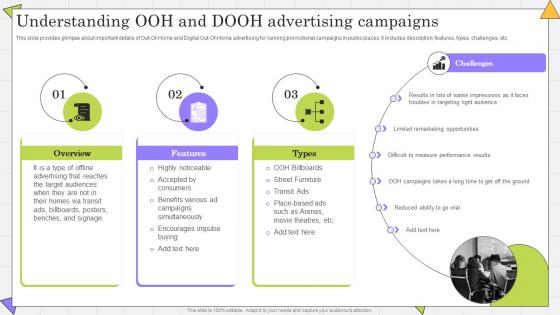
This slide provides glimpse about important details of Out Of Home and Digital Out Of Home advertising for running promotional campaigns in public places. It includes description, features, types, challenges, etc.
People who downloaded this PowerPoint presentation also viewed the following :
Understanding OOH And DOOH Complete Guide Of Paid Media Advertising Strategies with all 6 slides:
Use our Understanding OOH And DOOH Complete Guide Of Paid Media Advertising Strategies to effectively help you save your valuable time. They are readymade to fit into any presentation structure.





FAQs for Understanding OOH And DOOH Complete Guide Of Paid
So basically traditional billboards are those static printed ones you can't change once they're up. Digital lets you swap out creative whenever you want - like different ads for morning vs evening crowds, or updating based on weather. Yeah the digital costs more upfront, but you're not screwed if there's a mistake (learned that one the hard way with a client once). Plus you get way better data on who's actually seeing your stuff. Traditional is definitely cheaper though, just remember you're stuck with whatever you put up there for months. I'd go digital if you need flexibility or want to test different messages quickly.
Real-time data is a game changer for DOOH campaigns. Connect your screens to weather feeds, traffic APIs, local event data - whatever makes sense for your audience. When it starts raining? Boom, umbrella ads pop up automatically. Traffic's backed up? Switch to that coffee shop promo targeting frustrated drivers. Honestly, the weather triggers work best when you're starting out - they're dead simple to set up and you'll actually see results. Just create your conditional campaigns ahead of time so everything runs on autopilot. Time-based triggers are solid too if weather doesn't fit your brand.
So basically it's programmatic buying platforms and smart audience measurement tools driving everything. The hardware's gotten way better too. What's wild is the AI can actually swap out ads based on weather or who's walking by - like real-time stuff. Location analytics are probably the biggest game changer though. You can finally track if people actually showed up after seeing your ad, which regular billboards obviously can't do. Mobile integration helps with that too. The data side honestly makes it feel like a totally different thing now. When you're looking at partners, just make sure they can show you actual audience insights and programmatic stuff, not just fancy displays.
So basically, traditional OOH just gives you traffic counts and rough guesses about who's driving by. Pretty limited stuff. DOOH is completely different though - you get actual engagement data, how long people looked, even demographic breakdowns through cameras and sensors. Some networks can even track if people visited your store after seeing the ad, which is honestly pretty cool. Traffic counts vs real performance metrics, you know? I'd say use regular billboards when you just want eyeballs and go digital when you need to actually measure what's working.
So programmatic DOOH is basically like buying regular online ads but for billboards and digital screens. You set up targeting through a platform instead of calling companies directly (which honestly saves so much time). The system automatically bids on available inventory based on your parameters - location, time of day, audience data, all that stuff. What's cool is you can adjust campaigns based on weather or local events happening. I'd say start small though, maybe test a few locations first to see what actually works. Way more efficient than the old-school negotiation route, and you get real performance data to optimize with.
So basically you want your billboard and digital stuff to work together - same message, same timing. Put QR codes on your outdoor ads that link to custom landing pages. The cool part is using location data to trigger mobile ads when people walk past your DOOH screens. I swear tracking foot traffic is a game changer for optimizing everything else. Someone should be able to go from seeing your ad to their phone to your store without it feeling weird. Start small though - pick one billboard location and build out the whole digital experience around that first. Way less overwhelming.
Interactive touchscreens are huge right now, plus those crazy 3D anamorphic billboards that look like they're literally jumping off buildings. AR displays are everywhere too. Oh, and programmatic video that changes based on weather or traffic data - pretty wild stuff. Your phone can get targeted ads after walking past certain displays thanks to geofencing. Honestly, the sensor stuff is probably the coolest though. Content actually responds to whoever's looking at it, which feels very sci-fi. I'd start with interactive formats if I were you since they're crushing it with engagement rates.
Location is honestly everything for OOH campaigns. You want those busy intersections and transit spots - way more eyes on your ad. But volume isn't the whole story. Think about timing and context too. Like, that coffee ad? Perfect near office buildings at 8am, but kinda pointless in suburbia mid-afternoon. I always tell people to consider where their audience actually hangs out and what mood they're in. Are they rushing to work? Shopping? Just killing time? Match your message to that vibe and you'll see way better results.
Programmatic buying is huge right now - basically automated ad purchasing that's way smarter than manual buys. Interactive displays are getting crazy advanced too, responding to people walking by. Mobile integration is everywhere now with QR codes and geofencing connecting physical ads to your phone. Smart cities are feeding location data so you can see actual foot traffic, not just guesses. The AR stuff is honestly pretty wild when you see it in person. But here's what matters most: everything's finally measurable. You can actually prove ROI instead of just hoping people saw your ad. Jump on programmatic platforms ASAP because that's where all the money's going.
Honestly, start with your materials - recyclable substrates and low-VOC inks make a huge difference for static displays. LED tech is your friend for digital boards, plus you can set them to dim during off-hours when nobody's around anyway. One thing that's kinda smart is designing modular campaigns so you're not doing complete reprints every time. Solar power's becoming pretty common for remote spots too, which is cool. My buddy's company started asking suppliers about green alternatives and turns out most have them now - just gotta ask. Obviously you don't want to tank your campaign's effectiveness, but there's usually a middle ground.
Honestly, less is more with these things. People are rushing by, so you've got maybe 3 seconds max before they're gone. Keep headlines super short - like 7 words tops. High contrast colors are your friend, and don't go crazy with animations (I swear some of these ads look like slot machines). One clear message, that's it. Make your logo big enough to actually see. Oh, and here's something most people forget - actually go stand where people will see your ad and test it. What looks perfect on your computer screen might be completely unreadable from across the street. Trust me on that one.
So with traditional billboards, you're basically hitting people on autopilot during their commute - same route every day, slowly building that brand recognition. DOOH is totally different though. Real-time weather updates, location-specific deals, stuff that actually matters right then and there. Plus you can track what's working and tweak it instantly, which honestly feels like magic compared to regular billboards. Those are more for the long game anyway. The trick is figuring out what headspace people are in when they see each type - are they just zoning out or actually ready to act on something?
Dude, first thing - check your local zoning laws because they're all over the place and can totally kill your campaign. Digital billboards have their own FCC rules about brightness and when you can change messages. Alcohol, tobacco, and cannabis ads? Good luck with those - the cannabis stuff especially changes constantly (I swear they update it monthly). Transit ads need to hit accessibility standards too. Honestly just partner with a local OOH company who knows the market inside and out. They'll keep you from making costly mistakes that'll bite you later.
Honestly, measuring OOH ROI isn't as impossible as people think. Track foot traffic, website visits, and sales spikes during your campaign. QR codes and unique promo codes are your best friends here – they connect ads directly to actual conversions. DOOH is obviously way easier since it's digital, so you can see impressions and run A/B tests instantly. Traditional billboards are trickier, but brand awareness surveys work. Mobile attribution tools help too, though they can get pricey. Just don't make the mistake I see everyone make – set up tracking BEFORE you launch. Pick one solid KPI first, then expand.
McDonald's crushed it with their breakfast geotargeting - saw 33% sales bumps, which is honestly pretty crazy. Nike's "Nothing Beats a Londoner" billboards went viral too. And everyone knows about Coca-Cola's personalized Times Square displays by now. The best campaigns mix location targeting with real-time stuff like weather updates or different messages based on time of day. Oh, and definitely hit up OAAA's case study library or dig through AdAge's outdoor archives - there's solid metrics in there you can totally steal for your pitch.
-
Professional and unique presentations.
-
This visual representation is stunning and easy to understand. I like how organized it is and informative it is.