


Digital Media And Marketing Organization Chart For Ads Agency




Try Before you Buy Download Free Sample Product
 Impress Your
 Audience
 100%
100% Editable
 Save Hours
 of Time


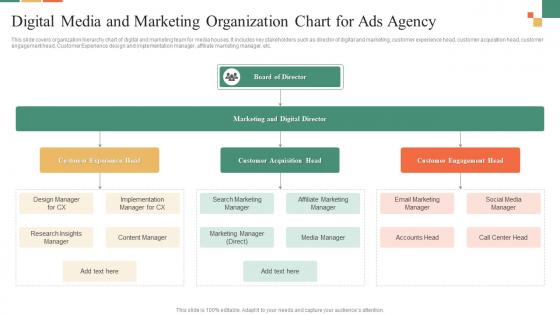
This slide covers organization hierarchy chart of digital and marketing team for media houses. It includes key stakeholders such as director of digital and marketing, customer experience head, customer acquisition head, customer engagement head, Customer Experience design and implementation manager, affiliate marketing manager, etc.
People who downloaded this PowerPoint presentation also viewed the following :
Digital Media And Marketing Organization Chart For Ads Agency with all 6 slides:
Use our Digital Media And Marketing Organization Chart For Ads Agency to effectively help you save your valuable time. They are readymade to fit into any presentation structure.





FAQs for Digital Media And Marketing Organization Chart
OK so here's what I'd focus on: Start with strategy first - figure out your goals, who you're talking to, and how you want to position yourself. Most people jump straight into posting stuff and then everything feels all over the place. Your content becomes the foundation for everything else - both your paid ads and organic stuff like SEO. Pick one or two channels to start with and actually get good at them before adding more. Oh, and definitely track your numbers because otherwise you're basically throwing darts in the dark. I know analytics sounds boring but you'll thank yourself later when you can see what's actually working.
Dude, digital marketing is honestly insane for targeting compared to old-school methods. You can track everything - how people behave on your site, what they buy, if they open emails. Social platforms let you get super specific with demographics and interests too. Geographic stuff goes crazy detailed, like down to zip codes or people walking near your store. The real magic happens when you stack these together though. I'd start with your best customers and create lookalike audiences from their data - that's usually money. Oh, and behavioral targeting based on purchase history? Chef's kiss.
Think of SEO as the backbone that makes everything else work better. Your paid ads will perform better when you've got solid organic rankings backing them up. Content marketing? Way more effective when you're hitting the right keywords. Plus, organic traffic doesn't cost you per click - which is honestly a huge relief for your budget. I'd start by checking what you're already ranking for (might surprise you), then figure out where the gaps are. Build your content around filling those holes. It's kinda boring work upfront, but it feeds qualified people into your funnel without you constantly paying for it.
Look, content marketing is basically the engine that powers everything else you're doing online. Create good blog posts, videos, whatever - then push that stuff out through your socials, email lists, paid ads. Way better than just constantly trying to sell people things (which honestly gets annoying fast). You want different content for different stages too. Awareness stuff to pull new people in, then harder-hitting content that actually converts when they're ready to buy. I'd start by looking at what content you already have, see where it fits in your sales process, then figure out what's missing.
Start with conversion rates and customer acquisition cost - they'll show you if you're actually making money or just burning through budget. Revenue attribution is key too since you need to see how your channels work together. Lead quality scores matter way more than people think. Like, your sales team will hate you if you're sending them garbage leads just to hit numbers. Time-to-conversion helps here too. Don't skip engagement rates and making sure your messaging stays consistent across channels. Monthly audits work well, then you can figure out which channels are dead weight.
Honestly, social media pretty much dictates your whole marketing strategy these days. Your audience lives on these platforms, so that's where you need to be. TikTok wants snappy videos, LinkedIn's all about professional posts - each one has totally different vibes. You'll need to tweak your content and timing for each platform's culture. The analytics you get are gold too, feeds right into your other campaigns. Oh, and don't spread yourself too thin - pick maybe 2 or 3 platforms where your people actually are instead of trying to do everything.
Okay so first thing - map out your big campaigns and product launches. Everything else builds around those anchor points. Then work backwards and add your supporting stuff like email sequences and social posts that build momentum. I'm super visual so I color-code everything (probably overkill but whatever works right?). Don't be like everyone else cramming stuff into Q4 - spread things out! Build in buffer time because revisions always happen. Leave space for when you need to jump on trending topics too. Honestly the biggest thing is treating it like a living document you'll update monthly, not something you create once and ignore.
So digital advertising is just the paid stuff - your Google ads, Facebook promotions, display banners, whatever. Your overall digital marketing strategy? That's the whole picture: content, SEO, email campaigns, social media. Honestly, I see so many people treat ads like they exist in a vacuum, which is nuts. The magic happens when your paid ads actually support what you're already doing organically. Like, if you're pushing a blog series about productivity tips, your ads should tie into that theme. Start by looking at how your current ad spend connects to your other marketing efforts - you'll probably spot some gaps.
Honestly, analytics turns your marketing from throwing spaghetti at the wall into actually knowing what works. You'll see which channels bring in real customers, not just clicks. Track where people bail from your funnel and fix those spots. The personalization stuff is huge too - you can predict what customers want before they even know it. Budget goes to campaigns that actually convert instead of the ones that just look pretty. Oh, and set up proper tracking first (I learned this the hard way). Once you're working with real data instead of hunches, everything clicks.
Honestly, start with Google Analytics and Google Ads Manager - you can't really avoid those if you want to track anything properly. For social stuff, Hootsuite or Buffer are lifesavers for scheduling posts. Email campaigns? HubSpot's great but pricey, so Mailchimp works too. Here's the thing though - there's like a million shiny tools out there that'll just distract you. Pick one from each area and actually learn it inside out first. I made that mistake early on, jumping between tools constantly. Master the basics, then add more stuff when you actually need it.
Honestly, start with a modular tech setup so you're not screwed when you need to switch tools. Cross-train your team too - having just one person know each platform is asking for trouble. Facebook used to be THE place to be, and look how that turned out for people who went all-in. Budget for experimenting with new stuff regularly. Oh, and don't fall in love with any single channel. I do quarterly check-ins to see what's actually moving the needle versus what feels like busy work. The companies that survive are the ones constantly testing new approaches.
Look, it really comes down to timing and who's making the call. B2B takes forever - you're dealing with committees who overthink everything for months. So you need tons of touchpoints: whiteparams, webinars, LinkedIn stuff. B2C? People buy on impulse. Quick social ads and email blasts work great. B2B honestly feels like chess while B2C is speed dating (which sounds dramatic but it's true). Your B2B deals are worth way more but happen less often, so tracking gets complicated. Just map out how long your customers usually take to decide - that'll show you which direction to go.
Don't just blast random newsletters to everyone - that's why most email marketing sucks. You gotta segment people based on where they actually are in your funnel. Like, someone who just found you on Instagram needs different emails than someone who almost bought something but bailed. Set up those automated sequences that fire off based on what people do - abandoned cart stuff, welcome series, all that. Oh, and use email to connect your other channels too. Map out where people drop off and fill those gaps with targeted emails. Way more effective than hoping one generic message works for everyone.
Honestly, branding is like the foundation of everything you'll do online. Think about it - your brand determines who you're talking to, how you sound, and what you look like across all platforms. Without that stuff figured out first, you're just randomly posting content and hoping people care (which... they probably won't). Once you know your brand pillars, suddenly your content strategy makes sense. Your ads have a consistent vibe. People recognize you whether they see you on TikTok or find you through Google. I always tell people to nail the branding basics before jumping into tactics.
Honestly, just make user content part of your regular posting schedule - it's way better than anything you'll create anyway. Start hashtag campaigns and ask for reviews, but also create natural spots where people actually want to share stuff about your brand. Your most engaged customers are gold mines, so just ask them directly for their stories. Then take that content and spread it everywhere - social, emails, your website, even ads. I probably should've mentioned this first, but build collection points right into your customer journey so it happens automatically. Short version: free marketing that people actually trust.
-
Unique and attractive product design.
-
Such amazing slides with easy editable options. A perfect time-saver.