


Full Digital Marketing Agency Organizational Structure For Smooth Business Operations BP SS




Try Before you Buy Download Free Sample Product
 Impress Your
 Audience
 100%
100% Editable
 Save Hours
 of Time


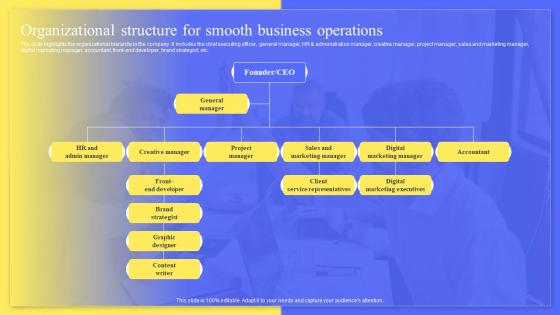
The slide highlights the organizational hierarchy in the company. It includes the chief executing officer, general manager, HR and administration manager, creative manager, project manager, sales and marketing manager, digital marketing manager, accountant, front-end developer, brand strategist, etc.
People who downloaded this PowerPoint presentation also viewed the following :
Full Digital Marketing Agency Organizational Structure For Smooth Business Operations BP SS with all 9 slides:
Use our Full Digital Marketing Agency Organizational Structure For Smooth Business Operations BP SS to effectively help you save your valuable time. They are readymade to fit into any presentation structure.









FAQs for Full Digital Marketing Agency Organizational Structure For Smooth Business
So you've got account managers handling clients, strategists planning campaigns, specialists doing the actual work (PPC, SEO, social stuff), and analysts tracking everything. Account managers are like translators between clients and the team - they turn "we need more sales" into actual briefs. Strategists and specialists team up to execute, then analysts figure out what worked. Everyone talks to everyone though, which honestly makes things way smoother. Oh and if you're hiring? Start with a killer account person and one strong specialist first. You can always add more later once you know what your clients actually need.
Dude, your team structure totally makes or breaks project flow. Clear roles = everyone knows their lane, so stuff moves fast. But when you've got account people doing creative too? Total disaster - I've watched agencies crash and burn that way. Flat structures rock for quick decisions since you skip all the approval chains. Hierarchical setups are slower but honestly, sometimes that extra oversight saves your ass. The trick is matching your structure to how work actually moves through your team. Otherwise you're just creating your own roadblocks.
Look, specialized teams crush it because your PPC guy actually knows Google Ads inside and out, while your content person gets SEO on a deeper level. Quality goes way up and you can charge more. But man, the overhead kills you - plus when one channel gets busy and another's slow, you're kinda screwed. Generalist teams are way more flexible and cheaper to run. Honestly though? The work tends to be pretty meh across everything. I'd probably start with generalists to keep costs down, then slowly add specialists once you've got the revenue to support dedicated people.
Honestly, get yourself a decent project management tool - Asana's pretty solid, or Monday if you're feeling fancy. Weekly team calls are clutch, but don't go overboard or people will hate you. Video beats typing for anything complicated, seriously. Set boundaries early about when people need to be available and how they should communicate. Focus on whether stuff gets done, not whether someone's online at 9am sharp. Oh, and make sure everyone's internet doesn't suck - learned that one the hard way. You'll probably need to tweak the meeting schedule once you see what works.
Honestly, you don't need to go crazy with tools right away. Grab a CRM first - HubSpot's free tier is decent, or Salesforce if you're feeling fancy. Project management wise, Asana saves my sanity (way better than my old whiteboard system). Google Analytics and maybe SEMrush for tracking stuff. Social media scheduling with Buffer or Hootsuite. Canva's surprisingly good for quick designs, though Adobe's obviously better if you've got the budget. Oh, and Slack for team chat because email chains are the worst. Start small though - I made the mistake of signing up for like 15 platforms at once and nobody used half of them.
Your client mix totally shapes how you should set up your teams. Long-term retainer folks? Dedicated account teams work best - they love having the same people to work with. Project clients are different though, they need those flexible squads that can jump around fast. Most agencies end up with both types (which honestly makes everything messier). High-maintenance clients require more account management layers, but the hands-off ones let you keep things simple. I'd look at what clients you actually have and figure out where your current setup isn't working for them.
Dude, you absolutely need a creative team. Without them, you're just another boring ad people scroll past without thinking twice. They turn all your strategy stuff into actual eye-catching content - graphics, videos, web design, the works. Trust me, data alone won't cut it. Having them in-house is clutch too because you get way faster turnarounds and they can actually work with your strategy people instead of playing telephone. I'd start with a good designer and copywriter first, then build from there.
Honestly, you can't just set up your team structure once and call it done. Most agencies I know shake things up every year or so - gotta follow what clients want and where tech's going. Remember when TikTok blew up? Suddenly everyone needed video people (still wild how overnight that was). Cross-train your team so they can jump around roles. Freelancers are clutch for testing new skills before you hire full-time. Client feedback tells you everything - that's where you'll spot the next big shift coming.
Honestly, agency hierarchy is make-or-break for campaign speed. Flat structures? You can pivot instantly when the data shows something's not working. But if there's like 5 layers of approval, good luck making quick changes on a live campaign. The worst part is when junior people have killer insights but can't get heard because everything flows from the top. Figure out who signs off on what before you even start - trust me on this one. And pad your timelines because approvals always take longer than expected.
Honestly, you've gotta tear down those silos first. Get everyone in a room weekly - SEO shares their keyword wins, content team previews what's coming, social reports back on what's actually working. I swear, most agencies keep these teams totally separate and wonder why nothing clicks. Set up shared Slack channels so people can actually see what others are doing. The real win happens when your keyword research feeds directly into content planning, then social runs with it. Oh, and make sure everyone can see each other's calendars - sounds basic but you'd be surprised. Start small with one campaign where all three teams collaborate from day one.
Honestly, everyone's going lean right now - pick like 2-3 things you're actually good at instead of trying to do everything. Remote teams with freelancers are where it's at, way better than paying crazy overhead. I mean, unless you're going after huge corporate clients, who even needs an office anymore? Partner up with other specialists instead of hiring full-time people you can't afford when things get slow. The agencies that are actually making money right now? They can pivot fast and aren't stuck with massive teams. Start small, don't hire until the revenue's really there to back it up.
Dude, mixing teams is where the good stuff happens. Your PPC person sits with the content writer and UX designer? They'll start connecting dots nobody saw before. Like the ads guy notices weird user patterns that totally shifts how content approaches their next campaign. Short bursts of insight just happen naturally. Honestly, it beats being stuck in the same department bubble all day - gets boring fast. Different skills start overlapping and boom, you're building actual integrated campaigns instead of random disconnected stuff. I'd literally just shuffle the seating chart next week and watch what conversations pop up.
Okay so the big ones you definitely need are client retention rate, project delivery times, and team utilization - that's like your foundation right there. Revenue per employee tells you if people are actually profitable, and profit margins by service line show which parts of your business work. Employee satisfaction is huge too because miserable people do terrible work, obviously. Oh and if your departments aren't talking to each other, measure that collaboration somehow. I'd check these monthly but don't panic over week-to-week stuff - look at quarterly trends instead.
Honestly, you've gotta build culture right into how your teams are set up. Mix your creative people with the strategy and account folks - breaks down those walls that kill good ideas. Weekly creative reviews help, or maybe monthly "play time" where people can just mess around with new stuff. The trick is making your reporting structure actually reward teamwork, not just solo wins. I mean, nobody wants to collaborate if they're only judged individually, right? Set shared goals between departments and let teams figure out their own solutions. Oh, and give them real autonomy - micromanaging kills creativity fast. Structure should help your culture thrive, not work against it.
Honestly, the trickiest part is getting all your different people to work together without chaos. SEO folks, PPC specialists, content writers, designers - they all think differently. Clients constantly shift what they want too, which makes everything harder. Then there's this annoying thing where your team needs time to actually collaborate, but clients hate paying for "just talking." I'd map out your bread-and-butter projects first and build teams around those specific workflows. Short bursts work better than long meetings anyway. Once you nail a few standard processes, the weird requests become way more manageable.
-
Wonderful ideas and visuals. I'm really pleased with the templates, which are unique and up to date.
-
I faced no difficulty while searching for the slide I wanted. Honestly, the website’s interface is easy to use and can be navigated easily!