


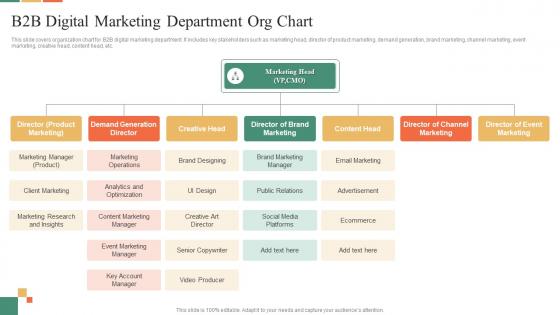
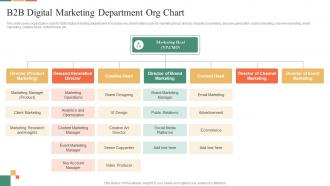
B2B Digital Marketing Department Org Chart




Try Before you Buy Download Free Sample Product
 Impress Your
 Audience
 100%
100% Editable
 Save Hours
 of Time


This slide covers organization chart for B2B digital marketing department. It includes key stakeholders such as marketing head, director of product marketing, demand generation, brand marketing, channel marketing, event marketing, creative head, content head, etc.
People who downloaded this PowerPoint presentation also viewed the following :
B2B Digital Marketing Department Org Chart with all 6 slides:
Use our B2B Digital Marketing Department Org Chart to effectively help you save your valuable time. They are readymade to fit into any presentation structure.





FAQs for B2B Digital Marketing
Most companies put a Digital Marketing Director or VP at the top, then build specialized roles underneath. Core team usually has a Content Marketing Manager, SEO/SEM Specialist, Marketing Automation Manager, and Social Media Manager. Oh, and Demand Gen Manager - that one's huge for B2B right now, like everyone's hiring for it. Depending on size you might also see Product Marketing, Email Marketing, Analytics people. Structure changes company to company though. I'd map out what you're missing first, then figure out which roles would actually move the needle for your growth.
B2B org charts get way more specialized than B2C ones. You'll see dedicated people for account-based marketing, sales enablement, lead nurturing - roles that don't really exist on the consumer side. B2C focuses on brand awareness and getting customers fast. But B2B? You're dealing with long sales cycles and like five people making one decision. It's honestly a pain. The marketing and sales ops teams work way closer together too. Oh, and committees instead of one person just buying something quickly. Map out how complex your buyer journey actually is first - that'll tell you which specialized roles you need.
You want someone who's equally comfortable with spreadsheets and creative brainstorming sessions. Deep B2B funnel knowledge is crucial - these sales cycles drag on forever. They need hands-on experience with account-based marketing, marketing ops, and content strategy. Data skills aren't optional anymore - SQL and attribution modeling should be second nature. Oh, and leadership chops matter since they'll wrangle teams across departments while proving marketing's worth to skeptical sales folks. Find candidates who've actually executed campaigns, not just PowerPoint warriors. Trust me, there's a huge difference.
Get both teams talking regularly - like weekly check-ins where they actually review lead quality and what's converting. Marketing needs to know what sales considers a "real" lead (trust me, their definitions probably don't match up right now). Give sales access to see which campaigns are bringing in good prospects. Build some kind of formal handoff process with deadlines so leads don't just sit there. Shared dashboards help too - everyone sees the same numbers. Honestly? Start small. Just get them in a room once a month to hash out what's broken and what's working.
Map specific metrics to each role so people know what they own. Content team tracks MQLs, engagement, and pipeline attribution. Demand gen owns conversion rates, cost per lead, pipeline velocity - the revenue-driving stuff basically. Marketing ops focuses on data accuracy and lead scoring. Honestly? Skip vanity metrics like followers - they're pretty useless for proving ROI. Each person's numbers should roll up to your main revenue goals. That way when leadership comes asking what's actually working, you've got solid answers broken down by team. Makes those budget conversations way easier too.
Yeah, B2B marketing jobs change a ton by industry. Tech/SaaS is all about product marketing and conversion stuff. Manufacturing? You're dealing with trade pubs and those super long sales cycles that drag on forever. Financial services makes everything crazy complicated with compliance - their job postings are basically novels lol. Healthcare throws in regulatory headaches too. The basic marketing skills are pretty much the same across the board. But honestly, the industry knowledge piece is huge. When you're looking at candidates, don't sleep on relevant experience in your space.
Honestly, it depends on your team size. Specialists are amazing - your SEO person lives and breathes algorithm updates, your ads person can squeeze every dollar. Plus everyone's clearly responsible for their stuff. But generalists work better for smaller teams since they're flexible and can jump around (also way easier when someone's on vacation). I usually tell people to start general when you're small, then get more specialized as you grow. Oh, and budget matters too obviously. Look at how complex your workload is first - that'll pretty much tell you which way to go.
Honestly, don't just pile on more generalists - that's a trap I've seen too many companies fall into. Build out specialized roles instead. Demand gen, content, and marketing ops should be your first hires - they're like your core foundation. Once you've got some real traction, then you can think about ABM specialists, field marketing, product marketing, all that good stuff. But here's the thing - resist hiring too fast even when you have the budget. Get your systems locked down first. Then bring in senior people who actually know what they're doing. Way better than scrambling with junior folks who need constant direction.
Dude, your team structure is gonna look totally different now. Marketing automation people, data analysts, conversion optimizers - roles that literally didn't exist a few years back. Generalists are basically extinct unless you're at some scrappy startup. Map out your current tech stack first, then figure out where the gaps are. You'll probably need way more contractors too since finding full-time people who actually know this stuff is rough. The whole org chart has to revolve around who can handle your MarTech and make sense of all that attribution data.
First thing - figure out your actual gaps, not just what you think you need. Revenue-driving roles come first: demand gen, marketing ops, that stuff. I've watched way too many startups hire someone for social media when their lead scoring is completely broken. It's like buying fancy furniture when your roof is leaking, you know? Get your foundation solid with strategic hires first. The tactical people can come later. Here's my test: can this person directly measure their impact on pipeline? If not, you probably don't need them yet.
Honestly? Just get everyone talking regularly. Weekly standups with content, paid media, and sales teams work great - no more working in silos. I've watched so many campaigns crash because nobody was communicating, it's genuinely frustrating to see. Shared Slack channels help tons for quick questions and updates. Make sure all teams can see the same dashboards too. Oh, and here's something that actually works - rotate people between functions sometimes. They'll finally get why other teams do what they do and start spotting ways to work together. Don't force it though, just make collaboration feel normal.
Honestly, just map out who's doing what on your team right now vs. what you actually need for B2B marketing. The gaps become super clear fast. Missing someone for marketing automation or ABM? You'll see it immediately. Also shows you where people are juggling way too much - which happens everywhere, let's be real. Check if your team setup even makes sense for collaboration too. Like, can your demand gen person actually talk to sales regularly? Then you know exactly what skills to hire for next or who needs training. Pretty straightforward but surprisingly helpful.
Honestly, org charts should shift with whatever's hot right now. When AI exploded this year, the best teams either grabbed specialists or upskilled people super quick. Build cross-functional pods instead of those annoying silos - let your content person talk directly to demand gen without bureaucratic nonsense. Kill roles that aren't moving the needle on pipeline anymore (I know, brutal but necessary). Check your structure every quarter and ask what skills you're missing for next year. Also maybe don't overthink it too much - sometimes you just need to try stuff and see what works.
Honestly, data analytics is pretty much running the show for B2B marketing teams now. You really need someone dedicated to handle all the attribution and lead scoring stuff - maybe a data analyst or marketing ops person. Some teams are splitting roles too, like having growth marketers who are total data nerds versus brand people focused on messaging. It's wild how many tools we're all juggling these days (feels overwhelming sometimes). Bottom line though - someone needs to own the analytics piece full-time, whether that's a specialist or rolled into your marketing ops.
Honestly, just bake it into your regular routine instead of treating it like an afterthought. Friday afternoons work great for team learning sessions - webinars, new tools, whatever. Have your paid ads person hang out with the SEO specialist for a day. I know it sounds super cheesy, but rotating "learning buddies" every quarter actually gets results. Budget some cash for courses and conferences too. Oh, and definitely ask each person what specific skill they want to work on this quarter - you'll be surprised what they say. The whole thing falls apart if you just assume people will learn stuff on their own time.
-
One-stop solution for all presentation needs. Great products with easy customization.
-
Great work on designing the presentation. I just loved it!