


B2C Ecommerce Marketing Department Org Chart




Try Before you Buy Download Free Sample Product
 Impress Your
 Audience
 100%
100% Editable
 Save Hours
 of Time


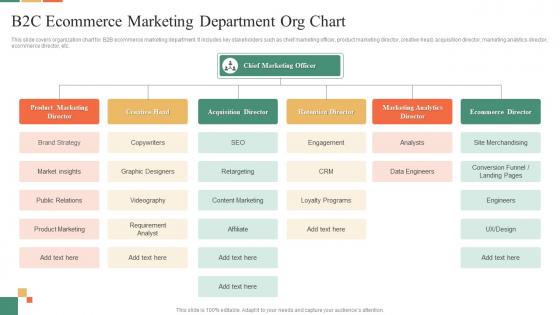
This slide covers organization chart for B2B ecommerce marketing department. It includes key stakeholders such as chief marketing officer, product marketing director, creative head, acquisition director, marketing analytics director, ecommerce director, etc.
People who downloaded this PowerPoint presentation also viewed the following :
B2C Ecommerce Marketing Department Org Chart with all 6 slides:
Use our B2C Ecommerce Marketing Department Org Chart to effectively help you save your valuable time. They are readymade to fit into any presentation structure.





FAQs for B2C Ecommerce Marketing
Start with a Digital Marketing Manager to run the show, then grab specialists for PPC, email, and content. SEO is obviously crucial too. Honestly, conversion rate optimization might be your best hire - that person literally pays their own salary within months. Data analyst is key for making sense of all the metrics flying around. If budget allows, add marketing automation and maybe someone for influencer stuff, though that depends on your audience. Build around what's actually driving revenue for you. No point hiring for channels that aren't working.
Honestly, org charts are a game changer for avoiding that "wait, who's supposed to do this?" chaos. Your team needs to know exactly who owns what - content, ads, email campaigns, whatever. Otherwise you get those cringe moments where everyone thought someone else was handling it. Also helps when decisions get stuck and you need to escalate instead of having those endless Slack back-and-forths (ugh). People can actually see how their work fits with everyone else's too. Drop it in your team channel and call out specific roles when you're starting new stuff. Trust me on this one.
So B2C teams are all about hitting huge numbers fast - they'll have massive paid media teams and tons of social people since they're chasing thousands of consumers. B2B is totally different though. Way more content marketing and those long nurture campaigns because sales cycles take forever (like months instead of minutes). Email's interesting too - B2C splits that out more since they're sending daily promos, but B2B usually just lumps it with demand gen. Honestly, just map out how long your customer journey actually takes first. That'll tell you if you need more awareness people or conversion specialists.
Your eCommerce CMO is gonna be way more numbers-driven than regular marketing folks. They're constantly crunching customer acquisition costs and lifetime value - honestly it's kinda overwhelming how data-heavy it gets. Funnel optimization becomes their obsession. A/B testing checkout flows, shifting ad budgets daily based on what's actually converting. Oh and they need to understand the tech side too since marketing bleeds into product experience. I'd definitely look for someone with solid analytics skills and actual eCommerce platform knowledge when hiring.
Honestly, your marketing team structure has to revolve around data now. You'll need people who can collect it, analyze it, and actually do something with it - so think data analysts, attribution specialists, marketing ops folks. The amount of data we're swimming in is honestly insane sometimes. Your org chart needs clear owners for different data streams, plus someone who can connect acquisition numbers to retention and revenue. Oh, and make sure someone can track customer behavior across all your channels. Without dedicated data roles, you're basically just throwing money around and hoping something sticks.
Put your social media manager between content and customer service teams - they need both constantly. Most companies screw this up by isolating social completely, which is dumb. Weekly meetings with your paid ads team help too since organic insights can guide targeting. Oh, and pair them directly with email marketing because those campaigns should play off each other. Real-time access to inventory and promo data is crucial if you want content that actually sells. Don't bury them under PR either. Direct line to your marketing director works best.
Start with a UX/UI designer who gets conversion stuff and mobile design - that's your bread and butter. You'll also need a UX researcher for A/B testing and figuring out why people bail on checkout. Product manager is key too since they connect UX with dev work. Content strategist might sound boring but trust me, good microcopy makes a huge difference in user flow. If you've got extra budget, throw in a CRO specialist. Honestly though? Designer + researcher first, then see where your biggest headaches are and hire from there.
Honestly, it depends on your company setup. Marketing teams usually house CRM people since they're doing email campaigns and lead nurturing stuff. But I've also seen them under customer service - makes sense when you think about it, right? They're managing relationships after someone buys too. Bigger companies sometimes create whole customer success departments for this. My advice? Put them wherever they'll actually talk to both marketing and support daily. Like, map out who they collaborate with most and just stick them there. Don't overthink it.
SEO basically touches everything in your eCommerce setup - product pages, content, even your paid ads. It's honestly crazy how connected it all is. You can either hire a dedicated SEO person who works with your content and product teams, or just train everyone to think about SEO stuff. I'd personally go with the first option if you can swing it. Don't let it get stuck in some corner though. Make sure SEO comes up in your weekly meetings and campaign reviews. Otherwise it just becomes this thing people forget about until launch day, and by then it's too late to fix anything major.
Your content team needs three main buckets: product stuff (descriptions, photos, specs), brand storytelling (blog posts, social, emails), and someone managing customer reviews and user photos. Product writers should literally sit next to your merchandising people - they work together constantly. Brand content can be more separate but they gotta stay tight with your paid ads and SEO folks. Honestly, don't sleep on having a dedicated person for reviews and customer photos because that social proof is gold. Just make sure the whole flow from discovery to checkout feels smooth with clear handoffs.
Start with a solid 30-60-90 day plan covering tech stack, customer personas, and current campaigns. Get them on customer calls and campaign reviews with experienced team members ASAP - there's really no substitute for hearing actual customer feedback. They need to grasp your attribution models and key metrics since B2C moves crazy fast. Regular check-ins with their manager plus key people from product and creative teams are essential. Oh, and give them some small project by week two. Something low-risk but real so they're actually contributing while they learn your processes instead of just sitting around feeling useless.
Honestly, just mix your teams up from the start. Create these little cross-functional groups with creative, analytics, product marketing folks all working together on campaigns. I'd do weekly check-ins between department heads too - yeah I know, more meetings, but trust me it saves drama later. The trick is making sure everyone's working toward the same goals instead of competing. Oh and don't try to overhaul everything at once - that's a recipe for chaos. Pick one big campaign first and test out this whole cross-team thing there. If it works, expand it.
Honestly, tech is flipping every marketing role upside down right now. Performance marketers are suddenly dealing with AI bidding systems they never asked for. Content teams? They're all learning video generation tools and AI writing stuff. Social media people became TikTok algorithm wizards overnight (which is actually pretty impressive). Data analysts are drowning in complex customer journey maps because cross-platform tracking got way better. Even email marketing - boring old email! - needs predictive analytics knowledge now. I'd sit down and figure out who on your team needs training versus who you might need to replace.
Honestly, just focus on the metrics that actually matter for your bottom line. Conversion rate, average order value, and customer acquisition cost - those three will tell you everything about whether your funnel's working. Cart abandonment is probably the most painful one to track, but you need to know how much money you're losing there. For the long game, watch repeat purchase rate and lifetime value. That's how you know if people actually stick around or just buy once and bounce. Oh, and don't forget email metrics for your retention stuff - open rates and CTRs are still super relevant. Set up weekly dashboard reviews with your team so you're not just collecting data for no reason.
Honestly, you gotta ditch those rigid departmental walls right from day one. Mix your teams up - get marketing people sitting with data analysts and creatives. Way too many companies turn into these weird bureaucratic nightmares where nobody can make a decision without seventeen approvals. Small teams work best, maybe 4-5 people who can actually pivot when things change. Oh, and make sure these groups can talk to each other directly instead of playing telephone through a bunch of middle managers. Hire people who don't freak out when their job description shifts. That's really what separates companies that adapt from ones that just... don't.
-
The best part about SlideTeam is their meticulously prepared presentations (complete-decks and single-slides both), infused with high-quality graphics and easy to edit. All-in-all worthy products.
-
“I always have a wonderful experience with SlideTeam. It's my ""go to"" when I need a template.”