

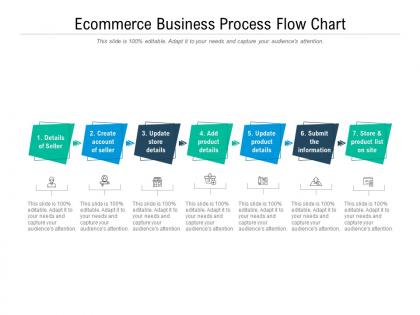
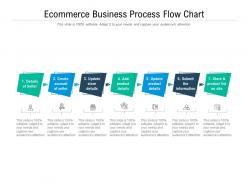
Ecommerce business process flow chart




Try Before you Buy Download Free Sample Product
 Impress Your
 Audience
 100%
100% Editable
 Save Hours
 of Time


Join the game with our Ecommerce Business Process Flow Chart. Get involved in fruitful interaction.
People who downloaded this PowerPoint presentation also viewed the following :
Ecommerce business process flow chart with all 2 slides:
Get involve in fruitful action with our Ecommerce Business Process Flow Chart. Be able to join the game.
FAQs for Ecommerce business
So you've got your basic flow: discovery, adding to cart, checkout, payment, confirmation, then fulfillment and shipping. After that comes delivery and hopefully getting some reviews. Real talk though - checkout is where everything falls apart for most stores. Payment processing too. I've literally abandoned so many carts because the checkout was a nightmare. Track where people are dropping off at each step. That'll tell you exactly what's broken. Start with fixing checkout first since that's usually the biggest leak in your funnel. Everything else can wait if people aren't actually completing their purchases.
Honestly, start with your checkout flow - that's where the magic happens. People are impatient as hell, so if your site takes more than 3 seconds to load, they're gone. Strip down your checkout to just the essentials and let people buy without creating accounts. I learned this the hard way lol. Mobile optimization is huge since everyone's glued to their phones anyway. Show shipping costs upfront so customers aren't shocked at the end. Trust stuff matters too - reviews, security badges, multiple payment options. Three focus areas: speed, keeping it simple, and building trust. Fix checkout first though, you'll see results immediately.
Your inventory system is literally what keeps your whole eCommerce thing running - it tracks what you can actually sell and ship out. So when someone orders, it checks stock, reserves those items, and updates everything across your channels so you don't accidentally oversell (been there, it sucks). Good systems will auto-reorder when you're getting low and keep your product pages current. Trust me, you don't want to deal with pissed off customers finding out their order got canceled because you're actually out of stock. Real-time syncing with your storefront is pretty much non-negotiable these days.
So basically when someone clicks buy on your site, the payment gateway grabs their card info and shoots it over to their bank to check if they've got the money. It's like having a middleman who does all the boring bank stuff for you. Takes maybe 3-4 seconds, then boom - approved or declined. Your site gets the answer and either completes the order or shows that awkward "payment failed" message we've all seen. Most ecommerce platforms already have this stuff built in anyway. You just hook up your merchant account and you're set. Pretty straightforward once you get it running.
So Google Analytics is your starting point - tracks page views and conversions pretty well. Hotjar's amazing for heatmaps, shows exactly where people click and scroll. Your email platform probably already tracks opens and clicks, and your ecommerce setup should have cart abandonment data. Cohort analysis is honestly my favorite thing right now - makes repeat buying patterns super obvious. Oh, and don't forget social media pixels for tracking people across platforms. The trick is connecting everything so you're not just looking at random pieces of data. Start simple though - GA first if you're not tracking anything yet.
Set up those cart abandonment emails - first one within an hour, then hit them again after 24 hours and maybe one more a few days later. People literally just forget sometimes, it's crazy how often that happens. Throw in a small discount or free shipping to sweeten the deal, or just send a gentle nudge with product pics. Also try exit-intent popups on your checkout page to catch folks before they bail. Start simple with 3 emails and see how your recovery rates look. You can always tweak from there.
Honestly, automation is your best friend here - get your order processing running on autopilot. Pick shipping partners you can actually count on, and update customers constantly so they're not wondering where their stuff is. Real-time inventory tracking will save your butt (I oversold once and it was a nightmare). Don't go crazy with packaging but make sure things arrive intact. Multiple shipping speeds are clutch since some people need it tomorrow, others don't mind waiting. Oh, and map out your returns process NOW before you're scrambling later when someone inevitably wants their money back.
Look, customer service is basically your safety net for the whole eCommerce thing. It hits every part - answering pre-purchase questions that actually help close deals, handling post-purchase stuff so you don't get slammed with returns and chargebacks. I've literally watched pissed off customers turn into repeat buyers after one solid support call. Wild, right? But mess up the service and you're looking at tanked conversion rates plus those brutal reviews that scare off future customers. Your CS team needs to get that they're not just fixing problems. They're protecting your money at every single step.
Honestly, chatbots are probably your best starting point - they handle the basic customer stuff 24/7 and you'll see returns pretty quickly. Machine learning is getting scary good at predicting what people want to buy before they even browse for it. There's also this thing called headless commerce that lets you update your site without everything breaking (thank god). One-click checkout is reducing cart abandonment big time. Voice shopping is picking up steam too, though I'm still weird about talking to my phone to buy stuff. Predictive analytics basically reads your customers' minds now. Start with the chatbot though - easiest win.
So basically, data analytics shows you what's working and what's completely failing in your store. You can see where people bail during checkout, which product pages actually convert - all that stuff. The weird part? You'll start noticing random patterns, like mobile users ditching their carts way more on Tuesdays (seriously, it's bizarre). Use it to fix your product recommendations, pricing, inventory - whatever needs help. Honestly, just start with conversion funnel tracking first. That's where you'll see the biggest problems and get quick wins.
Honestly, cart abandonment is your biggest enemy here. People add stuff then just... disappear. Email reminders help, but don't spam them. Payment failures are brutal too - always have a backup gateway because there's nothing worse than losing a sale over technical BS. Keep your checkout stupid simple, like 2-3 steps max. Mobile loading speed matters more than you think. Oh, and inventory sync issues will bite you if you're selling across multiple channels. Check your Google Analytics to see where people actually drop off - might surprise you which pages are the problem.
Dude, personalization is like magic for making customers feel seen instead of just another email address. Start with basic product recs on your site - seriously works wonders for sales. You can customize emails with their name and show them stuff based on what they've already looked at. Your homepage can even switch up to feature things they'd actually buy. Honestly, I sometimes forget how much data these sites have on us lol. But people eat it up because who wants to dig through random products? Takes like 5 minutes to set up basic recommendations and boom - way better conversion rates.
Dude, digital marketing is literally woven into everything now. SEO and paid ads get people to your product pages. Email campaigns keep potential buyers interested while they're deciding. Cart abandoners? Retargeting pulls them back in. Reviews and user posts help seal the deal at checkout - that social proof thing really works. After someone buys, you've got follow-up emails, loyalty programs, all that good stuff to keep them coming back. I honestly can't think of a single step that doesn't involve some form of digital marketing anymore. The trick is figuring out which touchpoints matter most for your specific flow.
Dude, fixing your mobile checkout could bump sales by 20-30% easy. More than half of people shop on their phones now, so if yours sucks, you're literally losing money every day. Cart abandonment drops big time when the process is actually smooth - nobody wants to fight with tiny buttons and slow loading. Happy mobile shoppers come back more often too. Honestly, I think most businesses are still sleeping on this. Try going through your own checkout on your phone this week and see where it gets annoying. You'll probably find like three things to fix immediately.
So returns basically create this loop after someone buys from you - they need an easy way to send stuff back, which then hits your inventory and customer service. Honestly, get this wrong and customers will hate you forever. Connect it to your order system so returned items automatically update stock levels and trigger refunds through whatever payment processor you use. Also handles exchanges if people want different sizes or whatever. The trick is treating returns like another sales channel instead of some annoying side thing. Make sure it talks to your fulfillment system and customer data smoothly.
No Reviews