


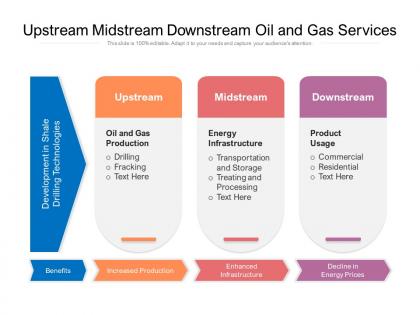
Upstream midstream downstream oil and gas services




Try Before you Buy Download Free Sample Product
 Impress Your
 Audience
 100%
100% Editable
 Save Hours
 of Time


Our Upstream Midstream Downstream Oil And Gas Services are explicit and effective. They combine clarity and concise expression.
People who downloaded this PowerPoint presentation also viewed the following :
Upstream midstream downstream oil and gas services with all 2 slides:
Give your audience a fulfilling experience. They will find our Upstream Midstream Downstream Oil And Gas Services elevating.

FAQs for Upstream midstream downstream oil
Honestly, AI-powered drilling and advanced fracking are where it's at right now. Machine learning predicts equipment failures before they happen - saves a fortune on downtime. CO2 injection for enhanced recovery is blowing up too, mostly because everyone's obsessed with the environmental stuff these days (which isn't bad, just saying). Digital twin tech lets you test everything virtually first. Super smart move. Oh, and if you want quick wins? Start with AI optimization on your current setup. That's your fastest path to actual returns instead of just throwing money at shiny new toys.
Yeah man, those environmental regs are gonna hit your budget hard. You're looking at major costs for monitoring equipment, compliance systems, all that fun stuff. The paperwork is absolutely brutal - seriously, it's like they want you to drown in forms. But here's the thing: you gotta factor these costs in upfront or you'll get slammed later. Fines are no joke and they can shut you down completely. On the flip side, it's actually pushing companies to get creative with cleaner tech. Stay on top of regulation changes though, because they shift constantly.
Honestly, data analytics has become huge for oil and gas companies. You can use it to pick better drilling spots by analyzing seismic data, figure out when equipment's about to break down, and tweak production rates on the fly. The waste reduction alone is worth it - though I know some old-school operators who still resist the tech shift. Algorithms catch patterns we'd never notice. Start with predictive maintenance if you're just getting into this stuff. That's where most companies see results fastest, and it's not as overwhelming as trying to overhaul everything at once.
Dude, three things you can't mess around with: solid equipment checks, proper crew training, and hitting those API/ISO standards. Your safety systems have to be rock solid - audits, incident reports, emergency drills, all of it. The paperwork's honestly brutal but whatever. Train everyone on blowout prevention and environmental stuff. But here's what really matters - build a culture where anyone can shut things down if something feels off. I've seen too many companies skip that part. It'll save your ass both safety-wise and when regulators come knocking.
Ugh, remote construction is brutal honestly. Getting equipment and people out there costs a fortune and takes forever. Most places have zero infrastructure - power cuts constantly, spotty internet, roads that barely exist. Weather will shut you down for weeks and destroy your timeline. Finding skilled workers willing to camp out in the middle of nowhere? Nearly impossible. Plus safety gets sketchy when you're hours from a hospital. My advice: double your timeline and budget, then add more padding. Trust me on this one.
Yeah it's more gradual than people think - not some overnight crash. Companies are already moving into offshore wind, hydrogen, carbon capture stuff. Makes sense since they know harsh environments and complex engineering already. Deepwater drilling guys? They can totally pivot to offshore wind installation. Honestly the writing's been on the wall for years so the smart operators saw this coming. I'd check which companies in your portfolio are already diversifying instead of just hoping they'll figure it out later. The ones sitting around doing nothing are gonna get left behind.
So basically there's three big things happening. Companies are drowning in new environmental regs and safety stuff - seriously, the compliance changes never stop. Digital transformation is huge too - everyone wants IoT sensors and better data analytics to actually run efficiently. Oil prices being all over the place means they're scrambling to cut costs wherever possible. Oh, and ESG compliance is where the money is right now. That plus anything digital/tech-related. Those are your golden tickets if you're trying to break into this space.
Look, geopolitical drama basically makes oil and gas prices go crazy. Markets freak out before anything even happens to actual supply - like with Russia-Ukraine or Middle East stuff. Traders start hedging against shortages the second there's conflict in major producing areas or talk of sanctions. Political mess in oil countries also screws with long-term investments, which hits future supply down the road. Honestly, it's wild how much prices can swing just on threats alone. For your planning, watch those political hotspots and build some wiggle room into your pricing models.
Honestly, start by mapping out who you're currently buying from - that'll show you where you're most screwed if something goes wrong. Get multiple suppliers for your critical stuff because putting everything on one company is just asking for trouble. Real-time tracking systems are worth the investment, trust me. You can catch problems early instead of scrambling later. Strong relationships with your main suppliers matter too - regular check-ins and honest feedback sessions. Oh, and have backup plans ready for when things inevitably hit the fan. The suppliers causing your biggest headaches? That's where to focus first.
So automation is basically cutting out manual work and human screwups in drilling and maintenance. AI can predict when equipment's about to fail before it actually does - saves you tons on repairs. Real-time drilling optimization adjusts everything automatically while you're working. The money side? Pretty solid returns when you factor in less downtime and fewer people needed on-site. Remote monitoring is a game-changer, especially offshore where you can't just drive over to check things. Honestly, I'd start with some small pilots on your less critical stuff first. No point jumping in the deep end right away.
Honestly, start with rock-solid geological assessments - don't cheap out on data collection, trust me. Spread your projects across different regions and asset types too. I've seen way too many companies get burned putting everything in one basin. Price hedging through futures or swaps will save your ass when markets tank. Oh, and safety/environmental compliance is huge - one regulatory screw-up can torpedo everything. Map out your worst-case scenarios first, then figure out how to protect against those specific risks. It's boring work but pays off.
So basically what happens is the big players keep buying each other up to get massive scale. Remember that Halliburton-Baker Hughes deal that got shut down? Same idea though - they want global reach and the ability to handle huge projects that smaller guys just can't do. The mid-tier companies get absolutely crushed because they can't match the pricing or scope. It's pretty ruthless honestly. Big fish eat the specialized tech from smaller ones too. For your planning stuff, just watch who's acquiring who because it'll directly mess with pricing and what services you can actually get in different areas. Market gets more consolidated every year.
Dude, carbon capture is gonna flip the whole oil/gas game upside down. Companies can't just drill and sell anymore - now they gotta capture their CO2 mess too. Pretty ironic if you ask me. But hey, there's money in it through carbon credits and gov incentives. The downside? Huge upfront costs for new infrastructure. You'll see operators retrofitting current sites and building storage facilities. My advice? Start setting aside cash for this shift because everyone's doing it. Companies that don't adapt are gonna get left behind fast.
Honestly, yeah you can totally do both. Start with pilot programs - pick one part of your business and test out predictive maintenance or renewable energy stuff. The upfront costs suck, I won't lie, but operational savings kick in faster than you'd think. ESG clients are getting pickier about sustainability metrics too, which is kinda annoying but also means it's becoming a real competitive edge. Carbon capture tech is getting better if that fits your industry. Once you see what actually works and gives decent ROI, then scale it up. Way less risky than going all-in from day one.
Dude, everyone wants digital skills right now. Data analytics, cybersecurity, IoT stuff - that's where the money is. Environmental compliance too since companies are obsessed with ESG metrics. Traditional certs still count though, don't abandon those completely. Project management is massive, especially if you've handled remote teams. Pick one digital thing that actually interests you and get certified this year. Oh, and brace yourself - literally every job posting mentions "digital transformation" now. It's like the new buzzword du jour or whatever. Remote work experience helps too if you've got it.
No Reviews