


Virtual Reality und Augmented Reality Powerpoint-Präsentationsfolien




Try Before you Buy Download Free Sample Product
 Impress Your
 Audience
 100%
100% Editable
 Save Hours
 of Time


Virtual Reality ist eine Technologie, die nahezu realistische und überzeugende Interaktionen in einer synthetischen oder virtuellen Umgebung erzeugt. Im Gegensatz dazu verbessert Augmented Reality die reale Welt, indem computergenerierte Objekte darauf projiziert werden. Schauen Sie sich unsere kompetent gestaltete Virtual Reality- und Augmented Reality-Vorlage an, die einen kurzen Überblick über die aktuelle Situation des Unternehmens gibt, indem sie sich auf die Geschäftsprobleme wie traditionelle Lern- und Gestaltungsmethoden konzentriert. Es enthält auch eine Folie, die aus Balkendiagrammen besteht, die die Marktgröße von virtuellen und erweiterten Realitäten zeigt. Darüber hinaus enthält es Folien zu Softwarearchitektur, verschiedenen Arten von Augmented Reality, Technologien und Komponenten, die in Augmented Reality verwendet werden. Darüber hinaus demonstriert diese VR- und AR-PPT-Fähigkeiten, die für AR-App-Entwickler erforderlich sind, wie z Budget für die Umsetzung. Schließlich umfasst dieses VR- und AR-Deck eine Roadmap für Virtual und Augmented Reality, die Auswirkungen der AR- und VR-Implementierung auf das Geschäft, Mixed Reality, Extended Reality und den Unterschied zwischen AR, VR und MR. Jetzt herunterladen.
People who downloaded this PowerPoint presentation also viewed the following :
Inhalt dieser Powerpoint-Präsentation
Folie 1 : Diese Folie stellt Virtual Reality und Augmented Reality vor. Geben Sie Ihren Firmennamen an und beginnen Sie.
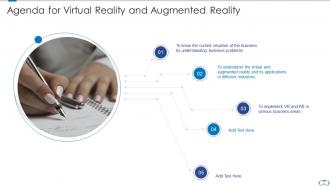
Folie 2 : Diese Folie zeigt die Agenda für Virtual Reality und Augmented Reality.
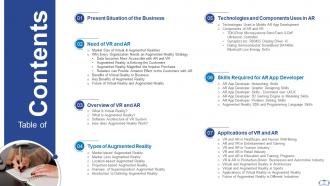
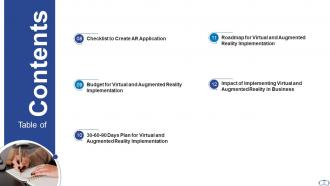
Folie 3 : Diese Folie zeigt das Inhaltsverzeichnis für die Präsentation.
Folie 4 : Dies ist eine weitere Folie, die das Inhaltsverzeichnis der Präsentation fortsetzt.
Folie 5 : Diese Folie zeigt Titel für Themen, die als nächstes in der Vorlage behandelt werden sollen.
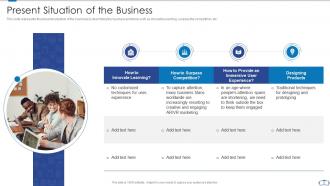
Folie 6 : Diese Folie stellt die Situation des Unternehmens dar, indem sie die geschäftlichen Probleme beschreibt.
Folie 7 : Diese Folie zeigt das Inhaltsverzeichnis für Virtual & Augmented Reality.
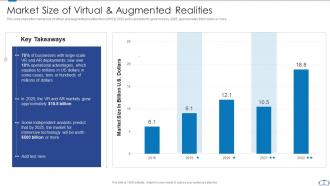
Folie 8 : Diese Folie zeigt die Marktgröße von virtuellen und erweiterten Realitäten von 2016 bis 2020.
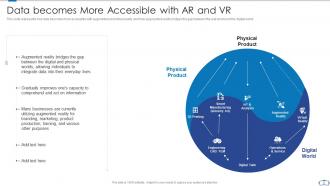
Folie 9 : Diese Folie zeigt, wie Daten mit erweiterter und virtueller Realität zugänglicher werden.
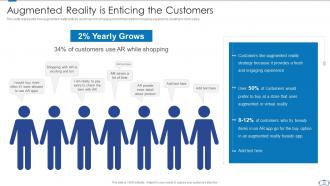
Folie 10 : Diese Folie zeigt, wie Augmented Reality die Kunden verführt.
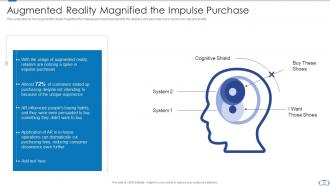
Folie 11 : Diese Folie zeigt Augmented Reality Magnified den Impulskauf.
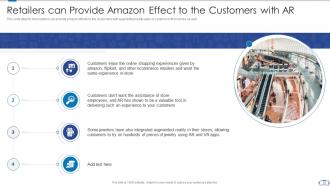
Folie 12 : Diese Folie zeigt, dass Einzelhändler den Kunden mit AR den Amazon-Effekt bieten können.
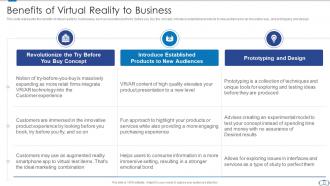
Folie 13 : Diese Folie stellt Unternehmen die Vorteile der virtuellen Realität vor, wie z.
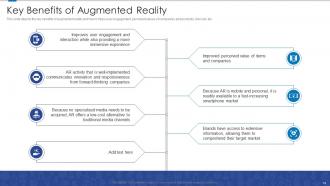
Folie 14 : Diese Folie zeigt die wichtigsten Vorteile von Augmented Reality und wie sie die Benutzerbindung unterstützt.
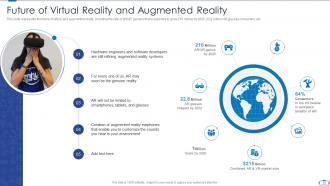
Folie 15 : Diese Folie stellt die Zukunft der virtuellen und erweiterten Realität dar, einschließlich der Quote der AR/VR-Gamer.
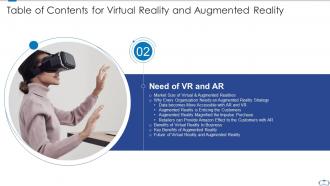
Folie 16 : Diese Folie zeigt das Inhaltsverzeichnis für Virtual & Augmented Reality.
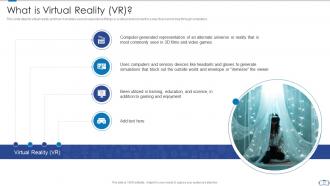
Folie 17 : Diese Folie zeigt die virtuelle Realität und wie sie es Benutzern ermöglicht, Dinge oder eine virtuelle Umgebung zu erleben.
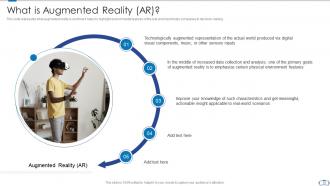
Folie 18 : Diese Folie zeigt, was Augmented Reality ist und wie es hilft, Umweltmerkmale der realen Welt hervorzuheben.
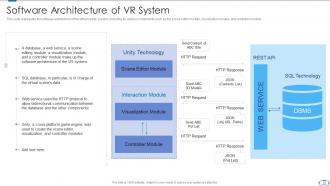
Folie 19 : Diese Folie stellt die Softwarearchitektur des Virtual-Reality-Systems dar, einschließlich seiner verschiedenen Komponenten.
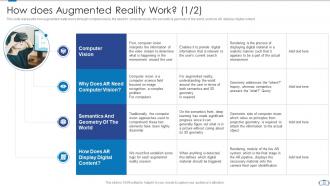
Folie 20 : Diese Folie stellt dar, wie Augmented Reality durch Computer Vision funktioniert, die Notwendigkeit von Computer Vision usw.
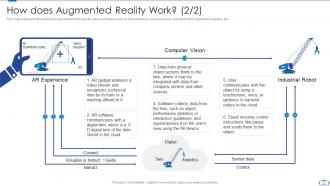
Folie 21 : Diese Folie zeigt die Funktionsweise von Augmented Reality und ihre verschiedenen Elemente.
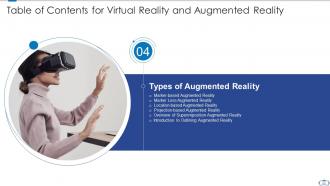
Folie 22 : Diese Folie zeigt das Inhaltsverzeichnis für Virtual & Augmented Reality.
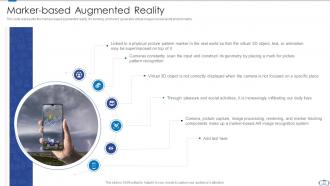
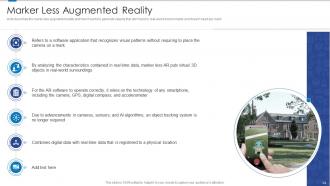
Folie 23 : Diese Folie stellt die markierte erweiterte Realität dar, wie sie funktioniert und wie sie virtuelle Bilder erzeugt.
Folie 24 : Diese Folie beschreibt die herstellerlose erweiterte Realität und wie sie funktioniert, um Objekte zu erzeugen, die nicht existieren.
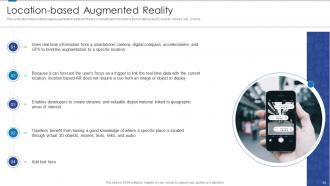
Folie 25 : Diese Folie beschreibt die ortsbezogene erweiterte Realität und wie es für Touristen von Vorteil ist, Orte zu finden.
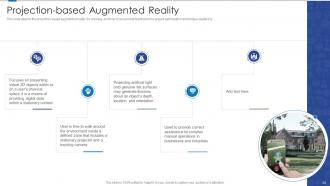
Folie 26 : Diese Folie zeigt die projektionsbasierte Augmented Reality, ihre Funktionsweise und wie sie Feedback für die Projektoptimierung liefern kann.
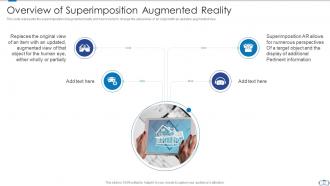
Folie 27 : Diese Folie zeigt die Überlagerung von Augmented Reality und wie sie funktioniert, um die tatsächliche Ansicht eines Objekts zu verändern.
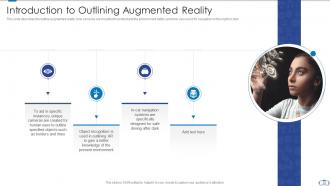
Folie 28 : Diese Folie beschreibt den Umriss von Augmented Reality, wie Kameras montiert werden, um die Umgebung besser zu verstehen.
Folie 29 : Diese Folie zeigt das Inhaltsverzeichnis für Virtual & Augmented Reality.
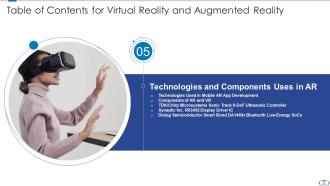
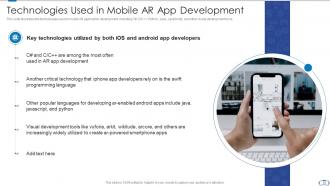
Folie 30 : Diese Folie veranschaulicht die Technologien, die bei der Entwicklung mobiler AR-Anwendungen verwendet werden, einschließlich C#, C/C++, Python usw.
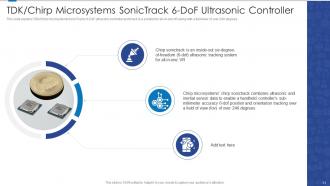
Folie 31 : Diese Folie erklärt TDK/Chirp Microsystems SonicTracks 6-DoF-Ultraschall-Controller und wie er eine Lösung für All-in-One-VR ist.
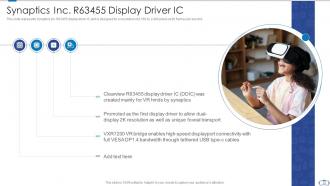
Folie 32 : Diese Folie repräsentiert Synaptics Inc. R63455 Display-Treiber-IC und ist für eine Auflösung von 2.160 x 2.400 Pixel ausgelegt.
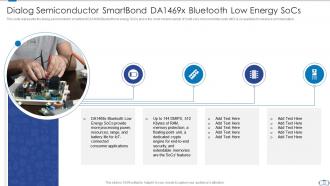
Folie 33 : Diese Folie präsentiert die Dialoghalbleiter Smartbond DA1469x Bluetooth Low Energy SoCs.
Folie 34 : Diese Folie zeigt das Inhaltsverzeichnis für Virtual & Augmented Reality.
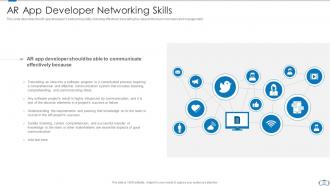
Folie 35 : Diese Folie beschreibt die Networking-Fähigkeiten des AR-App-Entwicklers, einschließlich der effektiven Übersetzung seiner Ideen an die Teammitglieder.
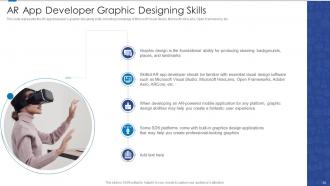
Folie 36 : Diese Folie stellt die Grafikdesignfähigkeiten des AR-App-Entwicklers dar, einschließlich Kenntnisse von Microsoft Visual Studio, Microsoft HoloLens, OpenFrameworks usw.
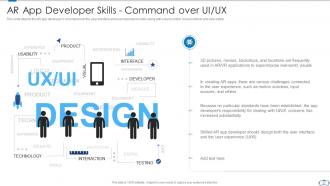
Folie 37 : Diese Folie zeigt die Befehlsgewalt des AR-App-Entwicklers über die Benutzeroberfläche und die Benutzererfahrungsfähigkeiten.
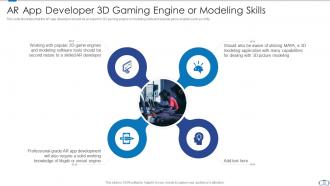
Folie 38 : Diese Folie veranschaulicht, dass der Entwickler von AR-Apps ein Experte für 3D-Gaming-Engine oder Modellierungsfähigkeiten sein sollte.
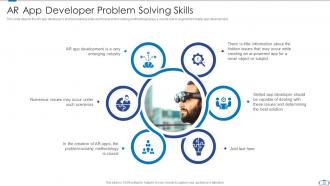
Folie 39 : Diese Folie zeigt die Fähigkeiten des AR-App-Entwicklers zur Problemlösung und wie die Problemlösungsmethodik eine entscheidende Rolle bei der Entwicklung von Augmented-Reality-Apps spielt.
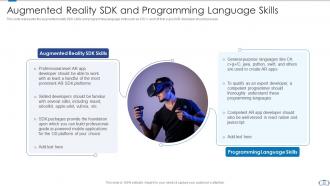
Folie 40 : Diese Folie zeigt Augmented Reality SDK und Programmiersprachenkenntnisse.
Folie 41 : Diese Folie zeigt das Inhaltsverzeichnis für Virtual & Augmented Reality.
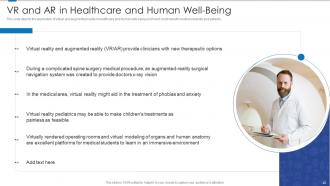
Folie 42 : Diese Folie zeigt die Anwendung von virtueller und erweiterter Realität im Gesundheitswesen und im menschlichen Wohlbefinden.
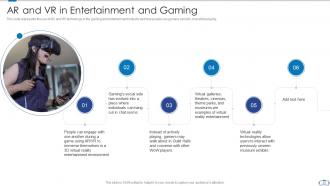
Folie 43 : Diese Folie repräsentiert den Einsatz von AR- und VR-Technologie in der Spiele- und Unterhaltungsindustrie.
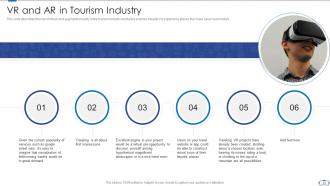
Folie 44 : Diese Folie beschreibt die Rolle von Virtual und Augmented Reality in der Tourismusbranche.
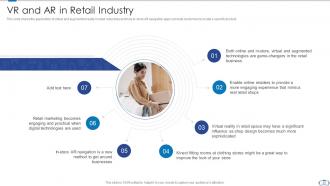
Folie 45 : Diese Folie zeigt die Anwendung von Virtual und Augmented Reality im Einzelhandel und wie AR-Navigations-Apps im Geschäft Kunden helfen können.
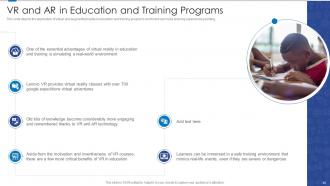
Folie 46 : Diese Folie zeigt die Anwendung von virtueller und erweiterter Realität in Bildungs- und Schulungsprogrammen.
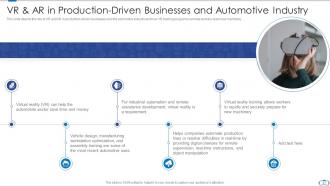
Folie 47 : Diese Folie zeigt VR & AR in produktionsgetriebenen Unternehmen und der Automobilindustrie.
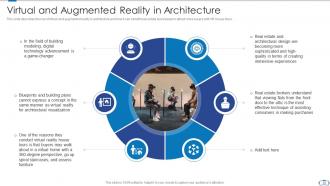
Folie 48 : Diese Folie präsentiert Virtual und Augmented Reality in der Architektur.
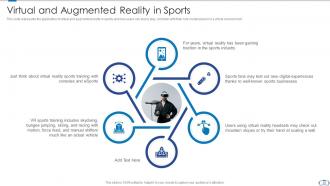
Folie 49 : Diese Folie zeigt die Anwendung von Virtual und Augmented Reality im Sport und wie Benutzer stehen, spielen und trainieren können.
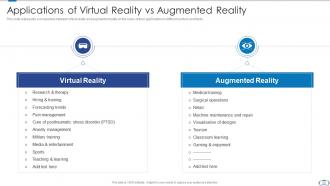
Folie 50 : Diese Folie stellt einen Vergleich zwischen Virtual Reality und Augmented Reality anhand ihrer Anwendungen in unterschiedlichen Branchen und Feldern dar.
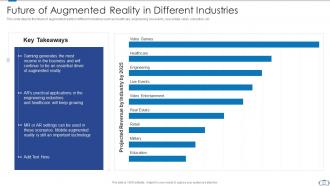
Folie 51 : Diese Folie zeigt die Zukunft von Augmented Reality in verschiedenen Branchen wie Gesundheitswesen, Maschinenbau usw.
Folie 52 : Diese Folie zeigt das Inhaltsverzeichnis für Virtual & Augmented Reality.
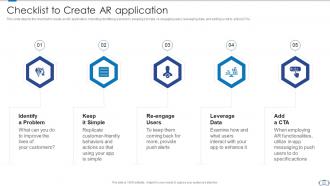
Folie 53 : Diese Folie zeigt die Checkliste zum Erstellen einer AR-Anwendung, einschließlich der Identifizierung eines Problems, der Vereinfachung, der erneuten Einbindung von Benutzern usw.
Folie 54 : Diese Folie zeigt das Inhaltsverzeichnis für Virtual & Augmented Reality.
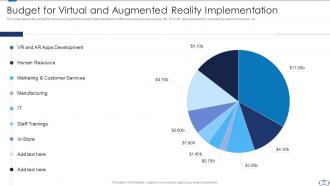
Folie 55 : Diese Folie zeigt das Budget für die Implementierung von Virtual und Augmented Reality in verschiedenen Geschäftsbereichen.
Folie 56 : Diese Folie zeigt das Inhaltsverzeichnis für Virtual & Augmented Reality.
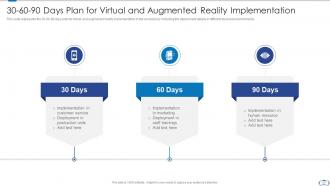
Folie 57 : Diese Folie stellt den 30-60-90-Tage-Plan für die Implementierung von Virtual und Augmented Reality im Unternehmen dar.
Folie 58 : Diese Folie zeigt das Inhaltsverzeichnis für Virtual & Augmented Reality.
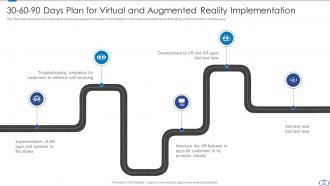
Folie 59 : Diese Folie beschreibt die Roadmap für die Implementierung von Virtual und Augmented Reality im Unternehmen.
Folie 60 : Diese Folie zeigt das Inhaltsverzeichnis für Virtual & Augmented Reality.
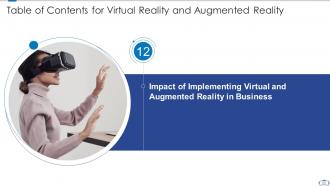
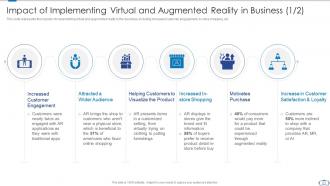
Folie 61 : Diese Folie stellt die Auswirkungen der Implementierung von Virtual und Augmented Reality im Unternehmen dar, einschließlich erhöhter Kundenbindung, Einkaufen im Geschäft usw.
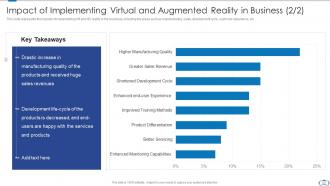
Folie 62 : Diese Folie zeigt die Auswirkungen der Implementierung von Virtual und Augmented Reality auf Unternehmen.
Folie 63 : Diese Folie trägt den Titel „Zusätzliche Folien“, um voranzukommen.
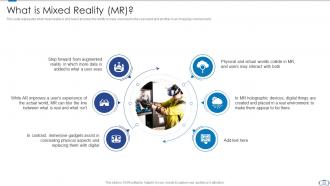
Folie 64 : Diese Folie stellt dar, was Mixed Reality ist und wie es die Möglichkeit bietet, eine Hand in der realen Welt und eine andere in einer imaginären Umgebung zu haben.
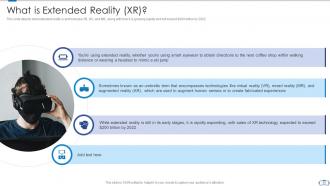
Folie 65 : Diese Folie zeigt, was Extended Reality ist und umfasst VR, AR und MR.
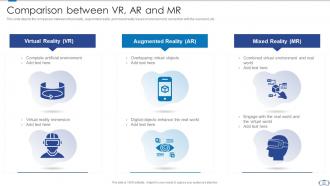
Folie 66 : Diese Folie zeigt den Vergleich zwischen virtueller Realität, erweiterter Realität und gemischter Realität basierend auf der Umgebung.
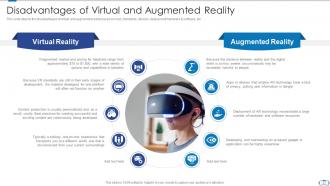
Folie 67 : Diese Folie zeigt die Nachteile von Virtual und Augmented Reality basierend auf den Kosten.
Folie 68 : Diese Folie zeigt Symbole für Virtual Reality und Augmented Reality.
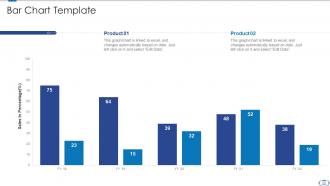
Folie 69 : Diese Folie zeigt ein Balkendiagramm mit zwei Produktvergleichen.
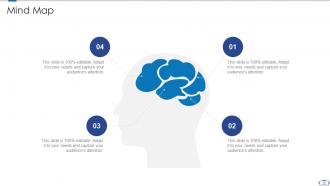
Folie 70 : Diese Folie zeigt Mind Map mit verwandten Bildern.
Folie 71 : Diese Folie zeigt Haftnotizen. Posten Sie hier Ihre wichtigen Notizen.
Folie 72 : Dies ist eine Folie zur Ideengenerierung, um eine neue Idee darzulegen oder Informationen, Spezifikationen usw. hervorzuheben.
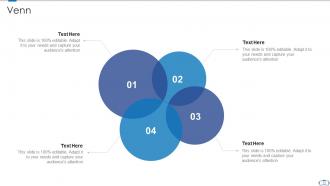
Folie 73 : Diese Folie zeigt ein Venn-Diagramm mit Textfeldern.
Folie 74 : Dies ist unsere Zielfolie. Geben Sie hier die Ziele Ihres Unternehmens an.
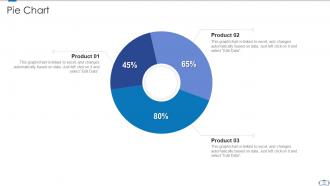
Folie 75 : Diese Folie zeigt ein Tortendiagramm mit Daten in Prozent.
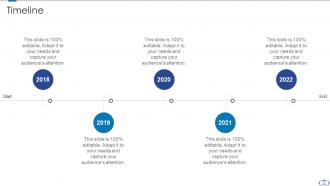
Folie 76 : Dies ist eine Timeline-Folie. Zeigen Sie hier Daten zu Zeitintervallen an.
Folie 77 : Dies ist eine Dankeschön-Folie mit Adresse, Kontaktnummern und E-Mail-Adresse.
Virtual Reality und Augmented Reality Powerpoint-Präsentationsfolien mit allen 82 Folien:
Verwenden Sie unsere Powerpoint-Präsentationsfolien für Virtual Reality und Augmented Reality, um Ihre wertvolle Zeit effektiv zu sparen. Sie sind gebrauchsfertig und passen in jede Präsentationsstruktur.








FAQs for Virtual reality and augmented reality
So VR basically throws you into a completely different world - you slap on a headset and boom, you're somewhere else entirely. AR is more like... it just adds stuff on top of what you're already seeing. Think Pokemon GO or those weird Instagram filters. VR's great for gaming and virtual meetings, but you need actual VR gear. AR works fine through your phone camera, which is honestly way more convenient. If you're picking one for whatever you're working on, just think about whether people need to still see their real surroundings or not. That'll tell you which way to go.
Honestly, VR and AR are pretty game-changing for education right now. Students can literally walk through ancient Rome or mess around with 3D molecules instead of just reading about them. Field trips become way more exciting when you can visit places that don't even exist anymore. Medical students get to practice surgery without, you know, accidentally hurting anyone. It's perfect for hands-on learners who zone out during regular lectures. Engineering programs love the simulations too. Oh, and if you're thinking about this for work training - definitely test some existing VR apps first before spending big money on custom stuff.
VR/AR makes remote work feel way more human, honestly. Instead of those awful tiny video windows, you get shared virtual spaces where everyone actually feels present. Your team can mess around with 3D models together, brainstorm on virtual whiteboards - it's wild how natural the conversations feel. AR's cool too since it overlays digital stuff onto your real workspace, so you're not completely disconnected from reality. The spatial awareness thing is huge compared to regular calls. I'd try Spatial or Horizon Workrooms first - see what your team vibes with. Way better than another Zoom meeting.
Healthcare's crushing it with VR right now - surgeons rehearsing tricky operations, which honestly makes me feel way better about going under the knife. Education's also huge, like kids virtually walking through ancient Rome instead of just reading about it. Retail jumped in fast too. You can try on clothes or see how furniture looks in your actual room. Gaming's obvious, but manufacturing surprised me - they're training workers without the safety risks. Real estate's doing virtual tours now. If you're thinking investment or career switch, those sectors are throwing serious money at this stuff.
Dude, VR and AR are game-changers for engagement - like, your brain literally thinks you're there instead of staring at a flat screen. I've caught myself trying to lean on tables that don't exist! It's wild how much more connected you feel to everything. AR brings cool interactive stuff into your actual space, while VR just teleports you somewhere completely different. People stay hooked way longer than with regular games. Oh, and the engagement numbers blow traditional stuff out of the water. If you're building anything entertainment-wise, seriously consider how these could make users feel like they're actually part of it.
Dude, the frame rate thing will kill you - anything under 90fps and people get sick instantly. Each headset works totally different too, so cross-platform stuff is a pain. UI design? Throw out everything you know because spatial interfaces are weird as hell. You'll constantly hit hardware walls that force you to make graphics look worse than you want. Oh, and testing sessions are brutal - my neck hurts just thinking about putting headsets on all day. Honestly though, keep your first project super basic. Get the core interactions working smooth before you even think about the flashy stuff.
Honestly, VR and AR could totally change how people shop. Think AR mirrors where customers try on clothes without actually putting them on. For furniture, VR lets them see how pieces look in their actual living room - way better than guessing from a tiny website photo. You could also do AR apps that show product details when people scan items with their phones. Maybe start with something simple like virtual try-ons? See how customers react first. Oh, and virtual store tours are pretty cool for online shoppers who miss browsing in person. The furniture visualization thing really is a game-changer though.
Oh man, UX is everything in VR/AR. Seriously - bad design will have people ripping headsets off in 5 minutes. You're working with totally new stuff like spatial interfaces and gesture controls that nobody really knows how to use yet. I've definitely thrown controllers after dealing with terrible menu systems lol. The thing is, motion sickness happens fast if viewing angles are weird or navigation feels off. Good design makes interactions feel natural instead of like you're fighting the technology. Test with real people constantly though - what makes sense to you as the designer usually doesn't click for actual users.
So basically healthcare workers are doing two cool things with VR/AR right now. Training is huge - med students can mess up virtual surgeries without killing anyone, which seems pretty smart honestly. They're also using AR to overlay 3D anatomy stuff on real patients during procedures. Treatment-wise, it's wild how much VR helps with pain management and PTSD therapy. Patients get so immersed they literally forget they're hurting. Physical rehab too - you can relearn motor skills in these virtual worlds. My cousin's a nurse and says their hospital just got some VR training modules. You should totally ask around at your place!
So basically there's three big issues with VR/AR stuff. Privacy is huge - they're tracking your eye movements, how you walk around, even emotional reactions. That's honestly pretty creepy when you think about it. Then there's the addiction thing, which makes sense since people already can't put their phones down. Reality distortion is the third one - people getting too lost in virtual worlds. Oh, and there's accessibility problems plus it'll probably make the digital divide worse between rich and poor. If you're working on this tech, just be upfront about what data you're collecting and build in some usage limits so people don't go completely overboard.
VR/AR privacy is basically a mess right now - companies are figuring it out as they go. These platforms grab insane amounts of personal data though. Eye tracking, how you move, biometric stuff. Way more invasive than regular apps. Some companies are getting better about letting you opt in/out and keeping data on your device instead of uploading everything. The EU's cracking down hard with GDPR too, which helps. Honestly, I'd dig through those privacy settings before jumping into any platform. See what you can actually turn off - might surprise you how much control you don't have.
Honestly, the big thing to watch is haptic feedback getting crazy good - like you'll actually feel textures and stuff. Standalone headsets are pretty much taking over, which makes sense since nobody wants cables everywhere. AR glasses are finally starting to look normal instead of those weird bulky things. Mixed reality is kinda blending everything together now, and AI's making the whole experience way more personalized. The metaverse buzz thankfully died down, but companies are actually using this stuff for training employees and remote meetings. Apple's Vision Pro really lit a fire under everyone else. I'd definitely keep tabs on what Meta's doing with Quest and see who's partnering up next.
VR and AR are changing travel in crazy ways. Hotels now let you walk through rooms virtually before booking - honestly, it beats scrolling through those generic photos. Museums offer remote tours, and you can basically "visit" destinations from your couch. The AR navigation stuff is actually super useful - point your phone at signs in Tokyo and boom, instant translation. Historical sites are doing AR overlays too, which is pretty cool. Oh, and apparently booking rates jump way up when people try VR previews first. Makes sense though, right? If you can actually see what you're getting into, you're way more likely to book it.
Honestly, it's mostly weight, battery life, and cost holding things back. Current headsets are way too clunky and pricey for regular people. Better displays and more powerful chips in smaller packages would help, but battery tech is the real killer - especially for AR glasses you'd actually want to wear all day. Field of view still sucks too, and we're figuring out motion tracking without those annoying external sensors. Though once someone nails the lightweight + affordable + all-day battery combo, I think adoption will take off pretty fast.
Honestly, measuring VR/AR ROI is kinda tricky but totally doable. Track the obvious stuff first - cost savings, faster training times, better sales numbers. But don't ignore the softer wins like happier employees or customers who actually finish tasks now. Here's the thing though: some benefits won't show up for months. Get your baseline numbers before you launch anything, then check monthly for at least six months. I'd focus on whatever actually moves the needle for your business - maybe it's less travel costs from VR meetings or people not bailing on AR training halfway through. Start small and track everything you can think of.
-
Designs have enough space to add content.
-
Top Quality presentations that are easily editable.