

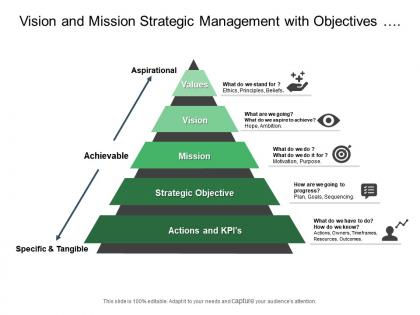
Vision and mission strategic management with objectives values and action





Try Before you Buy Download Free Sample Product
 Impress Your
 Audience
 100%
100% Editable
 Save Hours
 of Time


Enable folks to indulge in humorous interaction with our Vision And Mission Strategic Management With Objectives Values And Action. It helps encourage jokes.
People who downloaded this PowerPoint presentation also viewed the following :
Vision and mission strategic management with objectives values and action with all 5 slides:
Cast the net with our Vision And Mission Strategic Management With Objectives Values And Action. Haul in the praises with your views.


FAQs for Vision and mission strategic management with objectives
Start with vision/mission statements and your SWOT analysis - that's where you'll spend most of your time anyway, digging into strengths, weaknesses, all that good stuff. Then map out clear objectives and how you'll actually execute them. Honestly, the implementation part is where most people mess up. Don't skip the monitoring piece either because I've watched so many plans just sit there doing nothing. Getting everyone on board early saves headaches later. My two cents? Keep your first plan pretty basic. You can always get fancy once your team knows what they're doing.
Look, SWOT analysis is basically your reality check before making big moves. You map out your strengths, weaknesses, opportunities, and threats in four boxes. Simple enough. But here's the thing - the magic happens when you start connecting the dots between them. Like, maybe your biggest strength perfectly lines up with a market opportunity you hadn't considered. Or you realize a threat could totally expose that weakness you've been ignoring. I always tell people to do this as a team thing, not just fill out some template alone. Way better conversations come out of it, and honestly, other people will catch blind spots you'd miss.
Market trends will totally derail your strategy if you're not watching. Customer tastes change overnight, tech evolves, economy shifts - suddenly your plan looks ancient. Blockbuster learned this the hard way (still can't believe they passed on Netflix). Don't just do yearly reviews - you need ongoing market intel feeding into quarterly pivots. Stay flexible but keep your main direction intact. Oh, and set up regular trend sessions with your team. The companies that survive are the ones constantly adjusting without losing their core focus.
Look, external stuff basically forces you to keep changing your plans - they're total wild cards that can destroy everything you've worked on. Market crashes, inflation spikes, sudden booms... they all mess with your budget, what customers actually want, and who you're competing against. It's honestly like GPS recalculating your route every five minutes (super annoying but necessary). You've gotta build wiggle room into your planning process. That way when economic chaos hits - and it will - you can pivot fast. Keep tabs on the big indicators and have backup plans sitting there ready to go.
Honestly, you can't skip stakeholder engagement if you want your strategy to actually work. Map out who matters most first - customers, employees, investors, community folks. Get their input early because they'll spot problems you'd totally miss. People will fight strategies they had zero say in, but they'll back stuff they helped create. I learned this the hard way at my last job. Set up regular check-ins throughout your planning. Focus on the stakeholders who can make or break your success. Trust me, it's way easier than dealing with pushback later.
Honestly, you gotta track both the hard numbers and the fuzzy stuff to really know what's going on. Pick 3-5 metrics that actually tie to your goals - revenue, customer satisfaction, whatever matters most for your thing. I made the mistake once of measuring activities instead of real outcomes, so watch out for that. Employee engagement and stakeholder feedback might seem soft, but they're usually pretty good predictors of whether you'll succeed long-term. Check in quarterly and don't be afraid to change course if the data's telling you something's off.
Honestly, the two big killers I see are fuzzy communication and trying to bite off way too much. Teams will set these super vague goals like "increase market share" - okay, but by how much and when exactly? Then there's analysis paralysis, which drives me crazy. Companies spend forever tweaking their perfect strategy while competitors are already out there doing stuff. Keep your objectives concrete and measurable. Talk about them constantly - like, annoyingly often. Build in regular check-ins so you can pivot when needed. Sometimes you just gotta start moving and figure it out as you go.
Dude, tech makes strategic planning so much easier. Real-time dashboards show you what's actually happening instead of guessing. AI spots market trends you'd miss, and collaboration tools keep everyone on the same page - which honestly saves you from those painful "wait, what are we doing again?" meetings. There's tons of project management software for tracking your initiatives too. The annoying part? Way too many options exist. I'd start basic though - grab a decent dashboard for your KPIs and pick one collaboration platform. Once your team's working off the same live data, everything clicks into place way faster.
So there's basically three layers to this stuff. Corporate strategy is the big picture - like should Apple even be making phones AND computers? Business strategy gets more specific - how does iPhone actually beat Samsung? Then functional strategy is where each department figures out their piece of the puzzle. Marketing does their thing, operations does theirs, etc. You really want all three levels talking to each other though, or you'll have teams going in totally different directions. Which honestly happens more than you'd think. It's like zooming out from satellite view all the way down to street level - each layer needs the others to actually work.
Think of strategic alignment like getting everyone rowing in the same direction - sounds cheesy but it actually works. Your ROI goes up, stuff gets done faster, and people aren't constantly confused about priorities. Right now you're probably wasting energy on initiatives that fight each other (happens to literally every company I've seen). The fix? Audit your current projects and see which ones contradict your main goals. Then make sure future decisions support what you're actually trying to accomplish. It's wild how much smoother things run when departments aren't accidentally working against each other.
Start with the 2x2 matrix thing - seriously works so well for plotting different futures around your two main unknowns. Build 3-4 scenarios that aren't just "everything's great" vs "world ends." Each needs to feel real, like something your team can picture happening. Cross-impact analysis shows how factors mess with each other, while morphological analysis splits complex stuff into pieces. Getting different people involved is huge - they'll catch things you totally missed. Oh and once you have scenarios, run your current plan through each one. Set up some early warning signs you can actually track too.
Honestly, culture stuff can totally derail your whole plan if you're not careful. Most people forget how much your company's vibe affects everything - like how fast decisions get made or whether people actually embrace change. Some teams are super hierarchical, others hate taking risks. It gets even messier if you're rolling things out internationally because then you're dealing with completely different cultural norms too. My advice? Figure out early if your culture's ready for what you're proposing. Don't just tack on the culture piece later - that never works. Build it right into your timeline from day one.
Think of competitive advantage as your company's superpower - whatever makes customers pick you over everyone else. Price wars suck and nobody really wins those. You need something harder to copy, like better tech or amazing service or whatever. Here's the thing though - it has to actually matter to customers, not just sound cool in meetings. Your whole strategy should revolve around this advantage. Which markets to enter, where to spend money, how to talk about your brand. The tricky part is keeping that edge sharp over time. So what genuinely sets you apart?
Dude, shorter planning cycles are key - quarterly beats those ancient yearly plans that are dead on arrival. Cross-functional teams help too since they can actually pivot when things change. The worst companies I've worked with? Still doing those insane 5-year strategic plans like we're living in the Clinton era lol. Watch your metrics constantly and have clear decision protocols ready, otherwise you'll get stuck in meeting purgatory when you need to move fast. Honestly just try cutting your next planning cycle in half first and see what happens.
Think of innovation as what pushes your strategy beyond the obvious stuff. It's how you spot new opportunities and actually get ahead of competitors instead of just keeping up. Most successful strategic moves have some innovative twist - could be new tech, a different process, or honestly just approaching things from a weird angle. Without it, you're basically following everyone else's playbook. When you're planning something big, try asking "what if we did this completely backwards?" Sounds silly but it works. The best strategies don't just solve problems - they solve them in ways nobody expected.
-
must purchase
-
Amazing product with appealing content and design.
-
Very unique, user-friendly presentation interface.