


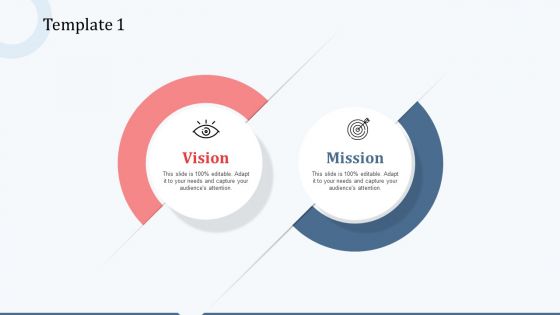
Template 1 vision mission and values ppt powerpoint presentation summary




Try Before you Buy Download Free Sample Product
 Impress Your
 Audience
 100%
100% Editable
 Save Hours
 of Time


Our Template 1 Vision Mission And Values Ppt Powerpoint Presentation Summary are topically designed to provide an attractive backdrop to any subject. Use them to look like a presentation pro.
People who downloaded this PowerPoint presentation also viewed the following :
Template 1 vision mission and values ppt powerpoint presentation summary with all 2 slides:
Use our Template 1 Vision Mission And Values Ppt Powerpoint Presentation Summary to effectively help you save your valuable time. They are readymade to fit into any presentation structure.
FAQs for Template 1 vision mission and values ppt
So you need three main parts: Vision (where you're going), Mission (what you do now), and Values (how you work). Keep each section to 1-3 short statements - seriously, nobody reads past that anyway. Add some brainstorming questions to help people get started, and make the whole thing easy to scan. Oh, and here's something most people skip - throw in a section where you can test your statements against real situations. Like, would your "values" actually hold up when you're dealing with an angry client at 5pm on Friday? That's how you know if they're worth keeping.
Here's my take: paint a picture that people can actually see in their heads, not some corporate word salad. Skip the buzzwords - use concrete, vivid language instead. Stories work way better than abstract concepts, especially ones showing real impact on actual people. Test it on a few people you trust first. If they look bored or confused, you're not there yet. The best visions honestly feel like "duh, of course that's where we're headed" once you hear them explained right. Oh, and stay consistent when you're sharing it - mixed messages kill momentum fast.
Think of your mission statement like a GPS for big decisions. Does this opportunity actually get you closer to your goal? I swear, so many companies completely abandon their mission the second something flashy comes along - it's wild. Your mission should be the first thing you check when weighing options. Short sentences work too. The companies that actually stick to theirs? They're the ones making smart strategic moves instead of chasing every trend. Just put it right there in your planning meetings - honestly, it'll stop you from wasting time and money on random detours.
Honestly, those values mean nothing if they're just decorating your office walls. When hiring, dig into how people actually behave - not what they claim to believe. I always ask candidates about specific situations they've handled. Then bake those values into everything: how you recognize good work, review performance, make tough calls. The real test? Whether your managers consistently model this stuff themselves. I've watched so many companies fail here because leadership talks a good game but doesn't walk it. Your people need to see values in action daily, not just remember some poster by the coffee machine.
Tesla nails it with "accelerate the world's transition to sustainable energy" - clear and huge at the same time. Amazon just says "be Earth's most customer-centric company" but that simple line drives literally everything they do. Disney wants to "entertain, inform and inspire people around the globe" which honestly sounds cheesy but it works for them. The difference? These aren't just pretty words for the website. You can actually picture decisions being made based on them. When you're writing yours, test it - would this help you choose between two real options, or is it just wall decoration?
Yeah, just swap out the language for your specific industry. Healthcare? Talk about "patient outcomes." Manufacturing? Go with "sustainable practices." Your mission needs to actually reflect what your industry does and who it serves. Values are honestly where most companies screw up - they just copy generic stuff instead of thinking about their actual culture. Tech companies should hit on innovation and being agile. Financial services? Trust and compliance all day. But here's the thing - don't just throw in buzzwords because they sound good. Make sure it actually matches how your company operates, or it'll feel fake as hell.
Honestly, I'd mix a few different approaches here. Anonymous surveys are your best bet for getting real honest feedback - people won't sugarcoat things when they know it's private. SurveyMonkey or even just Google Forms work fine. Focus groups are solid too if you want to dig deeper into the reasoning behind people's answers. One-on-ones take forever but sometimes catch stuff group discussions miss. For remote teams, Slack polls or Miro boards make it super easy to contribute. Don't just pick one method though - you'll get way better insights using a combo of these. Trust me on that one.
Honestly? Every 3-5 years is the standard advice, but it really depends on your industry. If you're in tech, maybe check annually since things move so fast. Traditional businesses can probably wait longer. Here's the thing though - timing isn't everything. When your vision statement starts feeling disconnected from what you actually do day-to-day, that's when you know it's time. Big leadership shake-ups, pivoting your business model, or major market changes are all red flags to revisit sooner. Don't just change them because you're bored, but if they feel stale or irrelevant? Time to workshop.
Ugh, don't fall into the generic corporate speak trap! You know those mission statements that sound like they could belong to literally any company? Skip that entirely. Also resist copying what sounds good from other places - it's super obvious when you do. Keep your vision focused on the future, mission about actual action. Values should matter for real daily decisions, not just look pretty on a wall. Oh and don't try cramming everything important into these statements. They need to stick in people's heads, not be novels. Definitely run them by your team first - you'll know right away if they're gonna make people cringe.
Honestly, having that vision/mission stuff written out clearly is a game changer. Your team actually knows what you're working toward instead of just wandering around confused. People get way more invested when they can see the bigger picture laid out - like, they actually *care* about showing up. Communication becomes so much smoother too since everyone's on the same page. I watched one team go from total chaos to actually productive meetings once they nailed this down. Just don't make it corporate nonsense that sounds good but means nothing. Workshop it with your key people first so they feel like they helped build it, not like you're forcing some mission statement down their throats.
Start with how your people actually talk about the company - that's the real test. Are they genuinely bought-in or just parroting corporate speak? Check employee engagement through retention rates and internal surveys about purpose connection. I'd also track how often your VMV naturally comes up in meetings (not forced mentions). Customer brand perception surveys show if your messaging lands externally. Recruitment's another good indicator - strong values attract better talent. Quarterly pulse surveys asking if leadership actually walks the walk work well too. Oh, and notice if people reference your values when making decisions without being prompted.
Honestly, a solid mission statement is like giving people a reason to actually *care* about your brand beyond just buying stuff. When customers get what you stand for, they feel connected to something bigger. Think about how people obsess over brands that support causes they believe in - same principle. That emotional connection keeps them loyal even when competitors offer better deals or you raise prices. The key is making sure your mission actually matches what your audience values (not just some generic feel-good nonsense). Then you've gotta walk the walk consistently.
Honestly, just make sure everything sounds the same - your website, social posts, all of it. Nobody remembers boring corporate vision statements, so tell an actual story instead. Show concrete examples of how you're living it through your products or community stuff. Get your employees hyped about it first - they're way better at spreading the word than any marketing campaign. Oh, and repetition is key but don't be weird about it. Weave it into presentations and conversations naturally. I'd start by checking where your vision shows up now and see what's missing.
Ditch those boring Word docs - nobody reads them anyway. Try Canva or Prezi for templates that actually look good. Miro's great if you want teams brainstorming together live (though honestly, people argue less when they're building stuff collaboratively). Google Docs works fine too, just way better than email attachments. For sharing company-wide, throw them on your intranet or make QR codes so people can pull them up on their phones. Notion's cool because the documents can actually change over time instead of collecting dust. Start with whatever your team already uses daily - don't overcomplicate it.
Think of company values like your decision-making cheat sheet. They knock out options that don't fit what you stand for right away. Got a choice between being transparent or keeping quiet? If openness is a core value, boom - decision made. Honestly, this saves so much time because you're not reinventing the wheel every single time something comes up. The trick is actually writing these values down and making sure everyone knows them. Otherwise you'll have people making calls based on totally different principles, which gets messy fast.
-
Content of slide is easy to understand and edit.
-
Great experience, I would definitely use your services further.
-
Great quality slides in rapid time.
-
Use of icon with content is very relateable, informative and appealing.