


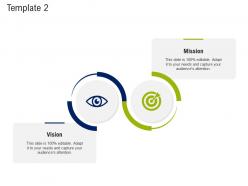
Template mission and vision statement ppt ideas





Try Before you Buy Download Free Sample Product
 Impress Your
 Audience
 100%
100% Editable
 Save Hours
 of Time


Our Template Mission And Vision Statement Ppt Ideas are topically designed to provide an attractive backdrop to any subject. Use them to look like a presentation pro.
People who downloaded this PowerPoint presentation also viewed the following :
Template mission and vision statement ppt ideas with all 2 slides:
Use our Template Mission And Vision Statement Ppt Ideas to effectively help you save your valuable time. They are readymade to fit into any presentation structure.
FAQs for Template mission and vision
You'll want to nail down three things: your purpose, core values, and where you're headed. Mission explains why you exist and what value you bring to people. Vision is your big-picture future goals - dream a little here. Keep both short and memorable, but honestly, skip the corporate buzzword nonsense everyone does. Make them specific enough to actually help when you're making tough calls, though not so narrow they become irrelevant next year. I'd start by figuring out your real purpose first. Why does your company matter? Then work backwards from there and refine until it feels right.
Dude, nobody wants to stare at a wall of text during presentations - instant eye-glaze territory. Break up your mission/vision with some visual hierarchy, maybe bold the key phrases or use icons that actually match your values. Colors should vibe with your brand too. If you've got metrics or goals, throw in a simple chart or infographic. I'm kind of obsessed with the "one visual per concept" rule - keeps things clean without looking like a PowerPoint from 2003. Don't go crazy with animations though, that stuff's distracting. Test it on someone first because what looks good to you might be confusing to others.
Honestly, the worst thing you can do is make them super generic or way too wordy. Like, if it's a whole paragraph, forget it - no one's remembering that. Skip all the corporate nonsense too ("synergistic solutions" - ugh, seriously?). Your statement shouldn't sound like every other company in town could slap their name on it. Make it specific to what actually makes you different. Keep it short and test it out loud first. If you stumble reading it or it sounds weird when you say it, definitely simplify. Oh, and make sure your team actually connects with it, not just the executives.
Honestly, just ditch all that corporate BS from the templates. Talk to people in different departments and figure out how you guys actually speak. Like, if your startup says "scrappy innovation" instead of boring stuff like "operational excellence," use that! Templates are basically just rough drafts anyway. Throw in your company's backstory, weird inside jokes, whatever makes you different. I always tell people - if it sounds like it came from a business textbook, you're doing it wrong. The whole point is making it feel authentically yours, you know?
Dude, you absolutely need stakeholder input for this stuff. Without it, you'll just end up with another boring corporate statement that nobody cares about. Talk to your employees, customers, leadership - even community people if that makes sense. I've watched companies skip this part and their mission statements are basically meaningless. Ask them what they think your company's real purpose is. What impact do you have? Where should you be heading? Structure some interviews or surveys around those questions. Figure out your key groups first, then dig into what they see as your core direction. Honestly, it's the difference between something authentic and total fluff.
Start by figuring out where you want to be in like 5-10 years, then work backwards from there. Map out your big strategic goals first. Then honestly ask yourself - does your current mission statement actually help you get there? I've seen so many companies where the vision says "industry leader" but all their goals are about being super niche. Makes zero sense. Most people write these statements once and forget about them completely. You should probably review yours every quarter when you're doing strategic planning anyway. Otherwise you'll end up with this weird disconnect between what you say you're doing and what you're actually trying to achieve.
Don't let them become fancy wall decorations nobody reads. Stick them everywhere people actually look - email signatures, break rooms, new hire packets. Leadership has to bring them up in meetings and reference them when making decisions, otherwise it's just theater. Host team discussions about what these statements mean for everyone's day-to-day work. Honestly, I've seen too many companies do the big reveal presentation then never mention them again. The trick is weaving them into regular conversations so they feel like actual guidelines, not just pretty words someone in corporate wrote.
So basically it comes down to your "why" - nonprofits are all about fixing social problems like hunger or education gaps. For-profits? They're focused on creating value for customers and making money. Your nonprofit mission should tackle something specific you're trying to solve. For-profit missions are more about your unique value - what makes you different from competitors. Though honestly, half the corporate mission statements I see are so vague they could be anyone's. Same thing with vision statements. Nonprofits envision changing society, while businesses picture market success. Just figure out if you're solving a social issue or going after a market opportunity first.
So templates are basically lifesavers for keeping everything aligned. They force you to actually connect each goal back to your mission instead of just wandering off into random initiatives. Most good ones have built-in checkpoints that make you stop and ask "does this really fit our purpose?" Your team can finally see how their daily grind ties into the big picture stuff. I'd look for templates with those alignment prompts scattered throughout - they're annoying but honestly prevent so much drift later. Plus structured formats just make planning meetings way less painful.
Look, mission and vision statements aren't just corporate BS - they actually matter for startups. When you're drowning in decisions, they're your compass. Good talent wants purpose, not just a paycheck, so clear statements help you attract the right people. Investors eat this stuff up too because it shows you're not just winging it. Honestly, the biggest win is keeping everyone aligned when chaos hits (and trust me, it will). Don't overthink it though - start with something simple. You can polish it later, but having direction beats wandering around aimlessly.
Start with the moment that made you realize this work mattered - like a real challenge someone faced. Skip the corporate jargon completely. What does winning actually look like for the people you're helping? I swear, adding just one human story transforms everything. Your audience needs to think "oh, that's me" when they read it. Honestly, most mission statements sound like they were written by committee. Paint the future you want instead of listing abstract goals. Draft it like you're telling a friend over coffee why you care so much about this stuff. Way more powerful than any templated approach.
Startups and nonprofits probably get the biggest win from good templates. Startups are juggling chaos 24/7, so they need something clear. Nonprofits are constantly explaining their mission to donors. Healthcare orgs also love them since they're dealing with complicated stakeholder situations all the time. Tech companies use them too - always pivoting or trying to sell their value. Oh, and consulting firms are obsessed with this stuff. Templates literally save you from that awful blank page paralysis. Just find one that doesn't sound too corporate for your vibe, you know?
Dude, feedback is a game changer for templates. Most first drafts are honestly pretty awful - you think they sound amazing but then real people read them and you're like "oh no." Test your mission/vision stuff with employees or customers first. They'll tell you what's confusing or sounds too corporate-y. Ask specific questions like "what stands out?" or "what feels unclear?" You'll catch gaps between what you meant to say and how it actually comes across. Way better than having some generic statement nobody cares about hanging on the office wall forever.
Honestly, I'd start with Canva - they've got a bunch of mission statement templates already made, which saves you from staring at a blank page forever. Adobe Express is similar if you want something more visual with drag-and-drop stuff. For team collaboration, Miro and Figma are solid choices. Real-time editing is pretty cool when everyone's working together. Notion or Airtable work well if you want something more structured with prompts and examples built in. Google Workspace is always reliable too - shared docs, forms, the usual suspects. I'd honestly mess around with Canva first to get a rough draft, then switch to whatever collaboration tool your team actually uses.
Check out Tesla, Patagonia, and TED - they're perfect examples. Tesla just says "accelerate the world's transition to sustainable energy." No BS, straight to the point. Patagonia's a bit longer but still works: "Build the best product, cause no unnecessary harm, use business to inspire solutions to the environmental crisis." TED? They went with two words: "Spread ideas." The short ones always win over those paragraph-long corporate nightmares. Figure out what you actually do first - not what sounds fancy. Most companies overthink this stuff. Your mission should hit people right away, make them feel something. Skip the jargon.
-
Easy to edit slides with easy to understand instructions.
-
Very unique and reliable designs.
-
Enough space for editing and adding your own content.
-
Easily Editable.
-
Easy to edit slides with easy to understand instructions.