


Vision and mission statement chart ppt background template





Try Before you Buy Download Free Sample Product
 Impress Your
 Audience
 100%
100% Editable
 Save Hours
 of Time


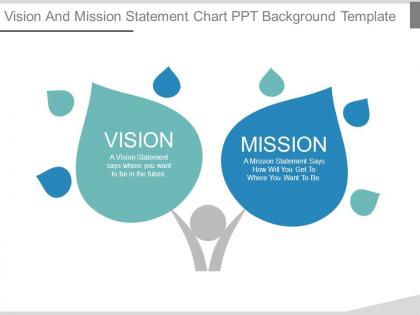
Introducing Vision And Mission Statement Chart PPT Background Template. Employ this organization mission PowerPoint slideshow to focus on both the mission and vision of your company. Replace the text in the placeholders with the vision & mission of your organization in this company goals PPT slide. Use this strategic plan slide to create a foundation for the broader strategic plan of the company. You can motivate your current employees and attract potential employees through clear categorization of the company's goals with this vision PPT. Also, attract like-minded individuals to your organization with this vision statement diagram. Moreover, this business goal presentation will enable you to focus on your company’s efforts. This PPT will further facilitate the creation of core competencies by directing the company to only focus on strategic opportunities. Thus, download this vision and mission PowerPoint theme to achieve the mission of your company and make your business a success.
People who downloaded this PowerPoint presentation also viewed the following :
Vision and mission statement chart ppt background template with all 7 slides:
Our Vision And Mission Statement Chart Ppt Background Template are easy to decipher. They project your thoughts bright and clear.

FAQs for Vision and mission statement chart
Ok so you need three things: where you're headed long-term, what impact you'll make, and who you're helping. Think like 5-10 years out, not next quarter's stuff. Make it inspiring enough that people actually give a shit about it, but also specific so you'll know when you hit it. Don't go full fantasy mode though - keep it realistic. Oh and keep it short! Nobody's gonna remember some paragraph-long mission statement. I'd start with picturing what success looks like way down the road, then figure out how to say that in a way that doesn't suck.
So here's the deal - your mission statement is all about what you're doing RIGHT NOW. Like, who you're helping and how you actually run things day-to-day. Vision is totally different - it's where you want to be in like 5-10 years, your big dreams basically. Mission = "what we do today." Vision = "what we're gunning for." Honestly, I'd start with mission first because it's way harder to figure out your future goals when you don't even know what your current purpose is. Mission keeps you grounded (super helpful for those random daily decisions), while vision gives you something exciting to work toward. Makes sense?
Dude, you absolutely need those mission and vision statements figured out first. They're like your company's GPS - without them, good luck getting everyone rowing in the same direction. When you're deciding on new projects, just ask "does this actually help our mission?" Makes choices way easier. Also, people want to work for companies that stand for something, you know? Same with customers. I've watched teams argue in circles for weeks because nobody could agree on what they were even trying to accomplish. Honestly, it's painful to watch. Get that foundation solid and everything else just... clicks into place way faster.
Your vision statement is like a compass for company culture - gives everyone the same destination to aim for. People naturally start making decisions that align with that bigger picture. Short, punchy visions work better than wordy mission statements, honestly. When it's clear and actually inspiring (not corporate BS), your team develops this shared language around what success means. Daily choices start reflecting those values without you having to micromanage every little thing. The consistency builds itself as you grow. Just make sure it actually connects with your people first - otherwise you're just putting motivational posters on the wall.
Think of vision and mission statements as your compass when you're planning strategy. They stop you from getting distracted by every cool opportunity that pops up - and honestly, there's always something tempting around the corner. Test your big decisions against these statements. Does this new project actually support our mission? Are we moving toward our vision? Your strategic goals should connect back to your mission, while vision shows you where you want to be in five years. Oh, and make sure your team actually memorizes them, not just the version hanging in your conference room.
Don't just stick your mission on the wall and forget about it – nobody actually reads those posters anyway. Bring it into real stuff like team meetings and performance reviews. Show people how their actual job connects to the big picture. Share stories about times the mission actually guided decisions (this is way more powerful than you'd think). Put it everywhere: email signatures, onboarding, town halls, even your Slack descriptions. The repetition across different channels is what makes it stick. You want it to feel like it's actually part of how you work, not just decoration everyone walks past.
Don't go super vague or use meaningless corporate speak - you know, those mission statements that could literally be copy-pasted between any company? Total waste. Keep it short too. If your team can't remember the main point, you've written way too much. Here's what kills me though - people write what they think sounds "professional" instead of what actually matters to them. Just be real about your values first, then clean up the wording later. Oh, and skip the buzzwords that make everyone's eyes glaze over.
I'd say every 2-3 years, or when big stuff happens - like pivoting, expanding, or new leadership. Most companies just write these once and never touch them again (such a waste). Markets change, your business grows, and honestly what sounded amazing five years ago probably feels pretty meh now. During annual planning is perfect timing to check if they still match where you're actually going. Does your team still connect with the mission? Just throw it on your calendar so you're not stuck later trying to fix something that's obviously outdated.
Yeah, for sure they can! Look at Patagonia - their whole environmental thing pulls in tons of eco-conscious customers. It's not just coincidence. Your mission and vision basically tell people "hey, this is what we're about" which creates that emotional hook beyond just product specs. People want to feel connected to brands they buy from, you know? The trick is being genuine about it though. If your statements sound like corporate BS or don't match how you actually run things, customers will totally call you out on it. But when it's authentic? That's when the magic happens.
Honestly, the clear ones hit different - Tesla's "accelerate sustainable transport" thing or how Patagonia just says they're saving the planet. No fluff, you know? Most corporate vision statements make me cringe with all the buzzwords. Disney's happiness mission is kinda cheesy but it works because everyone instantly gets it. The good ones pass my "would I actually remember this tomorrow" test. I'd look at companies you already respect and figure out why their statements click with you. That's probably your best starting point tbh.
Honestly, just throw everyone in a room and let them brainstorm without any judgment first. Get input from the whole team, then look for themes and values that actually click with people. Fair warning though - teams can get weirdly passionate about single word choices (I've seen grown adults argue about "synergy" for like 30 minutes). Focus on the big picture meaning first. Try breaking into smaller groups to draft versions, then merge the good stuff when you come back together. The main thing? Everyone needs to feel like they actually contributed to what you end up with.
Honestly, mixing up your approach is huge here. Surveys and interviews work well for getting different viewpoints on your vision stuff. Focus groups can get pretty heated in a good way - people really open up. For bigger crowds, town halls are solid, but workshops let everyone actually collaborate which I love. Anonymous suggestion boxes are clutch if you've got people who won't speak up otherwise. Start with your main stakeholders first, then branch out from there. Oh, and don't forget online platforms - sometimes people are way more honest behind a screen. You want to hear from both the loud voices and the quiet ones.
Honestly, vision and mission statements are huge for keeping people motivated. When your team actually gets how their daily grind connects to the bigger picture, they're way more invested. It's that whole "laying bricks vs building a cathedral" thing - same tasks, completely different mindset. Plus teams can make better decisions on their own since they know what you're all working toward. But here's the thing - don't just slap them on the wall and call it done. You've got to bring them up in meetings, reference them when hiring, weave them into project planning. Otherwise they're just fancy decorations that nobody cares about.
Dude, stories just hit different than corporate jargon. Like "we democratize education" versus "we provide online learning platforms" - one makes you picture actual kids finally getting chances they never had before. The other sounds like a press release nobody cares about. Your mission needs that narrative thread. Start with something like "Picture a world where..." and watch how much more people actually give a damn. I mean, vision statements on office walls are pretty much worthless unless they make people feel something, you know? Stories do that heavy lifting way better than buzzwords ever will.
Honestly, digital tools make this whole vision/mission thing so much easier. I'd start with Miro or Figma for brainstorming - way better than sitting in a stuffy conference room for hours. Canva's great for making it look decent too, because let's face it, nobody reads boring text blocks anymore. Once you've got something solid, you can push it out through internal apps or social media to see what actually sticks with people. The engagement tracking is pretty helpful for figuring out if you're on the right track or totally missing the mark.
-
Innovative and attractive designs.
-
Unique design & color.