


Wooden material for house construction




Try Before you Buy Download Free Sample Product
 Impress Your
 Audience
 100%
100% Editable
 Save Hours
 of Time


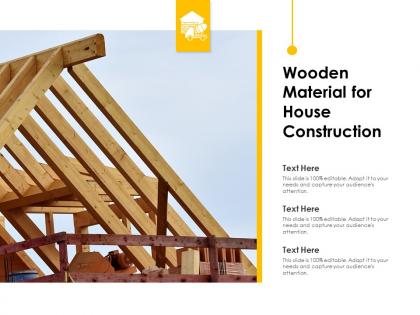
House is something that everyone wants it to sturdy and durable. The wooden material for house construction presentation template helps in representing that how house construction takes place. You can give detail of materials required for construction of the wooden house by using house figure template. With the help of building construction material slide, a building construction organization can share to their client that they are using high-class quality of material for constructing any building. The size of timber needed to build a house, you can share that with your client by taking help of wooden material PowerPoint slide. You can inform your client that what type of services you provide with the help of home construction presentation template. You can describe various characteristics of timber as a building material by using timber building material PPT. You can inform them how much time you are going to take to construct a timber home by taking help of building manufacturing template. Establish evaluation frameworks with our Wooden Material For House Construction. Create a format for accurate assessment.
People who downloaded this PowerPoint presentation also viewed the following :
Wooden material for house construction with all 6 slides:
Handle baseless disputes with our Wooden Material For House Construction. Get folks to admit errors in their argument.





FAQs for Wooden material
Honestly, wood's pretty great for building stuff. It's renewable and way easier to work with than dealing with concrete or steel - like, no frozen metal burns in winter lol. The insulation is solid too, so you'll save on heating bills. Strength-to-weight ratio is actually really good, and most places you can source it locally which cuts costs. Oh, and if you're trying to go green? Wood from responsible sources hits most of those certification requirements that other materials just can't. Plus it just feels better to work with, you know?
Honestly, wood choice is everything for durability and being eco-friendly. Oak and maple will outlast you, but those trees take like 50+ years to grow back compared to pine's 25. Cedar and teak are naturally bug-resistant though, so you skip the nasty chemical treatments. Bamboo grows insanely fast but technically it's grass (weird, right?). I'd probably go with southern yellow pine or Douglas fir - they're tough enough but won't make you feel guilty about chopping down ancient forests.
Pressure treating is your most common option - pumps chemical preservatives right into the wood fibers. You see it everywhere on construction sites. Heat treatment's the green alternative, kills bugs and fungus without chemicals, but costs more. Surface stuff like stains, sealers, and paint work too for keeping moisture and UV rays out. Honestly, I'd check your building codes first though - they're pretty specific about what treatment you need for different jobs. Sometimes they make the choice for you anyway.
Dude, climate is everything when picking wood. Humid spots? Go with cedar or teak - they handle moisture like champs. Dry areas let you use cheaper stuff like pine without worrying much. But here's what really screws people over: temperature swings. That expansion and contraction will destroy your joints if you're not careful. Oh, and if you're near the coast, salt air is brutal - it'll chew through untreated wood crazy fast. I learned that one the hard way on my deck project. Just match your wood to whatever grows naturally in your area and you'll be golden.
Dude, engineered wood is pretty much revolutionizing construction right now. Way stronger and more predictable than regular lumber. You can span way bigger distances without needing tons of support beams - perfect for those open floor plans everyone wants. It's made from smaller wood pieces glued under pressure, so no weird weak spots like you'd get with solid wood. Pretty crazy they can turn wood scraps into something this good, honestly. My buddy's an architect and he swears by LVL beams and glulam now. Definitely worth looking into if you're doing structural work.
Dude, measure twice, cut once - I know it's cheesy but it actually works. Make cut lists so you're not randomly hacking up boards. Don't throw away the scraps either, save them for blocking or whatever. Stack your lumber right or it'll warp and you'll hate yourself later. Order what you actually need instead of going crazy at the lumber yard (guilty as charged). Oh and pick one guy to keep track of everything - otherwise boards just disappear into the void somehow. Seriously cuts down on waste.
So it really depends on what wood you're dealing with. Oak and other hardwoods char way slower than something like pine - they basically form their own protective shell. CLT and glulam actually do pretty well because they're so thick, though the glue in them is sketchy. Fire-treated lumber obviously lasts longer but costs more upfront. Here's something weird though - bigger timber pieces often beat steel in fires. Steel just suddenly gives out when it gets too hot, but wood chars in a predictable way. Makes you wonder why we don't use more heavy timber construction.
Yeah, wood's definitely your cheapest option upfront - like 10-20% less than steel or concrete just on materials. Construction goes way faster too since it's easier to work with. Steel gets expensive quick with all the welding and heavy equipment you need. Concrete can work for big projects but honestly, waiting for that stuff to cure is such a pain. Plus finding carpenters is way easier than certified welders, so labor costs stay reasonable. Just check your local codes first - some areas are picky about wood construction depending on what you're building.
Dude, CLT and glulam are absolutely crushing it right now - you can build way higher than regular wood framing. Bamboo composites are getting crazy good too. All the manufacturers are figuring out how to use waste wood and farm scraps to make stronger stuff, which is pretty smart honestly. Fire and moisture treatments have come a long way. Oh, and there's this whole thing with engineered lumber from fast-growing trees that's worth looking into. If you're doing any mid-rise work, definitely check out CLT first.
So basically your local building codes are gonna tell you exactly which woods you can use and where. Fire ratings, structural stuff, treatment requirements - all that matters. Some places are crazy strict about it, others don't really care as much. You'll need to know about span tables, load limits, moisture content too. Honestly, the whole system can be pretty confusing at first. Pressure-treated lumber might be required in certain spots, or fire-retardant wood for specific areas. Just call your building department before you start anything because what's totally fine in one town might get you in trouble somewhere else.
Honestly, sustainably managed forests are like nature's perfect system. Trees pull CO2 out of the air while they grow, so your building materials are actually carbon-negative - which is pretty wild if you think about it. They harvest selectively instead of clear-cutting everything, so the forest keeps regenerating and wildlife doesn't get kicked out. Plus you get bonus benefits like preventing erosion and keeping water cycles intact. Just make sure to look for FSC or PEFC certifications when you're buying - there's a lot of fake "green" stuff out there trying to fool people.
Honestly, wood's just naturally better at insulation than steel or concrete. Air gets trapped in the cellular structure, so less heat transfers through your walls. Trees basically grow themselves with solar power - kinda wild if you think about it - so the energy footprint is way lower than other materials. I'd definitely look into engineered options like CLT or glulam if you're serious about a project. They give you all those thermal benefits but with the structural strength you actually need. Way less embodied energy overall too.
Okay so vapor barriers are huge - put them on the warm side of your insulation to stop condensation. Good airflow around your framing helps too. Definitely go with pressure-treated lumber anywhere near the ground or wet spots. I learned this the hard way on my deck project lol. Seal up all your joints and don't skip flashing around windows and doors. Water getting in is seriously what kills most wood structures. Short version: control moisture before it becomes your problem, whether that's vapor or actual liquid water sneaking in.
Dude, wood is just so much warmer than steel or concrete. The grain patterns and colors actually work with human skin tones - there's actual science behind why we're drawn to it. Ages beautifully too instead of just looking beat up. You can go rustic with reclaimed stuff or super sleek with maple. I'm probably biased but it makes any space feel way less sterile. Oh and the versatility is insane - you've got so many options depending on the vibe you want. If people need to feel comfortable there, definitely throw in some wood elements.
Hey! So wood's environmental impact really depends on where it comes from. FSC-certified stuff from well-managed forests is way better than clear-cutting operations. Local sourcing beats importing from halfway across the world - obvious but worth saying. Air-dried lumber uses less energy than kiln-dried, though that takes forever. Honestly, the whole supply chain adds up fast when you think about all the machinery and transportation involved. Try finding certified sustainable sources close to you if possible. Makes your projects look way better from an environmental standpoint.
No Reviews