


Building house with five steps ppt background template




Try Before you Buy Download Free Sample Product
 Impress Your
 Audience
 100%
100% Editable
 Save Hours
 of Time


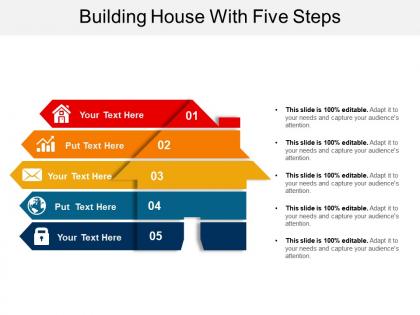
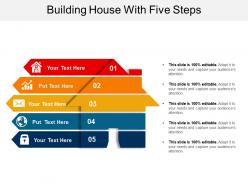
Increase efficiencies throughout the building plan using this Building House with Five Steps PPT Background Template. Enlist the essential features of building your house. Mention plumbing fixtures, lighting ideas, furniture, cost estimates etc. in your building plan. Create clear and comprehensive building plan diagram for your audience to follow. Display the optimum layout of your house with this professionally made PPT Template. Share what all steps are involved in the process of constructing your house. Help your contractor and the workers understand how you want to build your house. Keep the process of your home building project organized and well-structured. Our designers at SlideTeam have specially designed this home building PPT slide for your convenience with high-quality content and graphics. Enhance the way your PowerPoint presentation looks with this readily available PPT template. Download it to prepare an impressive PowerPoint presentation in less time.
People who downloaded this PowerPoint presentation also viewed the following :
Building house with five steps ppt background template with all 5 slides:
Our Building House With Five Steps Ppt Background Template are effectively equipped. All the essentials are available at hand.
FAQs for Building house with five steps
Honestly, start with your budget and financing - that's gonna determine everything else. Get the land surveyed and pull permits (ugh, permits are such a headache but you can't skip them). Work with an architect to nail down plans that actually follow local codes. Oh, and schedule utility hookups early - they take forever sometimes. Order a dumpster too since construction gets messy fast. Double-check your contractor's licenses and insurance before they start. The whole thing takes like 2-3 months minimum, so don't wait until the last minute.
Okay so first figure out what your climate actually demands - like if you're dealing with crazy humidity, go for fiber cement or brick. Cold winters? You need solid insulation, maybe ICF or decent wood framing. Budget's gonna dictate a lot obviously - vinyl and basic wood are your cheapest bets. Stone and fancy composites cost way more upfront but honestly they're worth it long-term. I'd make a list of what you absolutely can't compromise on first. Energy efficiency, durability, whatever matters most to you. Then get quotes for stuff that hits those points. Oh and don't forget maintenance costs down the road - learned that one the hard way!
Look, zoning rules are gonna tell you what you can actually build and where - like how far back from your property line, height limits, that kind of stuff. Then building codes get into all the technical crap: electrical, plumbing, structural safety. Permits are required for basically anything major, which honestly sucks but whatever. Inspectors will come check your work at different stages too. My buddy learned this the hard way when he had to tear down half his deck renovation. Do your homework on local requirements first or you'll end up spending way more fixing mistakes later.
Dude, get project management software. It'll save you from those nightmare moments where nobody knows what they're doing and your timeline goes to hell. Track your subs, deliveries, budget - all in one place. Real-time updates mean less phone tag too (seriously hate that). I'd go with Buildertrend or CoConstruct to start. Nothing fancy. The software catches budget problems early and handles change orders way better than spreadsheets. My buddy tried managing his first flip with just notes and... yeah, don't do that. You'll thank me later when everything actually runs on schedule.
Honestly, modular is pretty solid if you're in a rush. Factory builds happen while they're prepping your site, so you're cutting completion time by like 30-50%. Plus no rain delays screwing everything up - I've seen too many projects get wrecked by weather. Quality's actually better since it's all controlled conditions, not some crew rushing before the next storm hits. Your costs are way more predictable upfront too. Labor shortages? Not really an issue with factory production like it is finding good site crews. Definitely worth looking into if you're doing multiple units or working with a tight deadline.
Dude, get that soil test first - seriously can't stress this enough. Good soil means you're golden with a basic concrete slab. Clay or sandy mess? You're looking at deep foundations or piers, which honestly gets pricey fast. The drainage thing is huge too - waterlogged soil will mess up whatever you build on it. My neighbor skipped the soil analysis to save a few bucks and ended up with cracks everywhere within two years. Foundation fixes are brutal on your wallet, so just do the test upfront.
Dude, you absolutely need a licensed contractor for this. Electrical work can literally burn your house down, and plumbing disasters are expensive nightmares. Most places won't even let you pull permits without proper licensing anyway. I'm all for DIY projects - hell, I just redid my kitchen cabinets - but house building is way too risky. These guys carry insurance and actually know building codes inside out. Their work gets inspected properly too. Save yourself the headache and hire pros. You can always tackle smaller renovations once you're actually living there.
Honestly, just pick 2-3 things that make sense for your budget first. Good insulation and smart window placement will save you tons on heating bills - way more impact than people realize. Solar's great if you can swing it, but even small stuff like LED lights and low-flow fixtures add up. I'd definitely look into reclaimed wood or bamboo flooring too. Those HVAC systems are pricey upfront but they're worth it. Oh, and native plants for landscaping - saves water and looks way better than trying to keep grass alive in a desert or whatever. Don't feel like you need to go full eco-warrior right away.
Dude, 3D modeling is seriously worth getting into. Clients actually understand what they're getting instead of staring blankly at blueprints. You'll catch problems before they cost you money on-site - like realizing that bathroom door swings right into the toilet (been there). Walking people through virtual rooms sells jobs way easier too. Your subs will love you because they can see exactly what you want built. Material takeoffs become super accurate. SketchUp's pretty user-friendly to start with, though the learning curve's a bit annoying at first. Honestly saves me so much headache now.
So first thing - grab your building permits through the local building department before you touch anything. They'll want architectural plans, maybe engineering drawings too depending on what you're doing. Once construction kicks off, inspections happen at specific points: foundation, framing, electrical rough-in, plumbing rough-in, then final walkthrough. Each one has to pass before moving forward. The scheduling's honestly such a nightmare since inspectors are always booked up. Oh, and definitely try to get on your inspector's good side early on - trust me, it'll save you so much grief later when something inevitably goes sideways.
Ugh, weather is going to screw with your timeline for sure. Rain shuts down concrete work and roofing completely. Hot days? Too dangerous for crews to work outside safely. Winter basically kills any foundation progress - concrete won't set right when it's freezing. Honestly, winter is just the worst for construction. Your contractor should schedule interior stuff during crappy weather and save outdoor work for nice days. But here's the thing - even good contractors underestimate weather delays. I'd tack on at least 2-3 extra weeks to whatever timeline they give you, because weather doesn't care about your plans.
Dude, budget 20% extra for random crap that'll come up - and it WILL come up. My bathroom reno turned into this whole plumbing disaster, ugh. Get quotes from like 3 different people before you pick anyone. Never give contractors huge payments upfront either, that's sketchy. Write down literally everything you spend, even the boring permit fees and random Home Depot runs. Use whatever works - I just threw it all in a basic spreadsheet. Oh and figure out what you actually need vs what would just be cool to have. The "nice to have" stuff can wait if money gets tight.
So there's basically three ways to frame a house. Most builders do platform framing - that's just regular wood construction where you go floor by floor. Crews know it well and it's pretty affordable. Post-and-beam uses these massive timbers with fewer joints, gives you those amazing open spaces but yeah, it'll cost you more. Then there's steel framing which is super durable and bugs won't touch it, though you need specialized guys and the heat transfer is nuts without good insulation. Honestly, don't just pick the cheapest option - think about your climate and what you actually want the space to feel like.
PPE is huge - hard hats, safety glasses, steel-toed boots, high-vis stuff. Don't mess around with that. Check your scaffolding before anyone goes up, and fall protection kicks in at six feet. I swear, people get lazy with the basics and that's when bad stuff happens. Clear your work areas daily - debris everywhere is asking for trouble. Electrical protocols matter too, obviously. Heavy machinery? Only trained people, period. Oh and do morning walk-throughs with your crew. Catches problems before they bite you.
Honestly, start collecting visuals of everything you love (and hate too). Pinterest boards are perfect for this. Make a list separating your must-haves from nice-to-haves, and tell them your real budget upfront - don't be shy about it. My cousin learned this lesson the hard way when she kept flip-flopping mid-project and costs went crazy. Ask a million questions during meetings because designers aren't mind readers about how you actually live. Like, do you cook every night or just reheat leftovers? Schedule regular check-ins too. If something feels wrong, speak up immediately instead of crossing your fingers it'll magically work out.
-
Editable templates with innovative design and color combination.
-
Unique design & color.