

Types of building materials for construction




Try Before you Buy Download Free Sample Product
 Impress Your
 Audience
 100%
100% Editable
 Save Hours
 of Time


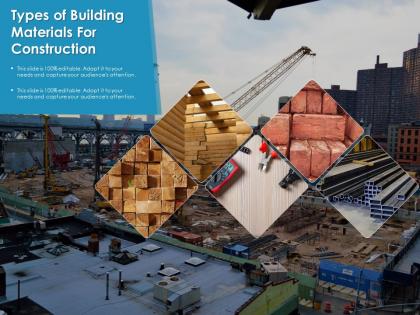
For civil engineers, Types of building materials for construction PowerPoint slide is the best method to share the information related to material that requires for construction of the building. The building construction material includes stone, brick, lime, cement, metal, timber, sand, aggregates, mortar and many other things which a civil engineer needs to know and he can learn all these with the help of different building construction material presentation template. A civil engineering teacher can explain to his students that how important it is to have detailed knowledge of construction material because constructing any building is a difficult task which needs to do very carefully by using construction matter PPT slide. He can discuss the various features and characteristics such as durability, sturdiness, hardness etc of the material for structure construction with the help of material characteristics presentation. A building constructor needs to share the quantity as well as the material dimension for construction. Our Types Of Building Materials For Construction get them dancing with glee. Their excitement will know no bounds.
People who downloaded this PowerPoint presentation also viewed the following :
Types of building materials for construction with all 6 slides:
Have all the basics going correctly with our Types Of Building Materials For Construction. They help you go according to the checklist.




FAQs for Types of building
Honestly, reclaimed wood is your friend here - plus bamboo and recycled steel are solid choices too. Cork flooring looks amazing if you're doing indoor stuff. Rammed earth is cool but kinda depends on your project. Oh, and hempcrete is trendy now though still hard to find in most places. Here's the thing though - whatever you can source locally will probably beat the "perfect" sustainable material that has to be shipped across the country. Transportation kills those green benefits fast. I'd start by seeing what reclaimed materials are around you first. Sometimes the most sustainable choice is just whatever's already sitting in someone's warehouse nearby.
Your local weather is gonna be the biggest factor here. Humid places need moisture-resistant stuff, while areas with crazy temperature swings do better with materials that have good thermal mass. I'd honestly just look at what older buildings in your area used - those choices weren't random. Desert spots often go with adobe or rammed earth. Coastal areas need materials that won't get wrecked by salt air. Plus using local materials saves you money and makes way more sense environmentally. My neighbor learned this the hard way when he imported expensive stone that cracked after one winter.
Dude, the coolest stuff right now is aerogel and vacuum insulation - crazy thin but performs like nothing else. Phase-change materials are wild too, they literally absorb and release heat to keep temps steady. Oh, and self-healing concrete is actually a thing now (I know, sounds like sci-fi). Bio materials that get stronger over time, triple-glazed windows with special gas fills. Smart glass that tints itself is pretty sweet. Honestly though, I'd focus on your building envelope first - that's where you'll get the most bang for your buck on energy savings.
Start with recycled steel and concrete - honestly the easiest route since they pass codes no problem. Reclaimed wood works great for floors or accent walls, just not structural stuff. Plastic lumber's solid for outdoor areas too. The trick is getting your architect involved early so they can spec this from the start instead of scrambling later. Oh and definitely hit up local demo companies - I know it sounds sketchy but they've got quality materials that'd just get trashed otherwise. You'll need extra time for sourcing though, fair warning.
Okay so basically traditional stuff like wood and stone is all natural and has been around forever, but modern materials are engineered for specific jobs. Steel, concrete, composites - they give you way more control over strength and how long things last. Traditional materials have tons of character but can be unpredictable sometimes (my dad's old wooden deck is proof of that). Modern ones install faster and you know what you're getting quality-wise. Honestly, mixing both works great - use traditional for the look and modern where you actually need things to perform consistently.
So building codes basically control what materials you can use - they set minimums for fire resistance, structural stuff, all that. You've gotta check your local codes first since they're different everywhere. Honestly some are pretty ancient but whatever, you still follow them. Most suppliers will mark if their products meet IRC or IBC standards which helps. Oh and definitely verify everything's compliant early in design. Trust me on this one - finding out during permits that something doesn't work is a nightmare. Way easier to catch it upfront than redo everything later.
Honestly, your building materials make a huge difference for indoor air quality. Cheap particle board and regular carpeting? They'll keep releasing toxins for years - gross. Go for low-VOC paints and formaldehyde-free insulation instead. Natural stuff like cork or bamboo flooring is way better too since they don't off-gas chemicals. Oh, and materials that handle moisture well prevent mold, which is obviously key. If you're renovating, look for GREENGUARD or Cradle to Cradle certifications. Worth the extra research upfront.
LCA data shows you the real environmental impact from start to finish - mining, making, shipping, using, tossing. Some "green" materials are actually terrible once you dig deeper, which is wild. You'll spot which ones have lower carbon footprints or better disposal options. Ask suppliers for EPDs (Environmental Product Declarations) - that's where the standardized data lives so you can actually compare things properly. Use it to justify spending more on truly sustainable stuff, or find cheaper alternatives that work just as well. My colleague swears by this approach for avoiding greenwashing BS.
Honestly, the biggest myth is thinking alternative materials are automatically weaker than regular ones. Like, people hear "bamboo" and assume it's flimsy, but it's actually stronger than steel in some cases - which blew my mind when I first learned that. Same goes for straw bale and recycled steel. The thing is, durability isn't really about the material itself. It's more about whether it's installed right, how it handles your local weather, and if you maintain it properly. I'd definitely look up how each one performs in your area first though.
Materials will eat up like 40-60% of your budget, so don't mess around with this part. Sure, natural stone and hardwood cost more upfront. But they last forever and need way less maintenance - sometimes it's actually cheaper in the long run. Also think about labor costs because some stuff is a nightmare to install. Oh, and availability is huge too. Pick something weird that needs special ordering? You'll wait months and pay crazy shipping fees. Honestly, just get quotes for 3-4 different options before you commit to anything.
So there's actually some wild stuff happening with traditional materials right now. Smart sensors in concrete can track structural health in real-time - honestly didn't think I'd be saying that five years ago. Nanomaterials make steel way stronger and resist corrosion better. Digital modeling helps cut waste during construction too. Self-healing concrete is real now, which still blows my mind. Same with photocatalytic coatings that extend material life. I'd start with smart concrete sensors if you're curious - they're getting cheaper and the data you get is pretty incredible. Some of this tech feels straight out of a movie but it's here.
So basically, fire ratings determine what materials you can legally use depending on your building type and height. High-rises and hospitals need way higher ratings - like 2-3 hours - compared to regular houses. Building codes don't mess around with this stuff, honestly. You've gotta match or beat the required rating for structural stuff like beams, walls, floors. The bigger your building gets, the more fire-resistant everything needs to be. Oh, and definitely check your local codes first since they can vary. Then just pick materials that hit those minimum requirements. It's pretty straightforward once you know what you're looking for.
Honestly, it's all about trade-offs. Local stuff is cheaper to ship and helps your community, but imported materials give you way more options - especially for specialized products you can't find locally. Shipping costs can get crazy with imports though, plus there's always that customs delay risk. Local suppliers are clutch when you're in a rush since they deliver faster. Quality's a mixed bag either way, so you'll still need to check out suppliers no matter what. My advice? Get quotes from both and see what the total damage is, then just go with whatever fits your timeline and budget best.
Start with what the material actually needs to do, then worry about how it looks. I made this mistake on a beach house project - almost picked this gorgeous metal finish that would've been a disaster in salt air! Durability and maintenance come first. Cost too, obviously. Once you've narrowed down what'll actually work, that's when you play with textures and colors. Honestly, the coolest designs usually happen when you work with what the material naturally wants to do instead of forcing it. Try making a simple chart ranking both the practical stuff and aesthetic goals - helps you compare options without getting too in your head about it.
Honestly, everyone's obsessed with bringing the outdoors in right now. Cork and bamboo are everywhere, plus there's this crazy mycelium stuff that's basically grown from mushrooms. Living walls are huge too - but like, actual living plants, not those awful fake ones from a few years ago. Natural stone textures and reclaimed wood are still solid choices. Oh, and I keep seeing these tiles with organic patterns that look like they came straight from nature. The air quality thing is a nice bonus too. Next time you're picking materials, just ditch the synthetic stuff and go natural instead.
No Reviews