


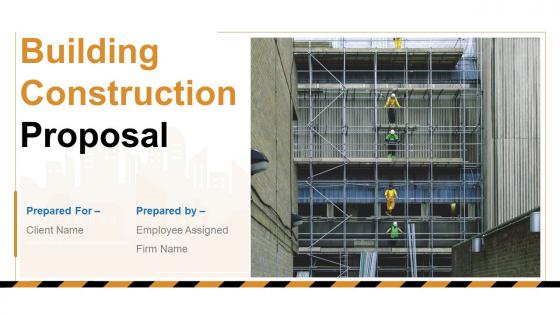
Building Construction Proposal Powerpoint Presentation Slides




Try Before you Buy Download Free Sample Product
 Impress Your
 Audience
 100%
100% Editable
 Save Hours
 of Time


Constructing any building from scratch is such a difficult task to do that is why a professional team of constructors completes the project with proper planning and hard work. A constructor is someone who builds a well-designed infrastructure on vacant land. There are many projects like office buildings, residents, colleges, and other buildings undertaken by the construction business. To provide appealing and great-looking buildings to the clients within a specific time is the only duty of a constructor. Most of the organizations give contracts to the construction business to build huge and attractive office buildings for them. The companies hand over these projects to the professional constructors because they safely complete the construction under the client’s specifications, time, and budget. The readymade proposals have been designed to ensure that the client will choose the deal as per their requirements. Introducing our content ready Building Construction Proposal PowerPoint Presentation Slides that help you to mention your dedicated professionals that help the clients in constructing their innovative building. Explain in brief how you design and construct projects in a streamlined, efficient, and cost-effective approach. With the aid of this construction proposal PPT layout, you can describe the benefits the clients will get after choosing your services. In the project context section, you can outline your team’s activities while constructing the client’s building. This will give the client an idea of your working process, and the chances of your proposal selection must increase. Talk about your interior and exterior service offerings like insulation, railings, window & door openings, drywalls glued, garage door, rear deck, drainage spouts, front porch, etc. Bring attention to the necessary construction permits your company needs to make while starting the project. Fuel your construction business’s growth and land more clients by downloading our ready-to-use building construction proposal PowerPoint presentation template.
People who downloaded this PowerPoint presentation also viewed the following :
Content of this Powerpoint Presentation
Every building that we see is a product of a good construction plan. But before coming up with a plan for either residential construction or commercial construction, a building contractor must win a construction bid via construction proposal. In some cases, it is the clients who reach out to the construction businesses through requests for proposals to which companies should respond with a services’ proposal.
A construction proposal comprises a thorough outline of the construction project management plan, its executive summary, budget, and other relevant details. The project proposal is a critical document determining projects from inception to completion. This piece of document lies at the center of a dynamic construction industry. This detailed document acts as a road map for all project stakeholders, outlining the specifics of the project's objectives, goals, budget, and schedule. In this section, we will examine the crucial function of proposal templates and provide three necessary construction project proposal templates in various formats. We have painstakingly explained each template to highlight its unique qualities and applications and why they are necessary for every construction business!
A construction project proposal promotes stakeholder alignment and transparency, ensuring a smooth project flow. A well-written proposal also helps in client engagement, legal protection, and a competitive edge in competitive situations. Additionally, a well-structured proposal ensures timely project completion and aligns expectations with the project's scope, reducing the risk of scope creep or customer discontent.
If you are assigned a proposal to compose, then our building construction proposal presentation is perfect for you! Explore SlideTeam’s collection of ready-to-use and custom-made PowerPoint Templates to help you craft a compelling construction project proposal to clinch the deals.
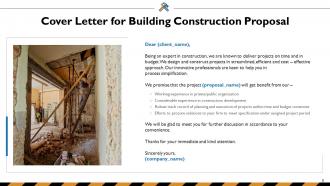
Template 1: Cover Letter for Building Construction Proposal PPT Template
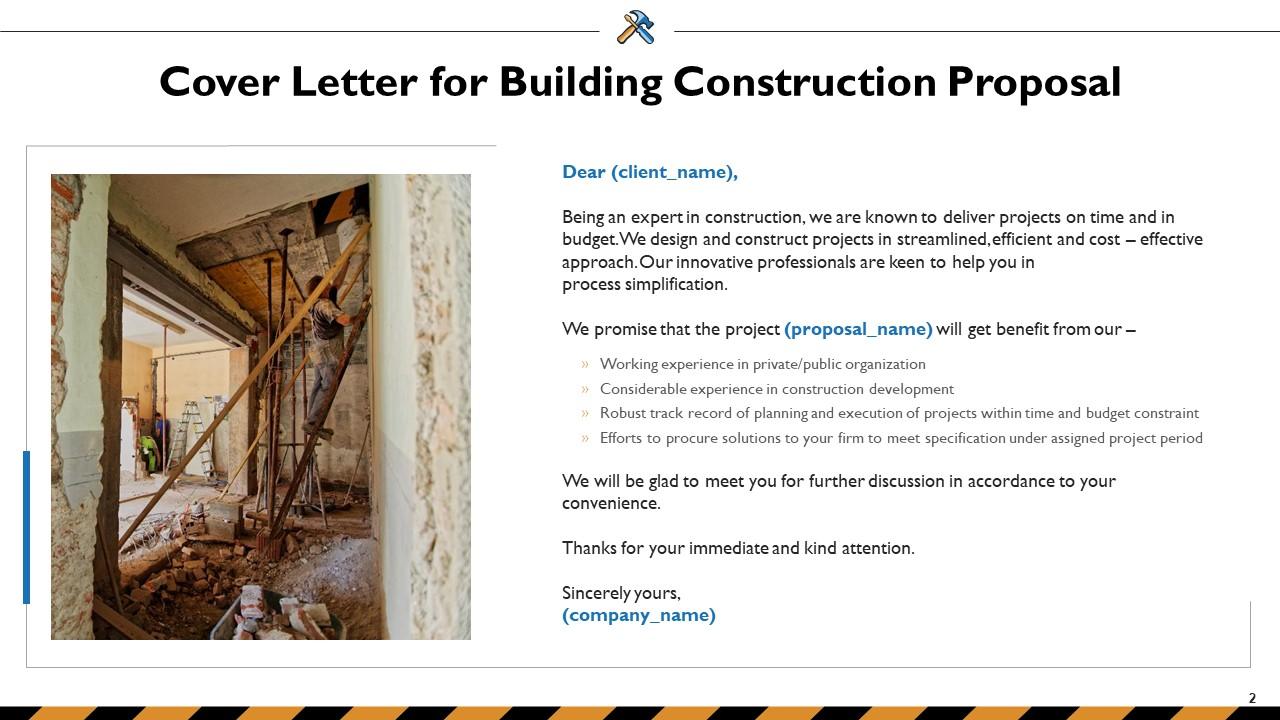
This cover letter template will be a wonderful opening to present a persuasive case. Respond to a demand or pitch your service to potential clients with this presentation design. For instance, you can state the size of the project and the kind of facility required in the opening line itself. List the number of penultimate projects that you have already completed, and conclude with significant industry recognitions your company might have been conferred with.
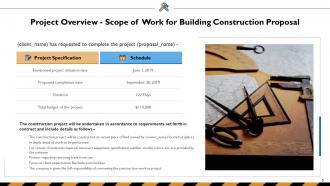
Template 2: Project Overview and Scope of Work PPT Template
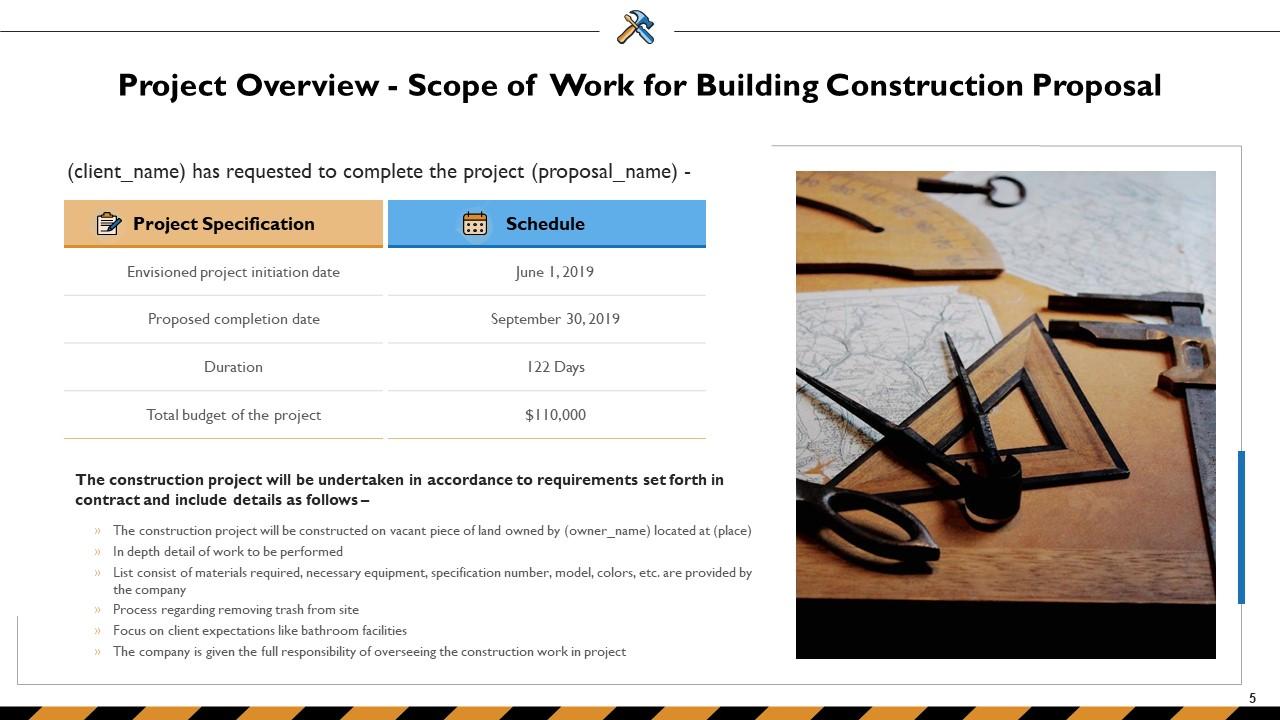
Use this PPT Template to provide a comprehensive overview of your Building Construction Project. Define the context by outlining the project specification and schedule. Outline project specifications like envisioning the project, proposed completion date, project duration, budget, etc. The bullet points in this presentation template allows you to highlight contract details. This PPT Design sets the foundation for the proposal by ensuring your potential clients understand the concept behind your building project and the standard of your construction activities.
Template 3: Project Overview, Sitework and Concrete Foundation PPT Template
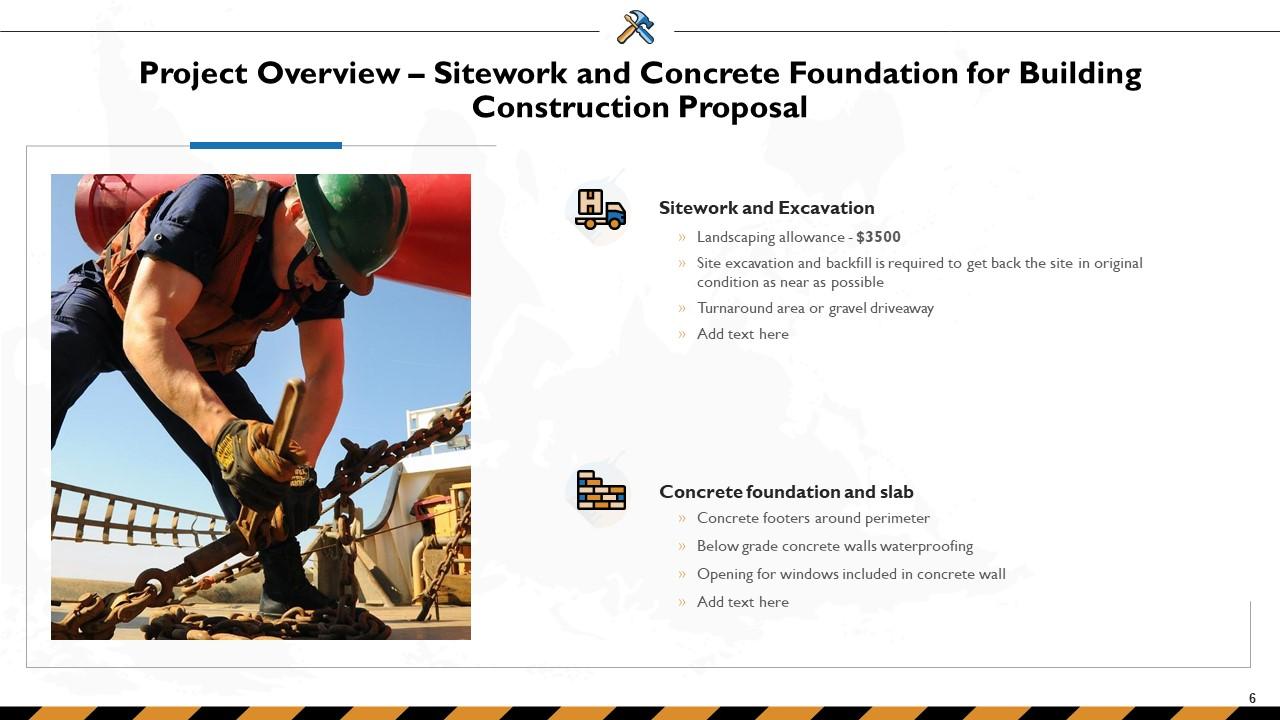
Lay a solid foundation for your project with the help of this fully customizable PPT Template. This PPT Slide focuses on sitework, evacuation, concrete foundation and slab. Use this PPT Layout to outline your value proposition. With the help of this context and objectives presentation template, the chances of your business convincing a roomful of investors go up significantly. This presentation layout is your key to secure that funding through persuasion and solid work ethic.
Template 4: Service Offering PPT Template
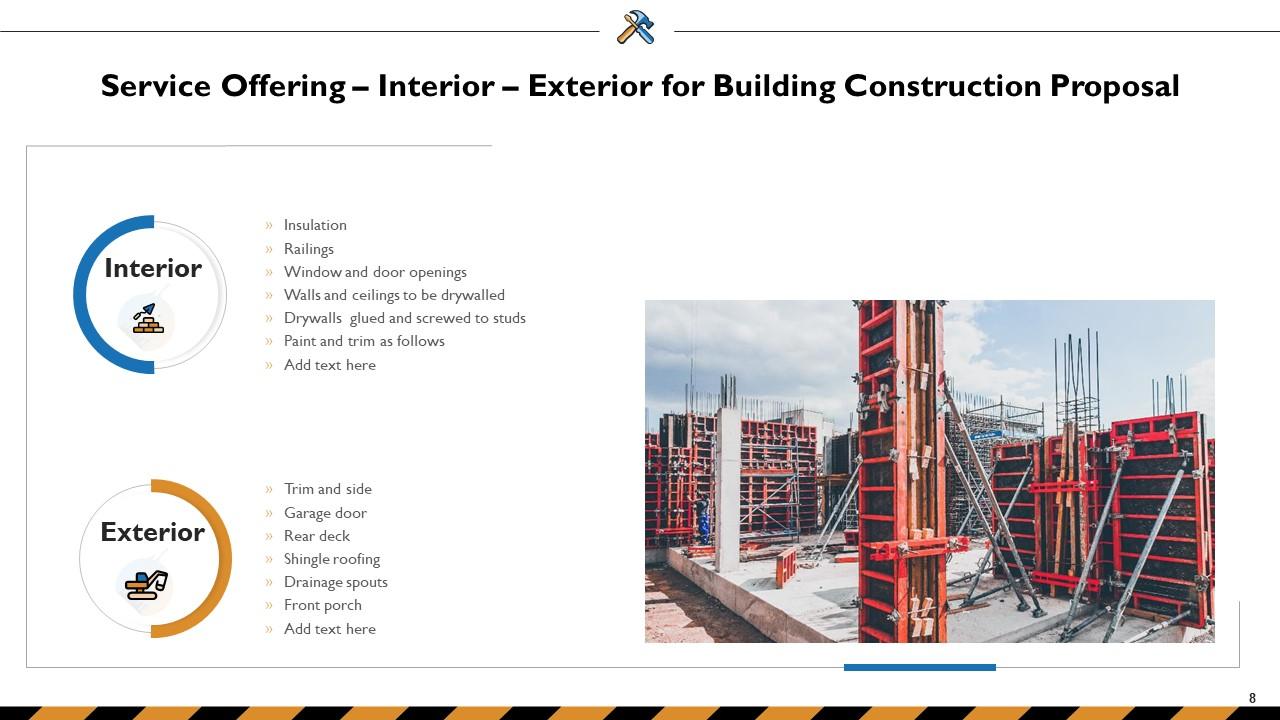
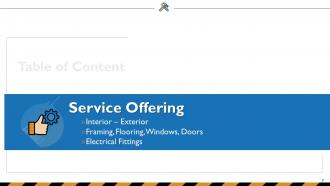
Use this presentation slide to convey service offerings to your clients. Include details of the interior and exterior services provided by your company. Interiors include insulation, railings, door openings, dry walling, painting and trimming. The exterior services include garage building, rear deck, shingle roofing, drainage spouts, and front porch construction. You can add more service as per your company profile as this PPT Design is 100% editable.
Template 5: Service Offering PPT Templates
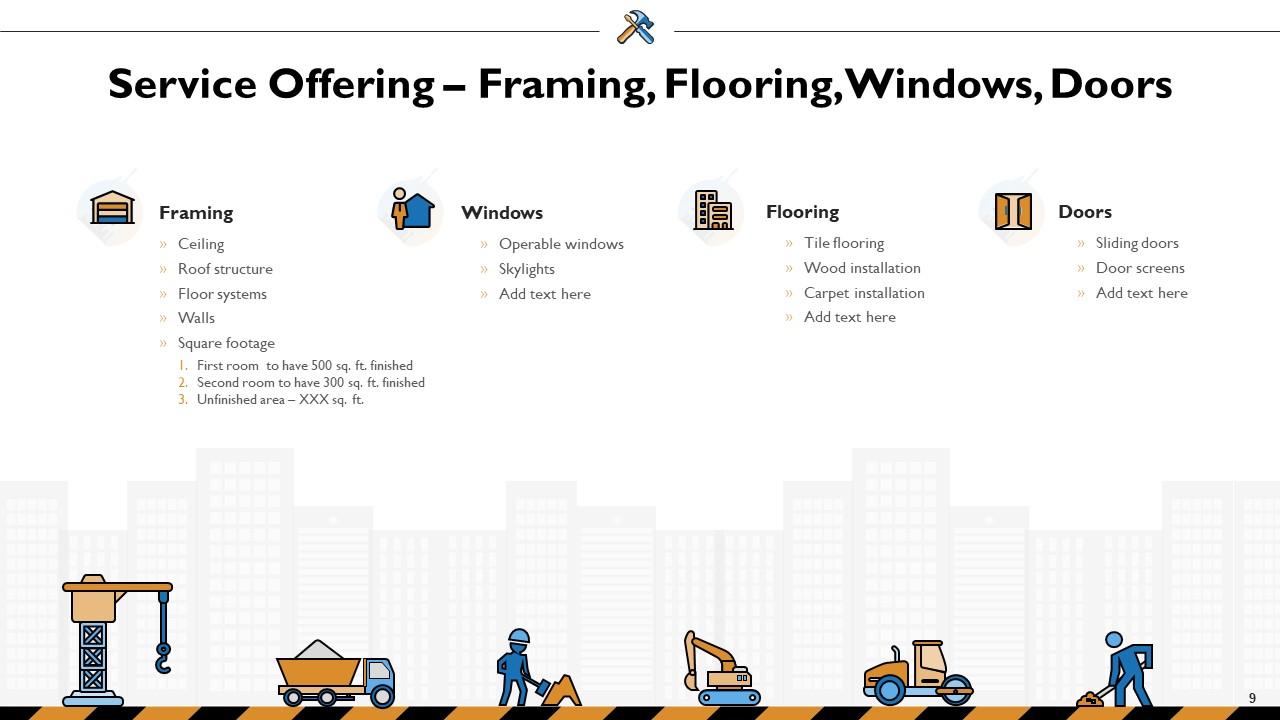
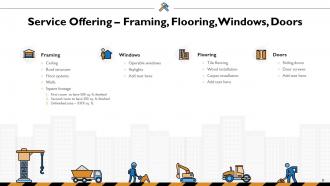
Use this PPT Layout to ensure that your clients are aware of services that your company provides. This PPT Template will enable you to list your offerings like Framing, Windows, Floors, and Doors. Explain the features of the services that your business offers with the bullet points provided in the presentation template.
Template 6: Project Schedule PPT Template
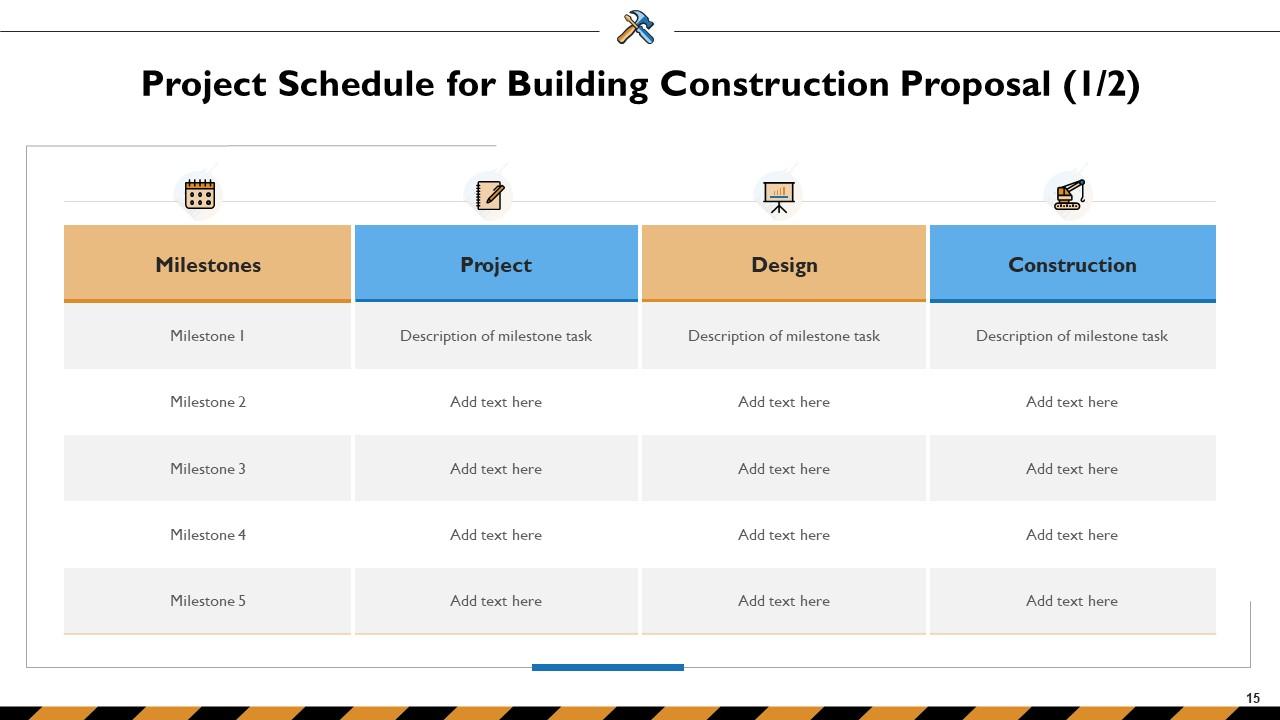
Showcase your readiness to get into the construction project with this PowerPoint Slide. This helps you convey to your clients the tasks and strategies that will be deployed through the course of the contract. Since the process will be carried out in multiple phases to achieve milestones, the slide depicts a timeline to visualize the process. The presentation slide also defines the activities that are planned and executed at each milestone of the construction. You can also provide your clients the tentative time of completion of each stage with this design-ready PPT Preset.
Template 7: Related Risks PPT Templates
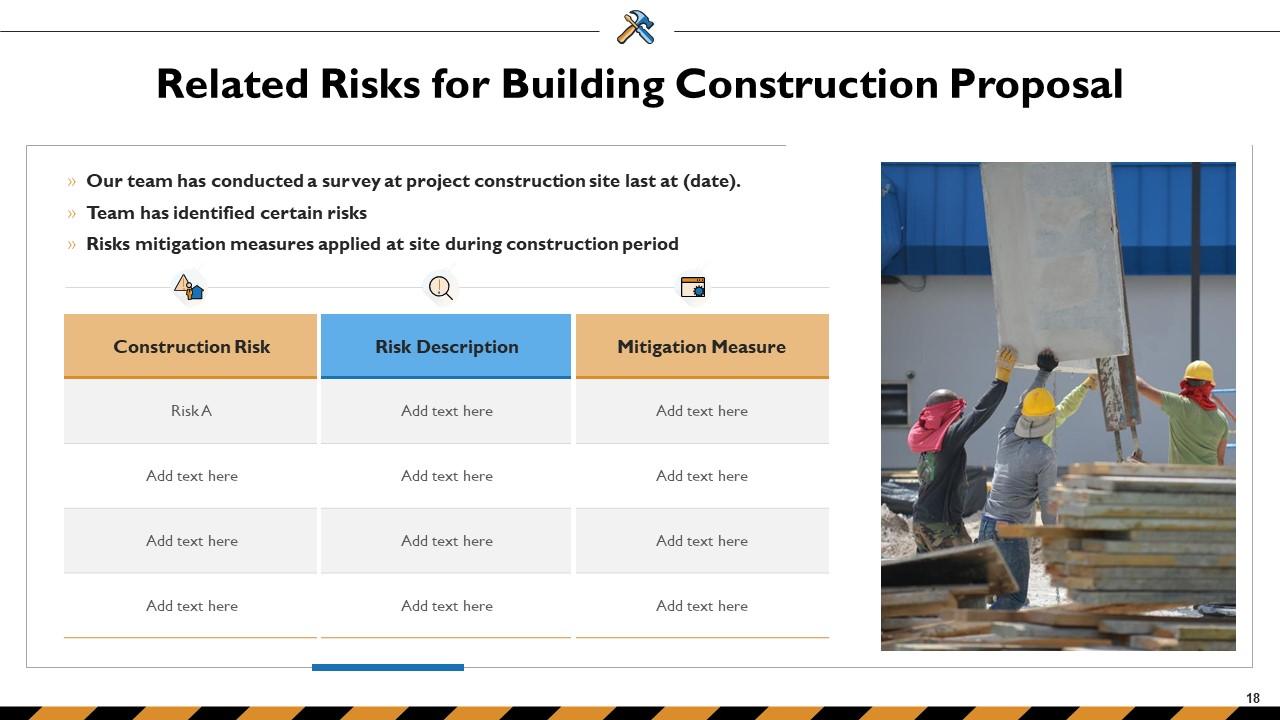
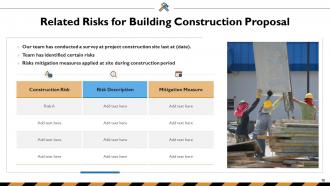
Construction is a tough, often volatile industry, it is also high risk. Predicting future risks, and taking steps to mitigate their impact, is critical to the success of any project. While it is impossible to eliminate entirely, identifying common sources of risk is the first step in minimizing loss. Use this PPT Template to tabulate construction risk, risk description, and mitigation measures. Ensure that all the stakeholders are aware about the related risks of the project.
Template 8: Fee Summary PPT Template
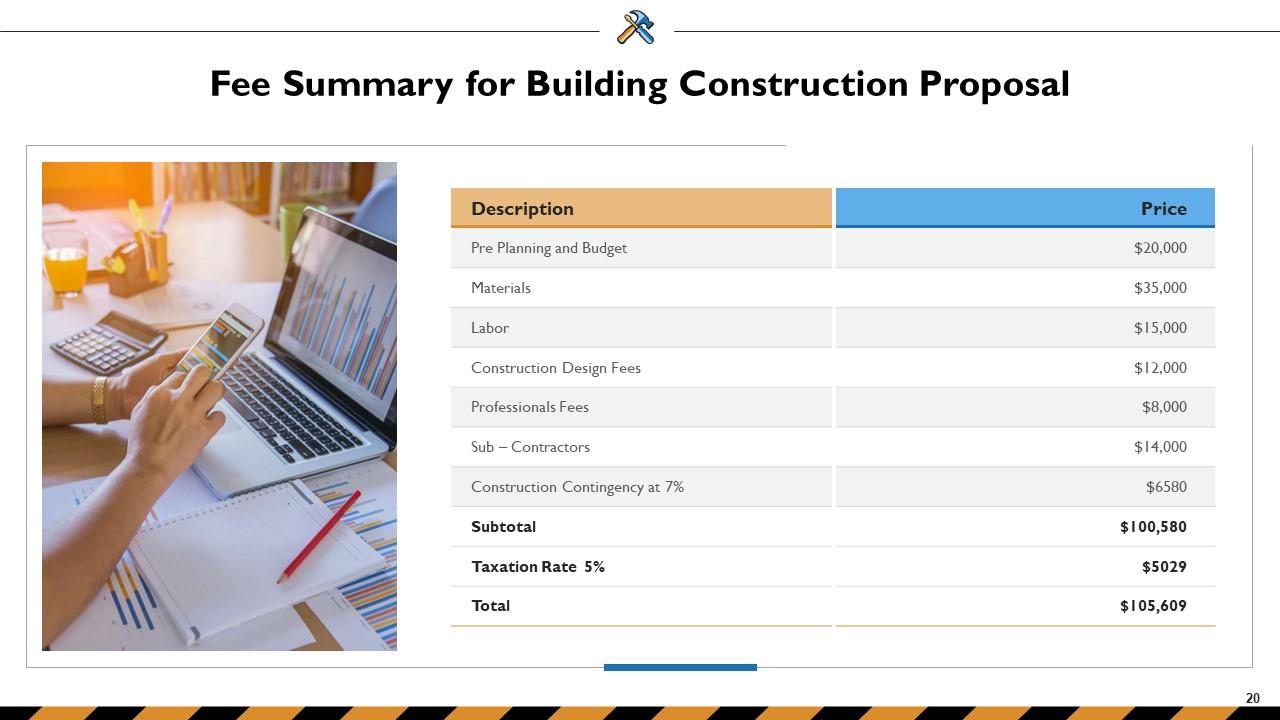
Make sure that you have discussed the fee summary with your customers. Providing your customers with a breakdown of the cost will give them clarity on the amount they will have to arrange as the investment, and within what timeline. With this PPT Template, you can break down your pricing plan and explain the cost of every activity. It also enables you to make a phase payment plan for your clients. Use this PPT Framework to explain activities that will take place in each phase with the cost clearly mapped to it.
Template 9: Portfolio for Building Construction Proposal PPT Template
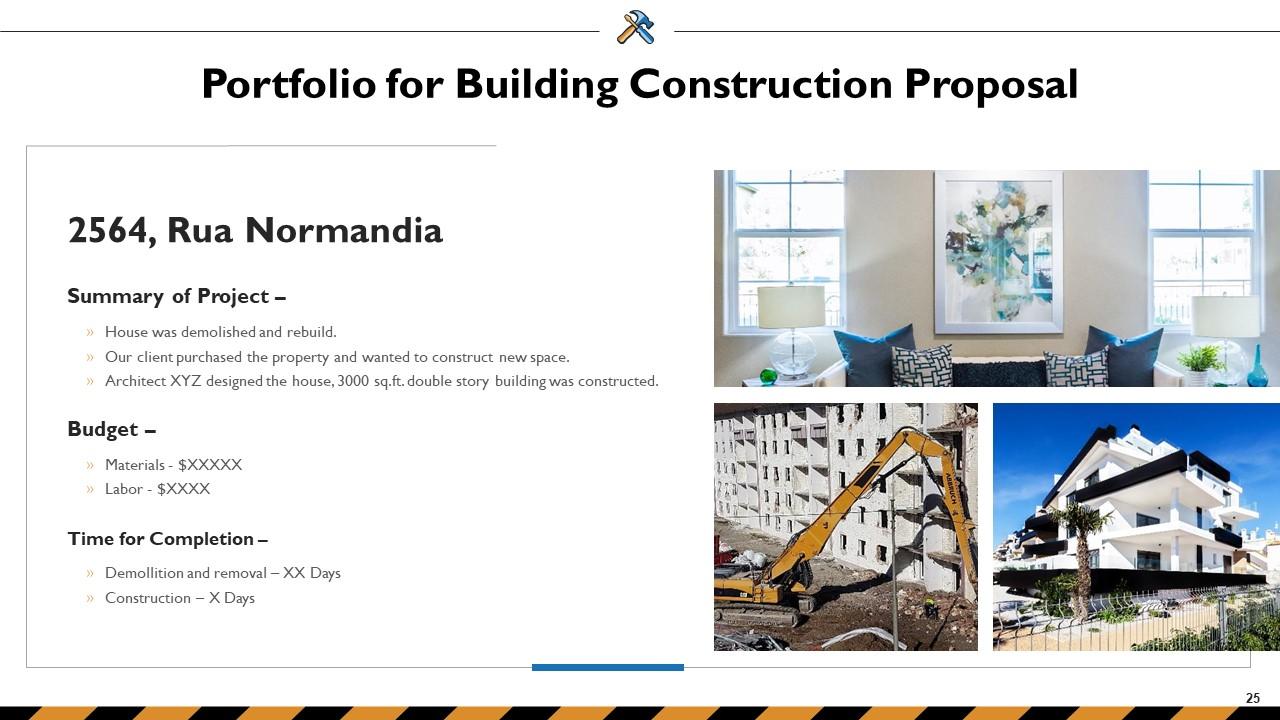
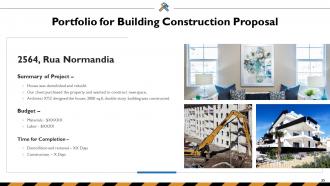
If you own a construction company, then it’s crucial for you to possess a construction portfolio design like this. Use this PPT Layout to write a summary of the project, budget, and time of completion. Add details in the column with the bullet points as shown.
Template 10: Contract PPT Template
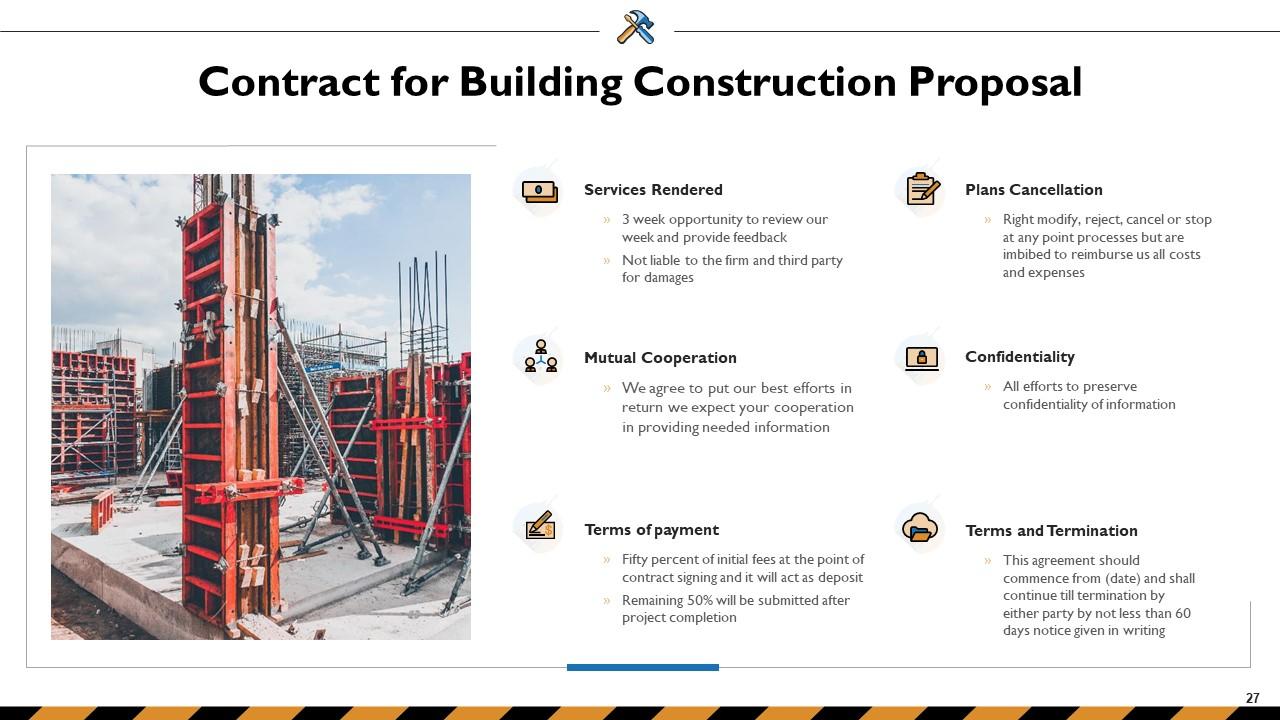
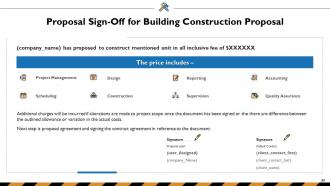
It is critical to understand and explain the scope of work your company will take care of. This will ensure a smooth flow of work in the future. Use this presentation template as a reference to form a contract with your potential clients. It should include information like services rendered, cooperation, payment terms, cancellations plan, confidentiality, terms, and termination. This PPT Template will help you avoid any future conflict among the parties.
Now, rest assured that you are going to make a good deal. These presentation slides will make the process of bidding faster and easier. With this comprehensive PPT Package, prepare bids that align with your requirements, tout your company’s differentials, precisely capture costs, ensure profit, and stand out from the competition. Construction bidding will no more be a source of stress for you as long as you have this PPT Toolkit at your aid.
PS: If you are searching for templates to help you develop a construction contract, then you are at the right place. Go through our well-curated list of templates to outline the contractual rights of parties.
Building Construction Proposal Powerpoint Presentation Slides with all 36 slides:
Be down to earth with our Building Construction Proposal Powerpoint Presentation Slides. You will feel firmly grounded.














FAQs for Building Construction Proposal
Okay so first things first - nail down your project scope, timeline, and a super detailed cost breakdown. Materials specs are huge too. Don't sleep on the permits and regulatory stuff because that's honestly where most proposals die. Labor details, subcontractor plans, safety protocols, payment schedule - all that needs to be crystal clear. Visual stuff like site plans or renderings? Game changer. People eat that up. Oh and seriously, be realistic with your timeline and transparent about costs. Nobody wants to get halfway through and suddenly owe more money, you know?
Dude, definitely include a timeline - it makes you look like you actually know what you're doing. Clients get way less anxious when they can see specific dates and milestones laid out. Shows you understand the order of things too, like obviously plumbing goes in before flooring. It also covers your butt if they change their mind halfway through or permits get delayed (which honestly happens more often than it should). Weather delays are real too, so build in some buffer time. The whole thing just makes your proposal way more professional and competitive compared to guys who wing it.
Look, cost estimation can make or break you. Underestimate and you're basically working for free - been there, it sucks. Go too high and clients will just pick someone else. You need that sweet spot where you're competitive but still making decent money. It also helps with planning your cash flow and figuring out realistic deadlines. I always throw in like 5-10% extra for weird stuff that comes up (and trust me, it always does). Your reputation rides on hitting what you promised at the price you said.
Honestly, photos are going to do way more heavy lifting than any fancy description you write. Pick your best projects that actually match what they're looking for - same building type, similar budget range, that kind of stuff. Don't dump your entire portfolio on them. Include the real details: square footage, whether you hit your deadlines, problems you solved that they're probably dealing with too. Oh, and make sure you mention your key team members and their certs, especially whoever's going to be running their project day-to-day. End with references who'll actually answer when they call.
Look, risk assessment is basically covering your ass while looking professional. Weather delays, material shortages, sketchy site conditions - call out all that stuff upfront. Clients love seeing you've actually thought this through instead of just throwing numbers at them. Honestly, half your competition probably skips this step entirely, which is nuts. Document the risks AND how you'll handle them when things go sideways. It'll help you price everything right and avoid those profit-killing surprises later. Plus you won't look like an amateur when the inevitable curveball hits.
Dude, visuals are a game changer for construction proposals. Most clients can't picture what you're describing when it's all technical specs - their eyes just glaze over. But throw in some floor plans, 3D renderings, or timeline charts? Suddenly they get it. I always start with basic site plans and elevations, then get into the nitty-gritty detail drawings for tricky spots. A good before/after rendering honestly sells itself. People need to see what they're paying for, not try to decode construction speak. Makes your whole proposal way more engaging too.
Dude, permits are gonna be your biggest headache here. Building permits obviously - that covers your structural, electrical, plumbing stuff. Check zoning rules first though because height limits and setbacks will torpedo your whole project if you're not careful. Then you've got the random specialty ones like environmental approvals or historic district nonsense. Oh, and fire department sign-offs depending on what you're doing. Honestly, permitting takes forever these days so build that into your timeline. Just make sure you spell out who's pulling what permits - you or the client - because that always becomes a thing later.
Start with the hard numbers - LEED certifications, energy reduction percentages, waste goals. Clients are obsessed with this stuff now. Create a whole sustainability section showing solar capacity, recycled materials, water conservation systems. Be super specific instead of just saying "green." Like actual percentages and footprint reduction data. Honestly the visual diagrams really sell it too. Here's the key though - connect every single initiative to money they'll save long-term. That's what seals the deal. Oh and definitely mention renewable energy systems upfront.
Honestly, you gotta show them stuff they've never seen before. Maybe it's your materials, crazy fast timelines, or some wild construction technique. Throw in detailed portfolios with similar builds - visuals are everything. Local connections matter too, especially if you've got solid supplier relationships. This whole thing reminds me of dating, no joke - standing out is literally everything! Post-construction support usually gets overlooked but clients love that. 3D models or renderings will blow their minds compared to boring proposals. Here's the thing though: pick ONE thing you're genuinely amazing at and make that your entire pitch. Don't try to be good at everything.
Dude, client communication can make or break your bid - I'm not even exaggerating. Get their input early because these proposals change constantly based on feedback. I've watched contractors submit gorgeous proposals that totally whiffed on what the client wanted. Check in regularly so you catch scope changes or budget issues before you've wasted tons of time going the wrong direction. Ask specific questions instead of just "thoughts?" - that never gets you useful feedback anyway. Your proposal should feel like a conversation, not some final ultimatum they have to accept or reject.
Scope creep will kill you - seriously, spell out exactly what you're doing and what you're NOT doing. I learned this the hard way. Don't lowball your bid either, even if you really want the job. Material prices are nuts right now so double-check everything before you submit. Oh, and permits take forever these days - factor that in. Build in some cushion for when stuff inevitably goes sideways. My buddy forgot about inspection delays once and it cost him big time. Get everything written down clearly before you hand it over.
Honestly, case studies are like your proof you're not just bullshitting. Pick ones that match what they need and get specific - actual timelines, budgets, the messy problems you fixed. Clients want to see you've done this before, not just hear you talk about it. Each one should tell the whole story: here's what was broken, here's how we fixed it, here's what happened after. Way better than just saying "trust me, we're great at this stuff." Oh and make sure you include real numbers - people love that concrete evidence. Turns your whole proposal from theory into something they can actually picture working.
Dude, first thing - get your licensing and permits sorted out. Be super clear about who handles what permits, you or the client. Insurance is non-negotiable: general liability, workers comp, plus bonding if they want it. I learned this the hard way, but also nail down your lien rights and how you'll handle change orders upfront. Local building codes and safety regs too, obviously. The liability protection stuff gets complicated quick if you mess it up. Honestly? Pay a construction attorney to look over your template once. Worth every penny to avoid future disasters.
Honestly, project management software is a lifesaver for proposals. It handles all the annoying coordination stuff - tracking document versions, assigning sections to people, setting deadlines. You can see who's doing what without constantly checking in. The best part? Everything lives in one place - templates, old proposals, client requirements. No more hunting through ancient email threads (ugh). Everyone can comment and edit at the same time too, which actually works way better than passing Word docs back and forth. Just pick one tool and make sure your team sticks with it - that's the tricky part.
Hey! So construction proposals are changing fast right now. Sustainability stuff is everywhere - clients want green building plans and LEED certs in basically every RFP. You've also gotta show off your tech game with BIM and project management software. Labor shortages are making everything expensive (seriously, it's rough), so build in realistic timelines and backup plans. Oh, and modular construction is getting pretty popular too. My advice? Update your template to hit these points or you'll look behind the times. The competition's definitely stepping up their game.
-
yes damn good